

Nichole Berg & Kimberly Howard on Educating on Climate Change
For more, see:
Stay in-the-know with innovations in learning by signing up for the weekly Smart Update.
Transcript
This transcript has not been edited for spelling accuracy.
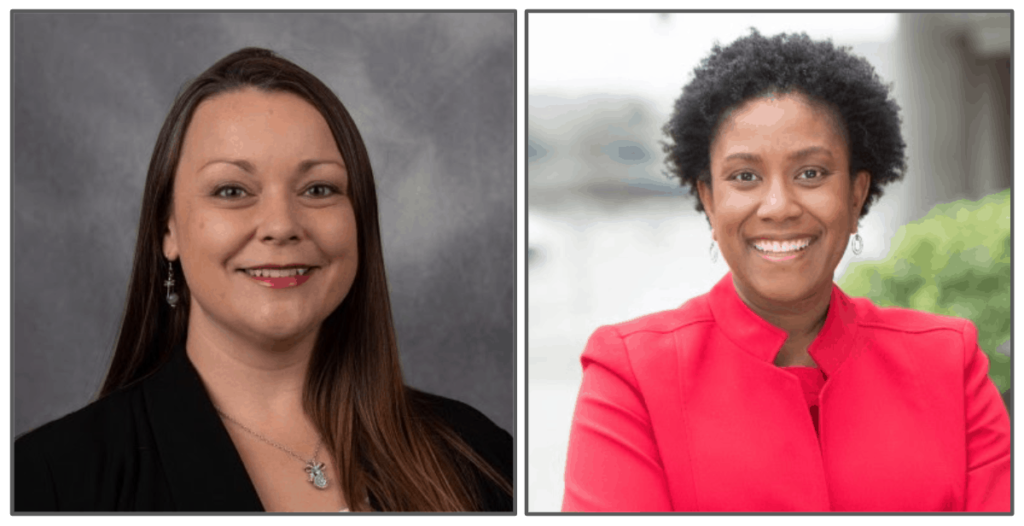
You are listening to the Getting Smart podcast, where we unpack what is new and innovative in education. I’m your host, Jessica, and today we’re bringing you an interesting episode on educating on climate change with Nicole Berg and Kimberly Howard. Nicole Berg is the programs manager for climate change and climate justice at Portland Public
Schools, where she leads efforts to support the school board’s groundbreaking climate literacy resolution. For today’s episode, Berg is joined in this interview by Kimberly Howard, the Project Zero Program Manager at Portland General Electric, who’s also the sponsor for the development of a climate change curriculum.
Let’s listen in as they talk to Tom about educating for climate change. Nicole Berg, welcome to the Getting Smart podcast. Thank you. Nicole, you’re from Portland Public Schools, right? I am.
Yes, I’m new to Portland Public Schools. You have this amazing title. You’re in charge of programs around climate change, but also climate justice. I love your title and your role. Does anyone else in the country have that title?
That’s my knowledge. I would recommend a shorter one, if possible, but I’ve met a lot of sustainability coordinators and other people working in the operations side. Very few people working in the curriculum side. Well, I love your title and role, and we’re going to dive into that.
Joining you today is Kimberly Howard. Hi, Kimberly. Hi, Tom. And you’re with the local power company, right? Portland General Electric.
That is correct. Yes. Well, it’s awesome to have both of you guys on the podcast. Nicole, let’s just start with your background. You have a great background as a bilingual educator.
Maybe you could tell us how does a bilingual educator come to care about climate change and move into a role that helps you expand climate justice? Yeah. Originally, I wanted to go into the field of law and do international law. So Spanish is a passion for me.
My family, my great grandparents immigrated here from Mexico. And I had a lot of time growing up with them as a kid and shared a lot of stories about their immigration stories and learning about what life has been like for them coming to the United States and developed a passion for wanting to work with Spanish-speaking people as well as specifically with Mexico in and around immigration and justice topics.
And so I had originally wanted to go work in the consular office in Mexico City. Life happened and I ended up moving into the field of education for the same reasons to work for justice for underserved students and populations. So I started out as a bilingual paraprofessional and worked my way through the system, went back to school, got teaching licenses, went back to school, got administrative licenses
and came to this work largely because of when you’re a bilingual educator, it’s a historically marginalized program because it serves historically marginalized students. And so you often have to spend a lot of your own energy or free time looking for and developing your own curriculum. And I would apply for these travel grants through the National Endowment for the Humanities
or the Fund for Teachers. And most recently was as a Grosvenor teacher, FALO, and I would explore the world and come back and write bilingual curriculum for my students and kind of take them on virtual field trips around the world so that they could see a bigger world than just our own location.
And the National Geographic Grosvenor Teacher Fellowship sent me to Antarctica where I studied climate change, climate science on the continent really from experts in the field on the ship. So I came home trying to figure out how to, yeah, I wanted to make that huge concept real for kids. And so I’ve been doing that ever since. So as part of the Grosvenor Teacher Fellowship, we went to Antarctica and studied climate
change and the implications of the human environment interactions, topics such as overfishing of krill or the impact of the changing climate on penguin populations and how scientists are able to use Antarctica as a place to understand the greater global concerns that we all have around climate change. And so I came back to my teaching classroom and have been doing that kind of work ever
since trying to get students connected to this very remote and foreign place that matters very much to the rest of the world. Well, it turns out to be a great background for somebody fighting for climate justice. It’s interesting, Nicole, that the pandemic that we’re going through like climate change is really impacting historically marginalized populations in a similar way.
So I appreciate your heart for underserved communities. Thank you. Yes, it is very devastating as we look at the statistics and the impact it’s having on even our families locally as well. Nicole, what’s the background on the Portland Board of Education Resolution 5272? That was kind of a groundbreaking 2016 policy that addressed climate change. Where did that
come from and what did it say? Yeah, in 2016, members of the Climate Justice Committee in Portland Public Schools is a group of teachers and students and community members and just other strategic partners came together and said, let’s take a look at this. This is the biggest issue that’s impacting our children today and absolutely will be
impacting their future. Why aren’t they learning enough about it? Or why aren’t they learning about it at all? And so part of the resolution the students brought to the school board to say, we want to learn more about this. Our textbooks that we’re using in our classrooms are not providing us with accurate information.
In fact, a lot of misinformation or denial of the situation. And we want to be able to engage in this topic. We want to be leaders. This is our generation’s issue. And so the students rallied the school board. The school board did commit to some resources and the beginning of a revision of curriculum in the district, which began both at central office and in classrooms. So there was the Climate Justice Committee
had been holding a lot of different workshops for teachers to help them redo their curriculum or implement new curriculum. And at the central office, there were efforts to do a system-wide shift in the science curriculum to include very specific climate science as aligned to next generation science standards. And three years later, just in 20 years. I think that was the first policy of its sort in the country. Is that right?
Yeah, it was a resolution. So I think the next step would be to make more policy around it. But it was groundbreaking in that it had been the first resolution of its kind in the U.S. to our knowledge. And then in 2019, students went back to the school board and said, it’s been three years. We are not seeing systematic change. We want to be empowered as youth leaders. And we want a youth advisory. We want some opportunities for our civic engagement. We
want to make sure that every kid, regardless of the teacher that they have or the school that they’re in, every student in Portland Public Schools, be taught not only about the climate science side of it, but also now what can we do? What can we do to be change makers in our world and be really proactive contributors to solutions in our community and beyond? And so the school board said, we agree with you and they allocated the position that I hold now
to coordinate that effort to do K-12 curriculum development work, to facilitate that and collaborate with various members of our community to make that happen, as well as support the development and sustainability of a climate justice youth advisory and help that youth advisory and other pieces of our system kind of work together so that we as an education organization also practice what we preach and we work also on becoming more sustainable
as a district and so that impacts facilities and assets management as well. Nicole, I love that story of the 2019 protest. I think it was at Franklin High School students or did they just read it in the Franklin High School newsletter? It may have been, it was a group of students all over. I definitely know Franklin students have been involved, Roosevelt students and Lincoln students. They’re students at Grant
that are very involved, Cleveland, Madison. Actually, I’ve been meeting with several students across the district and they’re all very excited about this work. Yeah, it’s exciting to see student leadership on this topic. Kimberly, why does Portland General Electric care about climate change? So we’re interested in a clean energy future for all of our community. In 2019, we started
work on trying to accelerate a transition to clean energy, which included modernizing the grid and included really working and focusing on transportation electrification. We have 25% of our customers are buying 100% green energy. We have our local city, our city, leaders asking for 100% green energy in the municipalities that we serve. And we have, we started work, we broke ground on the first of its kind, wheat, ridge, renewable energy
facility, which is a combination of solar, wind and battery storage, which provides the kind of load that you can’t actually have with one by themselves if you know renewable energy. It’s really PGE’s commitment to be responsive and to partner with our community, knowing that the climate emergency that we’re in is a big one and knowing how much we, as human beings, rely on power for our lives. And if we’re going to rely on power and we’re
going to increase that reliance on power, then it needs to be affordable, reliable, and it needs to be clean. So we have, have several components, right, of this clean energy future and also a long history of being part of our community in terms of education. So we’ve long given scholarships to college students. We’ve long engaged our PGE foundation and supporting education nonprofits and in our K-12 space as well as our community colleges
and our four year post-secondary universities and colleges. So when we announced this partnership with Portland Public Schools, it was not out of the blue. It was really PGE looking at our purpose as an energy partner in the community and seeing an opportunity to help the students who were calling for this information to elevate their voice in the conversation and to empower the next generation to create cleaner, greener, more equitable communities. We launched this
exciting partnership with PPS as part of a multi-pronged multi-year initiative that we’re calling PGE Project Zero. And the PPS or excuse me, the Portland Public Schools partnership is at the center of it. So really giving the young people the information that they need, that they’re calling for, the, the, giving them the mic, if you will, so that they are the, at the head of the work for them, right, with them being at the center of it.
So that’s why PGE wanted to, Portland General Electric wanted to partner in this way. We’re super excited to be part of it. It’s great to see that kind of leadership from the local power company. Kimberly, just a question about you. You’re an experienced actor. I’m curious how you came to lead the corporate social responsibility initiative like this.
That is a great question, Tom. Thank you for asking it. I, my work as a performing artist has always been centered in community engagement. When I was in graduate school at Columbia University, I studied the kind of theater creation that was informed by theater greats like Peter Brooke and Jerry Grotowski in England and in Poland. They were making work that was at that time in the early seventies. They called it avant garde or experimental,
but it was really the theater as a way to highlight a social issue that was impacting all of us as human beings to shine, put a mirror on it and then turn it inside out so that it would generate dialogue and they’re from dialogue, generate action. And so that, since that is my theater training and how I grew up in the theater that works continued when I, after graduate school and in the Portland Metro region where I kind of, I guess, cut
my teeth as a performing artist, if you will. And I worked with a lot of theater companies in Portland and then became part of Sojourn Theater, which is now a test wing of the center for performance and civic practice. So it is, it is in my blood to do the kind of community engagement work that corporations like Portland General Electric do as part of corporate social responsibility. It is in my DNA and also in my training to be strategic about that, to
connect the dots and to seek out partners to do that work, to know that we have a resource that we bring as the energy partner and that there are others in the community that have their own resources and to be a thought partner at the table. And so I became an actor because I was passionate about telling and exposing and sharing the human experience. And then as life happened, I, after a decade of having three jobs, because if you’re a performer,
especially in an area like Portland where my performing arts career was not paying the bills entirely, I had three different jobs, including being a teaching artist in the schools and also having my full-time job at that time as the director of catering for a local restaurant. And at night, going into rehearsal to create theater that I had already described as being, having a social focus and then community engagement focus, I got tired. So I got to the end of
my 30s and I thought, I can’t do three jobs anymore. And my first opportunity to work in advocacy and philanthropy came through the state of Oregon, a unique tax credit called the Oregon Cultural Trust, you may be familiar with that. So I became an arts advocate and a grantmaker through the Oregon Cultural Trust. And then when Portland General Electric said that they were hiring a community engagement strategist, I signed up or I put my hat in
the ring. And because I had the connections with the nonprofit community, and I had this background of having worked in all three sectors, the private sector, the community-based or nonprofit sector, and in the public sector working for the state of Oregon, they felt like I was a good fit for this work. And here we are. That’s really exciting. Since both of you have such interesting backgrounds, I have a surprise
for you. We’re going to do a little instant poetry. Bill Stafford was the poet laureate of the state of Oregon. He died a few years ago. He has this poem called The Way It Is. And it says there’s a thread you follow. It goes along, it goes among things that change, but it doesn’t change. People wonder about what you’re pursuing. You have to explain about the thread, but it’s hard for others to see. While you hold it, you can’t get
lost. Tragedies happen, people get hurt or die, you suffer and you get old. Nothing you do can stop time’s unfolding. You don’t ever let go of the thread. I thought of Stafford one because he’s Oregon’s greatest poet, but the idea of a thread that runs through both of your backgrounds that in interesting ways has brought you together around this really exciting initiative. And so Kimberly, sometimes the arts are the best way to make the case,
absolutely, Tom, that you couldn’t, I couldn’t upset it better. Thank you for sharing that. And William Stafford is one of my favorite poets, so I’m doubly inspired now. Have you read the book that is Sunday, Kim? I’ve read parts of it. Yeah, he wrote a memoir kind of of his dad and it’s beautiful includes a lot of Bill’s best work. So we’ll add that to the show notes for everybody. Thank you, Tom. Nicole, this is the skeptical question you
probably get from the TV folks that follow you, but is it at all weird for you to have any concerns or limitations that come with having a public energy company sponsor your climate curriculum? Yes, there is some skepticism. And I think that that comes from just people not being in the room together. A lot of fear comes from not being in a relationship with one another. And often, our paths don’t necessarily cross as, you know, energy people or as educators
or as activists. And sometimes it feels like we could be very diametrically opposed. And there are long histories of injustices that are perpetuated both in education and in the energy field. Those are just very clear issues. I think that through my relationship that Kimberly and I built together through our relationship, I think from my perspective, Kimberly is a wonderful human being. She’s a wonderful human being to work with, very
talented and also genuinely concerned about contributing to solutions and not perpetuating problems. And in our conversations together, it’s been very evident that her vision and PGEs vision is to be a support and to help enhance curriculum development efforts and youth leadership and not just to plant or to create. They’re not coming in with the agenda of their creating the curriculum. We’re working together. They know the field of energy.
They have experts in the field. They have scientists. They have biologists. They have people that work in just all different areas of energy. And that’s the kind of knowledge that I know as an educator I don’t have. So I have strategic skill sets around developing curriculum, offering students engaging learning opportunities, working with educators, leading different kinds of professional learning. But that’s a different skill set than an actual practical application
of someone working in the field of energy. And so I feel like our partnership is very symbiotic. We can offer students connections to real people doing real things in the real world, as well as the real people doing real things in the real world, learning from our students as the next generation, as their leadership is unfolding, learning from them about things that could help improve their work as well. And vice versa. So there has been a little
bit of just hesitation, but I truly feel confident that this partnership is positive and that we are going to together do things that I know as an educator I’ve never seen done before. And so I’m really excited about that. That’s great. The partnership reminds me a little of one of our favorite schools is Energy Institute High in Houston. And they partner with a lot of the energy companies there, but
they’re really clear that occasionally there’s going to be disagreements about particular topics. But it’s a very productive relationship with industry. So this feels like a great relationship. I appreciate the partnership spirit that the PG is brought to the table. I’ll have Kimberly tell us more about that. But before we do that, Nicole, just tell us a little bit about how you’re developing the curriculum.
For we do have a plan for K12 Scope and Sequence that has at least one unit at each grade level in science and in social studies that addresses the climate change and climate justice sides of all of this issue. As we shift to distance learning, as we kind of navigate new waters, and as our district is also shifting through our visioning process, we are trying to move more towards integrated transdisciplinary curriculum through through one of our vision
components of transformative and transformative curriculum that promotes students to become global leaders and innovators. So I think that the one unit at each grade level is more like one whole unit that can show connections between science and in social studies. The most innovative and the most immediate piece of the curriculum development that’s happening is coming up this summer. And we are doing the first of its kind really an integrated interdisciplinary high school
elective course that is going to be developed by teams of educators and students in collaboration with each other from different high schools in Portland public schools. That’s great. And so I’m very excited about that process. By the way, Nicole, I’m working on with AI for key 12 curriculum units on what kids should know about artificial intelligence. So maybe that can be your next initiative. I think it fits it fits together quite well in terms of being a blend of science and
social studies and really looking at social impacts. And as we talked about at the beginning, particularly in in underserved communities. Kimberly, how are PGE employees going to be involved? We’re super excited to be in partnership with Portland Public Schools on this and I already have started to compile what I’m internally calling our climate crew. And they are made up of we
like to say we like to call ourselves subject matter experts. But I do like how one of the Portland Public Schools specialists noted that we are coming to the table as thought partners. So our thought partners include members of our decarbonization team. They include members of our environmental services department, and which some of the biologists and scientists that Nicole has already referenced. We have a team of data analytics professionals, which is a new emerging field. And as
you talk about measuring climate measuring weather patterns, measuring sort of human connection to natural resource and the impacts, there’s a lot of data involved. And so we’re excited to bring data analytics to the table. I love that. Nicole, there’s your there’s your link to the AI curriculum, right? I told you, Kimberly, I have a I have a I have a master’s in energy finance. I’m geeking out over all
the data behind this. I think that sounds like a terrific set of experts. And they can not only be helpful in helping put this curriculum together, but serve as great curriculum resources and mentors for students, right? Absolutely. Let me give you a really specific example. We tested this, we prototyped an involvement or a partnership with a local high school, their their freshman physics class. So every freshman in this
high school take physics. And there were just over 300 of them. And last spring, we alighted upon them in a general assembly for all 300 freshmen. We talked about our clean energy future, we talked about decarbonization and transportation electrification and the reasons why that was important to the to the addressing the climate emergency. And one of the ways it addresses the climate emergency. And then we worked with the students who were creating an integrated, well, they called it a 50 year energy
plan, which if you since you are a former energy finance person know it’s part of every energy companies portfolio to every couple of years do an integrated resource plan, which really looks at the combination of energy sources that you are using to generate power. And for these students, the culminating assignment was a grid that had been created by another sort of curriculum specialist. And on this grid, there were a series of emojis. So if they had enough balance of solar and wind, then
they had some smiley face emojis. If they had too much natural gas in the mix, then they the emoji had like a straight line face. It wasn’t bad. It wasn’t good. Hydro was good, but there was still but it’s not technically a clean energy source. But it is, you know, cleaner, it definitely has a decarbonization aspects. Now I’m geeking out on the elements. But anyways, they did this, we after we came back to their classroom after introducing, you know, a clean energy future and the look at
what that looks like, and then set down with them the way that we in, you know, an industry do all the time when we sit down and think tanks, right? Or in even in our teams to do some problem solving. And each of the students got to share some of the challenges they were having with their 50 year energy plan, some of the things they discovered that were exciting. And it was a member of our team that helped facilitate that the way that they might that a manager or a team leader might do, again,
when a team is solving a problem. So it was a real world activity that was connected to their physics assignment to create a 50 year energy plan as part of their energy unit. And it’s that those kinds of solutions that we hope to bring to the table, as the standards get rolled out, and then those essential questions get asked, and then PGE can be a thought partner in. So how do we take that off of the page or out of the standards and out of the curriculum and put it into a real world
application? That’s a great example. Kimberly, I’d love a sense from you of what what does success look like? If this went really well, if things weren’t really well, we would see this curriculum as we are as one of our goals, we’d see it online and available as an open source. And first, first success would be seen it move beyond Portland Public Schools District within the state of Oregon. So for
Portland General Electric, we would like to see it in for all of our cussed for all the school districts that we serve. And then we’d also like to see it where we have assets, so in a plant assets in Central Oregon and in Eastern Oregon, when then we would love to see schools all over the country be able to use this curriculum to keep this the conversation going and again to empower the young people to feel that they have not just a voice, but that the conversation is centered around
them and their future and what they see as their future. So success looks like the curriculum being finished, it being available K through 12, right, kindergarten through 12th grade. An offshoot of that would be how is it fully integrated? Nicholas talked about the social studies and science, but more and more, especially in business and industry, when we’re thinking about what kind of future workers do we want, what kind of future co workers do we want? We know we want people that are good
problem solvers, we want people that are that can persevere and have grit and tenacity. We want people that are innovative and creative. And linking thinking about the climate justice climate action as Portland Public School is doing as a holistic conversation, there is the science, there is the people part of it. There is the history, there is the, how do you articulate or communicate about it? So there is the language arts aspect of it. And there is the arts, right, there’s the
creative expression, whether it is students actually building a model of what weather patterns look like and actually using clay or paint or metal, right, to do or any other kind of medium that you can possibly think of, making a video or making a song. So there’s all these ways in which it is fully integrated, that there it is across all disciplines, because the conversation is bigger than us as human beings. So the other side of success would be to truly see the outputs and
the outcomes be that fully integrated, not just understanding, but also articulation of understanding through the ways in which the students deliver their final projects, deliver their essential enduring, how is it, what is it called, enduring learnings? Essential questions that drive the enduring understanding. Enduring understanding, and how the students really come to show and demonstrate the enduring understandings from the lessons. Hey, this is,
it’s such a cool initiative. Nicole, anything that you want to add in terms of what success will look like for you? Three years from now, if this works really well, what happens? Success to me is students engaged in this learning, students loving what they’re doing, students engaged in civic life, participating in ways that they hadn’t participated before. And just to see that happen across our school district, and to see teachers enjoying the teaching, just joyful learning,
that’s what success looks like to me. I love that picture. Love the idea of project based learning. Love the vision of the high school class that could be co-constructed. I’m going to appoint myself to your informal advisory board and stay in touch with what you guys are working on. This is really great. I hope schools around the country take advantage of it. Please do.
Tom, please join us. You’d be a great thought partner. Nicole Berg from Portland Public Schools and Kimberly Howard from Portland General Electric has been terrific to have you guys on the Getting Smart podcast. Thank you so much for inviting us. Thank you. It’s been a pleasure.
A big thanks to Nicole Berg and Kimberly Howard for joining us on this week’s episode. We appreciate their partnership and climate change curriculum that will result as well as the way it will benefit learners in Portland and beyond. And thank you listeners for tuning in to this week’s episode. Before you go, make sure you hit subscribe so you don’t miss out on any future content and leave us a rating while you’re at it.
Okay, that’s it for this week. We’ll see you next Wednesday for our latest episode. For the Getting Smart podcast, this is Jessica signing off.

0 Comments
Leave a Comment
Your email address will not be published. All fields are required.