

Mason Pashia and Tom Vander Ark on Navigating Paradox
Key Points
-
Leaders must navigate paradoxes like security vs community connection and scarcity vs abundance to create thriving educational ecosystems.
-
Generative AI offers incredible potential but also challenges, requiring intentionality in curation, creativity, and judgment in its use.
Shownotes





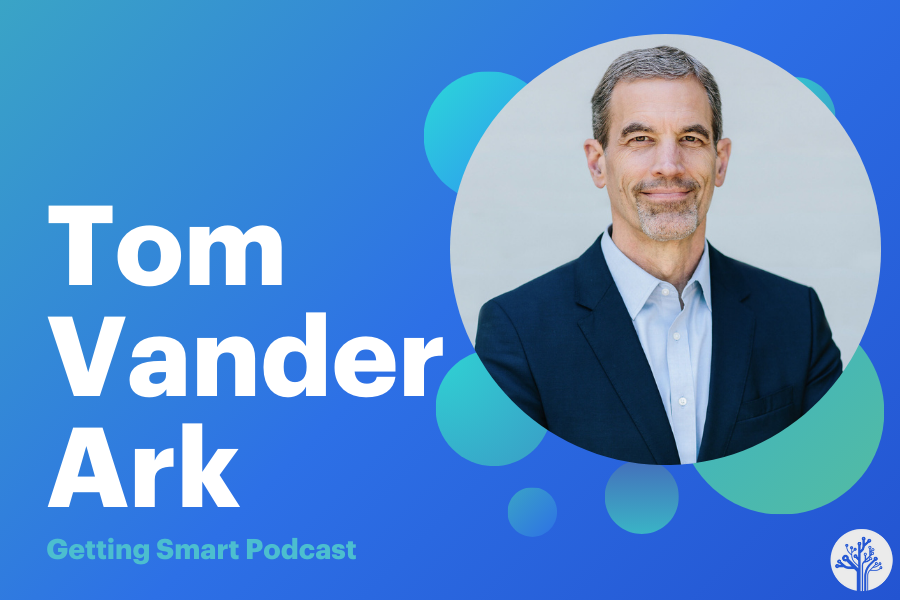
In this episode of the Getting Smart Podcast, hosts Mason Pashia and Tom Vander Ark explore the paradoxes defining education and technology in 2025. From the rise of generative AI—simultaneously empowering creativity and centralizing power—to the tension between secure schools and porous, community-connected learning environments, they unpack the complexities leaders face in an ever-evolving landscape. The conversation also delves into scarcity vs abundance mindsets, prescribed vs personalized learning pathways, and the critical role of intentionality and values in navigating uncertain times. Tune in to discover how embracing paradoxes can lead to more thoughtful, innovative leadership in education.
Outline
- (00:00) Introduction: The Year of Paradox
- (05:23) Secure vs Porous: Safety and Community
- (10:16) Scarcity vs Abundance: Mindset and Resources
- (19:24) Pathways: Prescribed vs Personalized Learning
- (29:47) Creativity and AI: Expression vs Slop
Introduction: The Year of Paradox
Mason Pashia: You are listening to the Getting Smart podcast. I’m Mason Pashia, and today I am joined by the one and only Tom Vander Ark. Tom, thanks for joining me.
Tom Vander Ark: Good to be with you, Mason. Looking forward to diving into this idea of paradox. It seems to have surfaced in some unexpected ways this year.
Mason Pashia: Absolutely. This idea kind of came to me the other day when I was working on a trends blog. I was trying to identify the trends I noticed this year, and for every trend I could come up with, I found one that was pretty much equal and opposite—moving in the exact opposite direction with the same level of velocity.
That put me in this kind of weird spot of wondering, are these all paradoxes? Are they pulling so much in opposite directions that it’s creating this never-ending spiral? And I think, given the questions we’re always asking at Getting Smart, it’s like, how do you advise a leader to move forward in a swirl, right? Like, those trends are sort of directionally in opposition to each other.
Tom Vander Ark: You know, that reminds me, Mason, that I have used the word “paradox” probably more in 2025 than in any prior year, and it was almost always in describing my views about the rise of generative AI.
Mason Pashia: Hmm.
Tom Vander Ark: Because I am, at one time, like Reid Hoffman, excited about the possibilities—individually and collectively—and I am terrified of the threats, the catastrophic and existential threats.
That has led me to experience paradox personally most days of 2025. On one hand, I am very excited about what this holds for us, for our kids, and for our future. On the other hand, I am terrified. So, I do think it’s my—well, I don’t know if it’s my word of the year, but it’s my feeling of the year. I appreciate you surfacing it.
Mason Pashia: Yeah, it’s been a wild year. I was emailing with our frequent columnist, David Ross, the other day, who’s been writing a bunch of really great AI content for us this year. We were talking about the idea of a paradox, and he said something similar to you about generative AI. But his perspective felt more like: you have independence, or you have total control and domination, and both of them can happen from the same tool. At a much lesser degree, you have creative expression more than ever before, and you also have this kind of homogenizing force where maybe everything’s just going to be the same that comes out of this thing.
So, there’s this really interesting pull of independence versus collective, positive versus negative, and it keeps twisting in my brain too.
Tom Vander Ark: And specific to learning, we are suddenly the 8 billion of us—amplified humans with a new set of superpowers, as Reid Hoffman would argue—a new sense of super agency. Simultaneously, that may lead to cognitive offloading and a general decline in intellect and curiosity. We’re not quite sure how this is going to play out. It’s strange that, on one hand, it empowers us in new intellectual and creative ways, and at the same time, it may erode, individually and collectively, our capabilities. So, another paradox.
The other one that I’ll jump to—it’ll come up a couple of different times as we talk about these—is that AI is extraordinarily democratizing in the sense that it’s this new capability that, much more quickly than anything else in history, has become widely available at a consumer level. At the same time, it seems, perhaps more than any other technology, to be centralizing in terms of access to compute and in terms of the way it seems to be aggregating capability, leading to aggregating wealth and income. So, it seems to be a great centralizing and aggregating technology while simultaneously creating these decentralized and empowering opportunities.
At its core, compared to Bitcoin and crypto—other, now secondary, tech trends, which are very much about decentralizing and empowering nodes rather than the core—AI, at its core, is highly centralizing. So, there’s nothing but paradox here.
Secure vs. Porous: Safety and Community
Tom Vander Ark: Talk about secure versus porous. That was an interesting observation that you made.
Mason Pashia: Yeah, yeah. So, I put together a short list of four of these, and then Tom and I have been riffing on it. Today, we’re going to try and unpack them. The first one was secure versus porous. I think this came to me because we were hearing a lot of stuff from, specifically, the workforce side and the learning sciences side. Basically, the community-connected classroom is more impactful, more high-powered, better for real-world learning, better for skill development, better for social capital development, etc.
Meanwhile, in the inverse, I’ve been trying to figure out a lot this year about the demand side for innovative learning models. Anytime I’m talking to parents or parent unions, the number one priority is safety and security. It’s not actually innovative learning experience (LX) options or these other things.
Those two seem like they’re moving in opposition because if you have a really secure building, it’s really hard to let the community in, and it’s kind of hard to let the students out. I was initially thinking about this through the lens of Jane Jacobs, the urbanist, who, when she was designing neighborhoods in New York, emphasized that the more eyes that can see the kid walking to and from school, the better. That’s all about this idea of opening up to the community, having this porous wall where people can look in and look out. That is security—just knowing and seeing each other. That’s really not the kind of environment we’ve built at all in terms of schools. So, that was that one for me. But what did it bring to mind for you?
Tom Vander Ark: I’m curious—having a famous education architect as a father—when he is dealing with communities, is safety and security now surfaced as a priority over openness and community connection? Does he experience that?
Mason Pashia: It depends on the community, but typically, yes. More so in terms of a bottleneck than a full perimeter. The way that people enter a building needs to be secure. So, there is still this squeezing. For example, when he did some work in the Virgin Islands, and it was a very place-based school, those buildings didn’t even have walls. They were like treehouses, basically, for everyone. That was some combination of trust in the community, the size of the community, and environmental factors. But it is always a top concern, especially in primarily urban settings.
Tom Vander Ark: Having recently toured a number of new facilities in my hometown, where I was a superintendent, these big open campuses with dozens of entrances have all been replaced by a two-story fortress model where there is one or two secured main entrances with a step of gating. This trend toward security is super evident to me locally.
Mason Pashia: Yeah.
Tom Vander Ark: But I am seeing, at least around the edges, some evidence of this porousness. I’ve seen it maybe most frequently this year through members of the CAPS Network. Our friends who started with the Blue Valley Center for Advanced Professional Studies now have about 200 sites around the country in that network. Many of those are community-connected sites. I was in Bentonville a couple of weeks ago visiting Ignite. Ignite is an example of a CAPS program with community-resident programs. They have a culinary program in a commercial kitchen. They have an aviation program at the airport. They have a nursing program connected to a hospital. It made me smile because I imagined this sort of set of facilities and programs 30 years ago as a superintendent.
We are starting to see, at least in the upper division of high school, more community connections where programs are out resident in the community. Or, I think what we made a lot of progress on in 2024 and 2025 was internships—students leaving campus to spend time in a business setting. The rise of apprenticeships, particularly in postsecondary, is more evidence of this. So, I think we’ll see more of this in 2026, but it feels like the move toward security is even stronger.
Mason Pashia: Yeah.
Scarcity vs. Abundance: Mindset and Resources
Mason Pashia: And I think it’s a roadblock too. Another one that we’ve been talking about a lot this year is this scarcity versus abundance paradox, which is, I think, probably where this kind of framing of “this versus this” came up first for me this year. I really think, in that model, there are so many systems, schools, and districts operating from a scarcity mindset this year—for a lot of good reasons. There’s been a lot of change in the air, and things have gotten harder.
But the abundance stuff that we’ve been writing about has really been about how else your building can serve your community. How else can you think about growing your user base if you start offering it to people who are outside of the K-12 system or outside of school hours? Or how can you expand that to private schools? To do that well, you have to have more permeable walls. You have to let people in. You have to let people out. That is really important. Nate McClennen on our team has been talking a lot about the idea of a learning ecosystem infrastructure and how we need a roadmap for how to do that. Without addressing whatever this safety and security concern is, I think it’s going to be really hard to move forward in that direction. But it needs to be community conversations and be designed with everyone.
Tom Vander Ark: This is another example of the scarcity-abundance paradox where there are trends hurtling in opposite directions. In public education, we have inherited a scarcity mindset, and that’s been reinforced by the way we fund schools, by our public policy, and by collective bargaining, which sets up a zero-sum mentality to education leadership. So, I think the whole idea of abundance is very difficult for school administrators. I’d love for you to say more about what this idea of an abundance mindset means for individuals and communities in embracing that.
Mason Pashia: I mean, I think it fundamentally has to do with taking a look at the new tools that have made this possible. Now we have AI, and we know learning happens everywhere, all the time. And now we have AI, and those two things together kind of mean that we’re in an abundant world, and we just have to figure out how to capture and count it, which we’ve been thinking a lot about this year.
So, the infrastructure of abundance is something that is in process. It has not been adopted in many places, but it’s incredibly possible. I think it’s worth flagging that if you are operating from a scarcity mindset at the leadership level, the way that trickles down to your students is that suddenly there’s a scarcity of opportunities for them in the world as well. We’ve seen this through college applications and so many different places. When really, again, if you have a generative AI agent or something in your pocket, you can do kind of anything with an entrepreneurial mindset or the right amount of agency.
Tom Vander Ark: Let me talk about this compounding trend of opening versus closing schools or shrinking and consolidating versus growing and expanding options. I think the majority of public school administrators are dealing with declining enrollment. That’s a demographic trend and a competition trend. As a result, I think the majority of school district leaders are shrinking, or they’re leading shrinking systems. Public school systems are terrible at shrinking. This is another structural problem that we inherited where our cost basis—even variable costs like labor—becomes semi-fixed because they drop into policy and contracts. Suddenly, 90% of your budget feels like a fixed cost.
Mason Pashia: Interesting.
Tom Vander Ark: You can deal with that if you keep growing every year. But when you start shrinking as a district, it’s very difficult to shrink at an appropriate rate—both labor and facilities infrastructure. I think that has exacerbated this scarcity mindset. At a time when you and I would argue for the abundance mindset—of creating new options around new possibilities—it makes me think of our friend George Philhower, who’s a school district superintendent east of Indianapolis. He is simultaneously starting new microschools, first in his district and next, we think, around the state, maybe even around the country. Because he has this abundance mindset. I’ll admit that he’s on a base that is at least stable because he has led with an abundance mindset. But I think he’s the picture of a public administrator with an abundance mindset who is expanding opportunities in his community and beyond.
Mason Pashia: I think that’s a great example. I mean, we’re seeing a version of this in Florida too, where the Florida Virtual School and a couple of other public schools have opened up their public systems so that microschools and private schools can actually pay to take classes there. They can pay for assets, whether that be a theater program, something in the athletics department, or some of these other more pathway-specific programs. Suddenly, if your student body is shrinking and your schools are consolidating, and meanwhile, you have this kind of decentralized spread of microschools or other networks, it becomes a really useful way to continue to grow the people you’re touching and reaching with your school.
Tom Vander Ark: This is also related to a couple of other paradoxes that really felt like they surfaced this year. One is just the mission of education: is it a public good or a private good? It feels like the 20-odd states that have expanded education savings account funding are really treating education like a private good—valuing private goals over collective goals, valuing private learning over collective and social learning.
Mason Pashia: Hmm.
Tom Vander Ark: What’s your take on this sort of redefinition from public to private? Do you see a trend in the opposite direction with a reinvigoration of education for the public good—for civic participation?
Mason Pashia: I mean, I think there are versions of this, but it tends to be kind of out of system for now. I talk with the Learning Economy Foundation guys a lot, and they’re very interested in having LearnCard be fundamentally a public good. That means you’re learning everywhere, all the time, documenting that learning, and it counts. I do think there’s this kind of interesting, decentralized public good that’s happening—almost more akin to an open-source movement or something like that—where you have these repositories of learning that exist a little bit outside of the system.
But it does seem like, in any instance in which you’ve got this kind of top-down money flow, which has been really constrained in the last year, that’s all kind of moving from public to private in that direction. There are people who are excited about the public options, and I think there are some really interesting models. Hopefully, what happens with this is the public models become a little bit more innovative and are able to lean in. But it’s going to be tough. It’s a fundamental redefinition of what’s working.
Shorts Content
Pathways: Prescribed vs. Personalized Learning
Tom Vander Ark: On pathways, I felt a lot of tension this year between the value of prescribed pathways that are really sequential, often accelerated pathways linked to opportunity, and—you know, I’m excited about CTE and these accelerated schools that value work-based learning. They started in technology, and then a number of communities added health. A few have added business and entrepreneurship. It’s kind of an accelerated path to a decent job, and there’s a bunch of benefit to that.
But the downside is there’s not much learner flexibility in those pathways. With the dynamic job market, a lot of people on a computer science pathway have found out that coding may not be the job skill of the future. Simultaneously, on the other hand, we value unbundled and personalized pathways where learners have a lot of agency over learning experience choice and course choice. We’ve highlighted a lot of leaders in that space. How are you thinking about those two polar opposites of a really prescribed pathway and a more unbundled, personalized pathway?
Mason Pashia: Yeah, I mean, I think the places where we’ve seen the more accelerated pathway to a prescribed career be the most successful are probably where they stay in conversation locally with demand from the local workforce. We’ve seen a lot of success with places like GPS Ed or these intermediaries that are working in manufacturing or other industries.
Tom Vander Ark: I would add the Bloomberg grants last year—well, they ended in 2024—but many of those grants went to a health provider that was deeply invested in the success of high school students. So, to your point, maybe these prescribed pathways are most valuable when they’re locally developed and supported.
Mason Pashia: Yeah, we heard from a great example of one of those partnerships up in Boston when we were there. That was super impressive. But I think this paradox is also suggesting some stuff we’ve seen coming from a couple of different frameworks, right? Like the durable skills movement continues to matter. If you’re doing a prescribed pathway, there should still be a way to build durable skills and have those be articulable so that you can transfer them if you have to. You have to keep them somewhat flexible.
At the same time, the stuff we’ve seen from the Advanced CTE folks and their framework—they have their different career sector clusters, but they say that entrepreneurship and leadership, sales and marketing, and digital technology need to be a part of every other career. If you’re making sure that everybody in the health sector is also learning entrepreneurial mindset, digital technology, and marketing and storytelling, I think that actually sets them up for success in a lot of adjacent fields. But it does matter how much you are including in this prescribed pathway. It can’t just be focused on this one prize in case the student does choose to change their mind.
One thing that you and I talk a lot about is that all along the way, the learner needs to be learning how they learn, right? You have to show them how to get off the pathway and onto another one if that’s what they choose, because odds are pretty slim that they’ll find such a prescribed pathway again in whatever they choose to do next.
Tom Vander Ark: On this unbundled front, we appreciate what’s happening around the CAPS Network. There are lots of really powerful experiences there. We’ve highlighted VLACS in New Hampshire. We appreciate the way they help learners craft powerful experiences.
Mason Pashia: Yeah.
Tom Vander Ark: Mason, this reminds me—I’ve really developed a lot of conviction about the value of powerful experiences.
Mason Pashia: Hmm.
Tom Vander Ark: Whether or not they fit into a particular pathway, powerful experiences are really about stepping into value creation.
Mason Pashia: Yeah.
Tom Vander Ark: That means giving the learner the opportunity to do some of the problem finding, opportunity recognition, problem solving, solution design, and then delivering value to a client or a community. Those experiences are super valuable because they create and demonstrate important skills. I guess you and I really became convicted this year that capturing the data about those experiences and allowing learners to describe their value sprints might be the new gold in talent development and career development.
I’m pleased to see this happening more frequently around the edges, at least in junior and senior year of high school and in a few more college campuses, where they’re shifting from this idea of AI literacy to AI capability—demonstrated expertise and experience in using smart tools on smart, diverse teams to deliver value to a customer.
Mason Pashia: I totally agree. We’ve been doing some work with Education Design Lab on some of this as part of an ASA project on credentialing that we’re working on. Really, the core components of these powerful learning experiences—we’ve kind of distilled them down to how complex the experience was, how much autonomy the learner had in the experience, and how much contribution there was. Basically, how involved were they actually in the project? Along a spectrum, you can start to get a pretty good idea of how high-quality the experience was or how powerful it might have been.
If you prime them with the right questions, they start to actually see the moments of growth in the experience. Otherwise, a lot of the time, it’s hard to recognize when you grew in a learning experience. My easiest example of this is that I think everyone’s been in a job interview where somebody asks, “Tell me about a time where you collaborated with someone, and it was hard, and you overcame adversity.” If you ask seventh graders that after a project, they’ll start to look for that in every project after that. They’ll be like, “Oh, this is a moment of collaboration. I’ve clocked that.” What that does is, in job interviews later or in just the articulation of skills, they have way more confidence, which, again, is what we see come out of the CAPS Network every year. That is their core metric—how confident are the learners now that they have left CAPS? I think that’s really powerful.
Tom Vander Ark: You know, for 10 years, people in Vermont have been talking about transferable skills, and for the last five years, our friends at America Succeeds have been talking about durable skills. I think what we’re talking about are transferable experiences and durable experiences—these rich experiences that develop multiple skills on a personal and accelerated pathway. We think they’re super valuable. You’ve been describing them as verified experiences and thinking hard about how to capture information about those so that those experiences become part of the new currency that augments courses and grades. Maybe, at some point, credentials and verified experiences become the new currency in human development.
Mason Pashia: Totally.
Tom Vander Ark: This reminds me of another paradox—the mission of education. Is it about employment or citizenship? We’ve seen, in the last 72 months, a historic collapse of confidence in college. It’s been cut in half, and suddenly, American aspirations for college degrees, particularly four-year degrees, are a fraction of what they were just in 2020. That seems to have been replaced by high demand for education for employment.
Mason Pashia: Hmm.
Tom Vander Ark: And sort of a rise of CTE. But around the edges, it feels like we’re seeing some resurgence. I think there are a couple of vectors. One is around citizenship and civic participation. You’ve written about that with our friend Fernando Raine and Nate McClennen.
Another vector that Michael Fullan has been leading for 30 years is just around deeper learning, including but not limited to citizenship. It feels like the citizenship and deeper learning vector had a resurgence in 2025, with some people arguing that the human skills behind that are the most valuable, durable, and transferable in the future.
Mason Pashia: I buy that. I think that’s important. I think that gets at a lot of the transferable, durable skills we’ve been talking about already, but it’s also catalyzed by our current socio-political moment, where there’s a lot of unrest and polarization. I think those are incredibly important. One thing I know you and I are both super passionate about is that it connects learners to what matters to them and what matters to their community in a way that just a workforce pathway doesn’t necessarily. If you’re just optimizing for where you can make money, that is absolutely a part of thriving in some capacity—stability and owning a home, for example, have ridiculous outsized impacts on how happy you are as a person. And yet, you have to find something that contributes positively to your community and that really lights the fire, which we’ve heard from so many learners on the podcast this year. That’s been really wonderful.
Creativity and AI: Expression vs. Slop
Tom Vander Ark: Hey, I heard this morning that the word of the day—the word of the year—is “slop.” AI slop.
Mason Pashia: Yeah.
Tom Vander Ark: You and I talk a lot about creativity, creative pathways, and new ways that people are going to express creativity. Is there a paradox here of creativity and slop?
Mason Pashia: That’s a loaded question. I think this one really comes down to what you’re trying to get out of art. For me, it’s always been about relating to the human on the other side or relating to the human experience, and I find that really hard to do with generated art. The thing that’s challenging is that the entire ecosystem of entertainment has been so metrics-based for the last 20 years that we’ve actually been getting closer and closer to slop by humans. We’ve been making things that are kind of formulaic. We know a lot about when people stop paying attention and when they come back. Slop is the extension of that to the nth degree—it’s all based on what can keep someone paying attention for a second, even if there’s no there, there.
I think we’ll learn a lot about ourselves as content consumers in the next three years. People need to be aware of this, similar to a misinformation diet. I think people need to be aware of that with content too. It’s dangerous to just consume stuff that’s a little bit empty.
Tom Vander Ark: It is exciting to see millions of people being invited into creative expression—whether it’s text, audio, or, just recently, video. It feels like in 2026, we’ll see our first AI-produced, full-featured films. We’ll see hundreds of millions of video shorts.
Mason Pashia: Well, and apparently, I don’t know if you saw that announcement a couple of days ago, but OpenAI has licensed all of Disney’s IP now. So, you could make a Marvel movie legally, which is kind of baffling. That deal shocked me, but it’s very interesting.
Tom Vander Ark: I will argue with my grandkids that they had to make their own Disney movie rather than going back to Disneyland.
Mason Pashia: That’s great. Something I’m thinking about—just on the subject of individuality and collectivity—I was with a friend this weekend, and we were talking about the future of art. I asked if they thought that every movie should have a personalized ending. Like, if you were like, “Oh, I want to watch Indiana Jones, but I want a sad ending,” should that be possible? Or is there actually a dissolution of collectivity if we make all art fully individualized?
I’m thinking about if your grandkids make a song, if they make a Frozen 3 and they have a bunch of songs in it and no one else knows the songs, is that a satisfying experience? Can you go sing an “Oh, Let It Go”-like song and no one else knows what you’re doing and have that be enjoyable? That will be a really interesting part of this too—how many experiences are going to be so generative in the moment that no one else is having them? What is actually the webbing of culture that holds people together in a generative world?
Tom Vander Ark: This is such a fundamental question about what it means to be a human being. Is that an individual experience or a collective experience? I think this is a profound question. As you said, I think we’ll sort this out in the next few years and develop some “and both” answers to this.
I don’t think human beings will give up on collective experience. I predicted the death of movie theaters 20 years ago, and we’re still going to movie theaters because we value the collective experience. It’s not just the big screen; it’s the collective experience.
Mason Pashia: Mm-hmm.
Tom Vander Ark: Our friend Sangeet Paul Choudary noted on a recent podcast the rising importance of curation—curiosity on the front end and curation on the back end. To both of the conversations we just had—one about the rise of creative expression and then whether it’s collective or individual—it is clear that, starting now, curation is, and he would argue judgment follows right behind that, the new valued skill.
As AI does more and more of the front-end work—the creation—in every profession and walk of life, and probably in citizenship, we will step into this role of curation and judgment. Those are going to become much more important. I don’t think we’ve even started thinking about how to more fully cultivate that.
Mason Pashia: I think that’s a great point. I mean, I think we curate all the time. I think curation is something that is not new.
Tom Vander Ark: It is part of it, right?
Mason Pashia: Growing is curating. Your feed is curating. Choosing what to share is curating. I mean, Getting Smart fundamentally has been a curatorial act for its entire existence. You writing a blog saying, “These are the 10 schools that inspired me this year,” is curatorial.
I think, as humans, maybe generative AI might actually show us that, more than anything, we are just curating. Creation is something that we don’t do all that much. It’s really a lot of curating, which I don’t think is a bad thing. But that is the question of the next few years: we have almost infinite content, and now we really do have infinite content. How do you make that useful?
Tom Vander Ark: The word that comes to mind, Mason, is intentionality. As school teacher-leaders, school leaders, and system leaders are dealing with this rise of complexity and the rise of paradoxes coming with it, I think it’s a call to, in 2026, try to be even more intentional about what you do, what you say, how you spend your time, and how you engage your community. Do it in a more intentional way that acknowledges all these paradoxes that we’ve talked about, but try to do it with a sense of transparency, integrity, and collaboration. I think that’s the best that we can do.
Mason Pashia: And care. Just knowing that people are on the other side of this, but they’re also people. I think that’s really important to keep in the mix as you’re moving forward. If you’re trying to do something on one side of the spectrum and you’re feeling a lot of resistance, it’s going to be hard to move forward unless you address that. So, naming it and spending time with it, I think, is a worthy pursuit as we go into 2026.
Tom Vander Ark: Mason, I’ve said often in 2025 that I feel confused at a higher level. So, I think that’s the new sign of growth—that if you’re confused but with a more well-developed model, then maybe we’ve made progress. Maybe in the last 40 minutes, we’ve helped a few people become confused at a higher level and can step forward with a bit more intention into the new year.
Mason Pashia: Yeah, I love that. That would be a success. So, Tom, thanks for spending this time with me.
Tom Vander Ark: Until next time, keep learning, keep leading, and keep leading with intention. Thank you, Mason.
Mason Pashia: Thanks, Tom.
Links
Guest Bio
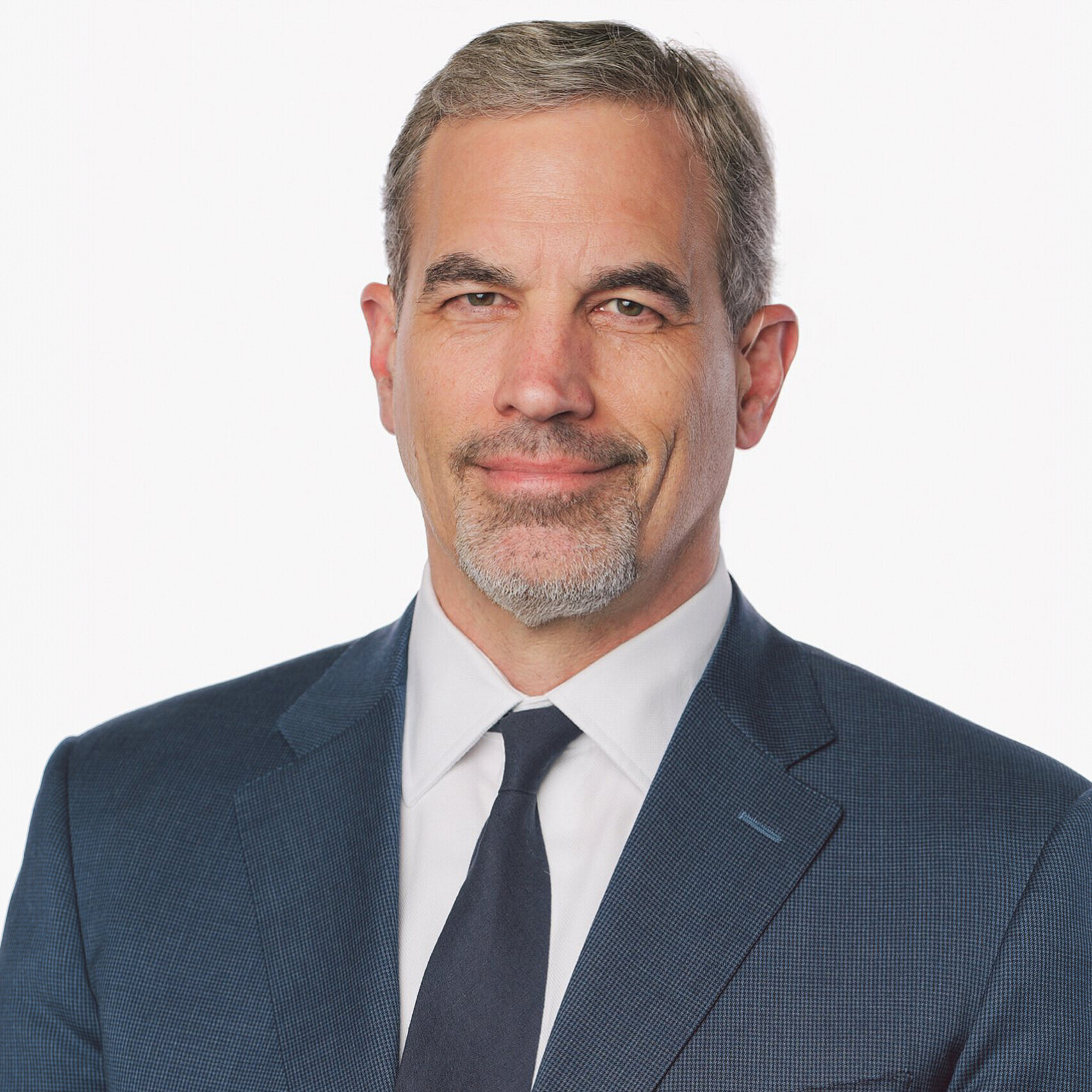
Tom Vander Ark



0 Comments
Leave a Comment
Your email address will not be published. All fields are required.