


Dr. Donna Housman on Mental Health and Wellbeing
- Housman Institute
- Housman Institute’s ECSEL Program
- “Teachers Are Anxious and Overwhelmed. They Need SEL Now More Than Ever.” (YCEI with CASEL) April 7th, 2020
- Yale Center for Emotional Intelligence (YCEI) Collaborative for Social Emotional and Academic Learning (CASEL)
- Getting Smart Podcast Ep. 202: “Jared Cooney Horvath on Cognitive Neuroscience”
- Getting Smart Podcast: Asaf Bitton and Beth Rabbitt on the State of Health and the Parabola Project
Transcript
This transcript has not been edited for spelling accuracy.
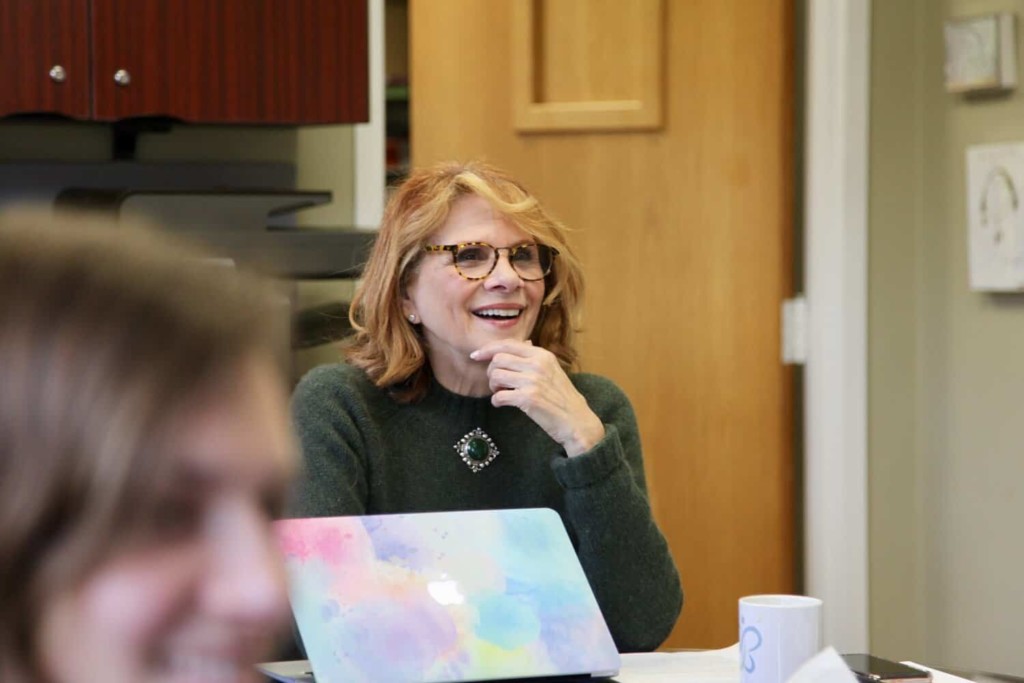
You are listening to the Getting Smart podcast, where we unpack what is new and innovative in education. I’m your host Jessica and today we’re listening to a conversation with Dr. Donna Hausman. Dr. Hausman is a clinical psychologist and founder of the Hausman Institute, a Boston-based early childhood training, research and advocacy organization.
This institute also features its own lab school, Beginnings. In these challenging times, Dr. Hausman has been providing insights to parents who are having to not only adjust to the stress of having to self-quarantine in social distance, but also become full-time teachers and caregivers to their children. Let’s listen in as Dr. Hausman talks with Rebecca about the importance of mental health
among parents, teachers and students. Welcome Dr. Donna Hausman, our clinical psychologist and founder of the Boston-based Hausman Institute, an early childhood training, research and advocacy organization and its lab school, Beginnings. Could you tell us a little bit more about your work and your background for our listeners? Sure.
My background is in psychology. I’ve been a psychologist for many decades and working with children, adolescents, families. The focus really early on was working with adolescents that were depressed, suicidal, really intense emotions, and they were really having a hard time dealing with their emotions and managing and regulating their emotions.
Although we would go retrospectively to really understand more about what was happening, I decided that it was really important to start to go prospectively in terms of one’s emotional health. When I began to really create a program that helped children and teachers and parents really begin to understand and deal with their emotions in much more effective and successful ways.
That’s how we started Begin to Excel, which is a program in doing that. It’s really equipping teachers and parents and children with the tools and the skills to really deal more effectively with their emotions, their own, and those of others. Really having a toolkit, if you will, to really be able to deal lifelong with emotions, with stress, with anxiety in effective and helpful ways.
You bring up teachers. I think we’ve been reading and hearing in many cases, seeing that strain on our teachers. You have shared that there are increased signs of stress and burnout trends even seen before COVID. In addition to telling us a little bit more about that data you’ve gathered, could you
share more about the causes of that stress? Sure. As you just said, Rebecca, the stress is not new, but it’s been exacerbated by what is happening around us for all of us. Even prior to this, teachers have been really dealing with overwork and feeling undervalued.
Things have been really difficult because they’re not just working with children and teaching children. They’re also having to work with their parents and the emotions of parents as well. In dealing with children and behavior has also become much more dysregulated. Not having the support and the tools and skills that they need to be able to deal with the
emotions of the children, these intense emotions, but also more importantly, their own emotions. Because we know that children develop in the context of relationships, which mean teachers have very important, intense relationships with the children that they’re teaching so that if the teacher or the parent isn’t really able to deal effectively with their own emotions, children are emotional detectives, if you will, and they pick up our emotions.
They sure are. They respond to them. If we’re not dealing really well with our own emotions, children pick that up and they end up feeling unsettled and anxious and really needing a model as teachers typically are really important models for children.
They need a model that is modeling positive interactions and positive responses. In order to really do that consistently and effectively, teachers need their own support and feedback and help to be able to do it in the best possible way. So that the stress that started before just because of overwork and not feeling valued, you multiply that now with the concerns and the worries of the virus.
And not just teachers are in many ways selfless. Their passion and their commitment is working with children and really providing them not only the skills for learning, but also really providing them skills for their social and emotional development. So in order, again, to be able to do that effectively, they really need to be able to have the support
not only of the administrators that they’re working for, but also the support of being able to understand and deal in better ways with their own emotionality. And that way, they’re going to be able to be more effective in terms of not only working with the children, but in their job performance. I can certainly relate to that as a trained educator and teacher in my past and now a parent
now I think about all the teachers I know and all the work they put in certainly true before COVID and now more so. So I appreciate you. Yes. Right.
Exactly. You know, it’s interesting. There was a survey that was done back in April and this was done by the Yale Center for Emotional Intelligence in collaboration with CASEL, which is collaborative for academic social emotional learning.
And they were really interested in what was happening for teachers during this period of time. So they sent out a survey asking them what they were feeling. And 5,000 teachers responded within just a couple of days and talked about the anxiety and the stress and the worry and the tension.
So that they were then beginning to wonder, was it different before? And they had done a survey back in 2017. And what they found was that there were very similar feelings back then and again for reasons having to do with what we were just talking about a moment ago in terms of feeling overwhelmed with the job and the imbalance between work and their own life as well as not having the
kind of support and feedback that they needed to really not only help them with the children that they were dealing with and parents, but also for themselves. So things have been going on for a while in terms of teacher stress. It’s just been exacerbated recently with all the realities of what everybody’s having to face with.
And also teachers having to learn new technology right now. And the changes that are happening day by day, whether they’re going to be teaching remotely and having to learn all of that or being in the classroom. So there’s a lot happening for them and they really are needing a lot of support right now.
You bring up a good point. I know it’s been said before, but in other professions as we are moving through this phase, we’re able to share our discomfort and our insecurities and our vulnerabilities with our staff, with our teams. But many times teachers are like leaders.
They are in front of a classroom of little ones who are depending on them to have this figured out very similar to folks that lead organizations and lead companies. And in that way, they don’t get to share that vulnerability all the time. They have some times with the staff, but they really have to show up as you’re saying and present and that causes a lot more stress, I’m sure.
That’s correct. Absolutely. And that is one of the reasons why they need the opportunities for professional development in helping them be able to share their emotions and be able to learn how to be able to express them in ways that are going to be helpful, not only to themselves, but to the children
that they’re working with. Because in terms of modeling, we lead by example, but in order to lead that way, we really have to be able to be effectively dealing with the emotions that drive our behavior and also our thinking and our performance. I think about the airplane mask message that we often repeat.
So in order for us to be able to be available to the children that we’re working with, like in the airplane, we have to put on our oxygen mask first so that our needs are being taken care of so then we can care for the child that’s needing our help and our guidance. That brings up, well, I have a colleague who is sharing everything right now is important. And to prioritize the urgency can be the challenge.
And I imagine that many educators are feeling this way right now, particularly ones with their own children at home. It is also an easy time maybe to let go of some of those things and they don’t seem urgent, but some of these just are tending to ourselves like you’re sharing. Could you provide, I think, some strategies I think we could really benefit from that
insight that you have and some hope about ways that we can move forward? Right. Being able to be flexible and not feel that everything has to be A to B to C, but recognizing there’s a lot of change that’s going on around us and that to be able to be flexible in dealing with what is happening around us is critical as well as being able to make sure that we
understand what needs to happen and how to be able to give ourselves a little bit more freedom to not judge so critically, not blame ourselves and that we’re in this together. We’re learning as we’re going and to allow room for that to happen. Some of the things that can help us get to that place is by recognizing how we’re feeling and being able to be aware of that and deal with it in ways that we can reduce that tension
and oftentimes just taking a deep breath and being able to breathe helps to reduce that tension as well as sometimes just picking up a phone and talking with a friend or a family member and just talking not to have someone fix it for us but to have someone just listen and understand and the more we feel understood that in and of itself reduces anxiety and reduces stress. We no longer feel so alone and isolated. We feel more connected and that’s part of what
is so important right now because of this physical distancing and not being able to be close to people and friendships the way we had before. We need to maintain those social and emotional connections and whether it be you know through a Zoom kind of connection or kind of getting our friends together and and having a glass of wine and just sharing things, going for a run, getting involved in more mindful practices, journaling. You know we do a lot where when we
write things down it gives us more opportunity to think about it and reflect on it and it’s much more organizing so then we can make a plan as to how we want to deal with it and although all these things going on around us we really can’t control what’s happening around us but what we can do is we can control what we do and that’s what we really need to be aware of is that we do have control over our own actions and our own behavior. Such good advice even as as a parent and such
great advice for all of us in this system and who are supporting teachers at home in our role. How often do we forget to take that breath too? I appreciate that you started with that. That’s such a big piece in those strategies. I also hear you emphasizing relationships and I know that a lot of folks are doing that with Zoom and they’re doing walks and talks where they can go walking and talking to a friend and really putting that investment into relationships. I hear you also
highlighting that as well. Right relationships are so important because again it gives us that connection kind of that feedback not feeling so isolated and alone and really maintaining you know our friendships and connections that that’s really central in terms of helping us deal with our with our feelings and our anxieties. Thank you for sharing about what we’re thinking about for our teachers in our system. Is there
anything else you would like to share about the Excel program which we will link as well after this podcast? Well one of the things that you know we have learned and and through our own research and through practice is that when we’re able to really help both the adult and and the child start to become more aware and understanding of their own emotions this is what Excel begins to do. It really has it’s a program helping the teacher as well as the child begin to recognize label
their emotions like what am I feeling understanding where that feeling is coming from what’s causing me to feel this way making that connection and then being able to learn how to really express how one is feeling and more constructive ways and manage the intensity whether it is you know a negative emotion a positive emotion really being able to learn how to manage that we see how important and helpful it is in order to allow children once their emotions are really regulated
and managed then all that energy is freed up for them to focus and attend and problem solve persist in the face of frustration learn you know and this is what we’re hoping to see happen and this is what we see in terms of our program is that when we’re able to again help teachers begin to do that then they become much more available to really engage in very successful ways and joyful ways with the children that they are teaching and and that is so important because you know
it’s it’s a reminder to teachers why they got into this profession to begin with because of the joy that they experience in working with children and helping them grow and develop and learn and that’s so important to keep in mind even during these really difficult times why you got into this field to begin with and how important and central teachers are in the lives of children and again not just for their learning but also you know for their development socially because
you know classrooms are very social places and children need that guidance in terms of engaging in inappropriate ways and helpful ways in terms of friendships things of this sort so all of these things are really important in you know what we do in terms of excel and helping teachers develop these these tools and these skills and what we see is that their tension and their anxiety and stress really diminish and their joy and engagement really increase and they feel really energized to be able
to offer what’s so important for the children to continue to thrive and flourish great point great points for us as parents at home trying to support those teachers doing this great points for our learners I know a lot of our teachers are sometimes put in the place of having them and provide this for the families and the adults who are on those calls with their children and having those questions so having these strategies you can see the wide range and different stakeholders that could benefit
from that so I so appreciate you bringing that and sharing that resource I know many will look forward to finding out more which we will share after this thank you so much for your time and conversation to the work you’re doing well it’s been a joy being here and and and having this conversation about how important teachers are not only in terms of the lives of children and families but for themselves as well thank you thank you a big thanks to dr. Hausman for joining us on this
week’s episode we appreciate her continued contributions to the field of mental health and well-being for more on learners in the brain check out episode 202 with neuroscientist Jared Cooney Horvath and don’t forget to write and review the show and tell your friends about it that’s it for today listeners thanks for tuning in this is jessica signing out





0 Comments
Leave a Comment
Your email address will not be published. All fields are required.