


Brian Greenberg on Creating Great New Schools
 “Great new school principals do three things well: 1) they are committed to academic excellence, 2) have strong knowledge of operations and finance, and 3) build strong cultures,” said Greenberg. “They are open to improvement, they know where they are not excellent, and hire teams that fill in the holes.”
“We don’t pay much attention to written proposals,” said Greenberg acknowledging that they can preference teams with strong grantwiring and fundraising ability. They prefer to spend time in person with entrepreneurs, “it can last six months to a year. We are the fist funder, the quit-your -job money.”
“New schools take between $1-2 million of philanthropic investment,” said Greenberg. And they are “a bargain for what you get.” Well designed, well planned schools with strong founding teams produce dramatically better results than existing schools–and the result last a long time.
“Just one class of 500 students in a good new school could earn more than $10,000 per year more producing more than $200 million surplus– just from one class.”
He’s concerned that it’s getting harder to start new schools, particularly charters, in low income neighborhoods. “The coalition of support has started to fracture. When you lose the ability to start new schools, we won’t see gains that address the equity issues we face.”
“We want more innovation with each new school we support–but can’t underestimate forces of gravity, all the ‘return to normalcy’ forces. It comes from authorizer expectations, parent expectations, student expectations, teacher expectations–all together it’s an incredibly powerful force that pulls innovations back to earth.”
“Schools are strong organizations that crunch up innovations and spit them out.” added Greenberg.
“We will tolerate failure and messiness,” said Greenberg about their grantmaking. “In the early days, you see wild ideas, they run design charette, then begin paring [down the design] to what they rely on; they stage innovations–moving some ideas into year 2 or year 3
With the closure of school buildings, Greenberg observed his grantee schools moving smoothly to remote learning. He attributes the transition to well developed academic programs and strong cultures.
For grantee schools and others, Silicon Schools published well designed guidelines for reopening this fall.
Key Takeaways:
[:56] Tom welcomes Brian to the podcast!
[1:35] The best and hardest parts of teaching English in Los Angeles.
[4:27] The biggest takeaway Brian learned as a teacher.
[5:09] Brian’s experience as the founding Principal for Leadership Public Schools.
[8:55] Key pieces to a successful principalship.
[9:48] Lessons Brian learned from his experience with mentoring principals for new leaders.
[12:48] What Brian learned from serving as Chief Academic Officer at Envision Schools.
[16:07] How Silicon Schools was opened with the support from the Fischer family.
[16:58] The importance of new school development and why it is high-return philanthropy.
[20:33] The challenges with taking good schools to greatness and taking okay schools to good.
[24:52] What the formula for success looks like for creating new schools.
[29:51] Where you want to be on the spectrum of a proven model vs. an innovative model when it comes to creating a new school.
[33:48] Key lessons Brian learned when their fifty schools closed due to the COVID-19 pandemic.
[41:07] About Brian and Silicon School’s two guidebooks/playbooks; the content they covered and what they were made for.
[42:02] The challenges educators face in planning for an uncertain August and September and how they can be solved.
[45:38] Tom thanks Brian for all of the incredible work that he does and for joining the podcast!
Mentioned in This Episode:
Brian Greenberg
Silicon Schools
Leadership Public Schools
Envision Schools
The Gates Foundation
Teach Like a Champion: 49 Techniques that Put Students on the Path to College, by Doug Lemov
Teach Like a Champion 2.0: 62 Techniques that Put Students on the Path to College, by Doug Lemov
California Collaborative for Educational Excellence – The Playbooks
Getting Smart Podcast Ep. 259: “Eric Tucker on Reopening Schools with Equity in Mind”
For more see:
“Great new school principals do three things well: 1) they are committed to academic excellence, 2) have strong knowledge of operations and finance, and 3) build strong cultures,” said Greenberg. “They are open to improvement, they know where they are not excellent, and hire teams that fill in the holes.”
“We don’t pay much attention to written proposals,” said Greenberg acknowledging that they can preference teams with strong grantwiring and fundraising ability. They prefer to spend time in person with entrepreneurs, “it can last six months to a year. We are the fist funder, the quit-your -job money.”
“New schools take between $1-2 million of philanthropic investment,” said Greenberg. And they are “a bargain for what you get.” Well designed, well planned schools with strong founding teams produce dramatically better results than existing schools–and the result last a long time.
“Just one class of 500 students in a good new school could earn more than $10,000 per year more producing more than $200 million surplus– just from one class.”
He’s concerned that it’s getting harder to start new schools, particularly charters, in low income neighborhoods. “The coalition of support has started to fracture. When you lose the ability to start new schools, we won’t see gains that address the equity issues we face.”
“We want more innovation with each new school we support–but can’t underestimate forces of gravity, all the ‘return to normalcy’ forces. It comes from authorizer expectations, parent expectations, student expectations, teacher expectations–all together it’s an incredibly powerful force that pulls innovations back to earth.”
“Schools are strong organizations that crunch up innovations and spit them out.” added Greenberg.
“We will tolerate failure and messiness,” said Greenberg about their grantmaking. “In the early days, you see wild ideas, they run design charette, then begin paring [down the design] to what they rely on; they stage innovations–moving some ideas into year 2 or year 3
With the closure of school buildings, Greenberg observed his grantee schools moving smoothly to remote learning. He attributes the transition to well developed academic programs and strong cultures.
For grantee schools and others, Silicon Schools published well designed guidelines for reopening this fall.
Key Takeaways:
[:56] Tom welcomes Brian to the podcast!
[1:35] The best and hardest parts of teaching English in Los Angeles.
[4:27] The biggest takeaway Brian learned as a teacher.
[5:09] Brian’s experience as the founding Principal for Leadership Public Schools.
[8:55] Key pieces to a successful principalship.
[9:48] Lessons Brian learned from his experience with mentoring principals for new leaders.
[12:48] What Brian learned from serving as Chief Academic Officer at Envision Schools.
[16:07] How Silicon Schools was opened with the support from the Fischer family.
[16:58] The importance of new school development and why it is high-return philanthropy.
[20:33] The challenges with taking good schools to greatness and taking okay schools to good.
[24:52] What the formula for success looks like for creating new schools.
[29:51] Where you want to be on the spectrum of a proven model vs. an innovative model when it comes to creating a new school.
[33:48] Key lessons Brian learned when their fifty schools closed due to the COVID-19 pandemic.
[41:07] About Brian and Silicon School’s two guidebooks/playbooks; the content they covered and what they were made for.
[42:02] The challenges educators face in planning for an uncertain August and September and how they can be solved.
[45:38] Tom thanks Brian for all of the incredible work that he does and for joining the podcast!
Mentioned in This Episode:
Brian Greenberg
Silicon Schools
Leadership Public Schools
Envision Schools
The Gates Foundation
Teach Like a Champion: 49 Techniques that Put Students on the Path to College, by Doug Lemov
Teach Like a Champion 2.0: 62 Techniques that Put Students on the Path to College, by Doug Lemov
California Collaborative for Educational Excellence – The Playbooks
Getting Smart Podcast Ep. 259: “Eric Tucker on Reopening Schools with Equity in Mind”
For more see:
- Eric Tucker on Reopening Schools with Equity in Mind
- SkillRise: Exploring the Future of Work and Learning with ISTE
Stay in-the-know with innovations in learning by signing up for the weekly Smart Update.
Transcript
This transcript has not been edited for spelling accuracy.
You’re listening to the Getting Smart podcast where we unpack what is new and innovative in education. I’m your host, Jessica, and today we’re featuring a recent interview with Brian Greenberg on creating great schools. After teaching high school English and LA, Brian Greenberg was a founding principal for
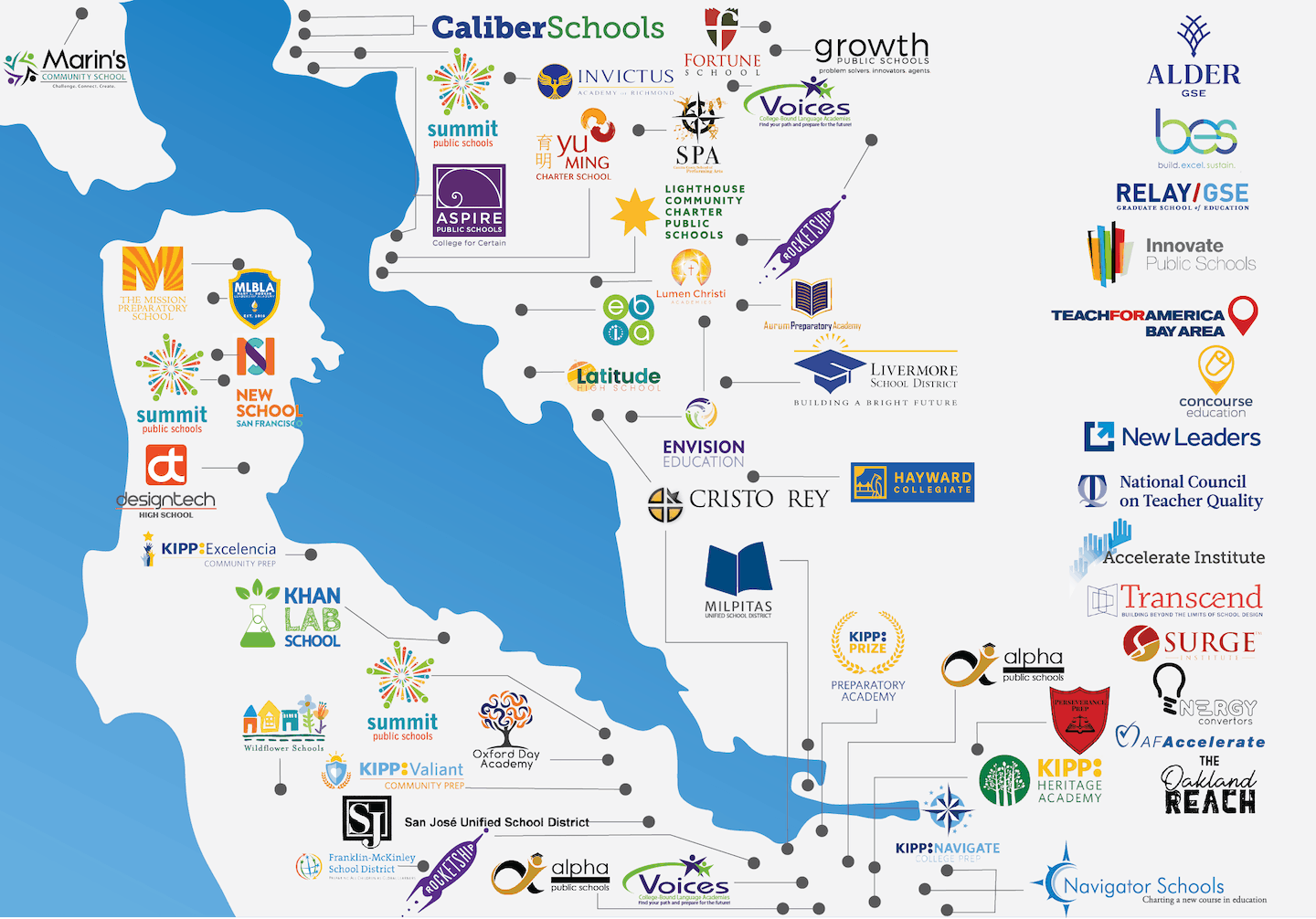
leadership public schools in the Bay Area. He coached principals for new leaders and served as chief academic officer for envisioned schools. Eight years ago, with support from the Fisher family, Greenberg opened Silicon Schools, a nonprofit that has funded the creation of 50 great new Bay Area schools that foster
innovation and personalization in the neighborhoods that need them most. With the closure of school buildings, Greenberg observed his grantee schools moving smoothly to remote learning. He attributes the transition to well-developed academic programs and strong school cultures. Let’s listen in as he talks to Tom.
Hey, Brian Greenberg, welcome to the Getting Smart podcast. Thanks, Tom. It’s great to be here. It’s great to have you on. You’re one of my favorite people in education.
I just love what you guys have accomplished at Silicon Schools. You have a smart team and a great board, and you’ve built a terrific track record. I’ve wanted to do this for a long time. Thanks for joining us. It’s very nice of you to say the feeling of respect is very mutual.
I love the chance to sit down and talk with you, even if it’s over the void of the internet. What was the best and hardest thing about teaching English in Los Angeles? Oh, man, you’re taking me back now, Tom. I know. When people ask me what I do, sometimes I just say I’m a teacher because anyone who
loves teaching and anyone who’s been a teacher, I don’t think you ever let go of that. That is just part of who you are. I started teaching when I was really young. I might have been 25 when I started teaching. I had done a little work in higher ed and a little work in politics enough to realize
that if I really wanted to change the world, I should have followed what I thought about doing right out of college was go be a teacher. I got really lucky. I got a credential through the LA Unified System and got a chance to go work at Marshall High School, which is in Los Feliz, long before Los Feliz became Hipsterville.
It was a much more diverse, really interesting community. I had this incredible school with incredible kids, many of whom were very low income and had not the best life trajectories, but were really brilliant young people. I just recently, while we were in quarantine, was digging through the basement and found a whole bunch of old VHS tapes and amazingly still had a VCR somewhere in the basement
and plugged it in and watched the old videos of my classroom when I was a teacher. It got it. It made me want to quit my job and go back to teaching because there’s nothing like getting to have that intellectual exchange with young people at these formative years. I was an English teacher, so I love literature.
I had a lot of freedom to explore the books that I thought would touch kids’ lives and put big ideas about what society we wanted to be out there with the kids. I just watched these guys make sense of Thornton Wilder and Shakespeare and these novels and plays that I think are timeless. Just amazing.
It’s a brutal job. I’ve often said that teaching is actually one of the hardest jobs in the world to do well. It’s a pretty easy job to do badly. If you just want to come in and phone it in, it can be fun and you can just hang out with
kids. But to do it well is so hard and yet so intellectually satisfying. I think I try to hold on to that. I definitely try to hold on to the respect of what a hard job it is because it’s really easy the further you get up the school leadership and then especially when you’re in philanthropy
to just sit back and say, why aren’t teachers doing these things? Then when you actually go in and realize how exhausting it is to teach an eight-hour day and what it’s like to see, you know, I had class sizes of 30 and I’d have five different preps a day. So, you know, 150 kids often teaching three or four different subjects throughout that
period of time. And then I’d go home that night having literally performed a seven-hour play and have to write the new play for tomorrow. And so that was the exhausting part of it. And I feel like it’s often a young person’s game to work that hard.
But we need teachers to sustain this over long periods of time because we need 3.7 million great teachers in America. So I think it humbles you to realize how hard it is. But I also have now seen that you don’t have to do it by yourself. And there’s all these new resources out there where there’s really good backbone curriculum
and really good teacher training and really good school protocols. So I think my biggest takeaway from when I was a teacher, you know, back in the Stone Age till now is we should not ask every teacher to do this by themselves. We should be giving teachers great material to work with and great collaborative tools and make the teacher’s job figuring out how to turn that curriculum into gold with their
own kids rather than asking each teacher to go home each night and Google the next day’s lessons plans and pretend that we could do a great job compared to if we really did something thoughtfully and collaboratively. After teaching, you had the opportunity to serve as one of the founding principles for leadership public schools, a great small Bayer network.
I think that was started by Louise Waters, right? It was started by Mark Kushner and then Louise Waters was the second superintendent. Tell us about that network. Interesting network. When I think of it, I always think of Louise talked about a distributed and collaborative
innovation agenda where each school would take on parts of the innovation agenda, which I thought was a brilliant approach to getting better together. Yeah, I’m really lucky to have had mentors like Louise Waters and Mark Kushner. And then going back to when I learned how to be a principal, a principal in Boston named Charlie Spasato, for whom the Spasato School of Graduation, Graduate School of Education
is now named after as a part of the match schools in Boston. And in many ways, what I did when I started LPS Hayward was try to take what I had seen about an incredible school in Boston and figure out what it looked like on the California dollar, which was probably, you know, under half at the time, what they were spending in Boston. If I loved teaching, one of the only things I loved more was getting to found my own school
as a principal. It is unlike any experience you have. I’ve now started a couple of different organizations. But when you start a school from scratch, the principal ship is this incredible combination. I think of it as like a three-legged stool. You have to be really committed to academic excellence. You have to really understand ops and finance. And then you have to master school
culture, which is like kid to kid, adult to kid, adult to adult relationships. And nobody can be great at all those things at once. And so the principal ship is like a plastic bag with these little microscopic holes, but the principal ship fills that bag with water. And the water will find your holes and it will make those holes bigger. And we think about this a lot now when we’re picking and selecting principals to start new schools and we’re
figuring out who we want to bet on with our philanthropic resources, is that you want to know that people have a pretty strong foundation in all three of those areas, but you’re also looking for humility where people understand what they’re not yet excellent at, because no one can be great at all these things. And you can get better if you’re open to improvement and you can hire for teams around you if you know what your weaknesses are. So I really understood the academic
side of being a principal and I got a lot better at it as I did it longer. And I just have a good background in ops and finance and that stuff came relatively easy to me. I think I understood culture at a classroom level and I had no idea how to build it as a school level. And I got incredibly lucky to hire sort of my first hire at LPS and my co-founder of the school, our dean of culture, who stayed at the school for a lot longer than I did and is really the heart and soul of the
place. And he was just magic with kids and he knew how to hold rapt attention of 400 kids at once. And so because I had like this maestro on the stage next to me, I could flip in and out and do what I was good at. And together we were kind of an amazing team. And LPS did give us a lot of freedom back in those days. This is early on in the charter school space and I had come out of working in district schools and they really understood the idea that this is too hard to try to centrally
command and control. We need each principal to feel like the CEO of their own little company. And these are big organizations. A small charter school with 500 kids has a P&L of like $5 million a year and 40 or 50 employees. But we really sweated every dollar we spent. We knew how our budget worked. We made everything we could to save money and build up a surplus so we could go after what we needed even with California funding rates at the time. There was like $6,500 per kid per year
which is criminally low. And we really paid attention to hiring. We went after like every job opening we had. Anytime we had a great expansion or a teacher was leaving, we would just work like dogs for months to find a great teacher. Because ultimately the principalship is a lot about setting a vision and then it’s a lot about just bringing the right people onto the team, which is so obvious to say. But to really feel like every hire is make or break because if you get one great hire and
they stay with you for five or 10 years, the school gets infinitely better. And if you have one bad hire and you let them stick around for a few years, it really has a negative impact in such a small school setting. So we’re always now looking for principals who get that, who understand that they’re the beginning of the culture, but their real job is to bring in a team around them that can take their vision and embody it and frankly make it better. Because it’s too hard for any one
person, no matter how talented to do this by themselves, you need an incredible team around you. So you had this great opportunity to mentor principals for new leaders. That must have been a great chance to visit a lot of schools, to work with a lot of different kinds of leaders. That must have been really formative to some of the lessons that you’ve just described. I totally agree, Tom. The ability to see good education and action is like one of the missing
ingredients in our school systems. I commented on it, became a principal that I’m suddenly a much better teacher because I got to go watch different people teach all day long. And most teachers rarely get to ever watch each other teach. At best, you might see one observation a semester and give feedback. And that’s just not enough in the same way that a young rookie in the NBA just spends all their time watching the All Stars and picking up every move they can and going into practice and
asking for tips and getting better and better and better. If we had them doing that in a void and a gym by themselves, they’d never get any better. But we kind of do that to teachers. We put them in their own classroom, we close the door. They say teaching is the second most private act. And it’s kind of true. We treat it as if it’s like, oh, this is sacred, you can’t interrupt. And then I get to become a principal and I get to go around and watch lots of teachers teach. And suddenly I
understand how to be a better teacher. And then when you get to go and either step into a role like philanthropy or do something like a new leaders program, you get to watch lots of other principals run schools. And suddenly you’re like way better at running schools. So I’m a huge believer in lots of thoughtfully curated school visits where principals go together and we facilitate these at Silicon Schools now for our portfolio. And I’m a real believer, I know you’re probably the master
of this time, you must visit 50 schools a year. I’m probably underestimating what’s your actual count. And you know like, oh, I’ve seen this play before. Oh, yeah, I’ve seen this three times now. I really believe it. Oh, gosh, I see something you’re struggling with. I know someone who knows how to solve this problem. And there’s not enough of that connective tissue in our ecosystem. So we essentially treat all 3.7 million teachers as independent contractors and pretend that what
one algebra ninth grade teacher is doing can’t help another algebra ninth grade teacher. And what one school two miles away is doing can’t help another. And it’s because teachers are spending all their time in the doing, they never have time to pull up, stop, learn, listen, think, principals are spending all their time executing, they never have time to stop, learn, listen, think. And I’m not faulting anyone. It’s the reality of such a job that requires you to be present all
the time. But if you’re on stage acting all day long, and you never get to watch other actors act, and you never have anyone to interact with you, you’re only going to be as good as your own soliloquy can be. Whereas if you get to go be part of an ensemble, and you get to go watch other people act, and then you get to have, you know, workshops, suddenly your craft becomes much greater. And that’s what I think is often missing in education when we work in such isolated silos.
I also forgot that you were the chief academic officer at Envision schools, which must have been a great experience. I think of Envision’s is probably being best in class that performance assessment. Yeah, it’s been so neat to get to have journeys through a few different organizations at this point to see how different people tackle the same problem. So leadership came from a set of schools that was focused on like culture and academics. And you know,
it’s what you might have called the no excuses movement back in the old days, although that has such a negative connotation now, I don’t like that. But really academics and positive vibrant culture first and foremost, Envision really had a philosophy is like student as creator, teacher as creator, students created these sort of portfolios of work and did these performance assessments where they would do demonstrations of mastery in front of real
live audiences. And the quality of some of the work that those kids produced was phenomenal. And each of those two models had their own strengths and weaknesses. LPS was incredibly good at getting kids prepared to do well on exams to do well on college entrance. And I think to have an academic background. But if you ask the kid, what’s the work you’re proudest of here? They might have said, Oh, I wrote this essay, or I did this performance, you go to Envision and the kids
would say, Oh, I’m really proud of this experiment I ran, where I designed, created, produced, made a video of did a montage and presented it. And you’re like, Well, that’s great work. But sometimes by focusing so much on the performance assessment side of the world, there was some gaps in kids knowledge, some like Swiss cheese of knowledge that was covered in a really nice veneer of Bree. So it looked great. But if you poked a little bit, there were still some holes. And I think
both of those orgs and many others like them have realized, no one model can get you all of what you need. So why can’t we take an academically driven model that’s really focusing on kids learning, you know, core skills, and layer really good performance assessment on top of it. And why can’t we take a school that’s got a lot of project based learning, and still ensure that there’s good mastery in the students know what they need to be prepared for success in college and career.
But the thing you want to avoid, and we see this a lot, because at Silicon Schools, our job is essentially to meet everybody who wants to open a new school in Northern California, talk to them about their vision, evaluate the team and see if they look like they have the right criteria to make relatively large philanthropic investments in these schools. And we sometimes see people bring us what we call like the Frankenstein School, where they say we’re going to do high tech,
high project based learning and envisions portfolio defense and Valor’s SEL circles, and KIPPS school culture and design techs, you know, maker’s lab. And you realize each of these schools got great because they did that one thing exceptionally well. And you can’t take this thing that they put 100% of their effort into and do it with 10% of your effort and expect it to be as good. So we love when people build on other people’s good ideas and don’t reinvent the
wheel. But we also know it’s not as easy as saying I visited a school, I signed a license to get their curriculum, now I’m just going to plug these eight things together. You’ll end up with a school that doesn’t actually have a soul in the middle, and that is trying to do too many things and the teachers are burnt out, the kids feel like whiplash of what are we working on. And it’s actually sort of like, then the cumulative of all those is worse than if you just picked one and stuck with
it. So Silicon Schools was formed about eight years ago. I guess you were the founding director there. It was formed initially with Super from the Fisher family. Is that right? Very much so. So we incubated out of the Fisher fund at the very beginning. And they were very generous in giving us, you know, space and resources, but also really smart in saying this has to be bigger than us. We want you to go out and raise a fund so you can bring in lots of investors to be part of this,
so it doesn’t just have to be limited by what we can do. And at the time, it meant I had to learn how to fundraise, which I had never done before. But I’m really glad they gave me that push because now we have a group of, you know, north of 15 investors, all of whom are really passionately committed about it. And it’s allowed us to take the scale of this work much greater than I had hoped we could have. So from 2000 to 11 until 2020, which is a little over eight and a half,
nine years now, we’ve helped launch over 50 schools all throughout Northern California. Really great schools too. And so I want to dive into that. My first observation is that I often tell foundations that new school development is probably the most effective philanthropy, because if you’re really clear about a good school and you support those grants well, you have a very high probability that you’re going to have a very good school
that creates a great option for a set of families and is likely to stick around for a long time. There’s very few other philanthropic investment opportunities that you can see the same about. I assume that you do agree that new school development is still a really important and high return philanthropy, right? Tom, I couldn’t agree with you more. And I think if every foundation in America just listened to that statement you made, we’d be in better shape.
I was playing with these numbers at one point recently and I was thinking, you know, it takes a lot of money and time to start a new school. Our estimate is it’s about one to two million dollars of philanthropy all in until these schools become self-sustaining and can fund themselves into perpetuity with public revenues. And that’s a requirement for us. We don’t want schools that have philanthropic subsidies forever. We want schools that can prove that this can be done on
the public dollar and that can scale by not needing to keep leading philanthropic resources forever. But once you get a school up and running, that one to two million dollars is a bargain for what you get in return. So I think about the school I helped found, you know, it serves about 500 kids a year and it’s getting, you know, results that are on par with or better than some of the best schools in the state despite serving a large number of low-income kids. It’s really an exceptional
school and it’s credit to all the principals who’ve worked there since we founded it a number of years ago. If we took those 500 kids in a single year, just took one year and said, okay, over their lifetime by being very well prepared to go to college, how much more money would they make? And we took the wildestly lowest estimate possible. Let’s just say they can make $10,000 more over their lifetime and it’s just those 500 kids, right? That’s right there a huge philanthropic return on the money.
But it’s not $10,000 over their lifetime. The average person in that school is probably make $10,000 more per year. And if we send them off with $10,000 per year more, those 500 kids for a 40-year work career, that’s a $200 million return on that $1 to $2 million that we invested. And that’s just one year’s class of 500. And to your point, if it’s a good school that gets a good start and keeps hiring good principals and has a good network behind it or a good district
behind it, it can stay excellent for years. And I think the thing that we’re most bullish on with new school starts is if you do the incredibly hard work of getting everything right to open well, get off to a good start and sustain excellence for those first three, four, five, six years, you’ve kind of built an entity that’s designed to stay good for a long time. The flip side is that if a school is not strong, if it’s not serving kids well, if it doesn’t have good relationships
between kids and adults and adults and each other, and if you’re not getting academic outcomes, it is brutally hard to improve it. And I think that’s one of the real travesties of the whole education movement in America is we have not figured out very many strategies to take bad schools and make them good. This is such a super important observation. And it’s sort of my big takeaway from most of a decade at the Gates Foundation, where we spent a
billion sponsoring about 1200 new high schools and about a billion dollars trying to improve 800 of the nation’s worst high schools. And the new school development worked very well. And the attempt at turnaround the worst high schools in the country was not very successful. And so I think it underscores that observation. And these, I think these observations are particularly true at the high school level, that we know some things
about improving elementary schools, but it’s just very hard to change everything that’s wrong with very bad high school, right? I totally agree. And I think it’s even hard at elementary and middle. I think there have been some good developments. I think excellent curriculum is probably our best bet right now. And we’re actually doing a small pivot within Silicon Schools, which I’m really excited about, which is our first attempt to work with existing schools to try to either
take good schools to greatness or okay schools to good. And it’s all going to be a bet on really high quality curriculum. So we’re working with a handful of the best trainers in the country, folks like instruction partners and relay and the Vinnia group to help schools that want to do this work that already have decent norms around collaboration and curriculum to adopt really high quality curriculum and get lots of intensive support for about a three year process with the
hope being that if you give good teachers the right protocols and systems and a good backbone curriculum, we can do more to advance people into quality than anything other than starting a brand new school. And I’d say the one sad part that I have in reflecting on this work is right now it’s getting harder than ever before to start a new school, especially in a place like California. The politics have really turned on charters in a way that I frankly can’t quite understand.
I look at what the charter sector has done and it’s not without its fails, you know, and its problems, believe me, I’ve lived through it and I’ve seen some of its, you know, weaknesses. But in net, I think it’s been a universally very powerful positive force to particularly help communities where there were bad educational options for families, which in our country, sadly, ties very closely to race and very closely to family income. So if you are a poor or if you’re
a family of color and you have very poor school options, everything we’ve done to try to improve your schools has generally not been very successful, but building new start from scratch schools in your community has been often wildly successful to the point we’ve made earlier. Now the problem is every great school only serves 400 or 500 or 1000 kids and we need way more of them than we currently have. So now when we add a great school to a bad community, a school with a bad current
schools that are not performing, the kids who are lucky enough to win the lottery and get a spot in that school benefit, but everybody else either doesn’t get any benefit or arguably even has some harm because the money that used to fund those schools, there’s now a little bit less to do that with. And that dynamic combined with the fact that many unions have decided that we don’t like charters because I believe those teachers aren’t generally unionized, they’ve put a really aggressive
campaign to smear charters out there. And I think some of their critiques are fair. I think charters need to do a better job of making sure they serve truly every kid, including all special ed disabilities. But the vast majority of charters out there are doing a really good job of taking any kid who walks in their door and trying to educate them. And we should see that as a net positive for the education sector. But because they’ve been so effective in their campaigning and
lobbying against it, the coalition of Democrats and Republicans supporting charter schools has started to fracture. And I’m really worried about that because I think starting new schools has to be part of the recipe of school improvement. And if we lose the ability to start new schools because of politics, and we put the interest of adults over kids, I’m worried that we’re not going to see the kind of gains that we need in our country to address the equity issues, to bring better options
to communities that desperately need them. How do you think about the formula for success? When you’re looking at a proposal, is it the design elements? Is it the leadership? Is it context variables? How would you summarize what a good proposal looks like? So one thing that we believe is we don’t spend a lot of time on the written proposal. We think that too much of philanthropy is sort of a disembodied approach where someone sitting in an oak paneled room gets a written
proposal and makes a decision. And we’ve just come to believe that that really does disservice because it preferences people who have particularly strong written and fundraising skills or have the money to hire people who have it, and you miss out on and you end up without as diverse or as potentially talented of a set of school leaders. So we have a small written process where people sort of give us their initial signals of their interest in applying, but the vast majority of
our diligence is done in person or now remotely via Zoom where we are really spending time with our proposed entrepreneurs. And our diligence process often lasts six months to a year because people are just at the beginning of formating their plans. And we’re the very first funder that most of these people go to. We call it the quit your job money. That first grant of $100,000 to give an entrepreneur a year to work on this vision to build the school model to start hiring to recruit
parents. So at the beginning, you’re really betting on the leader. And we’re looking for a combination of incredible academic background and success. If you can’t show us how you’ve been successful as a teacher, as an assistant principal, there’s very little likely you’ll suddenly get it right when you become a school founder because the job is so hard. But we’re also looking for like a deep well of tenacity because it’s so hard to start a new school, whether in a district or a charter,
and you have to just be willing to keep hitting walls and push through them. And people are going to be tempted to quit and they’re looking to their leader to make sure that they say, that’s not an option. I will get us through. I will carry us and essentially sell a vision for the school that only exists in their mind, which it’s a really crazy thing to ask a parent to give their most precious commodity of their children to a founder to start a school before they can
actually walk and even see where the school is going to be located. But when it works, it becomes this beautiful partnership where the parents have taken this leap of faith to trust these founders and the founders deliver these incredible schools that then change kids’ lives. So it does start with the leader. But then layered on top of that is like they need a very clear vision of what the academics look like and that’s the curriculum. And it’s also this sort of like, it just bleeds out
of them a belief that all kids can learn and that strong outcomes are just a requirement. It’s not even an option. It’s not an aspiration. It’s a requirement. And then we want to dig into, so what’s the model that you’re proposing? How does the day work? What do you do that is based on what we know works and where are you pushing boundaries? Because our fund is all about innovation. Now, that doesn’t mean wild innovation. It doesn’t have to be school on the moon.
But it doesn’t want to just be, we do an extra 15 minutes of math and ELA each day. It’s much more about this is where we’re figuring out where students are capable of exerting more agency. And we’re going to give them more independence and autonomy. And this is how we’re going to thoughtfully leverage technology for a portion of the day. So we want that combination of you know what works, but you’ve seen something that you can’t unsee. There’s something about the old
model that still frustrates you. You realize that kids aren’t being given anywhere near the challenge that they need. Or the kids aren’t getting the differentiated support that they truly need to address learning gaps. And you have a new idea or a new way of doing it that you think is going to help. And it’s interesting, it’s rarely that their innovation or their proposed idea is the magic. It’s more that they have the innovative mindset that they’re willing to
experiment and try and make changes and adjust based on data. You know, we have a school in our portfolio called Design Tech, which I know you’ve visited and you know, it’s now on the Oracle’s corporate campus and this sort of huge, beautiful success story with this gorgeous campus that Oracle built for them. But if you met Ken Montgomery and Nicole Sarah, their founders, when we met them, when they were a teacher and an assistant principal in the district high school there,
you would have seen in them this belief that something greater than what we’re doing is possible and there’s tenacity and willingness to go after it. And when they found at the school, it was literally in the hallway of an existing district high school. There was nothing beautiful or magical about it. But from the very first time you walked in those doors, you knew they were doing something different. And Ken had a phrase, he said, everything we do has an expiration date
on it. So plan for it, guys. Don’t get upset when we change things. This is the best idea we have for now. This might be a two-month expiration or it might be a two-year expiration. But when that expiration date comes, we’re going to change and adjust and do something new to better serve our kids. And that mindset of innovation combined with really strong sort of academic and curricular background and training, that to us is the magic that signals somebody we want to bet on.
I’m glad that you mentioned the question of innovation. When you think about a sort of proven model versus an innovative model, I wonder where you want to be on that spectrum and can you be, do you feel like your fund can be responsive to people that are really pushing the envelope? You know, we’re really lucky that we can be. If anything, I would say we want more innovation and more risk taking. When we started, we sort of had a vision that each school would be more
innovative than the last one because you’d be able to build on the previous one. And we, we were like, hey, it’s Silicon Valley. Let’s go for a moonshot here. And we radically underestimated the forces of gravity. And by forces, I mean it’s not just one. People think they’re going to just launch this rocket and amazing things are going to happen and you’re going to get escape velocity. But the minute you start proposing these new ideas, all the questioning, worrying, and forces of
return to normalcy starts to set in. And that takes the form of what your authorizer allows. That sounds too radical. That’s too risky. We don’t want that. Give us something we’ve already seen before. It takes the form of parent expectations. Why aren’t you going to do grades the same way? What do you mean you’re not going to have a home room? Why is school going to be partially done online? What does that look like? It’s student expectations. We liked it better when the teacher
just lectured at us and told us what we had to do. It takes the form of teacher expectations. That’s not how I went through school. I’ve been teaching for 10 years this way. You put all those things together and it’s this incredibly powerful force that pulls any innovation right back down to earth. And I think it’s not an overestimation to say that schools are this incredibly strong organism that have been built to take in new ideas, essentially crunch them up, destroy them,
and spit them back out. And they look remarkably similar to how they’ve looked for the last 100 years. And it’s not because people don’t want change in schools, but you put all those forces of gravity together and you don’t get enough innovation. So if anything, our job is to say to people, we will tolerate some failure. We will tolerate some messiness. And we work with entrepreneurs for often one to two years before the school launches and we’re going through these
design check-ins with them, which they do with their colleagues who are also opening schools in that class of 2022, for example. And in the early days, you see a bunch of wild ideas, but as they go closer and closer to the start date, they’re paring it down and trying to distill it down. So like what is really key for their innovation to work and where can they rely on things that they already know and have already experimented and proven work. They do a lot of rapid prototyping
where they go do little design charats either in a real school or in a pop-up school to try to prove out elements of their model could work. And then we talk to a lot of our entrepreneurs about trying to stage their innovation. So what do you have to do at opening because it’s required and if you don’t do it, it won’t work? And what could actually wait six months or a year? Because you can’t do everything at opening. You’ll exhaust your teachers and sort of overwhelm your kids.
So you pick and choose thoughtfully and if you do it well, then you can have sort of like a product roadmap of where your school is going. And you can tell people that idea, we’re going to implement year two. That idea is coming, but it’s probably year three. And people are willing to ride with you for some time while you wait to implement it, as long as they know that it’s on the map and there’s like a thoughtful plan of how it went to tackle that next innovation.
So I think the answer is we’d love to have a lot more radical ideas. And right now, sadly, we’re getting more innovation incrementally, even though most people would look and say, wow, the schools in your portfolio and the schools in the Bay Area are some of the most innovative schools in the country. And we feel really proud of that, that people from around the world come to visit these schools, that these incredible entrepreneurs have built. And even
so, we’re not yet satisfied that we have really reinvented school as much as we think we could. So Brian, what did you learn this spring when your 50 schools closed? So it has been such a poignant three months to live through alongside our schools. And I have first and foremost tremendous respect for every teacher and every principal in America who’ve been trying to really service their kids during this three month gap that we had before
summer hit. We looked at some of the data coming out nationally. Robin Lake up at Surpee did this really brilliant study where she talked to schools all over America and figured out how many of them are doing distance learning, how many of them are offering live teaching, how many of them are taking attendance. And the results were really depressing. Way too many kids weren’t getting almost any education at all. And it wasn’t because schools didn’t care, they just the obstacles felt too
great and they weren’t built to be rapid in responding. And we had a pretty strong suspicion that the data would be very different within our portfolio because these schools were built to be responsive to kids and they already had used technology a bunch. So we took Robin Lake’s survey, added a few questions and gave it to our portfolio and the data came back wildly different. So, you know, every one of our schools was doing full teaching remotely with real curriculum and
live in person teaching. Everybody was taking some form of attendance. Everybody was giving feedback to kids. And, you know, the picture that emerged out of our schools now we had data to quantify how different it was. So then we started to ask ourselves why is this the case? And we really realized that there was like two factors that predicted how schools would respond to when COVID hit. And you can think of this as almost like a two by two matrix on the horizontal axis. It’s
how flexible and positive and collaborative the culture of the school was before the crisis hit. And on the Y axis, it’s how comfortable and familiar with technology they were. Now the Y axis is pretty intuitive. If you’d used Tech a bunch, if you had a good underlying platform and the kids and teachers all knew how to distribute information digitally, it’s much easier when you go into COVID. But the X axis, the flexibility and the adaptiveness and the positive culture
was surprising to us. And basically what we realized is if you came from a very rule bound school where everybody did things by themselves, where you were driven by bureaucracy and, you know, contracts and agreements that could not be amended, it’s virtually impossible to overcome and learn to redesign school remotely while everyone’s working in their home. But if you were in a school, even if you didn’t know anything about Tech that had a vibrant
collaborative culture, the minute COVID hits, you can get on the phone and on the Zoom calls with each other and start making rapid plans and teachers have trust and principals have trust, and you figure out the Tech. So it’s proven much easier to move up the Y axis to become more tech-lederate than it’s been almost impossible to move out the X axis to being a more vibrant and collaborative culture. And essentially what we found is schools that had both, which is a lot
of what the schools in our portfolio had, had all the elements to be able to make this very hard pivot and figure out how to do distance learning. So that was like observation number one. And then we say, well, we really need to see this in action. So in the last few weeks of the school year, a bunch of our schools were very generous and allowed our team to join their classrooms and actually watch remote teaching or distance learning happening. And I realized how few people had been
lucky enough to get to see a bunch of different teachers trying to do this. And right away, some very clear observations became clear to us. So, you know, thing one, table stakes, you have to have good internet connections for all kids. It’s not even enough to say they have a device. If they have a laggy dial in internet, it not only ruins the learning experience for that kid, it ruins it for the whole class. And you only have to sit through one or two of these things with laggy audio
to hear like this is not possible for teachers. But much more importantly beneath the surface is, how do you get the balance right of live in person synchronous teaching via computer versus independent or recorded or things the students can do each day on their own asynchronously. And we’ve come to believe that there’s some ratio, let’s call it one third, two third, where there’s something magical about in person, you know, because you and I are talking to each other
live, we’re fully engaged in this conversation and hopefully our listeners are as well. But if you had just recorded this and sent me a bunch of questions and I recorded it and sent it back to you, it just takes on a different feel. And for kids, so much of what we do as educators is imbue what we’re learning with importance because of our relationship and our enthusiasm. And that’s just like the beauty of being done live. And I think when educators are figuring out what they do
with their time, they should do more of the time when they have kids live on the screen with them, or if we get back to open schools in person, the time that they’re face to face for that high leverage, important, most valuable learning time. In other words, if you bring kids into school and you take all the risk of bringing kids together and then you lecture at them, that would be a waste because you could lecture via a recorded video. Or if you bring everyone together and you proceed
to just ask open-ended questions and one kid at a time casually responds, you’re missing the magic of that moment. So along with that lesson came the observation that way too much of distance learning is very passive for kids. They are sitting there being spoken to and all the magic that we know of a classroom where kids are interacting and speaking to make meaning isn’t translating online. But when it does happen, you see very different classrooms. So we wrote about a student, a teacher
who was teaching kindergarten where all the kids had had their little whiteboards mailed home to them. And every time she asked the question, the kids stopped and worked out the answer and held it up to their screen. And that’s just such an obvious classroom technique that translates beautifully to Zoom. It can work perfectly. Or a teacher who would send kids into breakout rooms with a very discreet question that she wanted them to answer in groups of four and then come back and report
back. But with like fast clip, even things like cold calling students so that everybody knew at any moment you might be called so you could be engaged, all these things translated into classrooms that had a pop and an energy to them versus the classrooms that just relied on the teacher talking and the kids knew they could be laying back on their bed, sort of almost closing their eyes. It created a setting where of course they’re not learning. So we were sort of processing all this
thinking, wow, like we’re figuring out what’s working. Everybody needs to get much better at this. How do we do it? And we realized one of the things that teachers need is they need coaching on how to do remote learning. If this is going to be part of the plan for the fall, we have to get better at it. And coaching, I think, is the key piece. And it’s arguably easier to coach teachers now, because all instruction is happening over Zoom than it is when you have to walk into their
classroom, observe schedule. So we think that like getting teachers to observe each other, recording good teaching via digital and getting that out to teachers, a great teacher only needs to see something for 30 seconds or a minute to make meaning of it and think, I can incorporate that practice into my classroom. And I would say even some of the strategies like Teach Like a Champion, Doug Lemov’s great book, translate pretty nicely to digital if you commit to doing them.
But if we just get on, turn on our camera and talk at them with all the other kids muted, it’s going back to the old model of one professor in front of the classroom lecturing to 500 kids. And we know that’s just not the most effective means of learning. Brian, you developed a guidebook, one for distance learning and one for a hybrid model. Why two different guidebooks? And what does it cover? Who should be using those?
Yeah, so the guidebooks, which you can actually find right by going to our website, siliconschools.com, were created mostly by entangled with some of our funding. So I want to really give them credit for the intellectual work behind it. We partnered with them and trying to help them think through. And at the time, you know, this is mid-March when the pandemic first hit schools closed, we were hearing from a lot of districts that they were saying, we don’t even
know how to get started. There’s so much to tackle. How do we help our schools? And so there was a real need and demand for some of the basics. What’s an ideal student schedule look like? What are some of the basics? So we felt like we needed to create a handbook that was sort of like the beginning level of what it could look like. And I think that’s a really powerful resource. The hard part now that all educators find themselves in is trying to plan for an
uncertain August and September. When the school doors open, we have one shot to get this right, to show the kids we’re better prepared than we were in March. We have a plan. This stuff really matters. You know, LA Unified released a piece of data that said that they had 40% of their kids make no meaningful contact with the school from the time they went out in March until June. And that just about broke my heart because it’s essentially a generation of dropouts that we
created by not being ready to respond to their needs. And I saw schools that closed on a Friday and opened on a Monday that had higher free and reduced lunch counts than some of LA Unified schools that had that problem. So it wasn’t about poverty. It’s not the kids fault. You might need to solve, you know, connection issues and device issues. But we have a lot of devices in our schools that are just collecting dust right now. We should be getting those Chromebooks out to any family that
needs it. Connectivity is hard, but it is a solvable solution. Most of the telecoms have some version of a low income plan. Schools have resources that they’re not spending during, you know, shutdown. Even the school internet, like the easiest solution would be to let Congress change e-rate to allow school internet to be used for home internet during the pandemic. But even just getting hotspots, which is something we helped a lot of our schools with,
there are solutions if you make a list of every kid in your school who needs help and devote all your adult resources to going after it. And that is a lesson that we have seen where teachers are just as busy or busier than they’ve ever been with distance learning. But there’s a lot of other adults in the school who arguably have more capacity. So what do you do with your, you know, custodial staff, cafeteria staff, all your administrators, your counselors,
redeploying them thoughtfully to solve the problems that kids face is a huge piece of the solution. So Rocket Ship did a really nice job in California and actually across the country in their schools of creating site-based teams that were responsible for whatever parents needed to help them get back to, you know, on their feet. And they didn’t feel like they had to create their own resources. They became experts in what the community offered. So if there was a family that had lost their jobs,
they knew exactly who at the local unemployment office was the right contact to talk to to get people in which form they needed. So if a parent said, Hey, I just lost my job, there was somebody at that school and maybe it was a former counselor, maybe it was one of the school front office people who are ready to deploy unemployment support resources or where the food banks were and how to get in the queue to be served food. So it’s like the can-do spirit of we will do whatever
our kids need has to be what drives the force of what we do in this fall. But we also need to be clear on, are we going to open fully with safety protocols in place? Are we going to be in a hybrid model where kids are half in, half out? Or are we going to be fully distanced? Because the, I think this is the moment where health officials and politicians have to give clarity to educators because most good educators can plan for any of those three scenarios. But if they’re trying to
plan for all three scenarios, they are one third as prepared as they should be because they’re doing three different contingencies. And I think we have to start to erase uncertainty for them to the best extent we can and tell them plan for this scenario and we’re going to support you to do so. It’s going to be a super complicated fall. We appreciate the guidance that you guys have created. It’s certainly useful not just for the 50 schools that you’ve helped to start, but
for all schools. So check out siliconschools.com to learn more. Brian, eight years, what a great legacy you’ve created at Silicon Schools. You helped create 50 great schools in some of NarCal’s least advantaged communities. And that’s just a huge advantage for those families, for those learners, and for those communities. So we really appreciate your work and thanks for sharing the lessons learned from the last 20 years.
Thanks so much, Sam. It’s just been such a pleasure. It’s so much fun to talk with you. And I take almost zero credit for all this great work. It’s this combination of a dynamic team that’s working so hard. But honestly, it’s the entrepreneurs and school leaders who are doing this incredible work and the teachers that are on the front lines every day. Yeah, it’s a real gift that you and your team can support them. And we appreciate how you’ve
been doing that. So thank you, sir. A big thank you to Brian for joining us on this week’s episode. We appreciate his track record for supporting great new schools and his insights about the important role that they play in advancing innovation and equity in education. For more on reopening with equity, be sure to listen to episode 259 with Eric Tucker. As always, it’s linked in the show notes and on the blog. That’s it for today listeners. But before you go, don’t forget to
rate and review this episode and give it a share on social so more of your network can listen. For the Getting Smart podcast, this is Jessica signing off.



0 Comments
Leave a Comment
Your email address will not be published. All fields are required.