


The Microschool Mindset: Why Small Thinking Is the Biggest Shift in Education
By George Philhower
When we launched the Indiana Microschool Collaborative, the questions started coming quickly.
At first, they were practical. Questions about enrollment, staffing, facilities, and logistics. But before long, the questions shifted. They became more fundamental. More philosophical. The kind of questions that linger after the meeting ends.
One question kept coming back.
How big can a microschool be before it’s no longer a microschool?
When people hear the word microschool, they usually picture something small. A small building. A small class. A small group of students gathered around a table.
But a new belief is emerging: a microschool shouldn’t be defined by size. It should be defined by a mindset.
The microschool mindset is a reminder that nearly all the rules we play by in education today didn’t emerge naturally – they were designed. The regulatory structures. The schedules. The way we group kids by age. The pacing guides. The credits. The grades. The bells.
Every one of those decisions made sense in the context of the world they were built to serve. They were crafted, intentionally and thoughtfully, for a different era, and for very good reasons. And for a long time, the rules worked. Students graduated school, ready to enter workplaces that valued standardization, structure, and conformity.
But the microschool mindset invites a different question:
What if the reasons have changed?
What if the world our students are stepping into now demands something different than the world these systems were built for? Not worse systems. Not careless ones. Just systems designed for different priorities.
Today, students need more than efficiency and coverage. They need to be known, not processed. They need relevance, not just rigor. They need time to apply what they learn creatively, not just consume it. They need adults who notice when something isn’t working and have the permission to respond.
That’s where the microschool mindset matters.
At its core, it starts with a simple belief: school should be designed around learners, not around systems. Not “How do we fit students into what already exists?” but “What does this child need to thrive, and how do we build around that?”
When you start there, everything shifts.
Relationships matter more than structures. Progress is measured by growth and mastery, not calendar dates. Learning becomes active and applied, not passive and abstract. Real-world experiences aren’t an add-on; they’re central to the work.
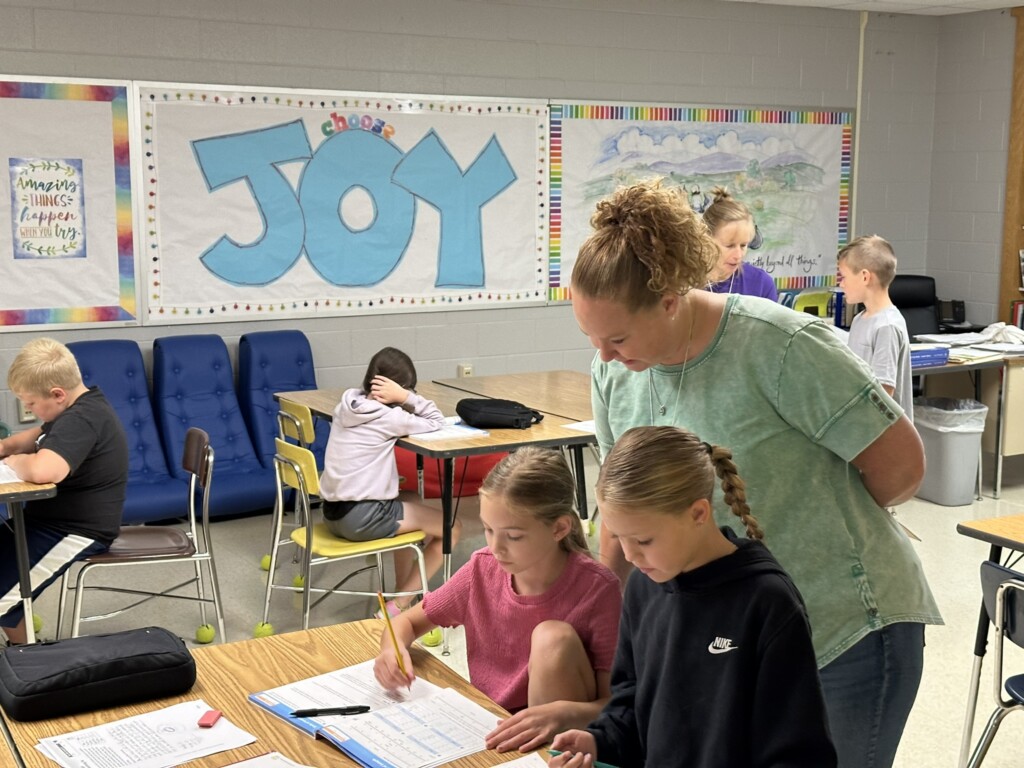
Joy becomes a design principle, not a byproduct.
Joy doesn’t mean school is easy. It means students feel safe taking risks. It means curiosity is protected instead of managed. It means kids wake up believing school is a place where they are seen, valued, and capable.
And here’s the part we might see right past if we’re not careful: We don’t need a tiny school to think this way. Large schools can adopt a microschool mindset. Traditional districts can, too. It shows up in advisory systems that actually matter, in flexible pathways that honor different futures, in grading practices that reflect learning instead of compliance, and in schedules that protect time for connection and support.
It’s an approach we’ve put into practice at Eastern Hancock Schools. Our first microschool, Nature’s Gift, serves as a testing ground for new ideas, allowing us to scale what works for our 60 microschool students to benefit the other 1,200 students we serve in traditional school settings across the district. From empowering students to set and own their learning goals to measuring their growth in ways that extend beyond seat time, we are designing learning experiences that help students discover their purpose and find joy in every school day.
The microschool mindset isn’t about tearing systems down. It’s about remembering that systems are human creations, and that many of the constraints we feel today are inherited, not inevitable. Some rules are fixed. Many more are flexible. And far too often, we underestimate how much permission we actually have.
Permission to pilot. Permission to personalize. Permission to rethink time, space, and structure. Permission to design forward instead of defaulting back.
Microschools get attention because they’re small.
But what really matters is that they remind us of something much bigger: School hasn’t always looked the way it does now. It doesn’t have to look this way forever. And imagining what comes next isn’t radical; it’s responsible.
George Philhower Dr. George Philhower serves as the superintendent at EasternHancock Schools in Indiana. He holds a Bachelors in Elementary and Special Education from Cardinal Stritch University, a Masters in Instructional Leadership from the University of Indianapolis, and an Ed.S. and Ph.D. from Indiana State University. George envisions a time when all students and staff wake up excited to go to school each day. He understands this will only happen when they know they will feel safe and free to be themselves, they will get to feel successful, they will do meaningful work, they will get to play and learn with their friends, and they will be surrounded by adults who love them when they get there. George is convinced that the best way to make this vision a reality is through collaboration among leaders in the field of education who are committed to disrupting the status quo. George works hard to share the work happening in his district and learn from others in the field in order to make his vision a reality.





0 Comments
Leave a Comment
Your email address will not be published. All fields are required.