

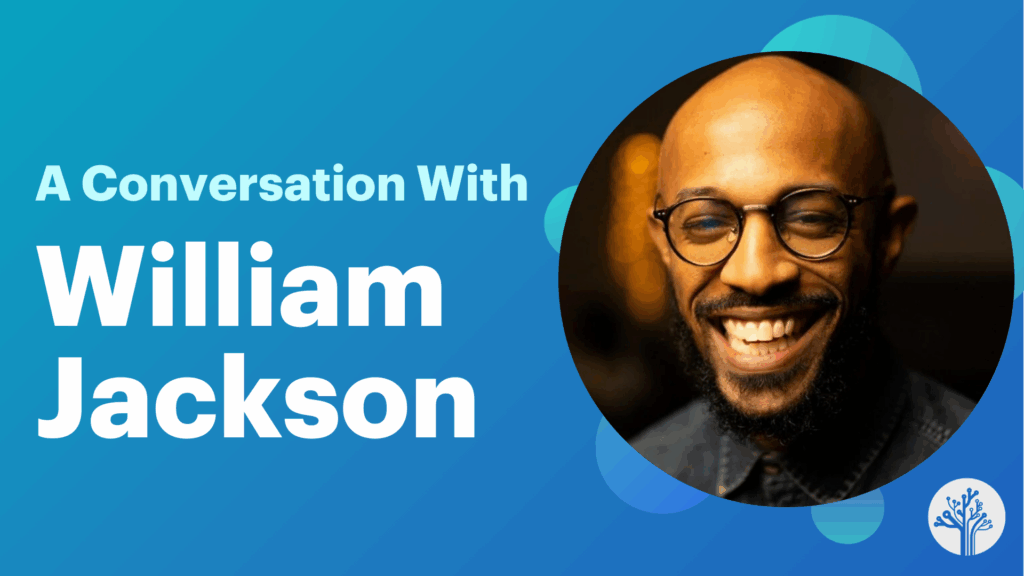
How Can Black Parent Power Transform Education? | A Conversation with William Jackson
Key Points
-
Parents need affirmation, rest, and opportunities to lead for their children to thrive. Village of Wisdom demonstrates the power of parent-led advocacy.
-
Schools must create environments that reflect and celebrate the cultural identities of all learners, ensuring equitable learning experiences.
Shownotes





We’ve been thinking about the collective efforts of the community and utilizing the collective brilliance as a valuable resource and how it can support learners and families. I’m Victoria Andrews, and today I’m joined by Dr. William Jackson, the founder of the Village of Wisdom, a nonprofit organization that uses collective Black parent power to ensure that education decisions about Black learners support their consistent exposure to culturally affirming learning environments. In our conversation, we dive into how collective parent advocacy, affirmation, and culturally responsive teaching practices are reshaping education for all learners.
Outline
- (00:00) Introduction to Village of Wisdom
- (07:37) Empowering Parents Through Affirmation
- (17:11) The Wisdom Hub: Validating Culturally Affirming Resources
- (26:41) My Genius Profile: Creating Love Letters for Students
How are you doing today, William?
William Jackson: I’m good. I’m good. I’m excited to be on with y’all today. Thank you for the invitation to be here and speak with y’all.
Victoria Andrews: Super excited. So, let’s just start with the origin story. What’s the why? Why the Village of Wisdom? Why did you create it?
William Jackson: Yeah. The origin story for Village of Wisdom. I mean, one origin story I tell a lot is that, you know, my mom brainwashed me into believing that all scientists were Black. And so, you know, growing up in a household with parents who really believed that—and then my dad was an aircraft mechanic, so he was always tinkering with things.
And so, I think I learned a lot of lessons about failure being only something that happens when you allow it to be the endpoint. ‘Cause my dad was always fixing stuff, and he always had me fixing stuff, and we never usually fixed stuff on the first day. And so, it was like, you just gotta try and try and try until you fix it. The reason why I bring that up as an origin story is I think those two things mixed together kind of lead to Village of Wisdom, right? Like, we’ve been doing this work for 10 years. One, I don’t think you get to start an organization that’s focused on Black parents in America 10 years ago if you’re not really willing to fail and try and try again.
‘Cause folks gotta remember, we were in a post-racial society when Obama was president. There was a lot of stuff going on in terms of, “Is this even necessary or important?” And then, you know, the reason why I bring up kind of my mom’s brainwashing is a lot of research in the racial socialization and racial identity development literature talks about the need for children of color—and Black children as part of that—to be affirmed around their racial identity, right? And so, the more they can hear, “You’re Black and beautiful. You’re Black and talented. You’re a Black genius”—a thing we like saying a lot—the more likely those children are going to be resilient to the racism that they experience in schools.
So, microaggressions, slights, them being devalued, telling them they need to cut their hair, pull up their pants, or whatever—they can’t talk like that. All of those things are things that kind of can hurt a child’s sense of identity, sense of self, and their confidence. And one of the most powerful antidotes to that is a Black parent’s affirmation to their child to say, “Hey, no, like you are Black and beautiful. You are Black and smart. You are capable of whatever you put your mind to.” And that, it’s a resilience factor. And so, initially with Village of Wisdom, after I was in a Ph.D. program, I got exposed to that research, and I was like, “Oh man, you know, I should try to start workshops so parents could talk to each other about how they were gonna talk to their kids about race.”
The Origin Story and Mission
William Jackson: And, you know, this is after teaching, and I’m 30 at the time that I started Village of Wisdom. And it kind of felt like, well, my mom could have just told me—I could have done this a long time ago. So, you know, I don’t—she’d be like, “Did you need a Ph.D.?”
Victoria Andrews: In true mother fashion. She’s like, “I could have told you this.”
William Jackson: Yeah.
Victoria Andrews: So, there are so many points that you hit upon, Will. One is just that sense of identity. That’s something that we talk a lot about here at Getting Smart as well. How do you develop that sense of identity, especially if your sense of identity is not crystal clear?
And you hit on that a little bit. So, if I’m a parent and I don’t have a strong sense of identity, and nobody’s affirming me, and nobody’s pouring into me and filling my cup, how am I to do that for the child that I’ve been charged to raise? I also think about this in advisory settings at different schools where it’s, you know, a lot of social-emotional learning, a lot of, again, identity work and naming those feelings. And sometimes the adults in those spaces haven’t been given the opportunity to explore their own. So, how do you adequately prepare families, caregivers, and parents to be able to do that when they may not have received that themselves?
William Jackson: Yeah, I mean, that’s the biggest thing. That was one of the first learnings—that you can’t ask somebody to pour into somebody else if it hasn’t been poured into them.
Victoria Andrews: Hmm.
William Jackson: And so, you can’t ask a Black parent to affirm a Black child if that Black parent hasn’t been affirmed around their own Blackness.
And I think another thing to kind of remember about the time is that, you know, the most popular tropes about Black parents at the time were that they were deadbeat dads and welfare queens, right? And so, when you don’t have a lot of positive messages out there, you know, invariably what we kind of heard at the end of it—I remember a parent being like, “Well, I believe you. I need to do this, but I don’t—I don’t know how. I don’t know what I’m gonna do.” And we spent the whole time talking about how. And I think really what she was saying was, “I don’t have it in me.” You know? And that’s not her fault, right? That is a systemic issue. And when you look out in the world and you start to ask yourself the question, “Well, how many times do Black parents get the chance to be affirmed as both parents and Black?” Right?
The most common, somewhat positive conversation that Black parents have had in popular culture is, “Oh, you know, give your child the talk.” And that in and of itself is just a stressful conversation, right? So, that’s not even like a—yeah, you have responsibility, but there’s no affirmation.
It’s a play on the idea of a rite of passage—like R-I-T-E-S—and just this idea that parents have the right to those things as they learn about the affirmation that is required. And so, when you invite parents into restful environments, when you invite parents into environments where they can interrogate, where they’re given the space to transform and all the things that come along with transformation—because it’s typically a pretty rough and ugly process—you give them the right to express, you give them the right to support, and that allows them to be vulnerable enough to even kind of hear that. I think the other thing that we learned was just that you gotta give people the time and space to process through their own identity, right? So, you can have a 34-year-old, 40-year-old Black man telling a story about how the first time he really had to reckon with his race was in college because he was on a football team and he was in a white town, and he kind of realized, “Oh, wait a minute. Like, I am—something is different here.” You know what I mean? But then it also makes you think about all the other times where that just didn’t—
Victoria Andrews: Didn’t even click. Yeah.
Empowering Parents Through Affirmation
William Jackson: And so, you know, I think a lot of what Village of Wisdom is trying to do is create resources and experiences for Black parents to think through that, but also to position Black parents as another form of affirmation. ‘Cause it’s one thing to tell somebody, “Hey, you’re a Black parent, you’re smart, you’re great.” It’s another thing to put them in a position to talk to school leaders or to superintendents, to lead research, to lead analysis, to validate instructional practices. Like, these are powerful positions. And when you do that for that parent, you provide them a new opportunity to see themselves in a luminous light.
But then what you also do is you change other Black parents’ perspectives about what they are capable of. And so, we’ve been trying to be really intentional about that. And, you know, I think a lot of people are hard on the word “empower” for reasons that I would agree with. But from that critique, which is what I will talk more about, is I think our position about how you position parents in places of power and what that does for the parent and what that does for the system that is not used to or has not benefited from their level of insight and wisdom.
And so, those are, you know, that’s kind of three different things. One is the support of those parents. The second is actually giving them affirmation and the space to kind of think through that stuff. And the third is positioning people in places of power because that is one way to affirm somebody’s intelligence.
Victoria Andrews: And I know another area that you guys are super intentional with, especially with parents, is allowing them the space to dream. I remember when we talked before, and you were sharing about just the dream model. For a lot of parents, that’s the first time they’ve ever been asked, “What are your dreams for your young people?” If you’re a caregiver, what’s your—you know, sometimes becoming a caregiver of a young person happens intentionally or unintentionally. So, you may not even slow down to think, “What is my dream for my niece, my nephew, my grandchild that I’m raising?” But can you walk us through what that looks like and why is that so important to your approach?
William Jackson: Yeah, I mean, I think, you know, after years of doing the workshops with Black parents and building community with Black parents, one of the things we realized is that—and this is like in the middle of the pandemic, and, you know, I read Tricia Hersey’s book, Rest Is Resistance. And in the book, when I was reading it, this quote came to mind, and essentially the quote that I say is, “Tired minds, tired dreams,” right? Or “Tired people, tired dreams.” And what that brought me to was just that, like, parents in general tend to be tired. They don’t get enough rest; they don’t get enough sleep.
They’re asked to do more than what is probably healthy for the human body. And then, if you layer on that, what happens when your body is also fighting against different systemic oppressions, right? So, you gotta drive further, or you gotta work harder for the same amount of money, or you don’t get the same access to health benefits, or your children don’t get the same amount of access to health benefits. You gotta deal with a kid that had a racist experience while another parent doesn’t have to deal with that. All of those are the personal impacts of a systemic process, right? Or, you know, systemic issues. So, what we were thinking about is, okay, you wanna ask Black parents to dream up what an ideal learning environment is for young people or for learners. You don’t want them to do that from a tired space.
Victoria Andrews: Yeah.
William Jackson: Right? And so, the dream shift was, okay, what happens if we—not only because we always had a practice of paying parents for their intellectual contributions—but what if not only did we pay them for their intellectual contributions, what if we also paid them to rest?
Victoria Andrews: Hmm.
William Jackson: And what would it mean to have a rest stipend to almost kind of force parents, incentivize parents to be like, “Look, lay down somewhere,” right? And what does that mean in terms of their ability to tap into their imagination? Because imagination, I think a lot of times, comes from a place of stillness, comes from a place of, “Hey, I somehow found a way to just be with myself and in my own thoughts and find a vision of tomorrow.” And so, that was the idea behind Dream, and that was the experience that we were trying to cultivate. And part of the reason why we were doing that is because Village of Wisdom has started to become an organization that was becoming synonymous with an entity that was creating standards for what ideal learning looks like.
And so, if we wanted to kind of stand on the firm ground of, yes, we listen to parents and also we do research, and as a part of that research, we’re asking parents to envision a more ideal future for Black learners in particular, but for all learners, how do we know we can trust the imagination and the standards that are being created—or the imagination that drove those standards? That would mean that the people who had those imaginations were taken well care of, that they were invested in, that they were given the opportunity to do the things that we talk about with RITES in terms of transforming, expressing, but they were also poured into, made to feel good about themselves so they’re not doing that from a broken place or whatever place, and that they had enough rest to dream expansively.
Because, as Ruha Benjamin talks about, right now we’re living in one version of different people’s imagination.
Victoria Andrews: Hmm.
William Jackson: If we want to get to a different type of society and a different type of world, then we have to create an imagination and a vision for that world that is different enough and attractive enough to get people into that world. And so, just think about the level of investment you would want to put into people who are trying to create the norms, the standards, the rules of that world.
Victoria Andrews: I really deeply appreciate the fact that you guys are, one, intentional about recognizing the genius of parents and compensating them appropriately. So often it’s, “Hey, sit in on this interview, provide research. We want to hear your voice, X, Y, and Z. We want to hear your experience,” to an already taxed parent. That’s another ask. That’s another pull. And then if they don’t show up, it’s, “Well, the parents aren’t involved.” No, no, no, no. It’s not that the parents aren’t involved. They already have a whole buffet on their plate, and we’re asking them one more thing. And it might seem like one more thing, but if the scale is already tipped over and they’ve already done so much, then they can’t show up as their best self.
So, I just deeply appreciate you guys, like you said, compensating their intellectual contributions as well as incentivizing rest. I’m so glad that you brought up the book Rest Is Resistance as well. That is such a good piece of writing, and it’s important to recognize for those who might be feeling like they’re on the rat race, especially just right now in the world. It’s hard for us to just detach and turn our brains off. But that goes to what you were saying before about just creating those conditions for dreaming, for imagination, and not treating rest as a luxury, but rest as a right and treating it as such—just as essential as food, air, and water. Like, we are not computers; we need to shut and power down.
Can you share what that is? And I love the idea that it’s a collective effort, but for those that may not be aware or knowledgeable of it, can you provide some more insight?
William Jackson: Yeah, for sure. So, the Wisdom Hub essentially is a place for folks to come and find different instructional and learning resources for young people. But it’s with a twist, right? Because there are a lot of resources, a lot of resource spaces out there. And as I kind of mentioned, Village of Wisdom really—we think about ourselves as a research organization in part.
And one of the things that has happened in research over the last 60 years since Brown v. Board of Education is that people have increasingly created these things called clearinghouses, which are essentially a place where you keep a whole bunch of evidence-based practices. And so, probably for a lot of the school leaders who are listening, they’re familiar with these things, right? It’s like, “Hey, our district is gonna use X, Y, and Z practice that is evidence-based.” And we’re gonna go to the What Works Clearinghouse or whatever clearinghouse that you go to, to legitimize that decision. If you go to the What Works Clearinghouse—which, you know, may not actually be there right now, but people listening to this—if you did, it basically is a collection of the last 60 years of research that’s been funded by the Department of Education. And if you typed in “culturally responsive” or “culturally affirming,” you would get one to two results. Then, when you looked at those results, you would find out that the core of those studies were not about culturally affirming or culturally responsive practices.
And so, you know, a few years ago, I’m here in Durham. You know, I love our district to death ’cause they were trying to do this right. But part of this is, it’s interesting when you see how systems show up because it is demonstrated by what institutions are capable of doing and what is actually available in the ecosystem.
So, our district lovingly said, “Hey, we want 100% of our classrooms to be culturally affirming by 2025.” But it was gonna be difficult for them to get there. Number one, because what are the evidence-based practices that are based in culturally affirming practice that they were gonna—what were the curriculums that were gonna offer that, like in truth? And then two, how would you assess that?
Victoria Andrews: Hmm.
The Wisdom Hub: Validating Culturally Affirming Resources
William Jackson: And so, the reality is, is that those things did not necessarily exist, right? And so, a big part of what Village of Wisdom has been trying to do is, through the lens of Black parents and Black families, introduce standards and measures for a culturally affirming practice so that when districts like Durham say they want to do that, they could actually measure and assess, “Yeah, we are doing culturally affirming practice,” or not, right?
And then even further than that, a lot of times what ends up happening is that any district leader or school leader who’s done a PD or had teachers go through a PD, you show them how to do something, and what’s the first thing probably people are gonna ask for? “I want an example,” right? And so, we heard that over and over again. So, we want examples of what this is gonna look like. And, you know, Amber—shout out to Amber Majors Ladi on our team—she, you know, was familiar with the resource libraries and the limitations of these clearinghouses, and she was like, “What if we position parents to be the validators of culturally affirming practice?”
Now, we have this growing library of resources that we hope folks listening to this might say, “Hey, we want to submit some of our own lesson plans and learning plans to be validated by Black parents.” And you have to ask yourself the question, “Why would we do that?” Well, if you are a Black caregiver and you have a school-age child, I’m going to say 97.5% of you have asked some other Black parent, “Where am I going to send my child to school?”
Victoria Andrews: Mm-hmm.
William Jackson: Because I get it. I understand that when I’m saying I’m going to send my child to school, I’m asking: Are they going to take care of my child’s cultural identity? Are they going to take care of my child’s academic identity? Are they going to be safe? What are they going to have to deal with? All of that, in many ways, is embedded in the criteria review of the lesson plans. That experience is not about you having a cultural night. That’s not about you doing a pep rally. That is about when that kid is in science class, are they going to have a chance to learn about Mae Jemison when you talk about space?
Victoria Andrews: Yeah.
William Jackson: Are you going to spend all your time talking about Buzz Aldrin? Are you going to talk about the mathematical minds that got Buzz Aldrin into space? Are you going to spend all your time talking about “Houston, we have a problem” and just erase these Black women who created all of these sophisticated physics? You know what I mean? What’s going to happen? Right? And so, we’re looking for lesson plans—and I talk about this a lot—that are going to highlight the intellectual contributions of Black people.
Because when a Black child sees other Black people and the intellectual contributions that they’re making, then they believe that they deserve and have the right to contribute intellectually to a field. And if kids don’t believe that they have the right and the ability to contribute intellectually to a field, then why would they participate well in classrooms? Really, that’s the type of belief, that’s the type of mentality, that’s the type of soul that’s in the review process for these lesson plans.
As a Black parent, when you go on there, you can be like, “Man, these are resources that I feel like see my child.” And if a teacher is using those types of resources, what kind of confidence do I now have in that teacher?
Victoria Andrews: Kudos to you and your crew, because that goes back to what you were mentioning before about just empowering people to know that they are indeed verifiers—not just on a whim of, “Ooh, I know Will, so his work is good,” but using an actual rubric for excellence so that it’s not just to the benefit of them, but to the benefit of the greater good. Like you said, not just for Black children, but for all learners. Because everybody benefits from learning about Mae Jemison. Everybody benefits from learning about those who are often overlooked or not mentioned. If you’ve sat in any classroom, you know you’re going to hear about the same people over and over, and so you automatically just turn off your brain switch the minute they bring up science because it’s like, “I already know the key people.” Or even Black History Month—it’s like, “All right, Martin Luther King, Sojourner Truth, blah, blah, blah.” But even in those core content areas, being able to highlight and name the specific contributions of people of color and Black people more specifically allows, like you said, that door so that other young people can see themselves in that space and become more engaged in the topic that’s being covered.
That goes along with both empowering the young person as well as those parents and caregivers who may not even have seen themselves in that role beyond, “If I send my kid to school, then I’ve done my part.” And it’s, “No, no, no. There’s space for you to do so much more.” You guys create those lanes, avenues, and models that can be replicated in other school systems, spaces, and communities as a key way for parents to actually see themselves and to feel like they are contributing to the learning of their young person.
Before we wrap, Will, can you share a little bit about your My Genius Profile generator? I know that it’s still in the works and you guys are getting ready to launch it in the fall, but just let our listeners know what you’re doing in that way.
William Jackson: Yeah, the My Genius Profile generator, I think, gets at what you’re talking about, which is this concept called targeted universalism. I believe the brother’s name is William Randolph, and essentially he came up with this idea of belonging and togetherness. Essentially, the point of targeted universalism is that you build something for a particular group, but it tends to benefit everybody else, especially if that group is often excluded or systems aren’t designed well for them.
William Jackson: So, targeted universalism is the idea that you build something for a specific group, but it ultimately benefits everyone, especially when that group has been historically excluded or under-resourced. A classic example of this is the handicap ramp. You design it for people in wheelchairs, but it also benefits parents pushing strollers, people with canes, or delivery workers with carts. It’s a universal solution that starts with a specific need.
That’s what we’ve seen over and over again with our culturally affirming learning framework, which is the foundation of the My Genius Profile tool and everything we do. Consistently, people have said, “This is going to benefit all children.” And we’re like, “Great. That’s exactly why we’re talking about it.” But here’s the thing: the stuff we’re talking about is just good educational practice.
For example, I’ve heard from parents over and over again that their kids aren’t interested in school. They say, “There aren’t enough people who look like them in the curriculum,” or, “They don’t trust their teachers.” Trust is critical. As Brené Brown talks about, without trust, you can’t be vulnerable, and without vulnerability, you can’t love, learn, or create. If a classroom isn’t a place where a child can love, learn, and create, then they’re not going to thrive there.
Interest is another key factor. Self-determination theory by Deci and Ryan explains that if students aren’t interested, they won’t have the energy or motivation to persist through difficult learning tasks. But the second you connect learning to their interests, everything changes. Let me give you an example.
Johnny comes into the classroom and says he’s interested in dirt bikes. Kwan comes into the classroom and says he’s interested in dirt bikes. Immediately, when I say “Johnny,” you’re probably picturing a white kid. Dirt bikes for Johnny might mean motocross, something wholesome and exciting. When I say “Kwan,” you’re probably picturing a Black kid, and dirt bikes might make you think of Rough Riders or riding in the streets—something that society often criminalizes. So, Johnny gets to talk about dirt bikes in class, but Kwan doesn’t. Johnny’s interest is seen as valid and worth exploring, while Kwan’s is dismissed.
Victoria Andrews: Yeah.
William Jackson: This is why culturally affirming learning environments are so important. It’s not about giving kids something different; it’s about giving all kids the same opportunities to connect their interests to their learning. But because of biases—whether conscious or unconscious—some kids don’t get those opportunities.
That’s what the My Genius Profile is about. It’s a tool for parents and children to work together to identify a child’s strengths, interests, trusted relationships, and social causes they care about. Through this process, parents write a love letter to their child’s teacher, introducing their child in a way that highlights their unique genius. It’s about creating a million love letters from Black families to the world, saying, “This is who our children are. This is what they’re capable of.”
Victoria Andrews: That’s such a powerful tool. And I love that it’s not just a questionnaire but a conversation between caregivers and their young people. It’s a way to elicit deeper responses and create personalized learning opportunities. I’m excited to see how this tool evolves and hope you’ll come back to share updates once it’s launched.
As we wrap up, Will, what’s one message or takeaway you’d like every listener to carry with them after this conversation? You’ve touched on so many important topics—collective genius, empowering parents, building systems that benefit everyone, and more.
My Genius Profile: Creating Love Letters for Students
William Jackson: One thing I learned in grad school that has stuck with me is this: learning is the connection of prior knowledge to new information. Prior knowledge is what students bring to the classroom—their experiences, culture, and identity. New information is what the school provides. If you present new information in a way that doesn’t honor a child’s prior knowledge, you’re robbing them of the ability to learn.
When we tell kids they can’t bring their language, culture, or identity into the classroom, we’re telling them they can’t access their prior knowledge. And if they can’t access their prior knowledge, how can they learn? So, my question for everyone listening is this: Are you contributing to creating classrooms where all children can bring their prior knowledge and connect it to new information? If not, how can you start?
If you’re feeling stuck or unsure, Village of Wisdom has resources to help. Check out the Wisdom Hub, the My Genius Profile generator, or our professional development opportunities. We’d love to support you in this work.
Victoria Andrews: Thank you so much, Will. This has been such an insightful and inspiring conversation. I appreciate the work you and your team are doing to create more equitable and affirming learning environments for all students.
Guest Bio
William Jackson
Dr. William Jackson is the founder and “Chief Dreamer” of Village of Wisdom (VOW) founded in Durham, North Carolina. Rooted deep in local context and community transformation, Will, with his amazing VOW team, has developed a dynamic platform and approach to power building with parents where they engage them in community-driven research, convening, and art. VOW’s work systematically addresses the negative cognitive implications of racial bias on Black learners. A former teacher and current parent, Will has a Ph.D. in educational psychology with a research focus on how Black parents make decisions related to their child’s racial identity and education. Through the work of VOW, he has built a reputation as a local catalyst and emerging national waymaker. He has led his organization on a mission to identify culturally affirming instructional strategies validated by the wisdom of Black Parents. For his efforts, he has been awarded numerous international and national awards and fellowships, including Ashoka, Echoing Green, The 1954 Project’s Luminary Award, and Camelback Ventures.
Links


0 Comments
Leave a Comment
Your email address will not be published. All fields are required.