


John Winsor on the Open Talent Economy
Stay in-the-know with innovations in learning by signing up for the weekly Smart Update.
Transcript
This transcript has not been edited for spelling accuracy.
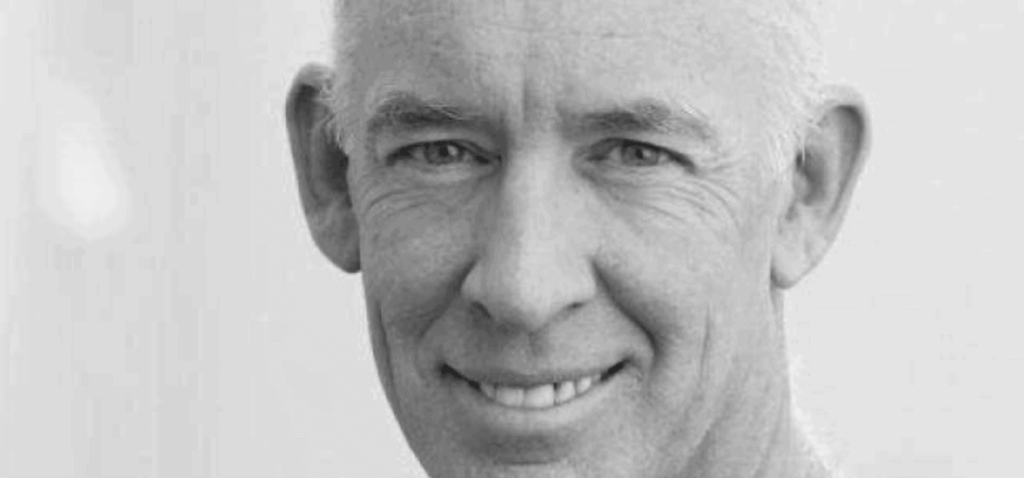
You’re listening to the Getting Smart podcast where we unpack what is new and innovative in education. I’m your host Jessica and today we’re talking with John Windsor on the open talent economy. John Windsor built a big publishing business around sports and fitness. He saw the business changing and started crowdsourcing articles from athletes that got him interested
in open talent, otherwise known as work outside of full-time employment, which includes the freelance and the gig economy. Three years ago, he joined the faculty at Harvard Business School as a visiting executive and founded Open Assembly, an organization that hosts conversations about the future of work.
In this conversation with Tom, John describes the shift to open talent. Corporations are interested in the shift because of the potential to get work done faster, better, and cheaper. Individuals like the flexibility and the variety. Tom and John also talk about the new social contract that would be needed in order to
support open talent markets. Let’s listen in. Hey, John Windsor. Welcome to the Getting Smart podcast. Hey, thanks Tom.
Glad to be here. I discovered doing some research that you were at Colorado College at the same time that I was at Colorado School of Minds. Wow. Not too far away from each other at all.
Yeah, but worlds apart in terms of learning philosophy at least 40 years ago, how did you get to Colorado College? I think that the main driver at the time was I wanted to be a skier and I was from the Midwest and I didn’t really, it wasn’t a conscious choice that I ended up at such a progressive school.
That’s interesting. I fell in love with a Denver girl and decided to stay in state so that mine was just about as accidental. Although I went to School of Minds to be an Arctic and glaciological scientist because I had really fallen in love with the mountains, had done a lot of climbing and skiing as well.
Part of being in Golden was just being in the mountains. Yeah, same thing for me. I was kind of an Alpine skier, area skier when I went to CC, but the CC has quite the heritage of climbers and mountaineers and that influenced me in a huge way. Colorado College is famous for being a big block school where you study one thing at
a time and I think the school is still organized in that way. Does that style of learning still make sense to you? Yeah, I attribute a lot of my success in life because of the block system. I was from a small Midwestern town and not in a factory town called Canton, Illinois. International Officer was the biggest employer.
Coming to a school that was more academically rigorous, just the idea of focusing on one thing at a time. Man, it made such a huge difference. It was super hard for me, but it gave me the ability to try on lots of different careers opportunities and philosophies and thinking.
I especially noticed that when I went to DU for business school, I got out of CC and then worked for a year and a half and then wrote a book. As I was getting that book, going through the editing process, I quickly decided to give my MBA and applied. A week later, I was in classes.
So, John, you did the MBA at DU the same time that I did as well. Really? Were you there too? I started wine at Pitt when I was in the coal business and then I finished at DU in 84 the year you started.
Exactly. Yeah, that was great. Well, if you remember, it was just such early days there. Pete Nehoff, I don’t remember Pete Nehoff, such an amazing guy. I don’t know if you remember Ron Rosuto in finance.
Ron’s still there. No kidding. I got an energy finance degree, learned a lot from Ron and still think about him in those classes when I think about an investment and net present value and what the rate of return is, I think, back to Ron 40 years ago.
Yeah. So, what’s amazing to me is like Ron’s been so instrumental in my life through these 30 years. He and I haven’t spent that much time together, but on the other hand, both my nephews are at DU and play lacrosse.
So, I’ve reconnected with Ron and then my son Charlie has decided he just fell in love with DU through Ron. So he’s an incoming freshman this year at DU. After we left, I think Bill Daniels made a big gift to the school and they really have done a nice job of incorporating ethics into the curriculum.
I really appreciate that about the Daniels School of Business. Yeah, it’s always great to go to a place that gets way better after you leave. I don’t know if I could ever get in there again. Right. I would say the same thing about Colorado School of Minds.
It was really a plug and chuck 40 years ago and I had the chance to visit campus last year and it’s really student-centered, project-based, really focused on helping young people make a difference in the world. Still, obviously, very academically challenging, but I think much more thoughtful pedagogically. So it’s been fun to see both of those schools really blossom.
Yeah, that’s great. It was super interesting for me because I took Charlie both to DU and to CC on the same day to look at it and DU was just unbelievable. Very focused on long-term success and helping and learning programs for kids. And then we went to CC for the same kind of introductory and it was all about, hey, you
can travel the world and you can take blocks off and you can do all this great stuff. I was so excited about CC for Charlie and I asked him, what do you think? This is so cool, isn’t it? And after comparing and contrasting to it, he just looked at me and said, CC’s great. It’s summer camp for rich kids.
And I was like, oh man, that’s not how much my experience was, but that’s kind of how they sold the school versus DU was very much focused on the problems of the world today. And so, well, I think at the core of CC, they still have the block program. It’s unfortunate that maybe some of the marketing and some of the way they talk about it isn’t what they use to talk about.
John, how’d you get into… It sounds like you started writing right out of college and how’d you get into the publishing business? Because my dad, actually, the family history of newspapers. So my great-grandfather did one of the first ESOPs in the country in media.
He was on the management team of the Kansas City Star and back in the early… In 1911, I think it was the date, but back then, much like it is today, that media companies are really patronages because they don’t make any money, especially newspapers. And so the guy who owned the Kansas City Star ran out of money and the senior management took over and it was pre-advertising.
So it wasn’t worth anything. And unfortunately, my great-grandfather was lucky enough to be in the right place at the right time. So advertising, the idea of advertising took off. If you’re going to marry into one of his four daughters, you had to go into the newspaper
business and my grandfather had a paper in Illinois in Missouri, a place called Booneville. And then my dad kind of went into the same business. So I kind of grew up since I was… I don’t know. My first memories are me at the newspaper hanging out and high school was all about
carrying lead blocks from the basement up to the smelter for the hot lead press, running the press in college and things like that. So that started super early and putting ink on paper is kind of my blood. But I got intrigued. One of the things…
And you’ll totally appreciate this because of your dedication to fitness. I’m the same way I played football in college and got into climbing and running and all those kind of things. And got out and started my first job and I started putting on a bunch of weight. And I just remember I was in New York City for a meeting and I’d gotten pretty heavy.
And how it was in the early 80s, I went outside the hotel and said, hey, where can I run? And the guy was like, dude, I would not run around here. This is dangerous. So I went upstairs and had a big hamburger, french fries and milkshake and put on a few more pounds.
And I just decided to write a book called Fitness on the Road, Kind of Where to Stay to Stay Fit. And that took me on a crazy journey of traveling around the country with my bike. And my publisher supported me as I tried to discover the best fitness trails and hotels to stay in.
Back then, only four seasons really had fitness centers in their hotel. So it was early days. Wow, that’s interesting. I’m curious now with your running and cycling, do you track that? Use any kind of a tracking app?
Yeah, I do some Strava stuff. I was really, really heavy into racing. I started a magazine publishing company around. So I had Sports and Fitness Publishing, which was a regional title and Women’s Sports and Fitness and Gravity Magazine and then a bunch of magazines in the inline skating biz.
And so I was really, really into racing back then. Unfortunately, I kind of blew myself up, you know, race Nordic skiing. But I had this crazy idea that we were going to go around and set speed records in the 90s on all the seven summits. So the first one we did is we went to Kilimanjaro and set the world record running up and down
that. Wow. And then I went to Aconcagua with the same idea, but got weathered off two years in a row. It just destroyed my knees.
And so, you know, as much as I love to run and climb, I don’t, you know, I’m not as analytic as I could be. And, you know, certainly on my bike, I am for sure. But I tend to, you know, one of the issues for me with analysis is that I get too obsessed, right?
And it takes some of the joy out of it. I’m always looking at, especially in Strava, right? Like, what, you know, what did I do eight years ago on that same section? And, oh my God, I could push it a little bit harder and done better. So.
It’s cool that you, that you were able to make a career out of a couple areas of passion between publishing and fitness. Yeah, I see. I feel super fortunate, you know, one of the big inspirations was the thing that really pivoted the career in publishing was that, you know, that we found this bankrupt magazine
called Women’s Sports and Fitness that Billie Jean King had started. And, you know, being here in Boulder, my wife at the time was a professional triathlete and a bunch of her friends, and they really wanted a magazine of their own. And, you know, we, I put everything on the line to go buy that. And lo and behold, you know, women, women started, you know, doing sports.
It was funny when I, when I was going to buy that magazine at a bank, I went to Nike and they were some good friends, Mark Parker and Tinker Appfield. I said, hey, should I put my house on the line and do everything to kind of promote women’s sports and, and Parker and Tinker looked at me and said, yeah, I think women are going to do sports one of these days.
I think it’s, it might be a big thing. You should do it. And so, you know, 15 years later. It turned out to be good advice. Yeah, it did turn out to be great advice.
I sold the magazine to, to Condi Nost in 2000. It was, it was a great experience for sure. Let’s fast forward to the, the topic of our discussion today. Open talent. Yeah.
How, how and where did you get interested in this idea of the future of work? Well, I mean, it’s, you know, it was really a necessity, right? So when I bought women’s sports and fitness, one of the things that, that made, made women’s sports and fitness work financially after being bankrupt is that I had no capability to hire any, any, you know, writers or editors.
I could hire a couple of editors, but I kind of flipped it on its head and said, well, you know, man, there are lots of great athletes that are out there doing super cool stuff. Let’s let the athletes write the articles and we’ll just edit them. You know, let’s let them tell, tell real stories and not have some, some writer following an athlete around and kind of try to interpret what they’re doing.
So that got me super interested in the whole thing. And then, and then when I sold that magazine, what was really inspiring to me, well, what, what, one of the things that was inquisitive to me was that we, we knew that the brands we worked with, especially like big car brands or, you know, food brands had a ton of money to spend and they wanted to spend it on healthy women.
And by the time they had, you know, those marketing dollars, so many intermediaries would get kind of take a piece of that. But by the time they would, you know, advertise at women’s sports and fitness and talk to their audience, they had just pennies on the dollar. And so I, you know, I read this book called Diffusions of Innovation by Everett Rogers,
which was in the, you know, in the 1950s and he was describing how hybrid currencies were, you know, should be distributed, you know, with the innovators and early adopters, early majority, the majority, and laggards. And I, you know, really dawned on me. I thought, oh man, that, you know, our readers were really early adopters.
And if I could take that community and not be an audience for advertisers, but actually put them at the top of the funnel and then charge advertisers for strategy and research to help them design new, new products and marketing, that might work out okay. And so we were kind of one of the first, we kind of called our survey, radar communications, but we called our servers, Anthrojournalism, because we were a bunch of journalists, but
we were interested in how anthropologists went out in the field and got information. And we did a bunch of ethnographies back in the day and got women to tell their stories to brands and did a lot of amazing global work for a bunch of companies. So that’s really started the journey. Instead of us trying to be the expert, right, the, you know, the expert in the field, it was
that kind of humility saying, I don’t know, let’s go ask, let’s go ask people that are really doing it. I could never as a middle-aged guy tell you what it meant to be a female athlete. But, you know, but I knew a lot of female athletes and why not ask them and let them tell their story.
So what is open talent anyway? How do you define the concept? Yeah, so I mean, it’s been a long journey, right? So we did, we did that. Back then I wrote a few books on co-creation.
I was calling it co-creation back then, co-creating with your customers in the marketing space. And then, you know, Jeff, I wrote the book in 2006 called Crowdsourcing, which seemed to take off and that, you know, caught a lot of attention. But because outsourcing was a big deal then and it was really looked in a negative space, crowdsourcing kind of took that negative energy as well.
I mean, it was great to use that word as a disruptor to be provocative, but it really wasn’t helpful. So we’re using today, we’re using open talent as a term to think about talent in the biggest sense that it’s not a closed employee-employee relationship, but it’s really open talent. And you can work with people, whether they’re freelancers or you can contest or gig workers
or, you know, anyway, you know, the taskification of work and the ability to do work together. So everything, we want to create, we’ve tried to create that as an umbrella term to include things like open innovation, crowdsourcing, co-creation, you know, collaborative innovation, freelance, everything. Should everybody be in that space or is it something that complements full-time employment?
What’s the homeostasis that you see five or ten years from now? Yeah, I mean, I think, you know, there’s some dynamics that make this possible. I mean, I think back when I had women’s sports and fitness, you know, I spent a couple of hundred thousand dollars in 1995 stringing my offices with ethernet cables so that they could all go on to dial up and get email.
And now, you know, the technology, we just walk into a coffee shop and there’s, you know, Wi-Fi and we can do anything we did back then, but for free. And so you see a rapid drop in the price of technology and, you know, this kind of gateways and expert gateways that you had to go through certain people to get to the knowledge. Now knowledge is ubiquitous.
And so I think that’s one dynamic, the drop of price of being an entrepreneur and doing what you really want to do, being a part of what I would kind of call the passion economy. So, you know, if you’re into being an educator, why not sell your lesson plans online on some of the platforms that allow you to do that and make extra money? So I think there’s that.
There’s also the fact that, you know, some of the statistics we’ve seen at Harvard are, you know, the average employer spends 0.03 percent of an employee’s salary on job-specific training. So, you know, specifically tool towards skills for that job, whereas the average freelancer spends 15 percent of their time learning. And my sense is, as an employer, I want to be around the people that spend the most energy
on learning and be in creating a learning culture. And so to me, that demands, you know, new ways of engaging with people. And, you know, freelance is certainly one of the options. It’s early days. And even though it’s been happening for 20 years, you know, this kind of open-talent movement,
lots of great platforms that are out there and a lot of platforms are trying to figure out how do we make it a much more sustainable thing for people, not just an adjunct to a traditional job. Yeah, let’s dive into that. It’s clear that new commerce platforms that make it easier, much easier to start a business, that new communication platforms that make it much easier to code an app or to create a campaign,
new talent platforms that make it much easier to sell your time and your craft, new platforms that make it easier to take advantage of a free hour or two in a car, right? All of those have created opportunity for people. But how do we create an open-talent economy that is equitable for everyone? That really gives people a fair shot at making a living wage.
Yeah, that’s a great question. I think that’s a big concern. We have a thing called the Collective, which we have about 40 members, both the demand side folks who buy open talent and then all the platforms up or top-tell, top-coder for the answer.
And we’re all concerned with that. We’re all concerned with how do we create this into a sustainable movement? I think it’s such a nuanced layer, right? There’s the issue of the fact that in the US, at least, that benefits are tied to employment. And that is a huge issue of not allowing people to have the freedom to pursue the things they really want to do.
Yeah, I mean, we should probably underscore that. That’s an idiosyncratic solution. The rest of the world doesn’t typically tie health insurance to employment. Exactly. Right. And in some respects, the solution that we backed into does not position the United States well for this
what appears to be a global direction towards open talent and doing it in a way that is sustainable and equitable. Is that fair to say? Yeah, I totally agree with that. I think that puts us at a real economic disadvantage. You know, one of the things that’s happening that we see a lot is that, you know, large companies are deciding to use open talent
because of the current political situation with the administration changing policy around allowing immigrants in H1 visas and those kinds of policy changes. What’s transpired is companies have decided I need great talent and I can’t bring them here as a place-based solution. So I have to have another solution. It has to be digital. I need a platform to do that.
How do I find those folks? You know, the reality is, and this is a judgment on the need to create sustainable workflows for everybody. But we just live in a meritocracy or at least what’s happened is our digital marketplace has created a meritocracy, whether that’s the right product to buy on Amazon or it’s the right talent to use. And, you know, I see this all the time.
I mean, I had an experience a couple weeks ago that just blew my mind. And it was, you know, I have probably like you, you know, I’ve gotten some mobility issues from all the fitness I’ve done, all the exercise I’ve done over the years. And so I saw an ad on Instagram for a, you know, for a yoga class specific for hip mobility for $69. Since I signed up for it. And essentially it was a guy, his name’s Lucas, and he has a, you know, he has a studio in Barcelona.
And you sign up for his hip mobility class. It’s essentially 21 days in a row. And he does a 15 minute video with his phone, talks you through stuff. You can either do it live or then it’s, you know, categorized. And it was all kind of done on a private Instagram channel.
When I looked at the private Instagram channel, he had over 5,000 people that had signed up at $69. So for 21 day class, spending 15 minutes a day teaching, he was making about $400,000 on that class. And so, you know, it’s mind blowing to me. Like the idea of a yoga instructor in a place based play, you know, spot like Barcelona to be able to have an online class with zero costs. And create $400,000 of revenue and really, you know, do it in a way that changes the lives of his customers.
It’s not like he’s the world’s authority on hip mobility. He just says he’s entrepreneurial and he’s decided to kind of use the digital tools that we have to do things. So, you know, I think that there’s a bit of that, right? The people that I see rising to the top on these platforms are they’re super entrepreneurial. They do things in new ways.
They’re at the very cutting edge of a new emerging, you know, field or technology or style of doing something. And they do it really, really well. That doesn’t mean that, you know, I mean, unfortunately, there’s a long tail and the people that are doing the most entrepreneurial things, it doesn’t mean that trickles down to the rest of the folks that don’t have that kind of that optimal entrepreneurial mindset. And it puts a lot of pressure on those folks economically.
So for this to scale in equitable ways, do we need to create portable benefits, portable, yeah, retirement programs? Yeah, for sure. And we’re working with a couple of insurance companies globally to do that. And there’s a lot of concern from industry that that’s one of the things that needs to happen.
Right. And I think philosophically, what we’re seeing is that we know from the work we do at Harvard, because I’m an executive resident at a lab called the Laboratory for Innovation Science at Harvard. And, you know, we’ve done about a thousand projects around open talent. We know from a lot of the research we’ve done with NASA, NASA has a very powerful open talent platform called the Center of Excellence for Collaborative Innovation.
And as we look at those projects, we know, last five years, they’ve done about 400 projects. And we know that qualitatively that using open talent results in as good or better results from a qualitative standpoint, interviewing the people that did that. But the results happen four to five times faster and they’re eight to ten times cheaper and, you know, super powerful results. You know, the problem is, is that it cuts all the intermediaries out, right?
And it’s instead of hiring a consulting firm that’s going to, you know, do a bunch of research and focus on solving a problem. It’s just getting way more fluid and it’s not only becoming more fluid externally, but that efficiency is happening inside organizations as well. And learning cycles are becoming much, much quicker. Unfortunately, that means that with that efficiency, people are saving lots and lots of money, but that means reduction in not only jobs internally, but also in jobs from consulting companies and other, you know, smaller companies that serve places like NASA that make it more difficult, right?
It’s, it becomes a much more of a competitive marketplace. And so I think the only way to go is exactly what we talked about is to create portable benefits, to create social systems that allow for, you know, a minimum income and create a place that is fairer and more equitable for everybody. Hey listeners, Jessica here. I wanted to just take a quick break from today’s episode to let you know that Getting Smart offers advertising opportunities on our podcast and on our website.
Do you need to get the word out about a new campaign or initiative? Want more school leaders and teachers to plan for the new school year with your EdTech product in mind? If you’re interested in sponsorship or want to learn more about ad placements, just shoot me an email at info at GettingSmart.com. All right, let’s get back to the podcast. Three years ago, you started an organization called Open Assembly that produces content around open talent, hosts a community, does some consulting.
What are you trying to accomplish with Open Assembly? Yeah, well, originally it just came out of our work at Harvard. People said, you know, the guys at Harvard, my partners, they really want to be academic or they want to focus on the academic side of things and not interested in helping companies adopt these kinds of new things. What we find is, you know, at the research at Harvard and some of the research I’ve been involved with, even as a subject, is that, you know, adoption is really, really difficult inside organizations, especially when the technology threatens the identity of people. And, you know, you see this over and over in places like NASA where you’ve got, you know, eight heliophysicists working on a problem for, you know, for a dozen years with millions and millions of dollars of budget and it goes out on an open platform and a retired, you know, cell phone engineer solves the same problem in 20 days and creates four times the, you know, the success for, you know, $30,000.
It really threatens the identity of folks that have been working on stuff. So, so we’re trying to figure out how, you know, a few things. One, how do we help the adoption process? Because we feel like if more companies adopt open talent, there’ll be more of a movement to create the kind of political solutions we need to, to make things more equitable. You know, that means changing a lot of the behaviors inside companies.
It’s super interesting to me as we sit in this age of COVID, the biggest issue that we faced as an industry before COVID was that most companies interested in adopting open talent were reluctant to go down the path of letting anybody work remotely. Like they didn’t, you know, their attitude was most companies attitude was we can’t trust people that we don’t see every day and know that they’re doing the work. So, so that’s kind of been knocked down. You know, my sense is, is that we have all the research and we understand the efficiency of doing things. The second step really is to get the adoption from companies that say, hey, this is a way to not just have, you know, employees, not just because it’s more cost effective, but because knowledge, their faster turns ability to be more efficient in discovery.
Get getting things done. And we’re also seeing that embedded in software that open talent starting to become embedded in software, which is really intriguing to me. But I think we’ve got to create enough of a movement so that it puts pressure on things politically. And then we, you know, then game obviously is to change things culturally so that we have the kind of benefits that everybody needs. But, you know, unfortunately, I think we’ve unleashed the Pandora’s box of technology and we’re, you know, we’re a decade at least away from solving all these issues that technologies brought brought upon us.
Let’s talk about education for a market of open talent. What should high school look like? What should we focus on? What kind of learning experience do you think would benefit young people? Yeah, so I’m super intrigued with that.
You know, I think the place to start thinking about that is actually in some of the experimentation is happening. That’s happening on kind of upskilling in, you know, on the kind of the platform level. A few of the platforms and, you know, TopTal has kind of been one of the leaders. They’re doing an amazing job of actually analyzing the difference between the demand side and supply side. What skills are in demand?
Where do companies not have supply? And then how do they go into their community and train people? So one of the examples they talked about not too long ago is they, you know, they did some analysis and they realized that AWS software engineers were in high demand. Low skills are not in low skills, low supply and low connection. So they actually went out to their community and have paid people to reskill and guaranteed them work in this field.
And I think, you know, that’s part of the solution. In my sense is that, you know, that the big thing that high school needs to really focus on is being more experiential and learn how to learn. Right. And I think there’s two areas. And I got keenly sensitive to that. Both my boys just graduated from high school and I have two other kids that are in the middle of it.
So we’ve tried lots of different options because of a lot of different things that have happened in their lives. But my sense is that, you know, as you and I’ve talked about, Thomas, you know, I think there are two things to to accomplish at the high school level. One is to create a safe place to learn and to fail, right, to experiment with things. And then and then a vessel to allow for experiential learning and and to just mature, right, to allow for finding one’s passion and finding what’s what people are interested in, not not for life, but just to begin that search. So.
We recently interviewed investor and author Ryan Craig, who’s now champion for hard sprint to a good first job. He said his basic advice is if you don’t get a free ride to a top selective school, then find a hard sprint to a good first job, a free or debt free, probably technology training program that gets you on the road. On the wrong of the employment ladder. What do you think of that? New emerging view of post secondary.
Is that I think it’s right on. I don’t know. I mean, especially, you know, as I sit here with two guys going into college and wondering if they’re going to have class in the fall and thinking about the value of an education if you’re going to have a free ride to a top selective school. What’s the value of an education if you know if those universities happen to be, you know, promote this year. What’s the what’s the value. Now do you think about that compared to all the other online schools. I mean, you’ve seen that, you know, we’ve seen that really happen in some stuff.
I mean, I think that’s the value of a free ride to a top selective school. I mean, you know, I think that’s the value of a free ride to a top selective school. I mean, you know, I think that’s the value of a free ride to a top selective school. I mean, you know, I think that’s the value of a free ride to a top selective school. There are 40,000 people take the class.
And I think, you know, our ability, even as high school students to go into an edX system or Coursera, whatever platform and start taking classes from Harvard is kind of astounding. It’s really, really, you know, interesting to me that we’ve really created a system that has much more access to people and I would concur. I mean, what is that getting on the path to finding a job, and the other thing that’s really, really it about open talent platforms is that you can get in and start working today, right, and on any field you want to work on, and a lot of that that work is, is to learn, right, is to learn and experiment and try and in, you know, for me as an employer, I would rather hire somebody who, you know, let’s just take graphic design, you know, instead of somebody who can work for a firm for three years and maybe done 10 projects. projects for those three years that are big projects or somebody that’s been on a platform that’s done
in those three years a few hundred projects and had some very quantitative results that are measurable and you can see the data on what they won and what their reputation ranking is on delivery. It seems like such a so much more of a sure bet to get somebody like that to do your work, to do the project that you need done. So from an employer standpoint, it makes a ton of sense. Yeah, John, you reminded me of the last day that I was in a high school before they all
shut down. I met a young man in Boise that was not only taking some classes on Udemy, he was teaching classes. He’d take a class and then he’d turn around and advertise a 3D modeling class and he’d have 5,000 people sign up and pay him 10 bucks to teach a class. Yeah, that’s so awesome. I think the big thing is that the overall cultural feeling, to me, the scary thing is it’s a retraining mindset of the population.
Instead of thinking about it as you’re going to work and you’re looking for some kind of a patronage, patriarchal relationship where the company is going to take care of you, these days you’re on your own and if you’re aggressive and you be creative, then you can do exactly those kind of things. You can make a career for yourself very, very quickly. But if you don’t jump in and engage and be passionate about it, it’s really, really hard.
There is such an exciting level of opportunity for young people that are aggressive, have an entrepreneurial mindset. I guess my big worry here, John, is just the does this lead to the inevitable widening income and wealth gap in society? Is there any way that we can prevent that? You know, I don’t know how to do that in any other way besides some kind of,
you know, some form of universal income. There’s just no way to bring people out of the situation so many folks find themselves in today. You know, it’s not, to me, it’s, you know, being an entrepreneur takes a few things, right? It takes some space to be entrepreneurial and not only be creative, but also be in a safe space that allows you to do some failure. But also, I think the big thing is, is like, how do you create the space to not be
distracted, right? And I know in my own life, you know, just watching my former wife go through her bipolar period and commit suicide, that it was just such a really unfortunate and destructive power and force for my boys. And I think that’s unfortunately, we’ve put so many people in desperate economic situations where there’s a whole generation of people that are incredibly distracted. They can’t, they don’t have the space to think about anything in a positive,
creative way that they have the ability to try things at all. And so, you know, it’s just really unfortunate. We haven’t taken care of our people. I think it’s, you know, it’s even, you know, apparent how we’ve dealt with this COVID issue instead of thinking about how to keep people safe and, you know, how do we create the right kind of health care system that makes sure that we all can, you know, survive this pandemic. It’s unfortunate that we’ve decided as a culture to take other choices.
So, Open Talent sounds like an exciting opportunity for young people with a world of, a new world of opportunity on these platforms where you really can make a difference while you’re in high school, while you’re in college. A couple times we’ve touched on the fact that it is just going to take a new social contract that creates opportunity for everyone, that creates a floor of both economic and health security that allows people some degree of freedom to try to fail,
to find their way in this new economy. So, both create opportunity but an obligation that we all have to help create that new social contract. There’s no doubt. I think if I was a young person, I would harken back to the great work by Kevin Kelly on the idea of, you know, 1000 True Fans, right? I don’t know if you’re familiar with that work and I love that. I think that’s an idea that’s super inspiring, right? That’s a very, you know, where the rubber meets the road, like,
how do you build a community of 1000 people that want to, you know, hear your voice, buy your songs, you know, fuel your passion. And I think if you start there, right, if you start there as a young person, whether it’s your example of the high school kid and boys who’s creative enough to say, and bold enough to say, well, I can teach that, I can find, you know, 1000 people that could pay me a little bit of money to do that. You know, the fluidity of our economy is astounding. You know,
when you think about payment services like PayPal and Venmo and all the things that we can transfer, you know, transfer money, there’s lots and lots of ways to build careers. But it, like you said, it takes us, it takes a, it takes a, you know, a bit of security and it takes a lack of distractions and it takes, you know, some kind of foundation to allow you to operate on that. And I, it’s incumbent on us as a culture to create that foundation for everybody that we need to, you know, provide
equal access to these opportunities so that people can get started on, on pursuing their passions. Hey, John Windsor, it’s been great to have you, have you on the Getting Smart podcast. Let’s do it again. I’d love that, Tom. At least maybe go out for a run or get rid of it. Let’s do it. Thanks. Thanks so much. A big thanks to John Windsor for joining us this week. We appreciate his focus on equity as well
as opportunity in the emerging open talent market. For more on new pathways to employment, see episode 264 with Ryan Craig. We’ve got it linked in the show notes and on the blog. We also suggest checking out SkillRises podcast. We’ll link that as well. And like always, make sure you rate and review the podcast and hit subscribe. All right, that’s it for today, listeners. Thanks for tuning in for the Getting Smart podcast. This is Jessica signing off.



0 Comments
Leave a Comment
Your email address will not be published. All fields are required.