


Podcast: Dan Gohl on Leading in Crisis
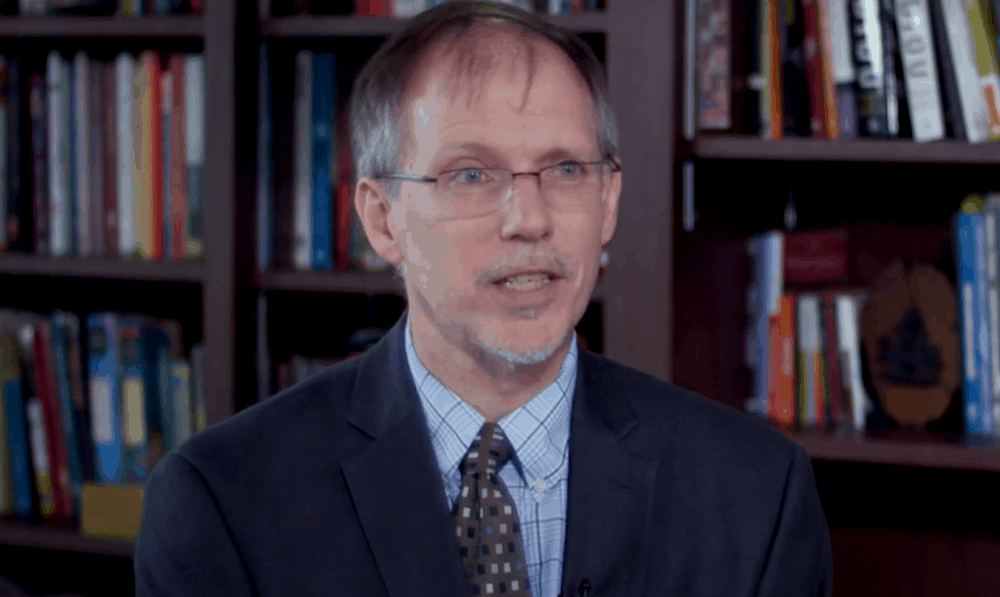
- Respect critics, there is something you can learn from them,
- Don’t be derailed in system change toward high-quality schools in every community, but
- Be a little uncertain all the time
Key Takeaways: [1:15] Dan tells the story of opening the McKinley Technology High School in Washington, D.C. [2:35] Dan speaks about his background in science and involvement with the Science Academy of Austin (that led to an opportunity that took him to D.C.). [4:25] Why did Dan end up in Austin in the fall of 1986? And what kept him there? [7:27] Dan speaks about his stint in Zimbabwe. [8:05] Dan shares more about his career after coming back to the States in 1990. [8:52] Dan speaks about his time in Newark in 2010 where he was leading the change effort. [11:28] Tom and Dan talk about when they connected again when Dan was CAO during the PowerUp Initiative in 2013 — America’s biggest move to 1:1 and blended learning. [12:21] Dan shares what he ended up doing after leaving Newark. [14:37] Now five years in as CAO at Broward County, Dan recaps some of the advances he has made thus far and what he’s proud of. [21:45] Jessica chimes in to share an important resource: the Getting Through microsite! [22:25] What happened when the governor closed the schools? What has Broward County Public Schools done to move their learning to digital? [27:37] What advice has Dan given teachers about learning expectations, workloads, and the challenges they may face going forward? What have they employed to aid teachers to continue to teach their students? [31:13] What does Dan mean by a ‘rhizomatic approach?’ [33:56] Dan takes time to remember those who were lost from tragedies in the past. He also shares how this crisis is different from past crises. [39:06] Dan shares some of the lessons in leadership he has learned due to this crisis. [43:03] Tom thanks Dan for joining the Getting Smart podcast!
Mentioned in This Episode: GettingSmart.com/GettingThrough Daniel Gohl’s LinkedIn Broward County Public Schools “How Houston Schools Are Making it a Great Global City,” by Tom Vander Ark (A Getting Smart article covering the PowerUp Initiative launched by Terry Grier) Getting Smart Podcast Ep. 234: “Terry Grier on Developing More Than 80 System Leaders” Code.org
For more see:- Podcast: Terry Grier on Developing More than 80 System Leaders
- Podcast: Tom Rooney and Scott Rowe: Buildings are Closed, Learning Goes On!
Stay in-the-know with innovations in learning by signing up for the weekly Smart Update.
Transcript
This transcript has not been edited for spelling accuracy.
You’re listening to the Getting Smart podcast where we unpack what is new and innovative in education. Dan Gaul is the Chief Academic Officer at Broward County Public Schools. The district serves the Greater Fort Lauderdale area of South Florida and has nearly 270,000 students on 241 campuses.
It’s the sixth largest district in the country. Dan has been a learning leader in Austin, Washington, D.C., and Houston. In his fifth year in Broward, as part of Superintendent Robert Runsey’s team, Dan oversaw the development of a great system of schools with well-developed personalized learning, the biggest speech and debate program, and the biggest computer science program in the country.
In this interview, Dan talks about their crisis response program called Learning Never Closes. He reflects on leading through crisis, including hurricanes and mass shootings, and talks about why this pandemic is far more challenging. We think you’ll find Dan to be one of America’s most thoughtful education leaders. Let’s listen in.
Dan Gaul, welcome to Getting Smart podcast. Tom Van Der Arc, thank you so much for having me. It’s wonderful to be with the Getting Smart community today. For some reason, I remember vividly walking the halls at McKinley High School with you. I think it was the fall of 2002 that you opened that school.
So that’s a great story, and it was right around then that we met. So I went to D.C. public schools to reopen a historic, beautiful building that had been closed in 1998. And I did get to D.C. in January of 2002 with the intention of being the founding principle of the reopening, focused on technologies, giving opportunity to students, not based
on high levels of academic achievement, but based on interest and motivation. The school was under reconstruction, and you and I walked halls that were empty at that time, a shell of a building. And we ended up, because of the vagaries of politics and economies, not opening until 2004.
And we opened with two classes that first year, grades nine and 10. We had that first graduating class in 2007, and it continues to go strong. D.C. as a community should be proud of McKinley Technology High School. And our conversations and the men who brought us together, Steve Sellas now deserve a lot of credit for making that happen.
I had forgotten that. You really, you spent a decade in Austin before that. You did your graduate work there. You’re a scientist. I really had forgotten that, but you have an amazing background in science.
I think you started a science high school in Austin before that. Is that right? Well, you’re a little too generous. I didn’t found it. But the reason I showed up on the radar of people in D.C. while I was sitting in a high
school principal chair in Austin, Texas, was that I was running what was called the Science Academy of Austin at that time. And the Science Academy was dedicated to super high achieving kids from throughout the Austin community. And as you can imagine, there are some amazing students that come out of that community.
It was a school within a school model and was in one of the poorest sections with students who had been denied the community resources to cultivate their own talents. And there were tensions between this high achieving county wide or district wide school and the students from the local surrounding communities, issues of race and class at the forefront.
And myself and the principal of the neighborhood schools had to work very closely together to bring the opportunities of the Science Academy to all the students and then bring them up to speed so that they were able to take advantage of those. We also had to make sure that the Science Academy students had the breadth of cultural knowledge and understanding so that they were more than technocratically proficient.
But they were able to go out as full human beings upon graduation. That work with a specialized group of schools drew some attention and somebody must have noticed. And that got me the opportunity to go to DC from Austin. But you asked, you know, why Austin?
So I was there for graduate school. So I landed in Austin in the fall of 86. I was a young graduate. I had finished my undergraduate work a year early. So that was a basser.
So how did you get the awesome from Basser? So I want to I want to give a big shout out to my parents here. My dad worked for the post office. My mom was a secretary for the computer science department of us. Neither gone to college.
And they really wanted to make sure my sister and I took advantage of every opportunity. Because my mom worked at Vassar once she hit five years, which would be halfway through my first year as an undergraduate, I got to go tuition free. That’s the only reason I got to go to a school with the pedigree of Vassar. And Vassar appealed to me because of its liberal arts and science programs.
I pretty early knew in my life that I wanted to study physics and was fascinated just with the ability of the human mind to understand the world. And not the engineering side of the applications, but the real theory. So I went to Austin wanting to do eight dimensional rotating black hole gravitational theory. You know, I I still read and I went to Austin.
But I by that point, as an undergraduate at Vassar, I had finished my major coursework early, did an exchange program to go to Dartmouth College. And I got to tell you, even in the mid 80s, the cultural differences from the all gender traditions of those two schools were stark, tremendously stark. Vassar is an all female school.
Dartmouth is an all male school still had some of the expressions of that history in their cultures. That cultural dissonance really caused me to add a new dimension to my life, which was social activism. So I got very active in the anti apartheid movement. This was obviously before Nelson Mandela’s in the presidency of South Africa.
So one of the things I had done was do some social protesting and done some sit in demonstrations in the Northeast, built some shanties while I was at Dartmouth. When I went to graduate school, I got involved in the challenges and struggles of the Texas communities and did a sit in protest. And I’ll tell you, the state of Texas doesn’t play social protests the same way that the state of
New Hampshire does. Ended up going on trial for over a year. And it disrupted my graduate studies in physics. Started to think about was I going to just keep going on the gravitational theorist route. So in order to resolve this, I moved to the country of Zimbabwe.
And well, like anyone would do. So it was as close as I could get to South Africa without using white privilege. I was one of two teachers in the country teaching the Cambridge A level computer science courses. And I had taken some computer science, but it clearly wasn’t my major. But I had enough math and science from Vassar to pick it up.
One of my proudest accomplishments as an educator was getting all of my students in Zimbabwe to pass the international rigor of the A level exams. I came back to the States in 1990 after being there for a year, convinced that I needed to intertwine this twin DNA of my passion for science and my passion for activism. Decided education was the way to merge those strands together.
Taught physics and astronomy at Austin Community College got certified to become a high school teacher and started teaching in the Austin Independent School District at Travis High School. Wow, I don’t think I’ve ever heard that background. That’s an amazing journey. It’s wonderful to see your mission in life emerge the way it has.
So if we, I want to fast forward, let’s see, we met again in Newark, probably in 2010. You were leading the change effort in that massive turnaround effort in Newark. That was incredibly challenging work, right? Politically, organizationally, financially. So, you know, your hesitancy reflects the complexity, right?
So I had left DC public schools after some governance changes and some trying to figure out what was going to be next for me. Did some work around STEM education and had the opportunity to work for another real strong leader in the STEM fields. In this case, I was a consultant, Jen Morrison.
But then I went back to district level work. I had the opportunity to go to Newark public schools as a new position of Innovation and Change Officer. Basically, Cliff Janney, the superintendent in Newark, had said to me, you have the portfolio of all the broken parts. What are you going to do? And it, you know, ranged from modernizing the technology to fixing special ed.
And at that point, Newark was under gubernatorial control. The largest district in the state at 40,000, but deeply, deeply challenged. Mayor Booker was there. And I straddled the communities of the tradition and those in the community who didn’t trust any change because they figured it was just going to be a new form of oppression.
And that really was a significant cultural component. So we needed to develop skills to respect people’s history. But at the same time, we needed innovation because the current system wasn’t working. And by trying always to keep one foot in that respect for tradition and one foot in the need for innovation. You know, Cliff came and went and then a new team came on.
Chris surfed, did a lot of great work thinking through. New superintendent came in. New works on a new trajectory. It now has local control back. Has a new mayor.
All the change that was seated in those years. Is really beginning to bloom for new opportunities and a very different portfolio of schools for Newark. We connected again when you were CEO with our friend Terry Greer during the power up move that was probably America’s biggest and best managed move to one to one and blended learning. I think you and Lenny Chad played an important role in that program.
Is that just big kudos to Terry Greer who continues even after his retirement from formal superintendency to serve as a superintendent emeritus for us as a country. We did a podcast with Terry and we talked about the 83 people in that Greer stable that have gone on to lead systems in America. It’s sort of an unprecedented legacy. He’s such an amazing individual and I encourage all the listeners to dig in a little and find out not only what he’s
done but what he’s doing now. So yeah I had the opportunity after leaving Newark I worked for a brief period of time for the state of New Jersey. Under Chris surf who was then secretary of education for the state and got really brief but intense experience working with Eva Popoff and innovation and change across the state bring in really interesting changes to a very different model. New Jersey has 600 different school districts and local control is dominant.
Compare that to where I am now in Florida a bigger state with more students with only 67 districts. Just a different set of challenges but how does one drive change. I think it was probably my former colleague and leader Pat for Joan and Austin who put me on the very Greer’s radar. And I think what Terry wanted was somebody who had academic rigor and discipline had the chops to meet his expectations for what kids needed to learn and also new technology because Lenny was there and Lenny coming out of the oil and gas industry understood global perspectives.
So Lenny and I got a chance to execute Terry’s plan of you know universal access in the digital space that means both devices and internet. And then have good stuff for kids to do. It’s not enough to give him a device. You got to have someplace from the land. You got to teach them to learn and power up was the phrase that we had.
We were going to empower up each level the community the school and the student. And Houston’s a better place able to survive hurricane evacuations as well as. Pandemic physical distance enclosure and keep learning happening because of the work that Terry seated you know almost a decade ago now. Thanks for that trip to the Wayback machine. That was.
It was great to learn more about your background than I had even that I’d even remembered. The reason I call this we’re your five years in as a CEO at Broward County. It’s the sixth largest district in the country. Almost two hundred seventy thousand students. I think you have two hundred forty one campuses.
Yeah. All right. Plus about another hundred charter schools out there. Wow. Wow.
I want to focus on your response to school closures. And the great program that you and Superintendents Runcy and team have developed called learning never closes. But a little background is important because you’ve done such important work since you got there five years ago. I know you’re building on prior work. But let’s quickly recap some of the amazing advances that that you had in place.
You know up until a month ago. Yeah. I’ll tell you it was about five thirty p.m. on March 13 2020 that the decision to close the schools was made. And it’s fresh enough for me to recall the exact date. But before that I mean I think when I think of Broward I think of really great career academies often wall to wall really well developed.
Some with with NAF NAF dot org and some that you guys have developed really great English language learner programs the biggest the country’s biggest speech and debate program. A really great gifted education program. I get the opportunity to visit with a lot of those folks a couple of years ago. A great student voice initiative a really good one to one program. I mean you’re a huge district but you really had a lot of great foundation in place.
I guess highlight a couple of those things that you’re really proud of. So thank you so much. So you know you’ve already mentioned his name I want to repeat it. But Bob Runcy has just been an incredible leader here in Broward and he came in 2011. My wife’s from Palm Beach County originally her mom’s still here.
So that’s where the opportunity to basically come over to Broward from Houston which was the seventh largest and move my family and my work and you know she’s been able to do some incredible things and have the support of her mom. We have three kids that are in the Broward County public schools. So Bob I think very much similar to Terry had a very particular vision of what he wanted in a chief academic officer and it was somebody who could bring both an expectation that all students can learn and achieve. And somebody who was not reductionist about that assertion. And what I mean by reductionist is it’s necessary but not sufficient to raise scores on state tests on NAEP scores on whatever kind of external assessment.
We’ve got to verify our achievement with kids using these external assessments. But that is woefully insufficient to make sure that they are going to be engaged active global citizens moving forward. And so I got the opportunity to join Bob and his team and what we’ve been able to do is to focus on a couple of transcendent. Experiences we can give kids in schools that will provide them with the grit and determination that deeper learning that we advocate for. So as you’ve mentioned we have the largest debate program and that now means that we are offering debate both as a course.
And as a club activity in all of our middle and high schools and we have debate as experiences in all of our elementary schools. That is what student voices about giving them the experience to articulate. One of my big concerns about so much of the knowledge centric curriculum and advocacy that we see is that it fails to respect the life experience that our students are bringing into our schools every day. People are so worried about what we need to pour into their heads that we’re not taking the time to listen to what they’ve brought into our classrooms and experiences. And Bob has that and shares that and has certainly empowered me to work with colleagues throughout the organization in the community.
So Florida has county systems we’ve got 31 municipalities we’ve got chess clubs that are partnered with mayors and early literacy initiatives powered by city agreements where they are working in the pre case basis. That ability to work with language is directly the precursor skill set that’s needed to succeed in debate. Rhetoric as a academic skill going all the way back to the Greeks is the ability to articulate one’s life experience in a cogent and a motive way. We also have a deep partnership and I’d be remiss if I didn’t highlight this with code.org. An organization that has done great work around the county but we’re the largest code.org partnership and we have computer science and algorithmic thinking woven into our general education classes from kindergarten through 12th grade.
We are the largest participant and test taker for computer science. In the state of Florida. Right. So we’re we’re bringing rigor through the external assessment but we’re ensuring opportunity and most importantly participation. It’s not enough to offer it. We’ve got to make sure that kids are engaged. So one of the things we did four years ago now is a year after I came was we decided to create a new form of bureaucracy.
A new form of bureaucracy to highlight the need for these non traditional academic skills. We created a department of applied learning. And applied learning encompasses physical education band music civic engagement computer science stem robotics drones. All of these emergent and new materials. If we are going to say we care about them. Then we need to staff and fund them. In the same way we do English language arts mathematics social studies and our historical definitions. So that work around Bob and what I’ve been able to help and champion to give people permission. Which is really what my job as chief academic officer is as the coach and you know give people the OK to try and struggle and fail because we’re learning so much that it’s it’s broadening. Our investment in kids and we think they’re going to be life ready moving on.
Hey listeners it’s your host Jessica. I wanted to just take a quick break to share an important resource with you. Recently our team launched the getting through microsite to support educators leaders and families on the path forward during this unprecedented and uncertain time. There’s something there for everyone whether you’re just getting started with your transition to distance learning or you’ve had plans in place for a while and now have the opportunity to share your work and guidance with others. We hope this gives you a place for your voice and an opportunity to learn. We know we will get through this together. Check it out at getting smart dot com slash getting through. OK. Now back to the show. So what happened when the governor closed schools. So we actually preceded him by a couple hours. So the three counties in South Florida. Broward in the middle Miami Dade to our South and Palm Beach to our north.
Have about a third of the students in the state. We are superintendents convened and said you know the COVID situation is such that it would be irresponsible to keep it going. Personally I had hoped we’d have one more week because we had a professional development day to train people to get ready for it the following Tuesday. But it wasn’t responsible. So we closed on that Friday. We canceled school for the following week. And then the fall the week after that. The week of the 23rd was our spring break.
So when we closed on Friday the 13th we immediately began building from what we had already done. Broward’s been on a path to extend the physical school environment into the digital space for four years. And what I mean by that is we wanted to put together an ecosystem that would enable blended and flipped learning to occur at all grade levels. By getting the technical sides of interoperability and platforms and authentication and provisioning done at an enterprise level scale. And we started that four years ago. We’ve matured on that. It’s built into our procurement processes. Our teachers and students don’t care about that. What they need to see is that what they see at school what they see at home what they see on their mobile devices is all built on the same level. So we had to build a whole part of one ecosystem. We had about half our teachers not evenly distributed about two thirds of our high school teachers and only 20 percent of our elementary teachers.
Playing in this and I mean play in the most fun way possible in this digital extension. We have a learning management system. In this case it’s the canvas product by Instructure. We are an office 365 district and by integrating 365 and canvas and then dealing with special education and English language learners. Response to intervention and other things making sure that all those are part of one extension. People don’t have to leave that ecosystem. We were well positioned. But we had a heavy lift in 17 days between the 13th and when we returned on Monday March 30. We we’ve done OK. We had 98 percent of our teachers and counselors and our social workers stand up courses so that we can deliver not just core instruction but supplemental services.
By the end of the first week we had 96 percent of our kids who had logged on at least once. As you said we’re a large district that meant that last Friday we still had 6600 kids that hadn’t. And we’ve got staff at the school and district levels who are working from home themselves making phone calls sending text messages trying to track down those remaining kids. There are some who are because of circumstances not able to get the devices we’ve issued and we have deployed 82000 devices a simple way. And those were those distributed. Those those are not already at home. Those are devices that you distributed right after the building closure. Right. That’s for a variety for a variety of reasons. We hadn’t yet moved to device issuance which is where we know we need to go.
But between budgetary and other priorities and events that have happened. That’s been a little slower than we would have liked. Unfortunately unlike Houston we do not issue devices. So what we did in order to close this gap was kind of treat it like a bring your own device a BYOD but at home instead of at school. So if you had a device at home you were welcome to use it. And if you didn’t we would issue you one as a loaner. So in that week kids could go to their schools sign a property pass and take home all the laptops that we tore apart from our class sets in our libraries. And then we had a second round on a Saturday because some families couldn’t make it during the week. And now we have processes set up so that kids who don’t have devices can go to our food distribution sites because we have 71 schools open to distribute food in the community.
So we’re using those schools as food distribution sites as places to distribute laptops as well. And we will continue to do so as long as there’s a child who needs a device. Do you have a sense that kids are learning. What do you think about student engagement. I guess a related question. What advice have you given to teachers about learning expectations and workload. Great question. So you know the first challenge was just to stand up the ability to engage at a system level. All our kids in a digital ecosystem. We accomplished that. We still got some some to track down. But we’re there. Now it really does become a quality question. What is the quality of the learning that’s going on. And as one might expect there’s a broad spectrum. What are fundamental organizing principle is is the teacher student relationship.
Is predicated on students being present and engaged and then they need the guidance of a teacher to help them navigate the learning that should occur. And yes the learning needs to be rigorous and it needs to be standards based. But in the absence of a relationship. That is abstract and not held by students for the rest of their lives. So we were able to within 18 hours deploy the agreement Microsoft made with Instructure. That enabled Microsoft Teams video chat platform to be embedded inside of Canvas courses. We had it up and running the next day. We trained our teachers on it during the week of spring break. And our teachers based on our memorandum of understanding with the Broward teachers Union have the ability to go and hold class live in a digitally protected privacy insured. Walled garden. So that the student teacher relationship is not lost in the learning reduced just to doing these algorithmic digital worksheet approaches. That is not what we want.
So what that’s also meant is a huge diversity in how well that’s going. We have teachers that are conducting one on one tutorials with kindergartners reading books with them. And we have some teachers who are afraid of the technology or uncertain that we’re still working with to up their game. We are now having the complaints and problems of success because we have everyone on. We’re getting all the complaints that some kids have too much work. Some kids have boring work. Some kids have too little work. But we have issued and I’ve put out to chief academic officer letters to our teachers as a body. The first one really focused on the student teacher relationship being what they needed to stand up in week one. Week two was about having understanding compassion with the students as they sign work.
This is going to be hard for everyone. We must expect and we must be clear with students that they have the work to do themselves at home. Just they have to do the work themselves if we were in the classrooms together. The teachers don’t do the heavy lift of learning. The teachers guide it. They orchestrate it. The teacher the students need to put in that work. I’d like to shift gears and just talk a little bit about organization and sort of lessons learned around organization. I’ve heard you describe a rhizomatic kind of approach. What do you mean by that? I feel that in a classroom a teacher needs to be the best learner because they need to not only know the subject they need to study and learn from their students.
And a principal needs to be the best learner in a school. And as chief academic officer falls on me to be the chief learner for the organization. So I try and make sure that I’m always reading things that push my comfort zone. So there’s some work that actually comes out of philosophy. And there’s a part of me that has a big interest in these questions. Not of defining absolute truth but the way in which we as human beings go about understanding what we mean by it. So you’ve highlighted that I was a physics major. What I didn’t touch on is that I was a religion minor and study the histories of religion.
And that’s kind of morphed into an interest in philosophy. So there’s some work that came out of France in particular that looks at the way in which knowledge is connected. Not as taxonomy this kind of vertical approach but much more as one of sideways connected pieces of experiences. This is like a grass rather than a tree. If you think of how your lawn grows it grows horizontally. And there are nodes where growth of blades of grass occur across a network of connected roots.
Under our digital environment in our experience of physical distancing how do we make sure that that is not social isolation. And I’ve been thinking a lot about how to push horizontal connections. Our communities have been flattened in terms of communication. It’s now not the tree branch the tree root tree trunk tree branch twig leaf. Arboreal analogy. It’s much more like cultivating rhizomes and grasses are a kind of rhizome.
So thank you for taking that very abstract and forcing me to explain it. So you and I just want to talk about the crisis here and it’s so interesting that you and Runcy have you’ve been through crisis before. Marjorie Stoneman Douglas High School is in Broward. You’ve also been through hurricanes there in Florida but what you’re going through is different than both of those isn’t it. Yes and thank you for raising the tragedy at Marjorie Stoneman Douglas.
We will forever remember those 17 who were killed that day and the 17 injured and the entire community that’s been impacted because of that. Terrible day on February 14th in 2018. That was a tragedy and we have had our hurricanes. Most recently the biggest one to impact us was Irma but we’ve evacuated for others. Both of those are events that occur within a fixed block of time and then we spend a lot of time recovering from it.
Our current situation has the same ability of shutting us down in the immediacy of it but it is also very different because it is not limited in time. We are uncertain about what the future will be because of the past event of closing. We don’t know for how long. We don’t know what the difference will be and unlike the single event of a shooter just murdering children in a school or a hurricane destroying homes. What we have here is something which may become endemic.
It may be persistent and have a very different form of recovery. It may have a very different form of changing our basic ways of behavior. We could institute single points of entry and additional security and better mental health services as a result of the Stoneman Douglas tragedy. We can hurricane harden our physical abilities but when the virus is within us and we don’t know whom may be transmitting it. It causes a much deeper sense of existential angst and we are trying to be very sensitive to that.
This recovery is going to be different than anything we have ever experienced. I guess the crisis is different than anything we have ever experienced and it is likely to be really paradoxical where some people are busier than ever and some are in what feels like a depression for many years. South Florida in particular I think is going to be impacted. The cruise business will probably never be the same. Who knows how and when Disneyland and tourism returned to South Florida.
The impacts in South Florida communities is very likely to go on for years but to varying extents. This is as you said a very uncertain period going forward. It is deeply uncertain and cutting across race and class. No one is safe. We know it still has differential impacts on some of our lowest paid but most important workers who do our services that all of us presume and depend on.
But as you say Florida has a particular type of economy as every state does. Ours is highlighted by tourism and you have highlighted the cruise industry but we have another industry that is deeply challenged by the COVID pandemic which is the retirement community. All the care centers that are here knowing the impact that COVID has a much higher mortality rate on them. And that is causing deep economic distress immediately but it will persist. We already expect that at some point the state will come back because of the reduced revenue forecast and drastically cut budgets including education.
Well the federal government has taken some initial steps with the CARES Act to address these it will not replace what has been lost. We have a decade ago the economic crisis caused by the banking industry. This is much more analogous to the uncertainty of the late 29 through early 30s. We are not quite sure what we will be able to return because we don’t know whether Disneyland will be welcomed by people to go to even if Disneyland wants to welcome people to go to it. Dan I want to follow up questions just lessons in leadership.
You have had an opportunity to work with some of America’s best leaders in some of America’s great cities but in really large challenging districts. I’m wondering how you are beginning to reflect on the role of being a system leader. What lessons are you and Superintendent Ronsi drawing from this circumstance? Well whatever I say here is inspired by Bob but I’ll let him speak for himself. You should do a follow up with him.
What I’ll say is this what I’ve learned from Bob and from Terry from Pat Fourjean and Cliff Janney and I just do want to highlight Cliff passed away a little over a month ago now. Great loss for American education. And all the people I’ve had an opportunity to work with is that if we are to make systemic positive change, if we are to take the desire for progressive values to become part of the standard operating procedure and ensure fiscal discipline, take all those things that are often treated as the other side and merge them together into sustained high quality seat in every school system regardless of governance. We’ve got to respect those who are our biggest critics because they’re bringing some nugget of truth.
But we cannot allow the noise of people being concerned about a particular anecdote to drive systems change. And keeping those contradictory impulses tied together of being sensitive to the experience that’s lived even when people are very upset because of the decisions that need to be made and that could be something from as simple as moving a principle to closing a system. And we’re not going to be doing that in school. We’ve got to also make sure that people have the chance to hear why we’re doing things and why it is we are making the decisions, not just on what the decision is. Being a little uncertain all the time is a requirement for leadership.
But being made inert, freezing. You know, there’s an old lyric that says if you choose not to decide, you’ve still made a choice. Choose to make the errors of commission, not the errors of omission. Don’t let things linger. Get in front of them.
Yeah, it’s a great it’s a great summary of the paradox of leadership right of being open to your community. And and also being certain about your core values and about a direction and that that mixture of flexibility. And forward motion towards this this goal of equity and excellence that you’ve described so well. It’s that’s the work right. That is the work.
And as I hope I’ve been able to highlight, I stand on the shoulders of giants and you know, I want to give a big shout out to getting smart as being a platform for doing it. And it as the latest incarnation of how you yourself are both standing on the work of others. But now we’re able to stand on your shoulders as well. Yeah, with a little bit of uncertainty. And we we really appreciate your leadership.
Give our best to Superintendent Runcy and the team. You guys are doing great work for the 270,000 young people in Broward. We so much appreciate your time today. Take care. Dan will be Tom you as well.
Thank you so much and be safe. Be well. Don’t be socially isolated. See you soon. Take care.
Thank you. A big thanks to Dan for joining us during an incredibly busy period. We appreciate his thoughtful leadership through challenging times. During the episode, Tom mentioned podcast episode 234 with Terry Greer. Make sure you check it out.
We’ve got it linked in the show notes and on the blog for this episode. We’d also encourage you to dive into all of the resources in our Getting Through series. We launched that series back in March as more and more schools began to close and it serves as a resource for leaders, educators and families. You can find that at gettingsmart.com slash getting through. All right.
That’s it for today listeners. Thank you for tuning in for the Getting Smart podcast. This is Jessica signing off.


Kathleen Bushy
Thank you for this information! I have long been an admirer of Dan Gohl. A brilliant man and educator.