

Podcast: Ed Hidalgo on Introducing Youth to The World of Work
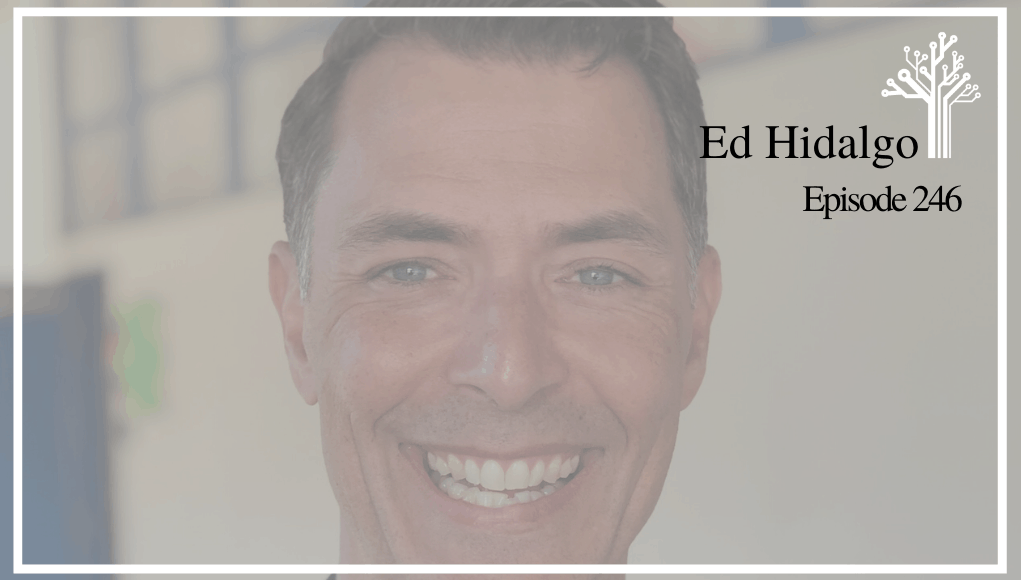
Key Takeaways: [2:25] Why did Ed move from Baltimore to Miami? [2:49] Why did Ed choose human resources to pursue a career in? [3:42] After working at Manpower for seven years, Ed worked at Qualcomm for 10 years. Ed shares some of the challenges in staffing in the years he worked there. [5:23] When did Ed leave Qualcomm? Was he there in the early days of ‘smart hiring’? [6:54] Ed shares some of the big lessons he learned about staffing at Qualcomm. [7:26] When hiring at Qualcomm, did they rely on traditional measures like where applicants went to school or the grades they received? [9:16] How has training and development changed in big tech? [9:57] Ed highlights the importance of the onboarding process for new employees. [11:22] Ed tells the origin story of the World of Work. [14:09] Did Ed find it a bit of a culture shock when he shifted into the world of education?[14:50] One of the core elements of the Cajon Valley model: celebrating differences. [16:44] Why Dr. Blustein starts every chapter in his book, The Importance of Work in an Age of Uncertainty, with ‘Being.’ [18:18] How did Ed develop Cajon’s career education system? And how was it adopted and incorporated at Cajon Valley? [20:16] How did Ed get such good support from teachers for this system and how did he support the teachers as well? [22:32] How did Ed convince the school board at Cajon Valley to adopt this system? [24:06] Tom shares a quick story about the Superintendent of Cajon Valley. [24:58] Ed gives a snapshot of what one of these units of study looks like in their framework. [26:58] Tom tells a story about Nepris. [27:49] Ed elaborates on their partnership with Nepris. [28:44] Dr. Bluestein chimes in with what he thinks career education should look like and gives his praises to Cajon Valley. [29:22] Ed elaborates on the secret sauce in this framework: the belief that career development is a human process. [31:17] Ed speaks about the importance of starting career education early. [34:30] Tom thanks Ed for the work he’s doing at Cajon Valley and for joining the podcast!
Mentioned in This Episode: Dr. David L. Blustein The Importance of Work in an Age of Uncertainty: The Eroding Work Experience in America, by David L. Blustein Ed Hidalgo Cajon Valley Union School District LearnLaunch American Student Assistance (ASA) John Holland Qualcomm Nepris
For more- The World of Work — in Elementary School (feature on Cajon Valley USD)
- Podcast: Jean Eddy on Starting Early with Career Education
Stay in-the-know with innovations in learning by signing up for the weekly Smart Update.
This post includes mentions of a Getting Smart partner. For a full list of partners, affiliate organizations and all other disclosures, please see our Partner page.Transcript
This transcript has not been edited for spelling accuracy.
You’re listening to the Getting Smart podcast where we unpack what is new and innovative in education. After almost two decades of leadership and high-tech human resource staffing, Ed Hildago led the development of a career education program called World of Work. He then joined the Cajon Valley Union School District as Chief Innovation and Engagement
Officer and implemented the best K-8 career education program in the country. World of Work is based on a framework developed by John Holland 60 years ago, popularly known by the Ackerman RISEC. The framework includes six personality types, realistic, investigative, artistic, social, enterprising, and conventional, and also a set of assessments that helps young people
become aware of their unique strengths, interests, and values. What’s great about World of Work is that it’s 54 immersive units of study that create broad career awareness and give young people the opportunity to imagine possible futures. Hildago is joined in this interview by a leader in vocational psychology, Dr. David Bluestine, a professor at Boston College and author of a new book, The Importance of Work in an Age
of Uncertainty. Tom spoke with them right before a keynote session at LearnLaunch in Boston, which was sponsored by ASA, a nonprofit that helps students know themselves, know their options, and make informed decisions to achieve their education and career goals. This is the second podcast in a two-part conversation about starting career education
early. If you missed last week’s episode, you may want to go back and listen to Tom’s conversation with Professor Bluestine. Let’s listen in as Hildago describes the best career education system out there. Hey, Hildago, welcome to the Getting Smart podcast.
Thank you. Glad to be here. It’s great to be together in Boston. Yes. We’re joined by Dr. David Bluestine, professor at Boston College.
The three of us in a few minutes are going to be going on the main stage at LearnLaunch and talking about the subject of how to improve career education for young people. We’ll be doing that with our friends from ASA, a nonprofit here in New England that’s doing some great work in career guidance. So Ed, it’s great to be with you.
Thank you. Thanks for having me. It’s great to be here with Dr. Bluestine. Thank you. It’s great to be with both of you.
Very exciting. Ed, did you go up in Florida? I grew up in Baltimore. I actually went to get to Miami. Oh, that’s a good question.
Did you go to school in Miami? Well, my family’s from Ecuador. And so Miami is the gateway for many Latin families when they come into the United States. So a lot of them live in Miami. So eventually it comes their way.
So you had family in Miami. Yes. Okay. That makes sense. You studied COM, but then you spent about 20 years in, almost 20 years in human resources.
So why HR? It’s a great question. I was really not a very good student. I struggled dyslexic and school was hard. And I picked a major that aligned to my strengths and my talents.
And communications was a very hands-on practical major where I could create and present speeches and public relations, press releases, et cetera. And I got all A’s in those two years of school. I’d never seen A’s before. And there was something about human resources that aligned to kind of that practical nature
of work that suited me. And so I fell into it and it really launched my career and what I’m doing now. So after working at Manpower, you went to San Diego, went to work for Qualcomm. What was the, that was kind of the go-go years for Qualcomm. Well, the company was really exploding in size.
What were the challenges of staffing at Qualcomm in those years? Yeah. Well, so Qualcomm was my customer while I was at Manpower. I had several thousand contractors working on site there. They got to know me and they asked me to come on board and be one of the lead staffing
directors. And thanks to our vice president, just an amazing guy, big vision allowed us really to kind of deploy creativity in everything that we did. But we took the company from 5,000 employees to, I believe, 31,000 employees during that time.
And really that was a time where mobile wireless communications was starting to take off. 3G, 4G was just proliferating the marketplace and really the vision of Dr. Irwin Jacobs, the founder of Qualcomm, just unbelievable to be on site at Qualcomm when Dr. Jacobs was there. But really it was about finding talent, qualified talent, the war between CDMA and TDMA and
software going into our phones. And moving from a handset that was just a basic phone to the smartphone era. So how do you find talent that could take a camera, a radio, antennas, video, and put it all into a phone? Where was that talent?
And it was all very new at the time. So the war for talent was hot. So when did you leave Qualcomm? Was that four years ago? I believe it was four years ago.
Yeah, 2006, I think. I guess you were there in the early days of what I guess I’d called smart hiring or beginning to use intelligent tools to find review and hire and then train employees. The beginning of using… Applicant tracking systems, for example.
LinkedIn. There was a time where everyone was post your job on Monster or Dice or these job boards and we were really moving to working through LinkedIn. Where is the talent? Who’s setting up talent?
What is Microsoft doing? What is Intel doing? Where are they setting up new shops, hunting for talent? And our recruiters, our marketing team, incredible. They would go and find talent.
And a lot of it, Tom, started in college recruiting. And the great work done by a college recruiting team, we would develop those relationships very early on on campus at the top engineering universities here in the United States and abroad and you start developing these relationships with your young masters, grads, and electrical engineering, computer science.
And you hope to convert as many of them as possible to build your pipeline. What were the big lessons learned about staffing? What did you find was most important? That’s a great question. At times it just never felt like you had enough.
Workforce planning, not very good at workforce planning. We were always off on the numbers. The engineering department was off on the numbers. Business was off on the numbers a lot of times. They always underestimated how much talent you were going to need.
Could you rely on traditional measures like where people went to school and what grades they got? Yes, and especially where they went to school, some of the top universities. I don’t know that I don’t want to name them on the podcast, but we recruited out of certain universities and talent.
You could almost drill down to particular classes in RF theory. And those students came and did very well. Like in systems engineering, very hard to find. Great talent. Engineering at the time.
But you knew certain professors, certain programs. Students were getting very hands-on work in their practicums. And those students could do very well at Qualcomm. It’s interesting. I don’t want to go too far down this rattle, but especially in the years since you left
really in the last five years, we’ve seen big tech move more and more into training. Because they’re frustrated by the lack of really job-specific training. Right, so we’re seeing more companies sponsor training and provide internal training. And they’ve just decided they’re going to do their own last mile training. Which makes sense.
And we had a big learning and development department there. And there’s a hunger for learning, at least on the engineering side. Our employees want to learn. They want to keep learning, but you also have to get the chip out. You have to get the product out.
And so there was kind of this tension between learning to prepare for what’s coming in two and three and four years. But we also need to get the chip out. So there’s just a lot of pressure. And that’s why we went to contingent labor a lot of times.
We had used contingent staffing to augment the pipeline of perm talent coming in the front door. And there’s a lot we could share about contingent labor and the value of it and the challenges with it as well. One more quick question about corporate HR.
How do you, how has training and development changed in the last five years, especially in big tech? I don’t know that I’m the best one to answer that question. I know how it seemingly kind of evolved in our world. And we were linked to it and learning what was its own vertical under human resources.
So we had specialists there. But really keeping up with technology and understanding kind of like the trends and understanding how we need to prepare a workforce for what’s coming. And I think the learning center did a great job of that. Probably fewer big cohort classes and much more individual, much more personalized learning.
You see that? Yeah, I would say so. Absolutely. Yeah, I see a lot of the transference between what I think our teachers do very well in Cahon Valley, for example.
Differentiated blended learning, small group instruction. Our teachers could actually teach learning center folks in the corporate world how to do blended learning. Right. And personalized learning.
It’s kind of an interesting connection there. I think that’s the interesting parallel that in from preschool to big tech, we’re all really trying to understand these new learning models and how to quickly assess the learning needs of a learner, help them create some goals, create personalized pathways with learners. I think we’re all trying to understand how to do that.
And it all starts at the beginning. Really the onboarding stage is so important, right? So how do you actually onboard a new employee very well? How do you understand their career development goals and how do you set up a path and a plan for them?
We know so frequently that in the surveys, our employees number one goal is career development. Who’s going to talk to me about my growth? And when you can provide that plan for an employee, it’s, I believe, a better way to get to engagement versus retention. We always talk retention, but how about engagement?
All right. What’s the origin story of world of work? How did that start? Well, truly, it’s my boss at Qualcomm was fantastic. And he would say, if you crush the core of your work, I’ll let you do whatever else
you want to do. And for me, that was first starting a career counseling practice to help many of the employees that we had who weren’t highly engaged in their work, that we were studying levels of engagement. And he approved this.
And so we start this career counseling practice. We hired career counselors. They came on board and we helped our employees with understanding their identity, their strengths, their interests and their values. And we gave them a language to be able to have a conversation with their managers about
what they want to do with work and how they could maybe job craft or job shift. And so it went very well. And then I wondered, how are these top students from these great universities not getting any career development? They’re on this conveyor belt of education.
What if we start doing this earlier? Qualcomm being very focused on corporate social responsibility. I then said to my boss, why don’t we start doing this as a CSR project to our local community? Let’s work with veterans and underserved students, low SES, first gen college, perhaps. And he said, OK.
And so we started this lab. It was a maker space called Thinkabit Lab. And it was a dedicated maker space for middle school students, grades 6, 7th and 8th. They have a hands-on experience with engineering. And I got to sneak in 45 minutes of the world of work.
And so over three years, we saw 15,000 students and became my full-time job. And it was amazing to see how far students could go in five hours. Number one, with building their own robotic creations, coding about 15 lines of code with no front-loading to this project, coding an Arduino, and then really their experience with the world of work and what students could share about their strengths and their interests
and their values. That surprised a lot of principals. We met 5,000 adults. And it was those superintendents who came in and said, can you do this in a school district? How could we do this in our classrooms?
And that’s when I met Dr. Miro Chiro from Cahon Valley Schools. And he asked me that specific question. How could we do this so it’s not a one-day experience? How can we give this to every child? So that was four years ago?
Four years ago. So big change from Qualcomm to Cahon Valley. I made a similar shift about 25 years ago, and I found it shocking. It felt like stepping into a completely different world where the people and the economics and the politics were quite different.
Was it a culture shock? I will say that it was very hard to step in. I was very thankful. And I am thankful for the leadership, the board, the community, the superintendent, and cabinet are incredible.
They’re amazing. They’re fantastic people. And the employees are incredible. Yes. But it was still shocking.
I guess, David, I don’t know if you’ve observed this, but I found that teachers are psychologically different than the people that I worked with in retail or technology. They’re human beings that have a different makeup and made different life choices to do what they’re doing.
And so they’re just different people that respond differently to stimuli at work. And it took me, I don’t know, a couple years to really better understand that, that I was working with a different group of people that had made different life choices to do a different kind of work. And much more frequently had responded to a calling in their life, people that valued
service to others, people that love kids. They’re different than the technologists that I had worked with. That really does capture one of the core elements of the Cone Valley model, which is based on the fact that people do have differences. That difference can be explained through the model that Ed is using with his colleagues
in Cone Valley, the World of Work model, which I’m sure he will discuss shortly. But that difference really does capture a fundamental different orientation toward how being in the world. And I think this concept of calling is a very important one. It’s been researched a lot in my field of vocational psychology.
Some people do have a very strong calling for something. Not everybody needs to have a calling, but people could also have a calling for business or for management or for engineering. But the calling to do teaching, to do service work, counseling, ministry work is somewhat different.
This is a quick aside, David, your new book, The Importance of Work in an Age of Uncertainty. Every chapter starts with the word being. I was really struck by that, of being alive, being able to work with others, being part of something bigger, being motivated. You really did dive into this idea of how you are in the world, how you’re being, right?
Yes. Work is a major theater in our lives where we experience the world. It’s probably the context where we have the most experience with the broader social and economic world. We’re not necessarily choosing the people we’re going to be with.
We’re not always choosing the kind of tasks we’re going to do. It’s really our entree into the broader world. Hi, Emily Leapteg here, co-author of the new book, The Power of Place. In my first couple of years as an elementary school teacher, I didn’t pay much attention to where my students were from or their connections to their communities, although I really should
have. Once I realized the value and strengths of these connections, I had an entirely new perspective on teaching and learning. I began to realize the incredible amount of untapped potential and creativity in the students that I was trying to so desperately contain in my traditional four-walled classroom.
My almost powerful learning experiences have been deeply rooted in place and connected to my community, so why wouldn’t this also be true for my students? There is nothing more incredible than witnessing one of nature’s finest phenomena, more invigorating than being uncomfortable and curious in a new culture or context, and more humbling than helping tackle an issue in your own community.
You’re invited to explore or continue your own place-based journey with us in our new book, The Power of Place, available for pre-order now at the link in the show notes. Thanks for listening. It’s interesting about being in the world, and it suggests that immersive learning of giving kids these really thick immersive experiences that within which they can ask themselves,
is this who I want to become? Is this the kind of work I want to do? That’s really what world of work is at Cohn, right? I think students are asking themselves those questions, and even when, and I’ve heard it suggested that, we shouldn’t ask kids what they want to do when they grow up, we should
ask them what problems they want to solve. I think that’s a fair statement, but I also think that at some point students ask themselves, what do I want to be? So to be able to have had this conversation with them earlier allows them to see that there’s a place in the world for them.
It allows them to develop a vision of their future possible self, and that’s incredibly powerful. So Cohn Valley, it’s a small K-8 district about 20 minutes east of San Diego. High Hispanic population, relatively low income, and you have by far the best career education system in America, and it is the curriculum.
It’s fully integrated. Students get 54 integrated learning experiences between kindergarten and eighth grade. How did you develop that, and how was it adopted and incorporated at Cohn Valley? Well, it’s been a journey, and I spent a year at the University of San Diego in the Jacob School of Innovation and Education, and working on the theory of change and theory of action
with Dr. Ian Martin and others. My first goal was transitioning from Qualcomm. Could these ideas, this concept of the career counseling practice that was working with adults using career theory, strengths, interests, and values, could we adapt this to work with younger students?
I saw that as the green field in this space, really working in that K-8 space. Before the period of adolescent disruption, before that forgotten middle, how could we help solve for that period of adolescent disruption, build identity, help students build self-efficacy belief, and outcome expectations? I wanted to do no harm.
Working with Dr. Martin, we kind of created a plan, a path, a design with the team in Cohn Valley, and some very special partners as well. We went big bang. Dr. Miyashiro wanted to have this exposure for everyone in the district. I think there’s benefits and limitations to doing that model, but there were bunches of
teachers who came forward and said, I want to try. I’m ready to move forward. So you have to tell me how you did this, because I’ve been in a lot of Cohn classrooms and the, well, first of all, they’re just joy-filled classrooms. And there’s what appears to be a high fidelity to the World of Work program, where each teacher
implements in their own way, but really well. It’s a comprehensive approach. How did you get such good support from teachers and how have you supported teachers so that they could do this so well, so comprehensively? I think we always talked about elegant and simple, and that’s the beauty of Holland, is
elegant and simple. There are six themes. It’s something that anyone can capture and understand. But first, we have to take the adults through this process. You have to give the adults the gift of understanding their own strengths, interests, and values.
I went to all 28 schools, and a lot of people thought I was a little bit crazy. Believe me, some of the teachers did not want to see me. I’m not everyone’s favorite person, and there’s some people who really do like me. And the thing is that there were a lot of great things already happening in the district. There was already one-to-one implementation.
There are already blended personalized learning happening. Students are doing TED Talks. The World of Work filled a void in the existing modern curriculum, which consisted of computer science, presentation literacy through TED Ed, social-emotional learning, and then it was this idea of this vision for the district.
Dr. Miyashiro, our vision should be happy kids, developing happy kids, and healthy relationships on a path to gain full employment. And this work really filled that void. And so as we expressed this vision, this mission, we understand the research and the data, we exposed the adults to this process, to learning about themselves first, and then we could
start to share the frameworks, the process, the protocols that we designed around deploying Holland in the classroom and other elements so they could start gifting their students with these experiences. So I want to come back to the student experiences, but I do want to underscore what an extraordinary school board there is in Cajon Valley.
Was this a matter of you and David Miyashiro convincing the school board or is the school board really leading this process? Is it a bit of both? Well, a little bit of both, but I will say this. Dr. Miyashiro is the absolute…he’s one of the greatest relationship builders that I’ve
ever been around. And he went out to the community and said, if you were running the schools, what would you want the schools to look like? And they said, you’ve stigmatized labor. The most important jobs in our community, whether it’s the military, whether it’s our
construction and our trades, you’ve stigmatized labor. And now we can’t complete our construction work, our jobs. East County builds San Diego. That’s the theme. The blue collar workers, the tradesmen and women, they come from alcohol and from the
East County and they go to San Diego. And so we need you to…it really was restoring dignity and all work. And so when I came in and I pitched this idea, this concept, that every child’s unique is special. Every child has unique strengths, interests and values that are needed in this world.
And it should be our job to help every child know that there’s a place in the world for them. We should help build possible selves and career decision-making self-efficacy into every child. And we can do it.
And there’s a science called vocational psychology that can help us do this work. I do want to just add a quick story that David had turned around the superintendent, Mia Shiro, had turned around a struggling school. And so he knows how to do that work. But I think having reflected on leading a school where the purpose was better reading
and math test scores, he found that he was really not fully serving that community. And that was part of his coming to appreciate the need to adopt broader measures that better reflect the kind of outcomes that a community really values. So he’s done an extraordinary job building support in that community for this World of Work program.
Yes. So let’s dive in and talk about a couple of the experiences. Give us a snapshot of what one of these units might look like. Customer service unit is a third grade social career. And in our framework, students are exploring a career.
They’re simulating a career. Ideally they’re meeting a pro and then they’re practicing. So our resources are both digital and physical. Everything from a career card that has the Holland codes to a Google informed doc that follows kind of John Hattie’s framework of learning practice where you have an essential
question, you have key vocabulary, you have a learning attention, a success criteria, and then you have a reflection. So students will actually simulate an experience of being a customer service rep. They’ll go through this process, this simulation, and really we allow the teacher to bring their creativity and certainly with the beauty of Google Slides, they can add any changes,
make changes, et cetera, that they would want to this experience. And the beauty is at the end that there’s a reflection that we’re asking students, how did you feel about this? And it’s not so much about the job, the 54 World of Work experiences and the jobs. People get lost about, well, this career isn’t interesting.
Is this career going to be here in the future? Ladies and gentlemen, it’s not about the job. It’s about the students stepping into the job and getting a sense for themselves. If you understood someone doing this work in the world of work, what would they feel like? What would be happening?
And how would that connect with who you are? Would that satisfy your needs, your values, your strengths? Would that work, that calling be benefited by your talents? And then that child gets the opportunity to reflect. And through that process, meeting professionals through a great technology like Nepris and
really having a chance to experience it. Well, let me tell a quick Nepris story. Last time I was there, I guess two times a guide, I was in a sixth grade classroom. They had been studying water quality. They’d done a big project around water quality.
As you said, they used the vocabulary. They’re learning natural science. They’re doing research. They’re using design thinking. And then several times during the project, they jumped on Nepris and they were interacting
with water engineers who were both coaching them on the project. And then at the end, assessing the quality of their work. So there was this thick interaction with working professionals. So great, great example of a big, complicated, community connected project. Yes.
Nepris has been an amazing partner and really the ability to scale the META pros. Once a child has a simulation and then moves to the META pro experience, the richness of conversation because we’ve already built in the key vocabulary, the language, et cetera. So the professionals are very impressed with the students across grade levels. We’ve achieved more than 69,000 student views of live industry chats in two years thanks
to Nepris. We couldn’t have accomplished that putting students on school buses and sending them out to the world of work. I understand that there’s value to that, but if we’re talking about equity and bringing this experience for every child, every grade, every year, Nepris allows us to give this
to every child. Every child can meet someone that looks like them, that’s in the world of work, that’s gainfully employed, and that’s incredibly powerful. Dr. Bluestine, is this what career education should look like? This is career education in the 21st century.
I mean, this is a beautiful example of it. It’s the only example I’ve seen where it’s infused throughout the curriculum and it’s done in a very thoughtful way. And I think it’s state of the art without question. When I visited Cajon Valley, I went into a number of schools and I have to say it was
so moving for me to see this. I was totally captivated by it and I didn’t quite expect it flying out to San Diego that I would have that reaction. Not only is these immersive learning experiences really powerful, I think the part that I appreciate most is the reflective activities at the end where kids are asking themselves, what am I
good at, what am I interested in, what are my values, right? And I’ll say that, and this is the secret sauce in this work. I mean, the core element is the belief that career development is a human process. And when we break the instructional core, we remove the human process from this work. And it’s really about a conversation between a human, a teacher, and a child.
And bringing their greatest self outward, honoring what you see in the beauty of the child and their abilities. Having a child have that conversation with another child and recognizing the gifts of another student. That’s the beauty of this work.
Career development is a human process. We’ve outsourced it to software and systems and computers to do this work. Taking a test, sitting down on a computer, take your assessment, take your test. Let’s see what your results are. That’s not career development.
Career development is people having conversations and it happens across the lifespan. Could not agree more. That’s the bottom line of career development. And Ed is right. It has become too self directed over the years.
And we really do need professionals involved. And I think one of the beautiful aspects of the Cone Valley model is training the teachers to deliver the career interventions and helping them to learn this material, not just as a kind of leverage to inspire kids, but to really understand it. To understand the psychological aspects of this work.
And to really help kids understand it and see themselves as fully embodied people who could exist and really achieve something in this world. Some people might ask why elementary and middle school it strikes me that high school in America is becoming much more focused on careers, career academies and career pathways.
So it strikes me that informing those decisions in middle school is critically important. I completely agree. And so one of the things in the earliest grades, and I do appreciate Linda Godfreyson’s work in the study of young people and that is early as age seven, students start to foreclose and say that’s a boy job, not a girl job.
But aside from the research, the earliest grades are the closest I will ever be to the parent. Like the parent physically has to drop the child off at the school site. And that means it’s an opportunity for me to have a conversation with the parent, for us to have the conversation with the parent. And in the last year alone, we’ve had more than 2000 families come in
and go through the mission of me process, learn about their own strengths, interests and values, and for them to start to develop a vision of the possible self of their child. Many parents don’t have a possible self for themselves. They’re struggling, everything that Dr. Bluestine already shared. And the literature is quite clear that parent is that first influencer, that driver to child
around their possible self. So if we can, and this is our two gen strategy, so if we can incorporate the entire ecosystem and our workforce board is part of this, the San Diego workforce partnership, incredible support, we have we owe a funding that’s supporting this,
but if we can bring in parent, teacher and child, same language, vocational psychology, speaking the lens of the Ryosac. And now we have high schools that align their pathways to the Ryosac. We have community colleges that are aligning their pathways to the Ryosac. And our workforce board has aligned our priority sectors to the Ryosac.
We can show the parent, here’s this path for your child. This is what’s possible. And if you need supports, we want to talk to you as well. Yeah, the two gen strategy is really exciting, isn’t it? It’s very powerful.
Actually, when I was out to Echo Home Valley, I visited a parent education session. I don’t know if you saw that as well. It was incredibly powerful. Well, for most people, they’ve never had that conversation. They’ve never had it.
And particularly a lot of them. They’ve stumbled into a job, but nobody’s ever asked them those questions, right? Exactly. And especially the parents in Echo Home Valley, where you have a lot of immigrant families. And actually, what I was very moved by was it’s one of the places where
refugees come in from Iraq and Syria are being resettled. And many of these people, which is a few years ago, were under the Islamic State. And I saw them engage with a translator so they could understand. It was an Arabic translator engaged in a process of self discovery. I was beyond words, so moved by it.
Because it’s really about the idea of having people experience the joy of creating a meaningful life. Right. Ed Hidalgo, we really appreciate the work that you’re doing in Echo Home Valley. It’s exciting to be here in Boston sharing this work at the Learn Launch Conference. Thanks for being on the podcast.
Thank you for having me. Thanks, Dr. Bluestine. Thank you as well, Tom. It’s been a pleasure. A big thanks to Ed Hidalgo for joining us on this week’s episode.
We appreciate the leading edge work that Ed and the Echo Home Valley team are doing on career education. For more on career Ed, make sure you check out episode 240 with Gene Eddy, CEO of ASA. We’ve got it linked on the show notes and on the blog. That’s it for today, listeners. Before you go, just make sure you hit subscribe so you get all of our episodes as soon as they
drop on Wednesday mornings and also leave us a rating and review. Thanks for tuning in for the Getting Smart podcast. This is Jessica signing off.




Victoria Jones
Cajon Valley Union School District's students have benefitted greatly from the World of Work program that Ed brought to us!