

Listening to Kids and Designing from Scratch for Timeless Learning
The Authors
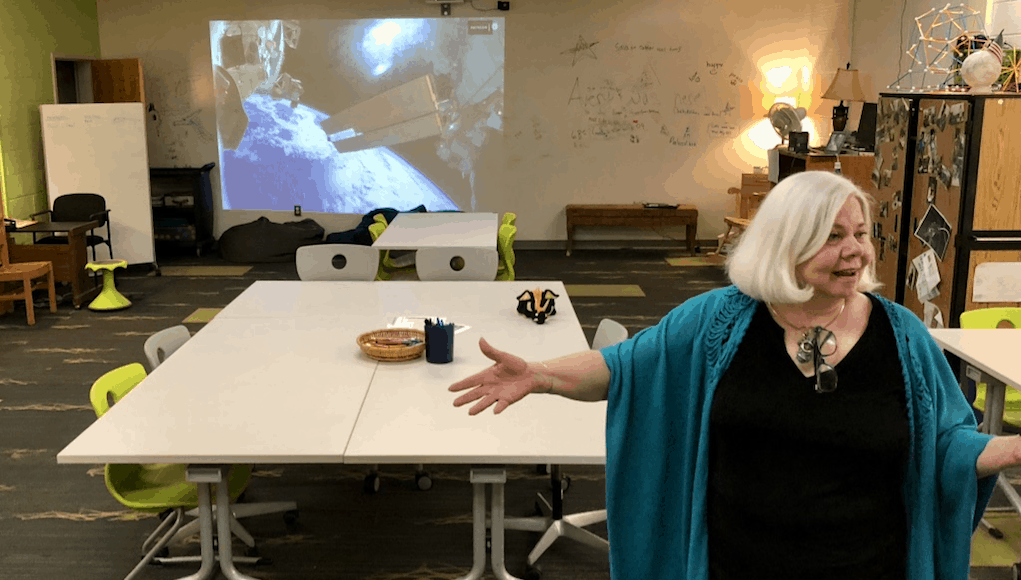
Pam Moran directs the Virginia School Consortium for Learning. Until last month she was the superintendent of Albemarle County Public Schools in Charlottesville, Virginia. In 2016 she was named the Virginia Superintendent of the Year. A great high school science teacher in South Carolina convinced Moran to combine her love of science with an interest in working with young people. She still thinks it’s the “most important profession.” And she’s learned that teacher voices matter–that they do their best work when they own it.
Contemporary Progressive Education
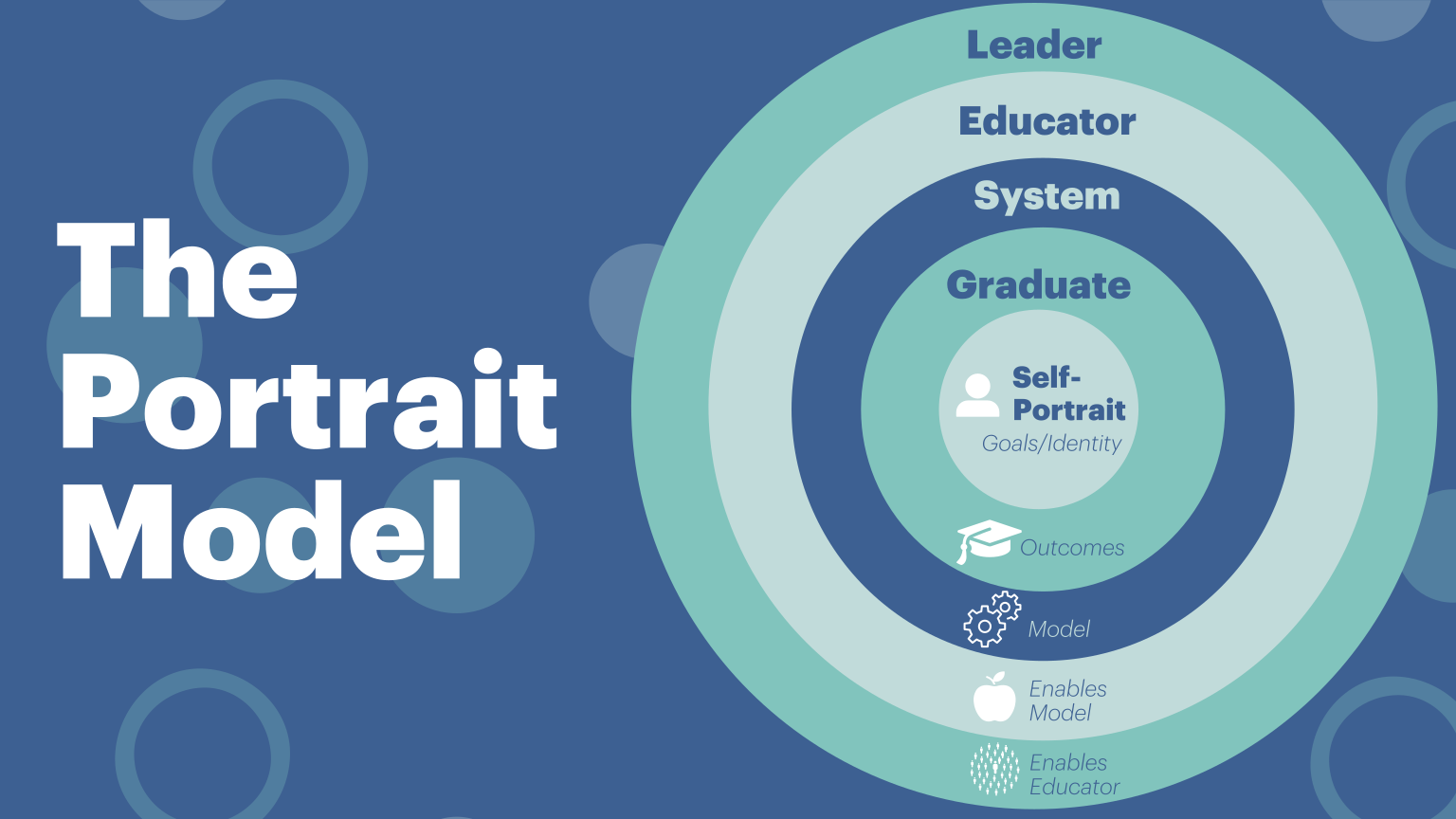
What Moran calls “contemporary progressive education” began in 2002 under superintendent Kevin Castner who wanted to sustain a passion for learning as federal testing provisions were rolling out. Moran took over as superintendent in 2006. A decade later she knew they had an important story to tell and the book project was launched. They had identified seven pathways to lifelong learning that uniquely combined a vision for powerful learning experiences and spaces. As quickly as capital budget allowed, schools added multiage space and programs. Interdisciplinary projects and maker spaces became common across the district. The district’s strategic plan includes a profile of a graduate that includes:- Responsible self-advocates who demonstrate ownership of and engagement in their future.
- Effective communicators and collaborators who can work well within diverse communities.
- Academically accomplished as demonstrated through a well-rounded instructional program inside and outside of “core” academics.
- Responsible citizens who value and build connections within diverse communities
- Critical thinkers who demonstrate an ability to analyze, assess and reconstruct issues related to any subject, content or problem.
- Creative problem solvers who have experience solving authentic, community-based problems.

Kid Watching
Becoming much better at seeing children is a key theme of the book. What Pam calls “kid watching” helps teacher observe how children learn and why some struggle. The questions that guided the journey of Pam, Ira, and Chad included:- What do you see when you look at your school?
- What do you see when you look in a classroom?
- What do you see when you watch children in the playground, or on a street, or in a park? What does learning look like? What does growing up look like?
Key Takeaways from the Podcast
[:15] About the guest today, Pam Moran. [:52] Tom welcomes Pam to the podcast and she describes her passion for her career. [3:40] When did Pam decide she wanted to be a teacher? [5:55] When and why Pam decided to write her book, Timeless Learning with co-authors. [15:00] Pam talks about one of her key focuses: seeing children more clearly. [17:28] About Pam’s and her co-authors’ collective philosophy. [25:20] Pam talks about multi-age spaces and the benefits of children learning in these spaces. [31:10] About an initiative Pam is working on, and one of the major ways schools can help ready students for college and career. [36:06] If Pam were going to write a headline for each of her co-authors, what would they be? [38:23] How did Pam and her co-authors write the book? [41:59] Why Pam and co-authors decided to include the “take action” section at the end of each chapter. [45:03] Pam reflects on and gives her thoughts on Better Together.Mentioned in This Episode
Albemarle County Public Schools Timeless Learning: How Imagination, Observation, and Zero-based Thinking Change Schools, by Ira David Socol, Pam Moran, and Chad Ratliff Virginia School Consortium for Learning MakerEd.org Better Together: How to Leverage School Networks For Smarter Personalized and Project Based Learning, by Tom Vander Ark and Lydia Dobyns Wiley Publications For more, see:- Find a Way to Yes: 9 Leadership Lessons from Pam Moran
- HQ PBL Case Study: Albemarle County Public Schools
Transcript
This transcript has not been edited for spelling accuracy.
We’re listening to the Getting Spurlet podcast where we unpack what is new and innovative in education. I’m your host Jessica and today we’re bringing back a past episode we published featuring an interview with Dr. Pam Moran. Last summer Dr. Moran wrapped up 32 years with Albemarle County’s public schools.
Even as a science teacher and concluding with a dozen years as superintendent, Dr. Moran quietly became one of America’s leading educators because the work she leads is so compelling. With two of her Albemarle colleagues, Moran published a book of lessons learned. It’s called Timeless Learning, How Imagination, Observation, and Zero-Based Thinking Change Schools.
In this interview, Tom talks to Pam about the book and the work. Let’s listen in. Pam Moran, welcome to the Getting Smart podcast. Tom, it’s great to be here with you today. It’s a beautiful day in Virginia with those gorgeous white cumulus clouds that we love
here and I’m just excited to be able to talk with you about the work that I’ve been engaged in with a lot of others. I would call it a cast of thousands. So thank you for having me today. It’s on 32 extraordinary years in Albemarle County.
That’s Charlottesville, Virginia for folks that don’t know. You had a terrific run as an educator and a teacher leader in Albemarle County. And first of all, we just want to congratulate you and thank you for your amazing contribution there. Well, I certainly appreciate it, Tom.
And I know that you remember the days of being a superintendent and it’s a job that does not come without challenges on most days. But one of the things that I’ve really loved across my entire career, whether it was as a teacher in the classroom 43 years ago or the day I walked out as a superintendent, is that the work we do, I describe as the most important profession that exists and
that I feel I have as much love and passion for the work that I’ve done now as I did on that first day in a classroom. Well, I saw that in action recently and I also saw a lot of love from the students and teachers that you work with. So you’ve had a big impact on that community and they certainly appreciate it.
And I think that it’s a real mutual focus that we’ve had here on how do we as a community come together, whether it’s the folks that are in our parent community, our business community, our school communities, and even obviously the most important reason that we’re all here is for our students. And how do we really leverage up that sense of that when people come to believe inside
communities that their voices matter, that they’re important, that they have a real sense of agency and ownership for the work they’re trying to accomplish. And I think that’s as true in the private sector as it is in the public sector, as it is in even the school sector, that people who believe their voices matter, who believe that they really own the work that they’re doing, they own their learning, and start
to see that as a result of that, that they have influence and that things can change as a result of their influence, that all of a sudden you have a different kind of synergy than in a typical hierarchical structured institution. Did you decide you’re going to be a teacher when you’re in high school? You know, that’s a really interesting question.
I go back to my roots and like a lot of young girls that came through in the Baby Boomer generation that I certainly had my love of playing a little bit of school when I was young. I had a teacher who was incredibly influential. I had the same teacher for chemistry, physics, biology. She was the earth science teacher and also did guidance counseling in her spare time
in a very tiny rural school in the deep south in South Carolina who said to me in biology class, she said, you know, you have a real affinity for this and I’d love to encourage you to consider doing something with biology and maybe even to consider teaching. When I went off to college, I actually thought that I was going to be chasing snakes in the Everglades.
I had a real affinity for the outdoors from growing up on a farm in the swamps of the low country, but to found myself really being drawn to herpetology and by the time I was heading out of college, I really had this drawback to teaching. I ended up coming to Charlottesville, Virginia with some connections to the University of Virginia.
I ended up teaching in an environmental education program in a tiny rural system that had a huge grant from the federal government to implement environmental education across the curriculum. It was right up my alley. I would say that I was able to marry a real love of science with a real interest and value
for working with young people. I had taught children as a tutor through school. I had worked with kids in my local church. So I had a real interest in the idea that I might end up working in education, but I also had this real affinity for thinking about doing field biology, put those two together
and had a wonderful number of years working in that together before I branched out into administration. That’s probably more than anybody wants to know about my early life. Pam, congratulations on your new book. You had a book that just came out.
It’s called Timeless Learning, How Imagination, Obturation, and Zero-Based Thinking Changed Schools. We’re going to talk about that book and the characters that wrote the book with you, Ira Sokol and Chad Ratleff, both veteran educators that have worked with you and Alba Morrow. Let’s start by talking about the impetus for the book.
When and why did you decide you had a book to write? Well, you know, it’s really interesting. I’ve always really loved reading education resources, among other things that I love to read. But over the last few years and the work in Alba Morrow that I would call a contemporary
progressive education approach really began in 2002 under the administration of a prior superintendent where we really wanted to look at what’s beyond the no child left behind act of 2001. We wanted to be sure that even with increased accountability and a focus on state standards and state assessment system that was a pretty traditional system at the point it rolled out,
how do we really sustain passion, interest, and love of learning in both teachers and in our learners? We embarked on a project that we called Design 2004 where we asked teachers from across the system to write proposals that would ground interdisciplinary learning, use of technology, performance or portfolio based assessments that would be value added along with the other
work that we were obviously doing to implement our state standards in Virginia as well as the state testing program. From that we continued to build on that. Dr. Kassner who was the superintendent at the time left in 2005. I became superintendent and every year we were adding pieces to the puzzle of how do
you build deep transferable learning. I was a real student of the Tyak and Cuban work around tinkering towards Utopia and really trying to figure out how do you get to that deep change. I knew it wasn’t going to happen in a year. I knew it wouldn’t happen with quick fixes.
I knew it wouldn’t happen because of me as the superintendent alone having that vision. Over time what we did was to really build that collaborative culture where we added elements in. At some point probably around 2013 I felt like that we had the work deeply embedded enough that we would be ready to tell the story at some point.
It’s not my story or Chad’s story or Ira’s story. It’s really the story of many people who have been a part of a school culture of change in which we have extended that work that we’ve been doing beyond the state standards to really go after things like project based learning, make or work, looking at interdisciplinary learning, next generation focus with high schools, the structures of scheduling and
routines and testing and all of the things that really make up what schools do. Of course as you know from your visit we’ve added in the years recently a real focus on how do learning spaces get redesigned to support the changes in pedagogy and the changes in curriculum that we believe are going to get our kids to a different kind of result. When we talk about the results that we’re after we’re talking about competencies, lifelong
learning competencies in Albemarle County are clearly what we see as the exit competencies we want all kids taking with them into life. We really developed a focus on that we’re not just educating kids to pass tests, we’re educating kids to be ready for entering the workforce, their homes, their communities with skill sets and competencies that are going to allow them to be really great citizens
but also to continue to iterate their learning across their lifetimes. We know in this day and age Tom that our kids are not going to go to work in one job and have that job stay basically the same for the remainder of a career. We know that there are going to be radical changes. One of the things that we’ve really started working on as of recent that we believe is
the next generation is how do we really deepen our commitment to social emotional learning. We see that as being what will basically prove our kids to be able to be successful in a variety of different workforce career areas that are not going to be based on necessarily what people know in a static way but what people can do to evolve and add skills, add competencies and iterate the knowledge that they need to be successful.
We know from white collar jobs to blue collar jobs to high tech jobs, a lot of those jobs are going to disappear or they’re going to change radically and our kids need to be ready for that. So that’s where we’ve been aiming for a long time. I guess hence the title timeless learning right.
Yeah, you know one of the things that I said to Ken Kay with Ed Leader 21 and we have been associated, affiliated with Ed Leader 21 for a number of years now is that when you talk about whether it’s critical thinking, collaboration, creativity or communication or as Virginia has added in with their five C’s citizenship, the reality is those things were as helpful five centuries ago or a millennium ago that we believe that those are timeless qualities
of what humans do who are learning creatures heading towards being able to be successful in their lives. And so we’ve tried to really think about that it’s really not about 21st century learning, it’s really more about any century learning and that the timeless kinds of things that people have done to educate up young people have really stayed the course whether it’s
storytelling, physical interaction with projects, with materials, with resources. It doesn’t really matter if you go back the best of who we have been as educators has always been on a platform in which our kids are engaged and that they are learning skill sets in a really active way that they can transfer forward. And so that’s why we really see this work as being timeless, we see it as being about
imagination, we talk about that educators are some of the most creative, inventive people that exist in any profession, they have to be. They are a do it yourself generation of people who teach others, they have to make things all the time. And if we can make sure that neither our educators or our kids are checking their creativity at the school house doors, we’re going to end up with a culture inside schools that is all about trying
to get beyond the horizon and not just look at the horizon and hope that one day somebody will be able to get there on our behalf. And so we’ve really worked on how do we take imagination inside our schools and outside our schools? How do we use observation as a way to get deeply focused in terms of inquiry, asking questions, really focusing on what does it take to get all children, every child,
to a place where they are able to graduate and walk out with the effective competencies they need to be successful in life. And that’s not something that we’ve conquered, I’m not sure there are many places in the country that have, but it’s someplace that if we don’t aspire to finding those learning paths that let every child be able to get to their hopes and dreams, then we will always sit with opportunity gaps, that equal achievement gaps, that equal
kids that fall into divides of all sorts as they move from childhood to adolescence to adulthood. And so that’s what we’re really trying to do is to figure out how do we not just fill in gaps, but how do we rise above those gaps in the work that we do? So I appreciate the equity focus of chapter one where you talk about all means all. Pam, one of the most interesting things about you and your co-authors is that you really stress
seeing children, that we must get better at seeing children. I’ll read a quick quote from the introduction. It says, once we’re able to see clearly what is happening with children in our schools and outside of schools, we will then be on the path to learn how to take rapid yet considered actions to change the education we have inherited. I’d love to have you talk about seeing children more clearly.
I think that that is one of the key areas of focus that I take away from, you know, I didn’t start out life as an early childhood educator or even an elementary educator, but I went into a school as an elementary principal in 1990. And one of the things that was a real key area of focus at that point in time was something called kid watching. How do you really study what kids are doing, how they learn, what they prefer to do as learners,
the challenges are that seem to cause some kids to struggle, others not. And how do teachers grab that capability to observe kids on the playground, in the classroom, even in the cafeteria or in the hallways and put that data together. It’s a different kind of data because it’s more qualitative in nature. And marry that to quantitative data, whether it’s literacy data or math data or science and social studies or arts data, whatever
the source is that looks at what kids are doing to progress, how do teachers get better at watching kids, figuring out what that child needs. And I guess that in a day and age where we talk about personalized learning, I don’t think a personalized learning is just being about technology as a way of differentiating or giving kids capability to pace faster or slower. I think about it as being more of what a teacher knows, understands and does
to take in the whole child and be able to craft what kinds of opportunities and choices they can bring to bear based on kids interest, based on the context of the learning. You, in the introduction, you do this beautiful summary, I think of your collective philosophy that schools need to move from content driven adult determined teaching to context driven child determined learning. I thought that was a very nice description of what I saw on the
ground in Elba Morrow. Yes, it’s a very different way of thinking about the work. One of the things that the accountability movement did and there are some good things that came out of it and I think there were some things that really challenged educators in a way that perhaps created more narrowed filtered paths in terms of what kids were able to do and to access learning. And
when we talk about equity, we talk about equity, access and opportunity as being almost a three legged stool of what we have to do here or anywhere else in the country if you’re really going to go after rising above those gaps that we worry so much about. That when we talk about context driven child determined learning, one of the things that we have found is that our teachers who really dig in and figure out what kids are interested in in terms of their own
questions and curiosities that when teachers can take that and connect it back to content that may be prescribed in a standard that what you start to do are to see kids who engage very differently with the learning work that’s going on in the classroom. The other thing that we acknowledge is that kids are sometimes interested in learning things that are not a part of the curriculum and how do we make that work something that is as authentically a part of where kids
can go as learners as the work that is more prescribed. And so we really look at that if a child is interested in something around aviation or it could be flight, it could be a little kid who’s gotten enamored with drones. How do we take that interest and allow a child to move that into could be what they read about, it may be what they write about, it may be about the questions that they would like to answer through a more science frame. It could be about the narrative of history
that’s connected to flight. We have a kid in one of our high schools who and I think of the drone piece pretty naturally because he absolutely was just taken with drones and was watching a lot of drone movies and so forth and so on on YouTube and was really excited and he walked into a new makerspace we had one day in the library, high school library and he said he looked at the materials and he was like oh my gosh I can make drones in here and he did and then the principal said to him
so who else in the school is interested in drones? He said I’m not real sure. Principal said why don’t you take some of your drones to the cafeteria with you today? The next thing you know this kid has a drone club up and running, he gets a call from the middle school next door, goes over there, starts working with one of the Macatronics Labs teachers and doing some work with drones in that middle school. Now he’s still a high school student, he ends up speaking at the World Maker
Fair in New York City, he was a key noter, had everybody on their feet clapping at the end particularly when he announced he was going to run for the school board after he graduated from high school which he did and one of the things that he says is that he found a real love of something that was very important to him and one of his comments to me was you know Ms. Moran, people underestimate how important informal learning is for kids in school particularly in
high school. Today he spent his last year in a gap year working in policy work, he’s off to college this next year but one of the things he did this past year was to help develop a curriculum around aviation and to co-teach it in that middle school and so I think that that’s a story that’s worth telling because when you have a young person who can find that interest, turn it into a passion, have us support it up and end up and being a really extraordinary kid who describes himself as
pretty ordinary you know he says you know I’m just an ordinary kid, I’m not the kind of kid that’s going to end up with a lot of scholarships, I’m not going to get accepted at highly competitive schools but I got to tell you this is a kid who is set for life with some skill sets that would have never been seen if we had not put that makerspace in that library. On the other hand we are you know piloting interdisciplinary courses in the schools, we have a course called American Fusion
that we’ve been teaching in one of our high schools that looks at the story of America through the lens of a citizen and immigrant approach that is an amazing course, the teacher in that class was just named the Virginia History Teacher of the Year and his goal was how do kids find their place in the narrative of history and be able to take it to the next level. We had a grant from a very tiny grant from LRNG and the National Writing Project that turned into this huge monument
project which we didn’t anticipate was going to take on a life of its own but after August 12th in Charlottesville, Virginia last year in Albemarle County surrounds Charlottesville that became a project in which kids had a real deep sense of ownership for project-based learning in which they tried to really assess whether it was Washington DC or Richmond or Charlottesville or Montpelier or Monticello what do memorials do, whose stories gets told and what the kids finally
landed on is of the people who live in different times when monuments and memorials are erected whose story is not getting told and so what they did was to devise their own monuments and memorials that they took to an exposition at the end of the year for our community and people were pretty blown away by the stories that these kids told through their monuments and memorials that they had built some of which were digital which was pretty cool. So what I really see is that context
and learner-determined work is as relevant and elementary as it is in middle, as it is in high school, as it is in life and it is relevant through the context paths that we as educators by studying kids, by imagining opportunities that we might never consider that could happen in schools putting that together and saying let’s not let the traditions interfere with us doing the take it back to ground zero to what we call zero-based thinking and let’s build this up from the ground
too many times I think that what we do as teachers and even as superintendents is that we tend to take what we did the year before and we might tweak it a little bit so we tinker with it but what we’re seeing is that when teachers and kids literally go to that zero-based design where they start from scratch what you get is a very different kind of process of progress and outcome than when you are simply allowing the standards on a page written by somebody in some other part
of the state to define your approach and you’re just simply preparing kids to pass a test. I hadn’t heard of zero-based design but I’ve talked frequently about zero-based budgeting so I like that sense of if you were going to start over how would we do this right and you’ve really applied that not only to learning experiences but learning environments. I’m really excited about the multi-age space that you created maybe you could tell us a little bit
about where that idea came from and how those spaces were developed. Yeah and you know it’s really interesting because you probably Tom you’ve got some past history in education that goes back a ways too but multi-age spaces have been around in American schools since the beginning of American schools. I mean it ultimately was the one-room schoolhouse model and when we moved into the factory school model in the early 1910s which was a very purposeful move and interestingly enough
there was pushback against that. There’s a letter from the state superintendent Michigan saying we really this is a big mistake to the legislature to go to these more congregated cells and bells and create schools you know in whatever language he used during that time but the reality there was a very you know clear purpose behind that shift. One of the things that that we’ve really tried to do is to study how children learn and to really look at not just what’s happened in our country
that has been some of the better opportunities for kids in terms of learning both experience as well as space design but we’ve also looked at other places in the world so if you go to Ireland for example and and I spent some time there a few years ago they can’t imagine not having multi-age spaces. They see it as as a real advantage as one teacher said to me when I asked her I said wouldn’t you rather have all five-year-olds together and she said well if I had all five-year-olds
how would they ever learn to be seven and so their their sense is that children model what they see and if they see older children doing the things that that you do in communities that are good things including older children being empathetic to younger children and helping them and supporting them that that’s how you learn to grow up into the next age that’s ahead of you so it’s a really different way to think about learning. There’s some some interesting research right now that that’s
come out um Linda Darling Hammond has done some of this or some out of North Carolina that says that anytime kids stay together in a group at a cohort whether it’s a team whether it’s in looping or even in a multi-age environment such as you’ll find in Montessori that over a three-year period you will see kids really widen achievement um performance against kids that stay in in a grade banded curriculum but you also see an increase in the social emotional learning
capabilities now you know the research is a little mixed on multi-age but there’s enough there now and more that’s that’s emerging that says this is something we should really be considering in America schools as one strategy now maybe not every child really and every parent’s ready for that but we’ve been not we’ve been working with multi-age and we’re finding some real successes we’re finding that we have some things that we really need to work on to get it right but um
we’re really excited about some of the initial information that’s suggesting that this does really make a difference for kids now we also you know and the thing is kind of interesting as high schools have always been in middle schools too to some extent multi-age spaces where kids are not limited to accessing more rigorous curriculum or moving up or taking things that are in classes with kids that are older or younger but elementary has been very set in a
age grade-based banding structure for probably 20 some years there used to be a lot more multi-age until the accountability movement really attached test to grades and grade level curriculum so we’re we’re seeing this as a real step towards a more contemporary way of thinking about social learning communities how kids can be grouped more flexibly how kids can learn what it means to work inside a community in a way that that does look at social emotional
context not just the academic context as being important to be able to have peer-to-peer networking as well as what we call aspirational peers and we heard this from a couple of the teachers at the agner hurt uh multi-age space who said our third graders look at the math the fifth graders are doing and they say that’s what we want to do are they look at the older kids and see them doing things that are really positive like you know helping to cook a meal for the younger kids and say
I want to be like that so putting kids in a place where they can grow using aspirational peers as a model is we think a really good thing there’s a lot of different ways to do multi-age and we have probably every school doing some versions of multi-age in different ways whether it’s grade level buddies or you know just a variety of different formats for doing that but these the school that you saw in the next one that we’re rolling out are going to have fairly large
multi-age spaces that allow teachers to really have maximal flexibility in the way that they think about how kids work together how kids learn socially um so that I think but the other thing that we’re getting ready to open in August and and Ira Sokol is is has chief responsibility for this is um the Albemarle Tech space where we are literally renting 45 000 square feet in what was an old manufacturing plant for phone systems that is now become sort of a hub of startups and early
build out businesses in our community and what we’re going to be doing is we’re going to be putting kids in a center there who have a real interest in some project that has a technology base to it that they want to accomplish and the kids will be there they’ll we’re going to start this next year with uh kids that are seniors and then we’re going to then go back the next year and bump it down and to bring in younger students and move them forward there but we see it as an
opportunity we’re going to co-locate those kids with our tech department so they’re going to get to see what does the real world of people working in technology look like whether it’s system engineers whether it’s our learning tech designer folks whether it’s our folks that that do networking or break and fix work it doesn’t matter they’ll be able to be rubbing shoulders with people that are adults who do the real deal work they’ll also be able to get out into internships in that building
and beyond very easily and we see that as the future of high schools in the united states we see those models all over the country emerging some are ahead of us some are behind us but one of the things that we know is that high school kids want more than anything a sense that that they have a relationship with adults that they have a real belief that that relevance that those authentic contextual connections of what they’re learning to what they want to learn are important and lastly
that they’re doing work that’s not just going through the motions but there’s some challenge to it and they have to figure some things out so we see the anchor of our elementary work to where we’re looking to go to a more center-based focused in high schools as being a natural evolution that builds kids competencies and particularly their autonomy as learners over time because our kids should not finish high school and basically have about the same level of structure and experience
in terms of similarity as a 12th grader as they had as a ninth grader as they had as a fifth grader there should be a real evolution that parallels what we know about how humans learn and how they move through rites of passage to adulthood how do we give more control how do we give kids more autonomy how do we provide more opportunities for them to really be able to branch out by the time they’re 18 and I got to tell you when I talked to I served on the state council for higher education
in Virginia for four years and heard over and over again from college presidents in Virginia that kids don’t bump out of their freshman year because of a lack of academic preparation they leave because they do not have whether it’s time management whether it’s the capability to really you know have a level of resilience to get through projects that they’re working on or papers that they’re working on or coursework that the things that bump kids out are really
related to the fact that these kids have never had an experience of having to learn how to manage their own lives we see that high school experience as heading kids towards taking on greater and greater responsibility so that by the time they graduate and go to college or into the workforce that they don’t need somebody to say to them you need to get up and go to class or you need to get your paper done and turned in or your project you’ve got to show up for your group that’s working on a
project so you know so we see this as a big picture of progression so if you want to go back to the word progressive we believe that education should be progressing from whether you’re four-year-old in a one of our pre-k programs or coming in as a kindergartner through age 18 that you should be moving up not just in terms of the difficulty of the textbook that you’re reading or the novel that you’re reading or the science experiment that you’re doing or the math problem you’re asked to solve
but it should be about what’s the progression of increasingly challenging life experiences that ready you for that rite of passage to adulthood we think that timeless learning going back to those basic tenets is a way that that schools could really change the game truly for for young people being ready for life that’s a great description let’s uh let’s talk about the book how if you were going to write a headline for each of your co-authors how would you describe them so in in headline length
iris socal uh chief provocateur yes he’s the one who asked the the the questions that push people’s thinking that sometimes make people angry frustrated that cause people to walk away and maybe scratch their head and think i gotta really dig deeper on this um he pushes people to think how about head how would your headline chat a radical entrepreneur um chad can’t walk into a situation without saying what about this can i really effectuate up to bar the language from the
entrepreneurial uh folks over at the darden school um sarah sarah vathi in particular who talks about that an entrepreneur doesn’t just generate up an idea that they think is going to be something that that will be attractive to other people that they might want to buy or invest in but an entrepreneur’s got to be able to see that project from its beginning all the way through the process of startup and moving it out into the market and so um what she refers to that as being
is effectuation thinking that’s what chad does he sees the big picture of okay if i take this over or i am going to invent this up how do i not just get the idea off the ground but how do i see it through and that’s a that’s another key focus for us is that the the person who is the entrepreneurial thinker in our schools can’t step away or disappear from the the supervising and supporting and leading that work they’ve got to see it through that’s what i think chad really sees himself as
bringing to the to the wheelhouse of innovation is that that entrepreneurial thinking but being able to not just get it started but to see it through that’s a great description of both of them how did you guys uh write the book how did it physically come together a lot of uh a lot of time um that for me was spent in the middle of the night in the very early morning because that’s about the only time i had left in my schedule to contribute you know ira is a person
who tends to he’s he’s what i call the person that has the capability to sprinkle the magic into the stories so he’s really good at that he he really worked the dialogue to a great extent um the folks out at maker ed.org Stephanie Chang and Jessica Parker at the time knew that we had been really ahead of the the curve in terms of bringing maker education into the schools um at a point in time where i actually daledority and i worked early talking around 2011 1011 and he said it’ll never
it’ll never happen in schools because uh testing is the dominant form of instruction in america schools and i said i don’t believe that that’s true i think that there are places that are doing uh a real nice blend of yeah the kids do need to pass the test but they also need to have rich experiences that um should be available to all kids not just to those that that um oftentimes get labeled as being the high achievers or the gifted you know and that so i said to dale i said i think
this can happen as we began to work the folks at maker ed came back and said hey can we can we just audio tape you guys and transcript it because we really think this story is very powerful so the dialogue a lot of it came from those tapes from the transcripts i like that about the book that there is some really uh obviously authentic dialogue between the three of you yeah i mean we had we had hours and hours and hours of video every time we’d go to a conference these guys would pull out
their uh their microphone and uh recorder and and just say just you guys talk and we’ll record so that came from that and and the thing that i would say is that you know that we feel like that what we’ve done is to really do an attempt to qualitatively capture uh the work that’s occurred that’s been done by a lot of different educators at every level we tell kids stories we have teacher stories we have principal stories that represent the fabric of our our system but that also we bring
in stories from other places as well where we’ve uh you know interacted with people and tried to support others up to take some of the steps that we’ve taken so when you put that together um Chad Chad has been amazing at helping us really figure out the context of what are the different layers to the story that we need to tell um we’ve all been contributors in a variety of different ways but we talk about that we’re the we’re sort of the narrators but we’re not the story um it’s
the same thing that i’ve often said when i’ve been out as a superintendent is that i’m just privileged to be able to share the amazing work that people that are in the trenches in our classrooms in our you know roles as principals as students and that i may be a translator of those stories to a bigger picture audience but the reality is that that i don’t i don’t i’m not the person who wrote the story i’m the person that’s getting to tell it it’s a beautiful book uh it’s really nicely organized
i i love the fact that every chapter ends with a section on your own learning uh and every chapter has a section on provocation structured inquiry reflective pause and take action so it is um it’s not a how-to book but it’s a thoughtful sort of map for uh reinventing learning so a great contribution uh by the three of you well and you know tom people don’t write these kinds of books anymore you know it’s a it’s a thick book it’s not something that’s a quick and easy read um
but we felt like that to just to do justice to the story that we needed to really you know build that context very differently and i’ll tell you the thing about why the take action we kind of worked on that last part of it and one of the things you know i started out as a a staff developer when i first came to central office here in albomarle and i did some deep dyes you can hear that that you know i’m not a person that rejects research by any stretch i feel like that we
constantly as educators need to be reading studying and deepening our knowledge not just of our own action research but of what else is out there but you know bruce um joys and joys and showers fame of the 1980s did sort of the seminal research into transfer into practice and they said if people don’t take actions after they leave a workshop or a conference keynote or whatever it is that they’re doing and actually go back and commit to making a change in practice and at that point you know
the focus was on how do you how do you connect with a critical friend or a peer today we talk about instructional coaches but if people don’t really take an action if they don’t do something all they’ve done is read a book attended a conference listen to a wonderful ted talk or keynote or gone to a workshop and only about 10 of the people that do those things actually ever change anything about their practice which is one of the reasons why i think that we spend a
lot of time tinkering around the edges of change in schools is that you know it’s pretty superficial and and what i’d like to think is that if we can in some way energize people to say let me change one thing let me do one thing to be a student of learning and to make a difference with others by taking an action then people are on the path to really doing some transformational change so that’s why we added that take action section it’s uh it’s terrific so get the book uh it’s
called timeless learning how imagination observation and zero based thinking changes schools it’s from wiley wiley’s got a bunch of good books out this summer yeah i would say that another one that’s a really nice book from wiley is called better together a lot of the same sentiments that this work is hard uh we we need to learn from and with each other uh bam would as our uh as we close out we’d love to just have your reflections on your your next gig you’re moving to the virginia school
consortium for learning uh what what do you hope to accomplish there well you know tom it’s it’s a really interesting piece that i just downloaded better together as soon as i could get access to it and have been reading and and i guess that you i could turn this around and do a quick two-minute interview with you about that um because i think that that is an incredibly relevant story that you’ve told with lydia about how when people network when schools network when school districts network
together that what they’re able to do is to cross pollinate the learning they’re able to share the resources they’re able to uh work together so that people are not necessarily reinventing the wheel that they’re able to do what i call scaling across that you take what somebody else is doing and while your you know your your teror your geography your um demographics may be different you can take a big idea a bright idea and have it become something that you are able to bring in
and make that difference with kids in the school or district where you work i see this as um this as being a network and that it one of the challenges and one of the the opportunities i’m looking forward to is trying to figure out how does it become a true bona fide uh bona fide network where uh people are cross pollinating and sharing their ideas and that we’re starting to see a cohesive focus on vision mission and goal and we know when that happens what you get is collective efficacy and when you get
collective efficacy what you also get are people who are making a difference with young people in every way possible so i would say that that what i’d like to to see the consortium become um as it evolves from a very good place to maybe an even not better together place is the kind of work you describe it’s uh it’s an exciting opportunity for you to learn from and with uh so many districts across uh virginia it uh it’s going to be fun to watch i i know um a lot of us around the country
will uh be eager to to learn from your next chapter uh what a terrific way to wrap up your work at albomar with this uh with this great book and and your amazing contributors uh bam we we’ve just really enjoyed learning from you uh from watching your work and we’re really looking forward to your next chapter we we appreciate you being on the Getting Smart podcast. Tom it’s been a pleasure and as you know i have amazing uh appreciation of you as a leader who
has really informed and not supported up uh work and who’s continued to also evolve just like i would think all of us aspire to as educators in terms of your own leadership and so i appreciate your appreciate it in value and we loved having you visit and um be able to uh say i’ve seen it and i know that what they’re describing is real so thank you so much. I’m a believer thanks fam. A big thanks to Dr. Pam Moran for all of her work and education.
You can now find her leading the Virginia School Consortium for Learning, a 30 year old network where she brings the same energy and enthusiasm that she brought to Albomaral County Public Schools. Thanks for tuning into the podcast that’s all we have for you today. If you haven’t already make sure you hit subscribe so you don’t miss out on any future episodes and for more on all things innovations and learning be sure to check out GettingSmart.com. For the Getting Smart podcast
this is Jessica signing off. you you

0 Comments
Leave a Comment
Your email address will not be published. All fields are required.