

Trace Pickering on Community-Connected Projects
- Passion: Start by tapping into a student’s interests and use that as a powerful learning tool.
- Projects: Engage kids in solving real-world problems and seeing how content actually lives in the real world.
- Community: Network kids into the community to see all of the great people and wonderful opportunities that exist.
- Leaders need a paradigmatic shift. Need likeminded individuals for a learner-centered paradigm.
- Leaders need to understand the opportunity costs of traditional school.
- “All it takes is an administrator to give a little leeway — and just get started. Start with some smaller, easier projects.” – Trace Pickering.
- Iowa BIG
- @IowaBIG Twitter
- The Iowa BIG Podcast on Spotify
- @IowaBIG Facebook
- @IowaBIG Instagram
- Trace Pickering’s LinkedIn
- XQ | Iowa BIG
- The Power of Place: Authentic Learning Through Place–Based Education, by Tom Vander Ark, Emily Liebtag, and Nate McClennen
- Difference Making at the Heart of Learning: Students, Schools, and Communities Alive With Possibility, by Tom Vander Ark and Emily Liebtag
- LimoLink
- Getting Smart Podcast Ep. 265: “Jenny Pieratt on Powerful PBL”
Transcript
This transcript has not been edited for spelling accuracy.
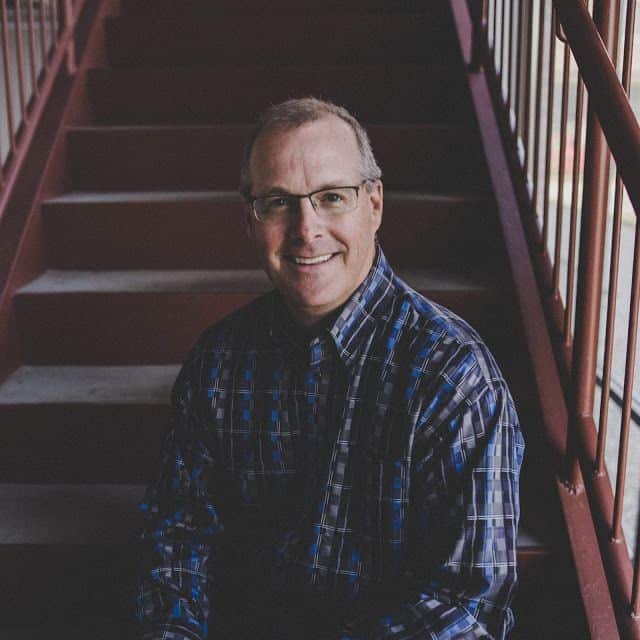
You are listening to the Getting Smart podcast where we unpack what is new and innovative in learning. I’m your host Jessica and today, Tom is sitting down with Trace Pickering, executive director of Iowa Big, one of our very favorite learning programs in the country. Trace has a background in community building, has served as associate superintendent of Cedar Rapids Community School District and also associate director of education reimagined.
He’s got a legacy of empowering people to pursue interesting and important projects while bringing together an entire community. Let’s listen in as Tom and Trace discuss the power of community connected projects, how to scale a place like Iowa Big and creating a culture of project based learning. Trace Pickering, welcome to the Getting Smart podcast.
Thanks Tom, good to be here. Hey, it’s a treat to have you on. I just wish I could be with you there and see the rapids. It’s been a while since I’ve been able to visit. Yeah, that’s not necessarily the best time of year to be here, but we’re having visitors. Trace, did you grow up in Iowa?
I am. I’m an Iowan. The closest I got to leaving the state was just on the other side of the river from Omaha. Trace, I’d like to go back in the way back machine to like 12 years ago after the Cedar River covered Cedar Rapids in a flood. A local newspaper invited you to host a series of community conversations about what’s next.
I’d love to have you reflect on what you learned in that process. Yeah, so in 2008, we suffered the nation’s fourth worst natural disaster, which was at that time, I suppose things have changed since then. But essentially 10 square miles of our downtown was unendated with river water as high as 12 feet in some places.
There was a conversation in our community when the floods receded, a group of people that just wanted to quickly clean up the streets, get businesses back to normal, and another group saying, wait a minute, we’re an agricultural kind of a rust-belly kind of town. Our heyday was in the 40s, 50s, and 60s. We have an opportunity to reimagine ourselves for the next 100 years.
And thankfully that faction largely won out. And so we started seeing entrepreneurs coming in and redevelopment of arts and culture center and all those kind of things. And one of our community leaders who happened to be the CEO of the media or TV and newspaper in town said, we’re not in conversations about education.
They’re impacted too. They’re a 100-year-old institution. Let’s talk about it. And so he asked me to be a community builder and just try to change the conversation in education.
At that time, Cedar Rapids had really fantastic schools using metrics from the 60s and 70s, right? AP, all the AP stuff, their top 100 schools on US News and World Report. And so there wasn’t a lot of energy to make the change. So anyway, we’re talking with, we start, Sean and I, my co-founder, we started talking
to people and we heard a consistent message. We would ask them, what do people need to know, do and be like to be successful citizens and human beings in today’s world? And we’d get this beautiful list every time, right? Collaborative, work in diverse groups, learn quickly from your failures, this beautiful
list. And then we’d ask them, great, what are you advocating for educationally to make sure schools can produce this? Tougher standards, longer school days, longer school years, get rid of the union, strengthen the union.
This is the litany of non-solutions, right? But they couldn’t see the disconnect. So Sean and I came up with what we called unofficially called, because Universal Pictures makes us called unofficial, the Billy Madison Project. We wanted to send people back to school.
We recognized that all of our histories are fiction and especially our experiences as high school students. And so like, let’s put them back in high school as students, going to the classes, having to relieve themselves in the four minute passing period like everybody else, all the kind of trappings at school.
And then let’s have the same conversation. And so over about four month period, we sent 60 community leaders into seven different high schools and they had their time in school and then we’d bring them back together in small groups and take the long story short. We asked them, what do you need to know, do and be like to be a successful citizen today?
We got the list. We said, compare and contrast that with your experience as a high school student. And they said almost none of the things on the list are actively being taught or addressed. So he said, great. So, you know, what did you see in its place?
We saw board kids, we saw teachers working really hard. And we never, it never dawned on us that separating all the content out into separate subjects and classes. We never thought that we just thought that’s how you did it. That’s the dumbest thing to do because it decontextualizes all learning.
Decolonize learning is boring and hard to teach. And so he said, great. Blank sheet of paper, build a high school you’d have. You could have what you want and produce the things that you say you care about. And it came down to passion project community.
Get used kids as natural interests and passions and use that as the vehicle for learning. Give them real work to do. As an educator, one of the things that stung a little bit, but I had to admit was true. One of our participants said, is it anyone ever actually found the fact that almost all the work kids do in school is fake?
We’re like, what? Like it’s fake. It’s made up by one person to satisfy one person to get a score or a grade or points or something. Why would you think students would put forth the best effort that they know it’s fake? We know it’s fake.
We have all kinds of problems and opportunities in our community. Why are they working on real problems? So that’s where the project real authentic project part came in. And then getting them out in our community because there’s so many people willing to be teachers of kids and show them their their profession and those kind of things.
So that that all led to 2012 when we were two districts that decided to jump in and give us a sandbox to play in. After an experiment or two, you launched something now called Iowa Big. What is that? How do you describe it? Yeah, so coming off of the Billy Madison project, one of the things that our participants told us was that the last thing they really wanted was all this.
We have four school districts in our community. They didn’t want all four school districts starting their own thing and then forcing business to choose which ones they partner with. And so they said, if you do anything, please do it together. For efficiency sake, for community sake. And so two districts stepped up within weeks of the Billy Madison project concluding and said, hey, we’ll give you a sandbox.
So Sean Cornelli, my co-founder and I, we called it Iowa Big. Big Ideas Group was what it originally meant and it just became Iowa Big. And we said, we’re going to we’re going to design a school around the three things that our community said they wanted, passion projects, community. And we’re going to focus our delivery on the outcomes that they say are important. And so that launched what’s now we’re now in year eight of kids coming in and learning in that model.
Sean and I as educators, one thing that we really wanted to do. We saw lots of fantastic programs across the country doing similar things, but it was always after your core content, after your academics. Then you can do this thing like, no, if you can’t teach most of the standards in authentic real world projects, then we better have a conversation about why we have those standards. And so we offer core academic course curriculum, but course credit for students to do these authentic projects.
So it is it’s basically a half day program for most young people. They can select it. You how many sending high schools do you work with now about a dozen? I’ve got seven sending high schools. The vast majority of the kids are with us half a day.
So they choose typically choose three courses that they want to take through big. And then we get them for a chunk of time either in the morning or the afternoon. We have a handful of kids that are probably more in the 80, 85 percent time with us. The second and third year kids who just want more. And the tricky thing about big is you call them courses and kids select something called a course.
But when they get the big, it’s pretty, it’s pretty different than sitting in the back row of a class doing fake work. Right. So tell us about the projects that are constructed at big. How does that work? Yeah. So what the team and I decided early on is that we’re truly going to be learner centered and we can’t be curriculum centered. Right. And so our curriculum is our community.
And rather than the teachers designing the experiences and figuring out how to teach what standard when we said, let’s turn that over to the kids, they have to own their learning. And so we said about any project a kid picks, we believe we can teach a good chunk of the English standards, sociology, psychology, and then depending on the project, we can touch on some government standards, some stats and probabilities, some science.
And so when students sign up for whatever courses they sign up for, that doesn’t drive what projects they choose. They choose projects they actually care about. And so we have two people, Amanda and Laura, whose job it is to go out and find this project. And so we get projects from local government entities, nonprofits and businesses, real problems, real things that these organizations want answers to or want to have created.
And then students are also allowed to pitch projects to our community. Say we think this is something our community wants to use. And then we help them find a partner for that. So the kids choose a project and then the teacher’s job is to help the students practice and see many of the standards for the courses they’re taking in the work they do in a project.
So rather than, for example, rather than an English teacher assigning a bunch of five paragraph essays on Shakespeare and you name it, our students are writing white papers for local businesses or writing an argument for the government entity as to why they should or shouldn’t do this policy. A myriad of professional emails and correspondence. We can teach voice, audience, purpose, all those kind of things through that in speech as well. Trace, your school is sort of the poster school for my last two books.
I wrote one on the Power of Plates, which is about community as classroom. That idea is really central to everything. Every course that you I suspect almost every project that you have in some fashion is connected to the community. Is that right? Yeah, very, very few, I would say or not.
So. And then my next book was on difference making, arguing that kids should do work that matters to them and their community. And that idea is also really central to every every project that’s co constructed at Iowa Big, right? Yep. Absolutely.
I’d love to go through a couple examples of projects that might help people get a better sense of that. Well, Trace, I’m thinking of one from. I don’t know if was it was the splinters project a year ago when you had that big storm just this. It was in November. You had a big snowstorm, knocked down a lot of trees.
What tell us about that project? What did the kids do? Yeah, so in the midst of the pandemic, in August, we had what’s called a derecho. I didn’t even know there was such a thing. Essentially, it’s an inland hurricane.
And so for about 70 straight minutes, we suffered through wind speeds of up to 140 miles an hour. And it city of 200,000. It wiped out 65% of our tree canopy destroyed businesses homes. Of course, you know, we’re people without power for 18 days. And, you know, a few weeks later, school started month later.
And a group of kids came to us and said, we want to pitch a project. We want to turn this horrific tragedy and the destruction that we see into something positive for our community. And they brainstormed some ideas, but essentially they decided to call themselves splinters. That was their project name. And they took all of these beautiful, huge oak and ash trees and maple and hickory trees.
And we we found some chainsaw artists that could turn these destroyed trees into beautiful art that would be here for years and years and try to try to make something positive out of it. A classic great project for kids. So he said, all right, who’s your partners? And they’re like, well, we want to partner with the city of Marion. And we want to be able to donate proceeds to selling these pieces of art to trees forever.
Who can help us read? We can’t appear community. And so they had they had a short timeline. So they wanted to do it the week before Thanksgiving. They wanted to have chainsaw artists.
So they went to work. They found a chainsaw artist who knew three other chainsaw artists. They sold them on the idea. They had to go to the mayor of Marion and they wanted to have the car rings happen in the city square in the park. So that people that week could come and watch them work.
And so they had to fill out an 18 page request for city and make their appeal. And they had to get connected with the work with the mayor to leverage the city parks and rec department and the city maintenance department to provide the vehicles and to get the trees. And they had to go to the people that were essentially grinding these trees up into mulch to pull some of the better pieces of way from them. They had to engage in marketing, develop flyers and the approach and get the word out. They had to find a site to do online auction and get that all set up.
They were almost ready to launch a bank account to run all this and then ran it by me. And I helped them understand that it was illegal to do that. You can’t have district monies outside the district system. And so there’s valuable learning about how checks and balances and financial systems work. And so we got that all set up.
They supervised all of the every day. One of them was there from eight to five watching these people work. They ran the auction. Their goal was $10,000. And they wanted to give 60% of the trees forever, 40 to the artist.
They raised $25,000. And so a great example of a project that helps the community. The kids are inspired and deeply passionate about it. And there’s a ton of learning that we were able to have them experience that they had really hard to give that experience to them in a traditional high school. Give us an example of how you might have incorporated some communication expectations into that.
And how would the organizing students have both developed and demonstrated some communication standards as part of that? Yeah, so our teachers work as a team. They don’t have their own individual classroom. So every day those kids are interacting with our business teacher, our English teacher, our social studies teacher. And they’re constantly getting coaching.
So they’ll be like, hey, we need to market and communicate what we’re doing here. So they would work with the business teacher, talk about it. Here’s some practices and approaches that marketers use. They went out and talked to a local marketing agency about how to put this together, how to have an appealing logo.
All of their email correspondence back and forth with the mayor, they would work with their English teacher. Making sure that the tone of their email and the message was clear and it was professional. And just all of those kind of things. So there’s just in the moment coaching. Our teachers have to be skilled to be able to pull out any part of their arsenal of tools
when a kid asks for it. And so, you know, Steve may come in, I’m terrified. I’m going to talk to the mayor of Mary and I’ve never talked to an official like this. But how does this work? What do I say?
And right there’s a learning moment. You know, have them do a quick rehearsal with you, talk about the key points, you know, all those kind of things. And then the kids go and do them. Yeah, that’s the beautiful thing about these projects is that you can plan some outcomes. But because they incorporate so much design thinking, you’re really doing your teachers are doing some dynamic coaching and new and different situations.
Trace, it’s pretty easy to understand how you could pack science and excuse me, English and social studies into a lot of these projects. But seems a little bit harder to do science and math. You have an example of one of those projects. Yeah. Sadly, Tom, one of the challenges that we have is with math, math and math standards, right?
By the time most of our kids are sophomores, junior seniors, they’re in algebra two and calculus. And sadly, there’s very few projects in real life that actually require that that kind of math. And so we offer statistics and probability here. We get a lot up. There’s a lot of projects.
We had a project a few years ago with a company called Limo Link. They provide limousine service for the elite and wealthy in our country coming off of airports and all this kind of stuff. And they had gigabytes of data that they had to go through and they wanted to find some patterns, patterns to their users and that. And so that was a task they gave the kids. And so there’s some math and math and stats there.
If a kid comes take science with us, we offer environmental science. Actually, the Splinter’s Project taught the kids at least a few of the standards in environmental science. They had to understand some there with the trees. So environmental science, physics, chemistry. So we go out and look for projects to have some of that.
So if a kid comes to us with a science course, their number of projects are trimmed down a little bit because we want them to experience it in the project. If they don’t get it in the project, we have seminars and that’s where the teacher they call it spackling and kind of spackle together. The standards of kids aren’t going to get. Quick example of one this this year. We have a young lady who’s really interested in in science and.
Wants a career in that and I’m not going to tell you the exact detail, but she’s doing. Some sort of original research on. I don’t know the biomes or something about lined it that can help break down oils, motor oil and things that get are in brown fields and. So she’s learning a ton of chemistry and environmental science and that with with Sean on that project. So we oftentimes the science projects are a little more targeted to the individual and the smaller kids.
Right. Grace, we love the work that you’re doing there and you I’ve brought a lot of people to visit you. You have a lot of visitors. When when somebody asks you how do I get started, I want to do more of this in my school or in my community. What what’s your advice?
What are the entry points that people could consider? Yeah, I get asked this question a lot. You know, I think you think back to 10 or 12 years ago and technical and adaptive change the buzzwords, right? Right. Understanding the difference.
I think it goes beyond that, honestly, for a program like this. I think the shift is paradigmatics. You have to find a few like minded individuals who see the learner centered paradigm and can step away from the trappings of. You know, the conflagration between what standards and content are, you know, understand the opportunity costs of traditional school. All it takes is a couple to two or three of those folks who have that and.
You know, an administrator who’s willing to give you a little leeway and get something started, start with simple small projects start. Honestly, start with English English and sociology are two really easy places to start. It has English in it. Since these kids are on project teams, sociology is alive right in the room with them. And so start with some of those easier to easier to connect standards.
So finding people in the like minded paradigm and starting small with the subjects that make the most sense. That’s great great advice. This is something a teacher can start or two teachers can create a unit or you could create a micro school inside a high school. You could have a just as you started, it could be an agreement between a couple districts. You could start at a career center sort of expanding the scope of a traditional career center.
We’ve seen the caps network in Kansas City created this next generation career center that has some projects that look like yours. So all good starting points. Trace, I’m so convicted by the project work that you do. I guess if I had a big wand, I would make the whole high school landscape in America one big Iowa big where most of the learning was incorporated into community. Connected projects.
How might that work in an Iowa big ecosystem? Yeah, we’re actually having conversations about that in our community now. With one of our districts, our larger districts has started magnet schools. And so the high school magnet is the next one. And so what is what does Iowa big look like as a full magnet school nine through 12 high school?
I’m excited by it. I just envision taking all the core common core standards that you’re required to teach, just putting them up all on a big board and telling the kids. There is a standards that you need to meet to graduate. Let’s get to work. Right.
Let’s find things you’re interested in projects and start to take your own learning path. Take responsibility for your own learning, learn the universal constructs, the important values that we hold. And when a student gets the eight common core standards in chemistry, when they’ve met all of them, however long it takes them, it would be easy to transcript it to a chemistry class so that a college can see it. And just getting away really from this idea that kids need to be in English class, 47 minutes every day for five days every week for 180 days, just getting out of that model and giving teachers the freedom and kids the freedom to explore. Because we’ve talked about this magnet school.
If I walk in as a freshman and I despise math, I think the worst thing you can do is make me do more math. Right. It’s like, you know, if the kids really fired up about history or what’s going on in government, let them take off. Right. Let them dig deep in there.
And then I think professional teachers can find opportunities to put math in front of them that they care about. Right. How to go. How do you read? Read for information so that you don’t get duped by graphics that you see.
Right. And then maybe a year or two later, they can get more excited about math. Is that kind of freedom and flexibility to really move with the kid and take advantage of the things that they care about in the moment? Because what they care about as freshmen is not what they’re going to care about as seniors typically. Tracy, it just strikes me that the work that you’re doing is more timely and more important than ever.
Before we’d recorded, we were talking about how social media has really damaged rather than enhancing the common good, our sense of shared reality and shared purpose. The last four years of our politics have really damaged our civic infrastructure and civic identity. For those reasons, it feels like the community-connected projects that you’re doing feel more important than ever. And I guess I feel a new sense of conviction to help more people do the work that you’re doing.
I wonder if you share that sense that you’re onto something really important. Yeah, I think the political landscape as well as this whole COVID has provided us a unique opportunity. So in our area, schools are on hybrid models. Kids are going to school half the time they were. And I think we’re seeing more and more teachers recognize they’ve had to make opportunity cost decisions
about what they’re teaching the kids and which standards are truly the most important. And I think so many people are starting to see that there’s a lot more time in a week, kids week, to do interesting, engaging things than they think there is without sacrificing the beloved content and things that they have. So I think that and I think everybody’s, not everybody clearly, but a lot of people’s understanding that kids have exited our schools for a long time without the ability to think critically
and distinguish between poor information and good. And so I think there’s this renewed energy to get kids out in the community, seeing how things really work and then helping them know how to learn on their own and not be spoon-fed things. So many people just get spoon-fed something and like, well, that person said it must be true. There’s too much of that going on.
Trace, we really appreciate the work that you’re doing. Feels more important than ever. If people wanted to know more about Iowa Big, how can they learn more about your work? We’ve got our website, www.iowabig.org. We also have a presence on Twitter, Instagram, and Facebook at Iowa Big.
And we’ve just added this year on Spotify, the Iowa Big podcast. And so we’re starting to document our story and talk about our innovations and our failings in podcast formats so people can dig into those as well. Fantastic. That’s great to know about. You also have a, there’s a great profile on Iowa Big on the XQ site.
So if you just, if you search for XQ, Iowa Big, you’ll find another great profile. Trace, you’ve created a really extraordinary place that many of us think sets an example for the way forward. And I hope a lot more people pay attention to the path that you’ve cut, because we think it’s one that can benefit millions of kids.
So thanks for your work. Thank you. Appreciate your help. In the new year, we hope it gets better quick. Take care Trace.
Thank you. A huge thanks to Trace for joining us on this week’s episode. We admire his leadership and as Tom said, would love to see schools like Iowa Big pop up all over the world. For more information on high quality project-based learning,
check out episode 256 with Jenny Pirat on Powerful PBL. All right. That’s it for today listeners. Be sure to hit subscribe on the podcast so you don’t miss out on any future episodes. Thanks for tuning in.
This is Jessica signing off.
0 Comments
Leave a Comment
Your email address will not be published. All fields are required.