


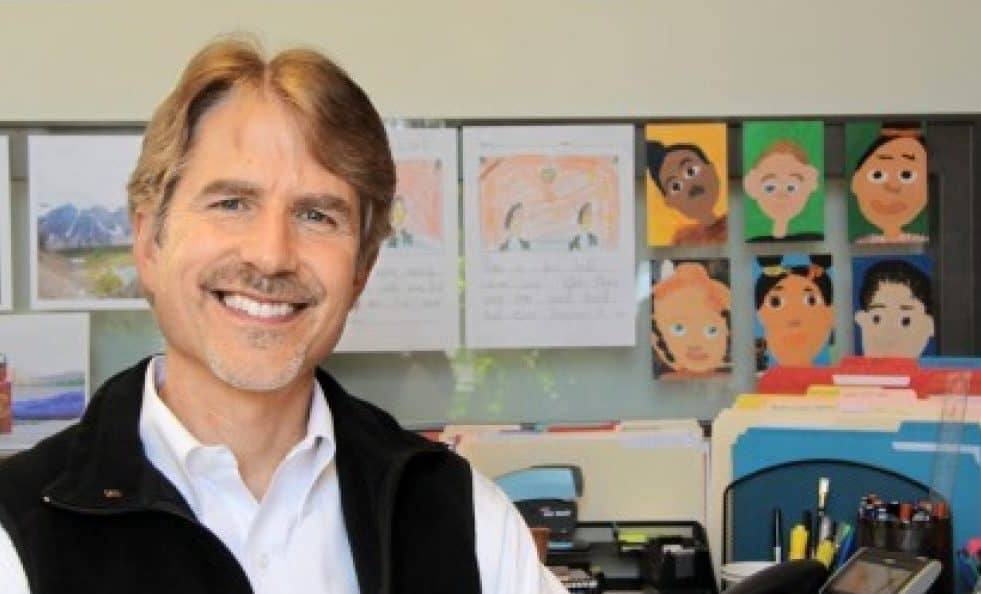
Ron Berger on a Teamwork Approach to School Culture
Stay in-the-know with innovations in learning by signing up for the weekly Smart Update.
Transcript
This transcript has not been edited for spelling accuracy.
You are listening to the Getting Smart podcast where we unpack what is new and innovative in education. I’m your host Jessica and today we’re talking about school culture with Ron Berger. Ron has been teaching for 40 years. He’s currently the chief academic officer of EL Education and author of some popular
books you may have heard of including one of our favorites, Leaders of Their Own Learning. He was on the podcast last year talking about a companion piece to Leaders of Their Own Learning. If you missed that, you can check out episode 222. I’ve got it linked in the show notes.
He’s actually back with us this week to talk about a new book called We Are a Crew, a teamwork approach to school culture. At EL Education, crew is the culture and the advisory structure. Ron’s new book details secrets to creating great secondary schools that promote academics and character development.
Listen in as Ron shares EL insights with Tom. Hey, Ron Berger. Welcome back to the Getting Smart podcast. Thank you, Tom. I so much appreciate you having me back.
It is good to have you back. We spoke a year ago about Leaders of Their Own Learning. You did a companion piece to that. Leaders of Their Own Learning is just one of the classics of education literature. You wrote this beautiful companion piece to it.
How is that book doing? It’s doing well, Tom. Thanks. Not only the book, but all the new accompanying videos and online resources. A lot of schools and districts that had taken on the Leaders of Their Own Learning strategies
of putting kids more in charge of assessing their own work, working together to critique each other’s work. Those are hard things to do, student-led conferences, passage presentations, presentations of learning. We had just for five years heard the need for, can you give us more examples?
Can you give us more tips? It felt really good to be able to get more resources to those districts and those schools that are trying hard at it. It’s not easy work, but it’s really powerful work when you get it working right. I appreciate that, Ron.
Your new book, actually the introduction to your new book acknowledges how challenging this work is in normal times. As we were speaking a minute ago, we’re just in the middle of a crisis, a health crisis, an economic crisis, an education crisis. While we deeply appreciate this new book, it’s called We Are Crew, a teamwork approach
to school culture. I think we both acknowledge that the book’s coming out at a really useful time, but at a really awful time when a lot of families and teachers are really, really struggling. Yeah. I mean, in one way, I feel like the message of this book, which is joining social and
emotional health and character with academic learning and building cultures that support all people, has never been more important than it is now during this crisis. But as you and I were talking about earlier, there’s never been a harder time to build good culture when things are, there’s so much trauma, so much distance and remote or hybrid, partially remote settings.
It’s really hard to check in on everyone and build the trust that is sort of at the center of this approach. I love Yale schools. I love visiting Yale schools. I always tell people that Yale schools really have the best advisory system in the world.
And I love how Yale schools start the day with something called crew. We’re going to talk about crew today. It’s both a structure and a culture. Maybe we can start with the idea of crew as culture. That’s covered in chapter one of your new book.
What does that mean, crew as culture? It’s a great question, Tom. So we’re a 28-year-old organization, EL Education, that was founded with two parents. One of our parents was Harvard Graduate School of Education, and the other was outward bound USA, the organization that takes youth and adults into the wilderness, but not to build
their wilderness skills, but to build their character and teamwork. And people that go on an outward bound course, whether they’re a rock war veterans that have PTSD that needs some rejuvenation and their spirit, whether they’re young kids from environments where they’ve never been in the wilderness, whether they’re teachers on a trip. The experience is transformational in the wilderness because of this spirit of crew,
which is letting go of just your own needs and being a full teamwork person, like caring about the success of the whole group, watching out for everyone in the group. So on an outward bound trip, whether you’re trying to get to the top of a mountain or trying to get out on the ocean, it’s not a success if you make it, if your crewmates don’t make it.
And so from the very beginning of an outward bound experience, you are meeting a group of people and deciding we’re a team, we’re a crew, and we’re going to look out for each other. And even when we’re feeling overwhelmed and feeling scared and feeling like we want to be selfish, we’re going to become better people and start working together and look out for everyone.
And I won’t say it’s easy because if you do go on one of those outward bound trips, and I’ve been on many, many and led some, there’s a lot of tears and a lot of arguments and people get filthy and overwhelmed and wish they had never done it for times like they wish they never signed up. But they get through it together because people are supporting each other and eventually
they get to the top of the mountain or get out on the ocean or down the river. And they feel like we did this together. And that’s our metaphor for school, Tom, is that what if we had school cultures where everyone was in it together, where it wasn’t just like getting some kids to succeed, but getting every kid to succeed together.
And if the job of kids and teachers in school was as much to support each other as to look out for themselves. So it’s a whole teamwork approach to the idea of school structure. But even before the structure, if if I were listening to myself right now, it could sound just like a lot of platitudes, right?
Like every school could have a poster that says we’re all in this together. So how is it really different? Well, I can tell you I went to public school growing up long ago. And my job in high school, for example, was to get myself into college. And not anyone else, myself.
And it was such an individualistic mission that we all were all were given that if any of my fellow students did poorly, it actually helped me because my grade point average would be better. The worst everyone else did the better I would be, basically. Because I would be a higher class rank or, you know, there was no incentive at all for me to be supporting my classmates, because that wasn’t the mission.
My mission was my success. And in contrast, in the EL education schools that I’ve been privileged to work with, when you talk to kids in those high schools, their mission is to get every one of their classmates into college, every one of them. And they feel like we haven’t succeeded if we’re not all succeeding.
And so we have a number of schools in our network that have gotten 98% or even 100% of kids into college every single year. And we have some schools that for more than a dozen years have gotten every single student into college. And these are schools set in low income communities, urban and rural communities, where a lot of
times the kids are first generation to college. And I think a lot of that success is the culture of we are all supporting each other to make it. And so when you ask kids, how did you get into college when no one in your family ever had before? There’s like, my crew did this for me.
Like they all they pushed me, they supported me. They wouldn’t let me let up until I got there. Like I had this family at school and it’s my crew and they made sure I got in. So the structure of crew, as you said, Tom, is an advisory structure. So we did certainly did not invent advisory structures.
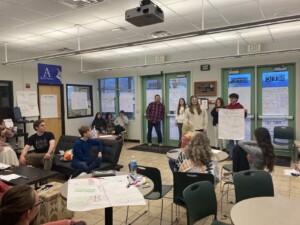
We just took it more seriously than many people do. And so our advisory is called crew. And it’s a small group. If you’re in secondary school, middle or high school, it’s an advisory group, a crew that meets together every day for a substantial part of time.
So it’s 30 minutes or 45 minutes or even an hour. It’s not a 10 minute homeroom. And it’s a small group, typically about a dozen kids or at the most 15 kids. And you meet with those dozen kids every day and you support each other and you push each other. You discuss how you’re doing academically, how you’re doing personally, how you’re doing
socially and emotionally, and you hold each other accountable every day. So it’s like your family every day who kicks your butt and also supports you and make sure you’re going to graduate and make sure you’re going to get into college. I love that spirit. I just finished a book on difference making that we’ve talked about and that we’ll circle
back to you in a few minutes. The first third of that book is called We’re All In It Together. And it it observes it maybe optimistically observes a new level of mutuality that I think some people have observed in this in the middle of this global pandemic. The pandemic along with global warming and the rise of artificial intelligence, I think
just for me, they continue to reinforce this idea of we are all in it together. That we we have so much mutuality and I guess your schools for almost 30 years have really embraced that idea. You start the day with that sense, right? Yeah, so it’s actually is quite different in our in our elementary schools.
Crew is much closer to the responsive classroom morning meeting model. So it’s a whole class sitting in a circle on the floor to open every day. We do some different things than the responsive classroom morning meeting model. But that was our inspiration for how we do elementary crew. But in secondary schools, crew is maybe a dozen middle school kids or high school kids who
meet together every day to both be honest and support each other about how they’re doing in every one of their classes and and holy and get support around their growth if they need to. But also how would you describe the the role of crew? I mean, what in Michael Horne and Clay Christiansen talk about jobs to be done. But what what jobs does crew have?
What jobs does crew fulfill in a high school? Exactly. So academic monitoring support for every crew member. Another part of a role that it plays is that social and emotional wellness of every kid, like checking how are you doing? Are are the people in your family in crisis?
Are you in crisis of anything? Are you feeling healthy and robust in your social and emotional life right now? And when kids are struggling, crew is their family at school to be checking in on that, dealing with trauma. So it’s sort of their social and emotional health place place to grapple with that.
Right. So that would be academic monitoring and support would be one job. It’s also the place that talks every day about character development. Are we becoming the kind of human beings that we want to be? Are we showing respect and responsibility and courage and compassion? Are we showing honesty and integrity?
And we and crew hold each other accountable. So it’s somewhat a support group and it’s somewhat like a kick your butt group of if you’re fine, if you are being less than a good person in being racist, in being sexist, in being marginalizing of anyone and that those behaviors are there. Your crew is going to hold you accountable for those to be the kind of person that we’ve decided you should be.
It’s where you have courageous conversations about race, about gender identity, about sexual preferences, about all of these kinds of things so that you can, you know, have your sexual orientation, your gender identity, your racial and cultural identity affirmed as it’s OK to be who I am and I respect all different kinds of other people from different orientations and cultures.
I think crew is also a place where you do some post-secondary planning, maybe some goal-fitting, right? Ah, it’s exactly right. It is our middle schools and high schools have counselors and they have college counselors. But if you have one college counselor with hundreds and hundreds of kids that back,
she can only do so much. Crew is the place where kids think about their post-secondary work, where they learn what college is about, where they visit colleges with their crew. Starting in sixth grade, starting in eighth grade, starting in ninth grade, they’re already on college campuses to understand what college is, to look at options.
It’s where they consider what kind of colleges might be right for them. It’s where they learn about college finance. It’s where they work on college applications. It’s where they work on their financial aid applications. It’s where they work on their college essays.
It’s where they do role plays for their college interviews. Like, it’s your family that says, like, it doesn’t matter whether your parents went to college or not. By the time you’re done with crew, we’ll be together for years, this group. We’re going to make sure you’re ready to get into a college that’s the right place for you and a way that you can afford it financially.
Ron, I think there’s, let’s say, 25 or 30,000 graduating campuses in the United States. And most of those have some kind of a home room or advisory structure. And most of them are pretty bad, or at least they vary dramatically in their effectiveness against the jobs that you just described. Why is this so hard to do well?
Wow. Well, I mean, first I need to be humble to say, even the structures and even our best instantiations of crew in our very best schools is still hard to do well. Because it’s just like it’s hard to have a great family. You’re a parent, Tom, like I’m a parent. Your family is never perfect.
Like being, we’re all humble as parents and as grandparents, right? It’s just really hard to support people to do well. But I would say what we’ve learned over more than 25 years in this is that the advisory structures in most schools don’t have enough depth and touch point and continuity to really make the change and guide kids’ lives.
So many homerooms and advisories are only once a week in schools, or they’re only for 15 minutes, or they’re 30 kids in one room. So we would say in a typical one of our high schools, you’re with a dozen kids and a crew leader, and you’re with that same dozen kids often for four straight years and with that same crew leader.
It’s sometimes the crew leader shifts. Some of our schools do two year shifts and then two years with a different crew or a different crew leader. But there’s a lot of continuity and you’re meeting pretty much every day for an extended period of time.
And in many of our schools, it’s a credit bearing course. So it’s a serious time in the day when for 40 minutes, 50 minutes, you are there with your peers to dig into hard conversations about math or hard conversations about race or hard conversations about gender identity and kids get upset. They cry.
They grapple with this stuff together and you have a crew leader there to make sure you’re supporting every kid to be okay with this. So like if you’re going to dig in deep, you need time, you need a small group and you need to be meeting regularly every day or almost every day. And lastly, I’d say it’s hard to be a good crew leader.
So we have to spend a lot of time making sure that the teachers in our schools and the other professionals in our schools, counselors and nurses who run crews are really prepared and have the curriculum they need and the resources they need and the support they need to be a good crew leader. Yeah, it strikes me from having visited a lot of Yale schools that it’s the combination of
clarity of purpose, well designed structure, the culture of the school and then the support with curriculum and protocols for teachers so that individual teachers aren’t trying to make stuff up on the fly every day that the combination of those seem to make crew unusually and consistently good. Does that sound right?
It is exactly right because, you know, we’ll have a situation where a new math teacher will come into a high school and that math teacher might reasonably say she can be your crew mentor. We can for the first year, maybe you won’t run your own crew, like you will be able to be an assistant crew leader. But yes, if you’re going to be a math teacher in the school, you also have to be a crew leader.
Because like this is how we get kids to succeed. I love that. It sounds like crew first hiring that all of the Yale schools really make this a priority role. Absolutely. And and staff crew is sort of a cornerstone of school crew because staff crew is a way of
thinking about your staff that our staff is a team that we’re going to take time as a staff to make sure everyone on our staff feels like they that he or she or they belong and that they’re respected and that their cultural background and racial background is respected and valued here and that staff look out for each other that they have each other’s back because if the staff crew doesn’t have that robustness, it’s hard for them to the staff then to go out and be strong
student crew leaders. So hopefully what we do is model what we hope kids will experience with what adults experience in the building. That’s great. I was thinking of Valar Public Schools in in Tennessee very much had that that same that same belief.
Ron, I would love a couple sentences on chapters four, five, six and seven are go into detail on some of the specific jobs that crew does for Yale schools. Chapter four is a beautiful chapter on helping young people become effective learners. How does crew help them understand themselves as a learner? Great question.
So chapter four is a lot around sort of what we and Yale call as as you graciously mentioned that our leaders of their own learning approach of getting kids to have more ownership and understanding of their path and stopping to change that notion that education is something that’s being done to me that I show up and this is done to me rather that I’m in charge of this. I have goals.
I understand where I’m going in my academics and in my life and I can have control of that. And so what crew can help kids to understand is where are their strengths? What are they bringing to this? What are their assets? And how can they take a leadership role in in charting a course for themselves?
So rather than think I’m a good student or I’m a bad student, having those conversations like in which classes do you feel comfortable in which classes do you feel like you belong in which classes do you do well? And at what times in your classes so kids can start to differentiate and think, well, I’m not really a bad student. I struggle in these classes, but I don’t struggle in these. And can I understand why I don’t struggle in certain classes?
Is it the content? Is the relationships? Is it the peers? What are the habits that I built that allow me to succeed in these places in school and not in those places in school? Can I identify the habits that make me succeed?
Can I get support from my peer group in my crew to sort of make those habits more of my own? The ones that are helping me to succeed? So I think giving kids more agency to feel like this is in my control. I can make this work and my crew is on is getting my back with. I can figure out how to get my homework and I can figure out how to do really well.
I can do great work because I now know how to get the critique from my work. I know how to plan my time better. So getting kids to feel the agency that they have a whole constellation of effective strategies to succeed academically. Chapter five is about becoming ethical people. How does crew aid in that?
Well, I mean, I’ll just share that I went to a typical, well, maybe typical is unfair to lots of great schools. I went to a big public, very diverse middle school, thousands of kids. And I’m sure many of listeners will experience this, but kids were often jerks. Like kids were really unkind to each other on a regular basis in the middle school. Many kids were marginalized due to their race, due to their culture, due to their language,
due to their background, due to their academic strengths and challenges. And and vulnerable kids were often off terribly marginalized. Like kids were just awful with each other so much of the time as middle school kids can be. Don’t need to be, but can be when there’s not guidance and modeling around that. There was no place that we were held accountable for that in our school.
Like it was all just I felt like as long as kids were not in serious trouble, people were not paying attention to where people being kind to others on a regular basis and compassionate to others on a regular basis. In contrast, when I go into our middle schools, every single morning, kids come into crew and they have to discuss am I being respectful, responsible? Am I being compassionate to everyone?
And if kids are being in their actions, marginalizing of others or racist or sexist or judgmental of kids that are different in their crew, they’re going to be held accountable for that from their peers. And, you know, it’s it’s a funny thing to say, but I often feel like crew is a little bit like an A group where you show up and it’s like, my name is Ron and I wasn’t so kind yesterday. Like I was a jerk to some people and a lot of you guys saw that or my name is Ron and I didn’t get my homework done for the third time.
And I got to be honest. Like kids realize you got to be honest in your crew because your crewmates, they love you and they’re going to hold you accountable. And it holds you accountable for getting your homework done, but hold you accountable for being a good human being to the other kids in the school and and not being not creating an in group where other kids are pushed out, not judging kids by who they are. But but showing respect and compassion for all other kids, just having an accountability and support system for that every day just seems vital to me for middle and high school kids.
I love chapter six. It’s on contributions. How does crew help young people? Understand and begin to make their unique contribution. Well, I’m so delighted, Tom, that your new book is really about that issue that
education should be about preparing kids to contribute to a better world. Like that’s why we’re we’re where we have public schools so kids can learn to be to become good human beings and good neighbors and good citizens who do good for the world. And our feeling is that if you want to put kids on a mission to support others and do good and contribute, you don’t tell them study hard in school for the next 10 years and someday you’ll graduate from high school or college or graduate school and then you can do some good for the world.
You say let’s start doing good for the world right now because you should feel like you’re getting smart to do good and that should be a part of every day. And so crew, a big part of crew is service is how can our crew serve the rest of the school? How can it serve other kids in our building that need help? How can it serve our broader community?
How can it serve a safer and more just world? And so crews organize themselves in work for social justice and work for community improvement. There are crews that clean up the buildings, that clean up the playgrounds, that work in preschools. There are crews that go out and are part of I mean right now during this crisis, crews were organizing themselves to be a part of Black Lives Matter marches and protests movements.
A year ago crews were organizing their own climate change work. So it’s like your crew should be a place where you’re considering how are we contributing to a better school, a better neighborhood, a better community, a better world. And not in the future, but right now how can we be active agents for a better world? I love that. And chapter seven talks about post-secondary.
We spoke about that earlier, but what else would you add about helping young people sort of imagine possible futures? Well, I think for many educators, it’s if an educator comes from a family where his or her or their parents felt like they are going to go to college when you grow up. And I understand and we can help you with financial aid and we can help you figure that out. If you haven’t worked with first generation kids a lot, you wouldn’t realize it’s very hard for a first generation college kid to know anything about what the church is.
It’s a terrain and the process of college and financial aid and making good choices is. And you can’t count on just one college counselor to do that for kids. You need to put kids in an environment from sixth through twelfth grade where they are thinking about it all the time, every day with guidance and support, where they can do financial aid forms in school. Their parents can come in in the evening. You can have a session for it.
You can help families who don’t have English as their first language to understand how to apply for financial aid, how to apply for scholarships, how to choose the kind of places where kids can financially make it and academically make it. And I would just add one thing, which is one of the powerful things I’ve seen in school in our schools and crew sessions is role plays of the social and emotional adjustment of being on a college campus. Because for many kids who come as first generation college students, often students of color who end up in a campus with more privilege, more financially privileged kids, often more white kids, they’re not in their element when they arrive. It’s like, that’s not a world they’ve ever been in. And so if they enter that college environment without thinking and planning ahead to how am I going to deal with being around all these white kids and all these kids of financial privilege?
How am I going to deal with not having someone checking in on me like they did in my high school all the time? How am I going to find the supports for the black student organization on campus, for the professors who have office hours? You need to role play and plan that out ahead of time with your crew. So when you land on campus, you can find the LGBTQ plus group right away and think, I want my people here. You can find that those those professors who have office hours, who can support you.
You can figure like, yeah, this doesn’t feel like the world I’m used to, but I’m ready for it because I thought ahead about it to find the right people to support me. So if you’re not fortunate enough to be a posse scholar and land on a campus that has the posse program and have a crew, which they call a posse on your campus, how are you going to build your network, your crew on campus of people that can support you when you’re a first generation kid? And so what crew can provide is planning time, emotional planning time to think ahead to when I land in a college setting and I’m a first generation kid, how am I going to build the support network there that I have here? And I’m going to start thinking about that now. Ron, this is such an important book.
Now more than ever, crew describes a culture and a structure, particularly for secondary schools. I think these are, I think the crew advisory system is the best example of the most important element for a successful school. And I think this is the best book to describe how to do that well. It just is a book that should be required reading for every teacher and administrator program in America. So thanks for this book.
Thank you. And we, it’s coming out at a time which is couldn’t be harder in some ways because our crews now, Tom, have been meeting online and zoom meetings every day, not in person. And you know, that’s just painfully hard for all of us during this time. But I hope that we’ll get out of this as a nation and as a world soon and crews can be back meeting together and like being physically there for each other again. Where can folks find you online, Ron?
Well, you can find us and I should say that EL education, we’re a nonprofit and everything we create pretty much is free and open source. So this book, because it’s a published book, does cost money to purchase the actual book. But we have an online toolkit that goes along with examples of everything in the book and examples from our schools, examples of crew curriculum and crew training sessions. And examples of how to run courageous conversations in crew. All of that will be free and open online at EL education.org.
You can reach our burger at EL education.org. And we have an entire set of videos about what this looks like in practice. What does crew look like in kindergarten? What does it look like in fourth grade? What does it look like in 12th grade?
How do you have courageous conversations about gender identity in crew? How do you have courageous conversations about race and crew? Those videos are also all open source free online that accompany the book at EL education.org. So I hope even if people don’t get the book, I hope you’ll that people will make use of our free resources, our online toolkit and our free videos. If you want to enhance your advisory program or dude, rich or morning meetings with your elementary students, anything we have, we hope can enrich your work.
Get the book now. It’s called We Are Crew, a teamwork approach to school culture. Ron, thanks for another great book. Thanks for being on the Getting Smart podcast. Take care and be well. Tom, thank you.
Thank you for supporting our great work, our good work. And thank you for your good work and your new book. That’s also about contributing and the importance of students contributing to a better world. Let’s talk about that again in the fall. Sounds good.
Thanks, Ron. Thanks for inviting me. Thanks for joining me. A big thanks to Ron for joining us on this week’s episode. We’ve got his new book linked in the show notes as well as the blog for this week.
We highly recommend grabbing yourself or your whole team a copy. All right, that’s it for today, listeners. Before you go, make sure you leave us a rating and as always be sure you’re subscribed as well. For the Getting Smart podcast, this is Jessica signing off.



0 Comments
Leave a Comment
Your email address will not be published. All fields are required.