


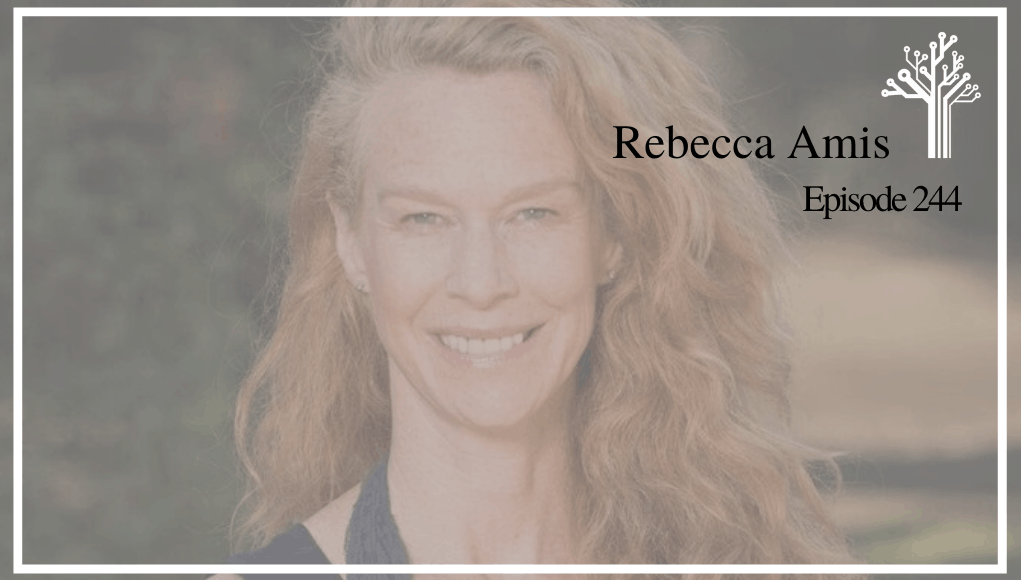
Podcast: Rebecca Amis on Taking Student-Centered Learning Global
Key Takeaways: [:52] When and why did Rebecca initially get interested in early childhood learning? [3:50] Rebecca shares the history of her career. [6:15] Fastforwarding to MUSE, Rebecca tells the origin story of the school. [10:10] What the learning experience is like in elementary school at MUSE. [11:50] What the learning experience is like in middle and high school at MUSE. [13:10] Where to pre-order Tom’s new book, The Power of Place! [14:12] Rebecca shares the influences that Elliot Washer of Big Picture Learning had on MUSE. [15:19] Rebecca speaks about MUSE’s Seed-to-Table program and how it fits into the life of the school. [17:40] Rebecca elaborates on how MUSE is a plant-based school and what that means for kids on campus and the environment. [21:15] How public schools across Los Angeles are following MUSE’s lead. [21:54] Rebecca’s strategies for sharing what she learned at MUSE with the world and how she’s supporting others doing similar work. [23:00] Rebecca speaks about MUSE Global and what they’re doing to influence schools around the world. [28:14] Where to go online and learn more about MUSE. [28:35] Tom thanks Rebecca for joining the podcast.
Mentioned in This Episode: MUSE School MUSE Global Martin Hoffman — NYU Reggio Emilia Approach Early Head Start UPrep The Power of Place: Authentic Learning Through Place-Based Education, by Tom Vander Ark, Emily Liebtag, and Nate McClennon Big Picture Learning Forks Over Knives (Film, 2011) Rebecca’s Email: [email protected]
For more see- Why Your Community Needs an Environmental Sustainability Coordinator
- No Excuse Not To Teach Climate Crisis Mitigation And Adaptation
- Podcast: Giving the Gift of Place
Stay in-the-know with innovations in learning by signing up for the weekly Smart Update.
Transcript
This transcript has not been edited for spelling accuracy.
You’re listening to the Getting Smart podcast, where we unpack what is new and innovative in education. I’m your host Jessica, and on this week’s episode, we’re going to learn about a school that’s taking Student Center Learning Global. Rebecca Amos is co-founder of the Muse School in Calabasas, California, a small student-centered
P-12 school with a robust sustainability agenda, a great seat-to-table program, a vegan kitchen, and climate action integrated across the curriculum. Rebecca and her team are launching a new initiative called Muse Global to provide access to the key elements of the Muse School model to communities around the world. Let’s listen in as Tom talks to Rebecca.
Rebecca Amos, welcome to the Getting Smart podcast. Thank you so much. And why did you get interested in early childhood learning? Well, the age-old story goes that I grew up in Oklahoma, and I’m the youngest of six kids, and I had aspirations to be a writer because growing up in a big family, writing
was my escape, and my way to really go into just my own world because that was sort of where I was left being the youngest and kind of a little bit on my own. But anyway, when I graduated from high school, I went to the East Coast. I moved to New York. I went to college to be a writer, and then I was required to take a behavioral science
course. I took theories of adolescence, and I started getting really interested in the development of children. I ended up changing my entire aspirations to be a writer and then wanted to get into the world of child development, psychology.
When I was in college, I started studying children’s drawings and really looking at why are they drawing what they’re drawing when they’re two, three, four, five. I started really looking at children’s drawings and what they were drawing at the ages of two, three, and four, and what that meant psychologically, what that meant developmentally, and I was fascinated.
I was fascinated by how children put themselves in their families. I was fascinated by how they drew themselves, how they drew their moms, how they drew their dads, how they drew their guardians, their brothers and sisters. I think because I came from such a big family. Then fast forward, my senior project in college was the development of empathy in children.
I had the wonderful opportunity to work with Martin Hoffman at New York University. He was doing a lot of empathy studies in children and attaching electrodes to them and their mothers. Then became the fascination of social emotional development in young children and what that looks like.
My senior project was a small research project where I got to apply statistics. Very exciting. I found out that empathy develops in children. It’s a developmental thing that develops. The small sample size I studied showed that girls were more empathic than boys.
Now, that was long ago. I don’t know if I necessarily agree with that right now. Anyway, I then went on to, I worked with a woman in Charleston, South Carolina. Who was doing research on PTSD in children who had experienced Hurricane Hugo. Totally dates me because that was back in the 90s.
Then I went on to graduate school and started studying child studies. I became enamored in their emergent literacy. I became in their emergent social and emotional development. Then I became enamored with the regio amelia approach because I loved that regio amelia looks at children in a way that is so respectful and so inclusive in the classroom.
That’s what I wanted to study was this mutual respect between teacher and child. I really went on to be fascinated with this idea of children have something to bring to the table just as much as the teacher does. What I wanted to do with that is take it from infancy all the way up to 18 years of age. It was no longer an early childhood approach, but it was a developmental approach all the way through high school.
I always loved that idea of child centered learning, respect for the child, regio amelia has the Bill of Rights for Children. I just thought it was wonderful. That’s how I became super interested. I then went on to work for Early Head Start and Head Start. I loved it.
Some of my greatest mentors were there because they taught me about dating myself, but anti-bias curriculum. Really looking at children to be who they are. That again got me really focused on personalized, individualized education. Really seeing each student for who they are. It just became a journey for me, an mission for me to be in the world and help teachers teach children.
To help people really look at children in a different way. If we fast forward to Muse, the subject of our conversation today, you had this amazing opportunity to be a co-founder of the Muse School. What’s the origin story? The origin story is that I was living in the Midwest. My sister, Susie Amos Cameron, was living out here in California.
She came to visit me and I had opened a school in the Midwest. It was very child-centered. It was infants, toddlers, and preschoolers. She said, I want to start one of these in California. At the time, I was like, yeah, yeah, sure, whatever.
Sure enough, about five years later, her then five-year-old was getting ready to go into school. She said, there is nothing out here that I like and I want you to help me start an elementary school. We embarked on this journey with 11 students, kindergarten and first grade in 2006. It was a child-centered environmental school. It was all about sustainability, environmentalism.
My slant on it was the inner sustainability going back to what’s going on inside of the child, what’s the social-emotional development and how do we sustain a healthy inside and a healthy outside. That’s really the origin story. Susie had two older kids who had gone through traditional school systems. She saw their spirits just depleted and squashed.
She saw the lights go out in them. Then she realized, I don’t want that for my other kids. That’s why she wanted something different. I was fortunate enough to be able to commute from Wichita, Kansas, all the way to California for about seven years while we got the school up and running.
Then I ended up moving out here about eight years ago. Oh my gosh. I am not a lover of flying. It was a little scary. Every time I got on the ground or every time I didn’t get scared on one of the flights,
I congratulated myself. You did it, you did it, you did it. For folks that don’t know, the campus is up in the Santa Monica Mountains, between Santa Monica and Malibu, a beautiful natural setting. Yeah.
Actually, we started our first school in Malibu off the Pacific Coast Highway. We then went to Topanga Canyon, which was way, way, way up in the canyons of Topanga. We are now nestled in the Santa Monica Mountains between Calabasas and Malibu. We’re about 45 minutes from Santa Monica. We’re about 10 minutes from Malibu, but right there in the middle of Calabasas.
In a beautiful, beautiful area. We have two campuses. One is about 22 acres nestled in the Santa Monica Mountains. The other is in a more urban setting, about three miles further inland. That’s our middle and high school.
We’ve definitely musified that particular building, and it stands on about an acre and a half. I’d love to dive into the sort of learner experience, and maybe we can talk about each of the levels, but what’s the learner experience like in elementary school? I would say that the learner experience is very student-centered. What we do at Muse is we don’t use grade cards.
We use something called the blueprint. The blueprint is a way that we assess every student, and it’s a narrative assessment. The blueprint is a way that we assess students. It’s their grade card, so to speak. However, it is something that we keep for the student until they graduate from Muse.
That blueprint starts with the child’s goals and passions. Within the blueprint and their goals and passions is the five-pillar approach. Within the five-pillar approach is passion-based learning, academics, sustainability, slash adaptability, self-efficacy, and communication. What we want to do is focus on a student’s agency, their social-emotional development, what they love,
and then, of course, wrapping academics into all of that. We follow the state standards. Every student is guided to, obviously, adhere to the academic piece. We are an accredited school, so we have a responsibility to teach the students. It’s just a very learner-centered curriculum.
We start from age two, and we go all the way up to sixth grade on our elementary campus, or on our primary campus. If we jump to middle and high school, what would the learner experience look like? The learner experience there is really about going deeper and wider into children’s passions and also giving them an even stronger voice and choice in their education. What I want to see at that level is I want to see students outside of the building.
I want them to be pursuing their passions outside and taking what they love and what they’re learning and doing outreach. For instance, we have a senior semester who is studying with a veterinarian. He spends probably six to eight hours a week with a local vet because that is his passion right now. That is all driven by him. Simultaneously to that, he’s working on something called the U-PREP.
The U-PREP is all about his post-experience at Muse and what that’s going to look like. Is he going to go to college? Is he going to go to trade school? Is he going to take a year on? Is he going to take a gap year? Is he going to not do any further education but open a business? Hi, I’m Tom Van Der Arc, the co-author of a new book, The Power of Place.
I remember the sound of running water, the smell of damp logs, the thrill of finding a tadpole in Slago Creek just north of Washington, D.C. I was 11 and my dad was serving at Walter Reed during the Vietnam War. Just a year later, I remember standing on top of a glacier at 14,000 feet in Colorado, bracing against the 50 mile an hour wind and feeling very small against the vast expanse of the Colorado Rockies. It’s these place-based experiences that sent me to engineering school and got me a good first job.
I’m the sum of the places I’ve been and the experiences I’ve accumulated. I’ve learned that place is powerful, it’s personal, and it’s persuasive. We invite you to explore or continue exploring your own place-based journey with us through our new book, The Power of Place. It’s available now for pre-order at the link in the show notes. Thanks for listening. Rebecca, that sounds like it might have been influenced by our friend Elliot Washer in Big Picture.
100% Elliot has totally inspired us. Elliot came into our world in 2010 and has really guided us and continued to be our number one cheerleader and has inspired us, but also encouraged us to stay the course because as you know, being in the education world, you can often go off course due to pressure, sometimes from parents, sometimes from stakeholders, and Elliot just kept bringing us back on track. He kept course correcting us and saying, no, you want your students at the center, get them out.
It’s about them, it’s not about you, and that’s been huge. He helped us really guide students as they go into the world after being at Muse. He helped us develop our middle school, our high school. He’s been, I would say, he’s one of my most inspirational mentors that I’ve ever had. Elliot, I talked to Elliot last week and he was talking about your Seed to Table program, which sounds really remarkable.
How does that fit into the life of the school? It fits into the life of the school as a common thread throughout the day, every day on both campuses. When we started the school in 2006, we had a beautiful greenhouse and we also had gardens where we grew just small areas of food. This is now developed into a full-on program that we actually are taking out to communities that want to learn how to grow their food. We now have about 80 garden beds on both campuses.
Students from age two all the way up to 12th grade are required to take Seed to Table programming. All of our lettuce that is served in our kitchen is grown on our primary campus, where all of that lettuce is planted with the students, grown with the students, harvested with the students, and then eaten with the students. Any scraps go back into our composting, and again this is all taking place with the youngest of children that we have there. We have a very comprehensive composting system on both campuses.
Students know that all of their food scraps go back into the gardens. What we are doing now is the Seed to Table programming has really amplified and grown into a full-on sustainability, adaptability, climate crisis, climate emergency program. Just over the past six to eight months, we have blown up that program to where we are not just talking about gardening, we are not just talking about what is going in the beds, but it is becoming more about the climate crisis. We now teach climate crisis one and climate crisis two, and we have students who are going, like I said earlier, going out into communities where it is a food desert, they are learning how to grow their own food. Earlier, you and I talked about being a plant-based school. Would you like for me to go into that now?
That would be great. Okay, great. Why that choice and what does it mean for kids and their food choices on campus? Yeah, so when we started in 2006, that was another big focus for Susie was to have a menu that was organic, non-GMO. And at the time, we were serving clean meats, clean dairy.
We were serving the best food you could possibly have, and then we had a non-site chef. So we were extremely lucky to be able to provide this. In around 2012, 2013, Elliott Washer once again encouraged us to watch Forks over Knives, and that was when we decided we can’t call ourselves an environmental school and still serve animal products. So we decided in 2012, 2013 that we would make a transition to a fully plant-based kitchen. It took about 18 months.
And the reason that we do that is the environment alone. Now we obviously are doing it for child nutrition. We are doing it for the rights of animals. But first and foremost, it’s for the environment, and that’s because we’re an environmental school. Students cannot bring their any food on campus.
Everything is served there on campus. And when we made the transition, it was very difficult. And parents came to us and said, how can you do this? Why are you trying to change our diet? Why are you not feeding my children meat and eggs and dairy and milk?
And what we said was, it is one meal a day. It is one meal a day for the planet, and this is what we’re going to be serving. We serve your children bacon and eggs in the morning. You can take them to McDonald’s in the evening. But as an environmental school, this is what we will be serving on our campus because we’re an environmental school.
Tom, we lost about 40 to 50% of our students at that time. Wow, did you really? We did. And we’ve grown them back. I mean, we’ve definitely reinstated our enrollment app.
Right. It’s funny how much things have changed. I think that’s a really popular aspect of your school. It is. It absolutely is.
And now we actually get it. We don’t lead with that. So parents just know that that’s who we are. We have been awarded the greenest kitchen, the greenest restaurant in the world by the Green Restaurant Association. And that’s because we’re solar powered.
We have a zero waste kitchen. We’re plant based, we’re organic, we’re non-GMO. We compost everything. So parents know that when they come to our school, they are getting a different type of food than many kids are getting across the country. And we’re starting to see across the country and across the world that we are leading the change in student lunches.
And that’s a really big deal. So we are now getting people from all over the country and all over the world to visit our school because of our food program. Because of our seat to table program. Yeah, yeah, it really is. And Elliot told me last week that there’s some public schools in Los Angeles that have really followed your lead.
So that it’s very exciting to see public schools picking up on some of the programming that you’ve developed. Yes, absolutely. And we have a school close by and a superintendent just came a couple of weeks ago and they are doing magnificent work. And they are actually pushing, they have a chef there who’s, they have plant based meals as an option every single day for students. And they’re starting to see that students will want to eat that more than some of the other, you know, more traditional meals.
Yeah, that’s exciting. Let’s shift gears and talk about strategies for sharing what you’ve learned at Muse with the world. And in what ways are you trying to support people doing similar work? Well, the way I guess what I would what I would share is that we were recognized three years ago in Finland to be one of the most innovative schools in the world because of our student assessment, which is the blueprint, which I mentioned earlier. So having that recognition is bringing people to us to get ideas, to get inspiration, to get encouragement, to get empowerment on how to implement slowly but surely baby steps, all of these different ways of educating that we all know intuitively works.
But how do we get it into our systems where there’s a lot of pushback? So we have that piece where we’ve been put on the map around being, you know, an innovative school and having that innovation, many innovations that we already do. Would you like me to talk about Muse Global at this point? Please. Okay, great.
When Susie and I opened the school. About a year in, we started getting a lot of recognition locally, internationally and around the world. Just based on what we were doing, especially as it related to being a very student centered curriculum. And this was 2006, 2007, 2008. And we started, Susie and I started talking about Muse Global.
We said, you know what? Let’s really try and spread this model around the world. So we talked about it, kind of put it out into the world. And what we really wanted to do was take the model and spread the model so that we could connect students around the world and connect their passions. So that was sort of the first idea of, all right, we’ve got Tom in Seattle, we’ve got Rebecca in LA, Tom’s a writer, Rebecca’s a writer.
Let’s connect them as students, maybe ninth grade students, so that they can talk about their successes and their challenges around writing. Or we’ve got a second grader in Japan and we’ve got a second grader in Africa, studying unicorns. How can we connect them so they can talk about their passions? We’re not quite there yet, as far as doing that. But the idea is connecting schools across the world.
So now what we have is a Muse Global Franchising System, which we just started about a year and a half ago. And with that, we are marketing to people around the world to start early childhood programs in their communities, strictly based on the Muse model. So strictly based on the five pillars, strictly based on being an environmental school. Of course, what we’re getting asked now is, I want to do the elementary, I want to do the middle, and I want to do the high. So now we are starting to develop systems around being able to sell components of the elementary, middle and high school.
So it is a franchising system, so what that means is there is 100% fidelity to the original model, which is our mothership here in Calabasas. So with that, what we want is we want to create, or not create, but cultivate kids as young as two years of age, being able to be fluent in sustainability and adaptability and future proofing. So how do we do that? Well, we do that as young as we possibly can. And for our students at Muse, we recognize that when we introduce concepts, sustainability and adaptability concepts at such a young age, it becomes part of who they are.
They become fluent, it becomes another language that they speak, and it’s natural. It just becomes part of who they are. I love that idea of sustainability as a second language. Yeah. Right. So we want to create just things like composting and growing up.
Garden to table does create a certain muscle memory that makes it very natural for kids. Yeah, absolutely. Just yesterday, we’re having our end of semester culminations and our third graders were had, they had all decided that they wanted to write their favorite restaurants and tell them or encourage them, suggest to them that they could be more sustainable, that they could adapt the way that they serve things in a way that is, you know, less waste, more environmentally conscious. They all wrote a letter to their favorite place and said, we go to Muse school, we’re learning about sustainability.
And this came from this sparked from a student and she said, let’s do this. That’s what I love. The fact that it starts to come from the students is wonderful. What I really want now though is I want it to go further than plastic, straws, food. I want it to really get into sustainability and adaptability around how we are as people, how our society is becoming, you know, around poverty, you know, gender rights, just how we are as a society.
And how do we sustain or how do we get back to sustaining something that at one time could have been very beautiful. And so I think that’s what I want is now we already know the kids already know how to live those basics. But how do we go deeper and wider and what does sustainability and adaptability and future proofing. What does that really mean? And that’s where we’re getting in 2020.
That’s where we’re getting as a school. Well, such an exciting model and there’s so many elements of it that I know educators around the world are going to want to know more about. Where can people go online and learn more about Muse? People can go online to learn more about Muse at MuseSchool.org. They can learn about MuseGlobal at MuseGlobal.org.
They can email me directly, Rebecca at MuseGlobal.org. That’s great. We really appreciate the work that you and Susie have been doing for the last 15 years. It’s really setting a new course for education around the world and it’s very exciting word. So thankful that you’ve joined us on the podcast today.
Thank you, Tom. I really appreciate it. I was very excited to be asked to do this. I love the work that you’re doing, so thank you so much. Thanks to Rebecca for joining us on this week’s episode. We appreciate the thoughtful way Muse teachers are weaving learning standards and student passions into community-connected projects.
For another great discussion of place-based learning, be sure to check out episode 237 with Nate McClennan of Teton Science Schools. And in case you missed it, Tom’s newest book, The Power of Place, Authentic Learning through Place-Based Education, will be publishing in a couple of weeks, but you can grab your copy early by pre-ordering. Check out GettingSmart.com slash Power of Place to learn more about the book and to place your pre-order. I’ve got all the details in the show notes and on our blog for this week’s podcast.
That’s it for today, listeners. Thanks for tuning in. For The Getting Smart Podcast, this is Jessica signing off.

0 Comments
Leave a Comment
Your email address will not be published. All fields are required.