


Podcast: Kaleb Rashad on Race and Education in America
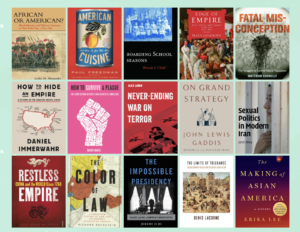
- The New Jim Crow by Michelle Alexander
- Race Culture and the City by Stephen Nathan Haymes
- Educating for Eco-Justice and Community by C. A. Bowers
- Making the City the Text at High Tech High
- It’s Not Just About the Projects
- Creating the New Way Forward
Stay in-the-know with innovations in learning by signing up for the weekly Smart Update.
Transcript
This transcript has not been edited for spelling accuracy.
You’re listening to the Getting Smart podcast, where we unpack what’s new in education. This is Tom Banderark, and tonight I’m talking to Dr. Caleb Rashad from the High Tech Eye Graduate School of Education, a leading voice in education.
And tonight I’m hoping Dr. Rashad can help create some context and direction for what we’re all experiencing. Caleb, are you there? Yes, hi Tom, I’m here. Hey, Caleb, I guess how you doing and how you’re processing this,
how you’re talking to your kids about what’s going on? Well, thank you for having me, brother. You know, I really appreciate it. I am like the rest of the people in this country, maybe around the world, watching these scenes in Minneapolis,
in Washington, in LA, Oakland, all around the country. And it’s, there are some times I don’t know really where to begin. Right. If I’m honest about it. But I feel such an incredible sense of like pain and agony and despair.
And it doesn’t feel like this is just like right now, right? I feel like yes, there was the incidents, so the incidents around Amy Cooper and her interaction with the African-American guy in the park in New York. Right.
And then there was the incident with this, you know, young kid, 20-some-old kid who’s jogging and he gets like cornered and entrapped and shot and killed among Aubrey. And then we’ve got like this next thing with George Floyd and the police officer putting his knee on the back of his neck for nine minutes.
It feels like that by itself would be heavy enough, but it feels like, you know, this is a bit of a powder keg that’s been like in this place of combustion for like 400-some-odd years since 1619, brother. It doesn’t feel like it’s just this moment, but a collection of moments that have just put us in a really, really difficult position here as a country.
Yeah, I think a lot of people are experiencing that. Right, it’s immediate, and it is this string of this year and decades of police violence, white supremacist violence on people of color. And then it’s situated in the middle of this global pandemic that in so many ways has disproportionately killed and bankrupt people of color.
Black people have died at two and a half times the rate of white people in this pandemic. And the pandemic has thrown tens of millions of people. The real number might be 50 or 60 million people out of work and disproportionately women and women of color. And so as you said, it’s a powder keg that is all about this incident and not just about this incident.
It’s about everything else. Well, yeah, I mean, my dad either said you make that bed just sleep in. And this is a bed that we’ve made right from the very beginning, like it or not. We’re all born and raised in this culture of white supremacy. And for some folks, this is like revelatory, like, oh, my God, I can’t believe all these things are happening.
But for a lot of folks in some communities, they’ve been experiencing this forever. And it’s like a slap in the face, frankly, when you’ve got folks in leadership positions at the national, say, regional levels who when accosted with like, hey, these things are happening in our communities. They get defensive.
They go into denial. Or even worse yet, they blame the individual and very rarely take a critical eye to look at the system that perpetuate and reproduce predictable racialized patterns and outcomes. So I know that we love to say, like, we’re all in this together. But are we really?
I mean, that’s not that. That’s really not how this country was was was constituted. We’ve always been in a ontological war between what one group believes and what another group believes about people. And even since 1865 and our civil war, we’re still, like, in my opinion, grappling with, am I really my brother’s keeper or not?
Do we really, I think we were really in a place where we still have an ongoing cold civil war about what we really believe about people or not? And until this seems all too evident this week, right? Yeah, absolutely. I mean, you think about, like, what’s happening?
What’s, you know, who’s bearing the brunt whether it was Katrina and that ecological disaster or this biological disaster that’s happening now. There are people who have been on the economic outskirts, on the social margin, hell, I’m not sure if they’ve ever actually been in, to be honest with you. It has always been a white backlash since 1865. I went back to just listen to some old school Martin Luther King in 1967 at Samford University,
where he described this sort of, we take one step, we take two steps back, whether it was the United Nations Proclamation, Reconstruction, 1875 Civil Rights Act, 1965 Civil Rights Act. Today we are Barack Obama and then Donald Trump, right? There has always been a pushback as much as we think about, like, the fight for liberation, fight for human rights, the fight for human rights, the fight for human rights, the fight for human rights,
the fight, maybe make this bit more clear, like, to recognize that all people are worthy of love and dignity and meaningful involvement in the democratic experiment. Not everybody believes that. And there have been, since the very beginning of time, if you go back and take a look at, like, what the history of education was, how Negroes were supposed to be educated, to how American Indians were supposed to be educated. It has always been about justifying a racial caste system for black people, brown people,
justifying the extermination of red people, not seeing them as, like, really viable to participate fully in this democratic experiment. And then third, to convey land voting rights, land and rights to white people, particularly men of property means. That is, like, the genesis of our racial challenges in this country. We can’t even, we were still kind of stuck on, like, thinking about a racist cop. We’re all racist in this country.
We grew up in it. I’m not sure that we know how to be completely not racist. But I love the way Ibrah-Mexico talks about it. It’s more about having racist ideas about any range of things he describes it as. You can have a racist idea in the morning and an anti-racist idea in the afternoon.
And for most folks in this country, we were raised in a racist country. And so we’re all grappling with these contradictions, self-included. And I guess some of this is so pervasive and baked in to who we are as individuals and as communities that much of it is just sort of taken for granted. I was listening to a podcast this morning with Secretary, former Secretary of Education, Arne Duncan.
And he said, and by the way, we in America still fund school based on property taxes, which are the most inequitable way that we could possibly fund public education. So just the way we have formed our governance, the way we fund our schools, the way we provide opportunities are fundamentally racist and inequitable. And so much of that is just invisible until an incident like this draws out the
conversation. Right? Well, yeah, it’s sort of like walking through an airport. And while walking through the airport, you get like ding, ding, ding, ding, ding, you get pulled over for one of those spontaneous searches of some sort.
Right? It may be because you didn’t fit the algorithm and the scanner thought that maybe you were a binary man or a binary woman or you didn’t fit this particular phenotype. So therefore the algorithm says, pull that person. And in some ways, what we need to do is kind of peel back some of the practices that we’ve been engaged in
so long and understand what’s the underlying algorithm that is invisible to most people. And my brother, Brian Lee, down in New Orleans, I think he’s just such a great job with like describing this sort of continuum of like pedagogies, which is more broadly about like how people are indoctrinated, pedagogies, policies, practices, procedures, people projects, and et cetera. Like all these things convey what our principles are.
And most of the principles that we are the algorithmic principles that we inherited are grounded in white supremacist ideologies. And Patriot ideologies too. Yeah, I have to insert here that this is getting worse, not better. And you know, Caleb, that I’m a tech optimist, that I do believe that technology can be used for good
to help more people live better lives. And I’m generally encouraged by uses of machine learning and AI, and that we can use those things beneficially. But today, we’re seeing police departments using machine learning algorithms based on his server data to decide where to police and guess what they over police in black neighborhoods. And judges are using machine learning in sentencing guidelines. And as a result,
they’re sentencing black people to longer sentences. So this notion of the human algorithm is now compounded by bad data and bad uses of machine algorithm. Add facial recognition to this, add biases built into who gets loans, who gets a mortgage, who gets a job, all driven by bad uses of machine algorithms. It’s now not only human bias, but we’ve actually incorporated it into the systems that we use across society. So it’s time to have this conversation.
Well, yeah, I think so. It is definitely time for a conversation. I think one of the maybe underappreciated, undervalued aspirations that sometimes get like white washed over is about developing a sense of publicness, an ability to be able for folks to be able to like be in community with each other. How do we live together? Sometimes we talk about it as citizenship, but we really don’t practice democracy. I mean, kids are like on the edge, they’re generally like
on the receiving end of totalitarian rule, but it’s like as a parent or within their school. In this land of democracy, it is very, very rarely practiced. And so we talk about citizenship, but really young people have very few opportunities to engage in like dialogical listening, meaning making together, making decisions together. There are a few examples where schools and organizations who I think for like, I was facing history, for example,
is one of these such organizations that it’s not about the, not necessarily about the curriculum, but more about like young people engaging critically about their ability to read the world and to read their place in the world. Like that’s a deeper sense of literacy skills that we very rarely talk about in this country. It’s all about getting a job and having a career and having like a superficial sense of success, but not like a deeper sense of like having purpose, a collection
of purposes, being able to like live in a community, work in a community and make decisions together and to pursue things in concert with one another. Like that’s the work. Yeah, that’s the work. We’ve talked about the justice system. We could go into more detail on the health system. It’s been painfully clear in the last 90 days that Black and brown people, low income communities don’t have access to health care. They don’t have access to
quality elder care. They don’t have access to quality daycare. We could go into more detail on economic disadvantage that’s built in and I’m afraid accelerating, but maybe we could spend a few minutes just talking about education, sort of our passion and just uncover a few of the sources of inequity that still exist in education and the work ahead for head leaders. What’s top of mind for you there?
What is, I always think about it in like two very simple ways outside of like developing like deep rich significant relationships with young people, but I think about one is supporting young people and pursuing topics of interest phenomena in the world that is of importance to them. My son was like 15 years old right now. I gotta say, made me a little proud because we’re like in this whole distance learning thing and I’m like, Tom, yeah, he’s one of you.
Tom, what do you want to study? What do you really want to like dig into? And he said he wanted to dig in like to old school 60s, 70s music like Bill Withers who just passed away recently. He wants to study music of like the 60s and the 70s and he wants to study civil rights and the history of racism in his country. And it’s just like, I mean, first of all, I’m sorry about the jump out of my skin. It’s so exciting because,
you know, one of the challenges, particularly like people of color face and I’m facing it right now. How do I help my son make sense of his current reality? How do I make sure that he’s okay? When he goes to the mall or goes to grab ice cream with friends or he’s out riding a skateboard or he’s going surfing or whatever he’s doing, right? I was on a call recently with some brothers from around the country or educators, about 20 of us on the call.
And to a man, each of them was genuinely not sure about how to have the conversations about what’s going on in this country with their children. One of them in particular said, his 21 year old son is what he was like into fashion design and he’s a dreamer ahead. So sometimes he takes his dad’s car and he’ll just drive through like the neighborhoods with like big beautiful houses just to dream about making it big. But the dad had to say, whoa, son,
you can’t drive around that neighborhood looking at people’s houses. Wow. In our communities, we’ve got to have quote that conversation all the time. Where are you going son? Tell me where you’re headed. How long are you going to be there? In our community, we know that if something’s going to go down, it might be involved in your kid and that kid might lose
his or her life. And on top of that, the media or others will develop a story and not only is your kid lost, but you also lose control of the story too. That makes you think that your kid was asking to be killed. This is the hypocrisy that we live. Look, none of this is new. You go back and take a look at like, how did race come about? We’re just going back to read the new Jim Crow from Michelle Alexander.
Brilliant work if you haven’t. Just pick it up and read it. It’s amazing. But she does such a lovely job just painting the picture very succinctly about how race was constructed in this country and why, particularly to justify the enslavement of Africans, to justify the extermination of Native American people here, and to justify being able to give land and voting right, land and rights to white folks. In the Constitution though, we know this,
there’s not one mention of slavery or Negroes. It’s a way of being able to talk about a thing without having to talk about the thing. And in this country, you might understand why what’s happening in Washington or what’s happening in Atlanta, because these American institutions talk out of both sides of the mouth, man. They say one thing, it’s like they hold the proverbial apple in front of you, but a knife behind their back. That’s exactly what many
people of color, communities of color have experienced here, is talking one way, but they always got a period of motive hidden behind their back and they’re ready to give it to you. If it will advance it then, and this is how it was codified in the Constitution, and they’re fortified by things like federalism, to make sure that the Southern states to protect the right to keep their quote property, and even now you ask people in the South about it, and you’ll hear
them say, to protect states rights. We have a funny way of, again this kind of goes back, what we’re just talking about in the very beginning, is just two different perspectives on what people believe about other people. And it’s either racist or anti-racist in this country. So how does this help support school leaders? Well, one is if we are not talking about reality in the community, we are missing an opportunity to help support young people and navigating their
reality. Priyari called it reading the world. Not just can you read what’s in this textbook, by the way, I think you should ditch textbooks, particularly history books, and rather, how do we help young people make sense of their life experience in their context? Secondly, how can they make a contribution to it? Once you get young, every, I think it’s from the National Equity Project, but it’s from every person is an expert in their experience.
So having young people do work that matters in their community, that in small, you know, in small groups or in small settings, those things are like very important, like equity moves. Those are all great points. You know, I appreciate that sentiment of doing work that matters. You talked about the power of place and acknowledging that every youngster comes from a place and brings that history and context with them to school. And
her really does start with this idea of helping them make sense of their experience in their context. And making a contribution. Like this is like old school work. I’m referencing race culture in the city by a brother named Stephen Haynes or Educating for Eco-Justice in Community by, I think his name is Chad Bowers. I think he’s from up around your neck of the woods up in Portland, I think. But essentially, it’s the same idea. And that is the sort of
intersectionality of justice. And justice meaning like what’s happening culturally, economically, politically, socially, how can young people be involved in their community and contribute one. Two, after we’ve done it like not after, but maybe even simultaneously, as young people are like using their community as a context for their learning, then we can also look at the environmental injustices that are typically visited on black and brown and poor, poor folks disproportionately
as well. So that sort of intersection around justice, if there’s a thing that school leaders might want to focus on, it might be social justice and environmental justice. And not everybody wants to do that. That’s the tricky part. I mean, this is where what you believe really matters. If you think that you know what’s best for everybody else’s community, well, well, you know, that’s problematic, let me say that. But
communities know what’s happening. And students want to do something that is meaningful, that makes their world somehow better. So this sort of like, I don’t know, this line of like exploring the intersection of injustices is something that really, look, we got these little Greta Thunbergs, you got black Greta Thunbergs, you got brown Greta Thunbergs. We just don’t like, this is like a pedagogy of oppression. It’s like, instead of like, you know, supporting young people
and doing meaningful work that they really care about, and they do, we just got to ask them, the issue becomes, well, they need to have all these other things first. And so as the adage goes, our kids get tested, and the other kids, they actually do real learning. Caleb, a lot of education leaders are going to make some important decisions in the next 60 days about what school looks like in the fall. And it feels to me like, like there’s a chance to either
be more learner centered or less to be more, more just or less to be more equitable or less. In any closing thoughts on how we hold in tension, the trust we’re given as education leaders, as we make a set of important decisions. Well, I can tell you what not to do as a way of illuminating like, what might make sense. But one is you don’t ignore the people that you serve. How about that?
That’s a good start. It sounds so simple, but we, I’m guilty of it too. Elementary, middle school, high school, administrative school, a long time. And we get like inundated with all kinds of things. And we’re just like in this spur to get the thing done, we forget about people and process. And we just get to the end goal, the product or whatever the thing is, right?
So I would say if I’m just a bit more straight about it, it might be to start by listening to the young people and to the teachers who support them and leading with a question that stirs in them interest and willingness to be meaningfully involved in their schools and redesign what school looks like for them. What do you really want to know about in the world?
And supporting teachers to create structures that help support that ongoing inquiry. Their ongoing learning experiences beyond people. So I would say one, well, maybe even before that, be clear about what’s really important to you. And this kind of comes back to something I mentioned with the New Way Forward Summit, is each person in the system, particularly if you have role position authority,
a little self-inventory goes a long way. Be clear about what’s really important to you. Two, create ways that which people can express what they really hope for and fear about school. And meaningfully involve them in ways to contribute to the school. And then third, build structures together and policies that help to support teachers and doing meaningful work with young people.
That’s great advice. Caleb, I appreciate you doing this on short notice. Hopefully I was helpful somehow. I know we were just talking about the written element. It’s a beautiful dialogue. I just, I really, I appreciate the struggle that you and the folks you’re talking to are just having about thinking about how to talk to your kids about this. But I think you’ve concluded in really important and meaningful advice for school and community
leaders that even though it’s difficult now that we’re distanced and even though the time is short and the decisions are many, we just have to find new ways to be in community, to be in dialogue, to be those dialogic leaders and engage people around a set of decisions. I think that’s the new work, right? Absolutely. I mean, look at what’s happening around this country right now, Tom, with these protests and we all know that no one can do anything
but violence that’s come out of it. But the origins of it is about people feeling unheard over and over and over again. So then how do we use all of our experiences, all of our theoretical knowledge, all of our networks, all of our resources to pose questions to help support community being intentionally and meaningfully involved in whatever the thing is that the school ends up creating? If I were to leave with one thing, it might be to take what we know, what we
think we know and hold it with some humility and maybe assume that you don’t know everything you need to know. And most good administrators do this, by the way. But instead of responding with certainty, respond with some curiosity and pose a question to the group and support the group and exploring what could be. That whole construction matters. Caleb, I do appreciate that you called out so many female leaders last week during a new way forward and just that you hope to
assume more of those characteristics to lead with a sense of humility to be quicker to say, I don’t know, I felt like such important advice. Well, I am learning, my brother, as you know, and learning from both folks who have, sometimes we think myopically about school, but school is a part of a larger ecosystem within the community. So then how do we make those walls more permeable, those relationships more malleable and create a sense of non-segregation of students from the
real world, from the outside world. We all know this, but this is a time to explore what could be and how do you involve the community. Because once you get the community involved in a meaningful way, right, with the voices of being heard, then you become a steward of the community’s vision. Dr. Rashad, thanks for joining us on the Getting Smart podcast. We appreciate you and the work that you do at High Tech High Graduate School of Education. Thanks for being with us.


0 Comments
Leave a Comment
Your email address will not be published. All fields are required.