

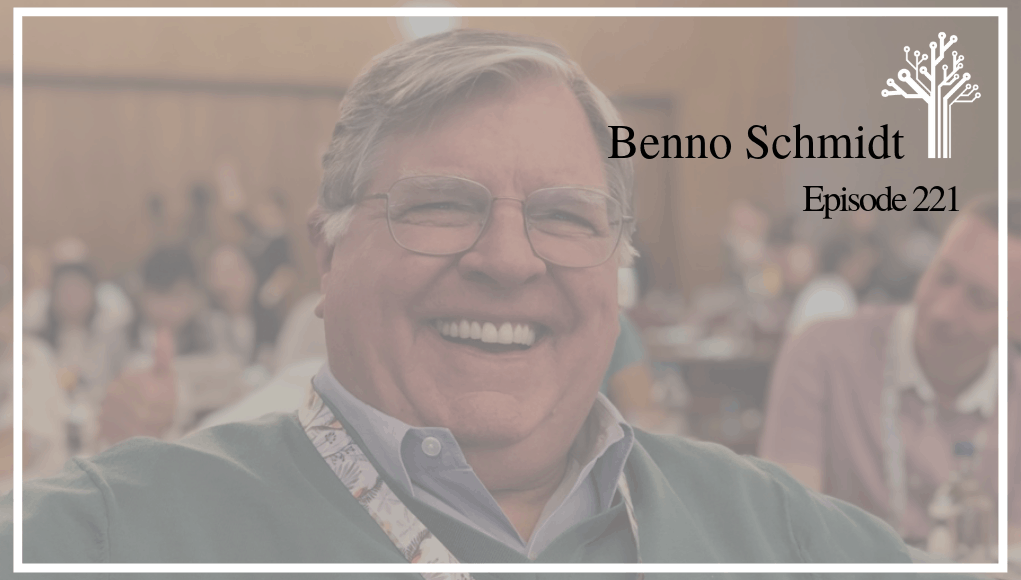
Podcast: Benno Schmidt on Leading Yale, Fixing CUNY, & Launching the Whittle School
Key Takeaways:
[:55] Benno speaks about his education background and how it affected his career path. [8:12] Benno speaks about his time spent at Yale University and all that he accomplished there. [10:40] Benno elaborates on his time spent at the City University of New York. [15:58] About Benno’s fateful meeting with Chris Whittle. [18:25] What Benno thinks about the opportunity of being the Co-Chair of the Global Advisory Board at Whittle School and Studios. He also speaks about what they’re working to accomplish, going forward. [26:48] Benno speaks about what makes Whittle so special. [28:40] Tom thanks Benno for his 40 years of educational leadership and for joining the podcast this week!
Mentioned in This Episode: Benno Schmidt Whittle School and Studios Chris Whittle Yale University EdisonLearning (Edison Schools) City University of New York Warren Court
For more see- Dare to Imagine: The First Global School Opens in D.C. and Shenzhen
- Whittle School & Studios: Transforming Education for Global Good
- Giving The Gift of Place (podcast with Teton Science School)
Stay in-the-know with innovations in learning by signing up for the weekly Smart Update.
Transcript
This transcript has not been edited for spelling accuracy.
We’re listening to the Getting Smart podcast. Where we unpack what is new and innovative in education. I’m your host Jessica and today we’re bringing you an interview with Beno Schmidt. Beno served as president of Yale University and the dean of Columbia University Law. He also spurred the renaissance of City University of New York as a trustee.
Thirty years ago, Chris Whittle convinced Beno to join him and together they built Edison Schools, a pioneer in the charter school movement. Three years ago they founded Whittle School & Studios and this month they’ve opened schools in Washington DC and Shenzhen, China. Let’s listen into a conversation Tom had with Beno and learn more about his 40 years
of education leadership. Beno Schmidt, welcome to the Getting Smart podcast. Thank you. How’d you get to Yale the first time around? Well, I was lucky enough to go to two very good schools as a kid.
I went to St. Bernard’s School in New York which is an English school run by Englishmen at the time and very, very strong in the humanities. A lot of reading and writing. A lot of Shakespeare. A lot of English poetry.
We actually learned more about British history than American at St. Bernard’s. They also started the study of Latin in the third grade. You picked up Latin and you were able to read Julius Caesar and some of the other basic Latin texts by the time you were in the seventh and eighth grades. Then I went to Exeter which of course was then as it is now a very, very fine.
It was then all boys high school and that Exeter had some really superb teachers particularly in history and in English which were the subjects that appealed to me the most. I went to Yale from Exeter. Yale was the only college I applied to back in those days. When I started at Yale it was 1959.
Back in those days a lot of people only applied to one college. But I wanted to do Yale because for two reasons. Yale was the strongest then in history with people like Van Woodward and John Blum and Hajo Hallborn and the whole very distinguished group in history. Then so many of my Exeter classmates were going to Harvard that I wanted to see a new
group of people so I wanted to go to Yale instead. It turned out to be a very good experience for me. I majored in history which was then Yale was number one and it is now. I became very interested in the history of the South. I worked with Van Woodward and John Blum on 20th century, 19th and 20th century American
history and was able to through that we read Hofstadter and Luttenberg and Bill Luttenberg and some of the other sort of standard treatments of 20th century work on Roosevelt, Schlesinger’s books on FDR. I kind of absorbed what I think of as the progressive tradition in American politics which was sort of represented.
Richard Hofstadter wrote about that in the Age of Reform in particular but in other books as well and with political leaders like Theodore Roosevelt especially to some extent Woodrow Wilson and then of course FDR. I developed an interest in a personal interest and commitment to what I think of as the progressive tradition in American politics to which I added, you know, it was the early 60s and
so it was the beginning of the really strong age of civil rights reform and so we were at the very beginning of that movement and I developed a big interest in because both my parents were from Texas and I had spent from the age of 14 on I spent every summer doing construction work in the south so I knew quite a bit about the south even though I grew up in New York I spent summers in Mississippi and Alabama, Georgia, North Carolina, Texas
doing work mostly for pipeline, gas pipeline construction work and so I got, I was quite interested in the civil rights reform and the impact it would have on what was then when I was working down far south in the summers it was strictly segregated. There were no blacks on any of the jobs that I worked on all white and the residential segregation was pretty, was pretty absolute in those southern states.
That progressive tradition I think is what led me to be interested in law and I went to Yale Law School and was fortunate enough to find it really interesting and for the first time really in my life at law school I really worked hard. I had not worked very hard in the college but I worked hard in law school and did very well and wound up then after I graduated from law school my first job was to be a law clerk
for Chief Justice Earl Warren and I spent a year, that’s hard work, clerking with Earl Warren. It was the height of the Warren Court. You know Warren was kind of in his heyday there in the mid 60s. Hugo Black was still strong, Brennan was very, you know, had come on and was very influential
and so I developed a big interest in constitutional law working for Warren and after that spent a couple of years in the Justice Department and then I was trying to decide what law firm to join in New York. I had, it was going to be either Cravath or Devil Voice and while I was trying to make up my mind Columbia called me out of the blue and said come up and spend a day with this
we’d like to meet you. I did, I spent a day and they offered me a teaching job and said I could start out teaching constitutional law from the beginning so I did that thinking not knowing whether I would do that for more than a couple of years but I tried it, I liked it. You ended up becoming dean there.
Yeah, ended up becoming dean and got tenure in my third year at Columbia before I was 30 so they treated me very well and became dean and then my alma mater called and asked me to be the president of Yale and so that’s what I did. How long were you at Yale? Seven years.
How do you think about that work? What were your priorities, what were you trying to accomplish there? Yale when I arrived was a very different place than it is now. Now the endowment is almost $30 billion. When I arrived it was just $1 billion and the place was, it was all too evident that the
physical planet Yale was falling apart. It had mostly been built in the early 1900s and in the 20s and 30s and there had been no maintenance since then so all the roofs were starting to leak and windows not working, the plumbing was. So I asked an engineering firm to come in and survey all of Yale’s buildings and do
reports on each building, what needed to be done and they came back and said that there was approximately $5 billion deferred maintenance that urgently needed doing so that the place didn’t continue to deteriorate and the great struggle of my presidency, the great challenge was to figure out how to fund this massive capital investment to keep the buildings from falling down while not starving the operating budget so that the place could continue to
function at a high level and that was a huge, huge challenge because the numbers were so big and at that time the endowment was just totally inadequate to deal with it. Since then of course Yale’s had the highest growth endowment of any university in the country as it did in my time as president so that’s been a very fortunate development for Yale and it’s given them the wherewithal to really rebuild the campus and it’s in pretty
good shape now. While we’re talking about universities you got involved in City University of New York as a… Yeah that was much later, that was around 1997, 1998, Rudy Giuliani who had always been an admirer of the Edison project and actually wanted Edison to come into New York City but
he couldn’t persuade the school board to do that. He had known of my work at Edison and he asked me to chair a task force to look at CUNY which he thought either needed to be reformed or should be shut down and because the graduation rates were very, very low the place was sunk and it just absolutely buried in remediation of students who weren’t ready for college coming out of the New York City public schools
and so graduation rates were low, academic standards were very low, the dropout rate was high so I studied CUNY hard for about a year and a half and wrote a long report which to my surprise the governor who had nothing to do with my appointment, the governor read and liked enough that he made me chairman of the board and told the trustees to put my report into action and we did that, I was chair for 15 years and we were able to put
almost all the reforms that I recommended we were able to make them happen and the result was what most people describe as the renaissance of CUNY, higher graduation rates, much higher academic standards, much, much better higher quality faculty appointments, we were able to raise much more money from private sources than CUNY had historically been able to have so we had the resources to really invest and of course in that period you know in the early
part of the 2000s a lot of universities were hurting so we were able to hire faculty that would otherwise have been hired by the best universities in the country so the young faculty we brought in were very very high quality and we were able to just lift the place up quite quite dramatically so I was chairman of the board there under four different governors you know because the when the democrats came in you know I was appointed by Pataki a Republican
and got involved in it in the first place because of Giuliani but then when democrats came in they they had liked enough what they were seeing at CUNY and they were hearing from their constituents that CUNY was really working you know much better and so the democrats backed me just as much as the Republicans did and it was so it was a real bipartisan became a bipartisan reform effort you know sort of started out as a Republican led effort but it worked and
its benefits were obvious enough to everybody that the Democrats embraced it no it’s a great it’s a great turnaround story yeah and it’s a very important institution you know I mean it’s the third largest public public system in the country has almost 300,000 degree candidates and another 250,000 people who are in various you know adult education courses or registration courses one area or another so it has a huge impact and it really is the university for the poor and the
immigrants in New York in New York City of whom there are so many so it’s you know the Economist magazine called it the American Dream Factory and that’s what in many ways it is because it it gives poor kids a chance to get an education that they you know they could never afford to go to Columbia or Yale or whatever but CUNY 80 percent of CUNY’s graduates have no debt at all when they graduate that’s great so about 30 years ago you made an entrepreneur named Chris Whittle
yes I was at Yale and and I had become increasingly distressed by the fact that at both Columbia and at Yale which are you know certainly two of the finest universities in the world educating students you know the highest quality students of the great with the greatest promise to you know to lead successful lives and so on I could walk in two blocks from either CUNY or I mean it from either Columbia or Yale because Columbia is up in Harlem and find public schools where the
students were very poor and had almost no chance of even graduating from high school and this was a time when a movement called reimagining government was beginning to take form and the democratic progressive unit which Bill Clinton was actually active in was a big proponent of this reinventing government idea which was the idea that if you brought in the private sector into public services and you you managed it correctly that often the private sector could do the job
more efficiently and be of higher quality and so Chris Whittle came to see me at Yale and he had concluded that this reinventing government idea of using the private sector could be particularly effective in public education and the charter school movement was just getting started at that time and he thought that a private enterprise like Edison turned out to be could be a big mover in the charter and so we we built and managed more charter schools than anybody and we were real
pioneers in that area so today your chair of the advisory board at Whittle school and studio it’s uh so how do you think about the opportunity what’s well I think the opportunity is very special in the first place a network of campuses a network of schools closely integrated has vastly more capacity for innovation than does a single school a single school just doesn’t have the scale or the resource yes and even a small public school district no they don’t spend much on
research and development they don’t so k-12 education is probably the least uh researched least systematically researched and developed area and what research exists has nothing to do with there’s not really a strong link to practice or to no education and the schools and the schools of education in our public universities are by and large not driving sophisticated intelligent reform and so you have this huge sector of american life it’s uh you know the second biggest economically
to healthcare and uh it’s probably the most important sector in terms of what kind of a society we’re going to be 20 or 30 years from now and I would argue that it’s largely failing us you know it it really does fail children of color what Whittle has is the scale when we’re you know when we’re up to 10 campuses we will be able to invest in the neighborhood of um 30 million dollars maybe 40 million dollars in research and development no one’s ever done that on how to how to do education
more effectively how to do teacher training better what kind of curriculum works best in math and science uh uh how to use technology in an optimal way to strengthen teaching and learning how to use assessment to inform teachers about what they’re doing right what they’re not doing well what the students really need in real time these are all things that are very that are essentially unknown in american education and that we hope that I hope and believe that Whittle will be able to
provide so I think we have the capacity I don’t think we’re there now but I think as we develop scale we have the capacity to do research and development that no one else has done and if we do it intelligently and I suspect we will because we’ve got good we can attract very high quality talent to this I think we can be a great force for reform and the stuff we develop we’re going to share uh so it won’t only be uh sort of high tuition private schools that benefit from this
we’ll uh we’ll share all our curriculum innovations and everything else with uh with public schools with the catholic schools and the you know the other religious school communities that that serve you know kids who aren’t wealthy at all and so I think we can be a real source of reform throughout education and that’s why I’m excited about the opportunity and really why I want to be part of it it sounds like it’s a global school and that kids will learn several languages and
have several languages they and they’ll I think the most important thing is as the kids get old enough they’ll have the capacity to spend you know a half a year or a year uh in a Whittle on a Whittle campus in another country so we’re starting with our two first two schools in in China and the US I think we’ll uh have quite soon a a campus in India we’re working hard to get a campus in London I think we’ll be able to get campuses soon in Abu Dhabi and Dubai so we’ll be
in the Middle East India China the US hopefully London Europe and and the kids who are in the system will have the capacity and the teachers too will have the capacity to kind of move around and spend time and really get to know other live in and get to know other cultures besides the one that they grew up in and and I think that global experience that they will get with us along with the language acquisition and the fact that our curriculum is going to emphasize what you what
we talked about a lot last night the the global competence idea that that the Asia society and OPEC have have developed I think this will produce graduates who are very well informed about about global issues and graduates who who understand what it’s like to you know come from maybe the United States but spend real time in China and India uh South America too eventually when we get there and I think this will give our students some educational opportunities and advantages that
that a single school just you know can’t really do sounds like every campus will have a an area of expertise yeah that’s right I mean the cities that were the cities that we’re going to tend to be very very strong centers of excellence in some area for example Shenzhen is probably it’s the Chinese Silicon Valley and it’s really the the part of China where they’re doing the most research into artificial intelligence robotics and so on and and uh Washington DC will be the
center there will focus on international cooperation diplomacy London when we when we’re in London we’ll focus on architecture and design uh New York when we get to New York as I think we will uh we’ll focus on communications media and sort of media production and uh so and and we want these centers of excellence to develop things that then can be shared across our campuses in other continents so the Shenzhen Center on Robotics will come up with ideas and projects that students
can work on that you know will be shared with the students in Washington and the students that we will eventually have in Delay or London um and so forth so I think this idea of centers of excellence is a way that you know a single campus can enrich the whole network of campuses around the world and it’s a very promising idea I think we’re we’re together with a founding faculty and leadership and it’s really an impressive group it’s it’s well yeah I mean I think one of the
things that is so attractive about Whittle is our ability to attract talent uh we have had over 3 000 applications from for faculty positions for the you know the 250 or so that we’ve hired so far so we’ve had 10 applicants more than 10 applicants for every position and that means that you know if we’re wise in the way we choose we get a faculty of very high quality and I think it’s you know it’s not too surprising that the faculty are interested in this because we offer again as a network
geographical mobility because we’re a fast growing system we can offer them promotion opportunities uh in our new schools that they would never get in a single school which is a much more as you know uh Tom a much more static environment uh but we’ll be hiring new heads new division heads in our new schools and some of our current people can move up the ladder very quickly uh if they want so that and the geographical mobility and the fun of being part of a network I think
are natural attractors for faculty and are the reason that I think we’ll continue to get very large numbers of applicants uh to look at which is of course you know a great thing in terms of putting together a great faculty. Beno thanks for your 40 years of education leadership. Well it’s uh it’s sometimes been a struggle but on the whole um I’m very pleased that that’s where my career has has has taken me um and of course you’ve been involved yourself Tom for for near for for 40 years.
I think I think we met at an Edison meeting in 95. Right. Yes. It’s been a while. It’s been a while. Thank you Beno. Well thanks Tom and uh good luck in your important work and education. A big thanks to Beno Schmidt for joining us today on the podcast. We appreciate his sector leadership. Whittle schools will use their host cities as classrooms for learning also known as place-based education. For more on place-based learning see episode 168 for our discussion with Nate
MacLennan from Teton Science School. Also keep an eye out in early 2020 uh Tom, Dr. Emily Leavtag from our team and Nate will release a new book that they just finalized their manuscript for all about the power of place. You’ll definitely want to make sure you grab a copy. That’s it for today listeners. Thanks for tuning in and make sure you rate and review the show so more people can find us. Keep up the hard work and keep innovating. For the Getting Smart podcast this is
Jessica signing off.



0 Comments
Leave a Comment
Your email address will not be published. All fields are required.