

Kevin Stoller on Designing Learning Spaces That Transform Education
Shownotes





Learning doesn’t happen “in rows,” and Kevin Stoller has seen firsthand how the right environment can change everything. In this episode of the Getting Smart Podcast, Mason Pashia talks with Stoller—author of Creating Better Learning Environments and host of the Better Learning podcast—about designing learner-centered spaces that support movement, choice, collaboration, and community connection. They explore why the term “classroom” can limit our thinking, how districts can better align facilities with instructional vision through a “learning space integrator,” and what microschools, team-teaching models, and even museums and hospitality design can teach us about the future of learning spaces in an AI-enabled world.
Outline
- (00:12) Introduction to Learning Spaces
- (05:09) The Power of Intentional Design
- (11:26) The Learning Space Integrator Role
- (18:59) Transforming Existing Spaces
- (26:30) Inspiration from Beyond the Classroom
- (30:12) AI, Flexibility, and the Future
Introduction to Learning Spaces
Mason Pashia: You’re listening to the Getting Smart Podcast. I’m Mason Pashia. What do you think of when I say the words “learning space,” and is it different than when I ask you to imagine the space where you’ve had the most powerful learning experiences? In a recent conversation with Danish Kani, we talked about the power of design in the classroom and what it means to design for learning.
And today we’re taking another step deeper in thinking about the humans that lead and steward that design.
I’m joined today by Kevin Stoller, author of Creating Better Learning Environments and host of the Better Learning Podcast, which I’ve been honored to be on in the past. Kevin, thanks so much for being here today.
Kevin Stoller: Mason, it’s great to see you again. Yeah, you’re right. I’m looking at that guitar in the background, and last time we were on a podcast together, you pulled it out, so I’m going to work on it. That’s going to be my goal here this whole episode.
Mason Pashia: Cool. Yeah. And if you’re like, “I don’t know, I don’t know if I understand that question. Can you tell it to me in song soon?” We’ll be very used to talking to our AIs like that, where it’s, “I actually don’t understand fractions. Can you sing it for me?”
Kevin Stoller: Very true.
Mason Pashia: That’s hilarious. So, Kevin, I’m curious how that first kind of provocation in the intro landed for you.
So, to think about the space where you have had the most powerful learning experiences—does that conjure anything for you?
Kevin Stoller: You know, I mean, it gets me thinking to my early days of what I remember of school, which was literally just something you have to get through. And for me, all my learning happened in projects outside of the classroom, outside of the traditional way. And it was nothing that I understood when I was doing this as a kid, but later on, when I happened to get into this world of education—which I never thought I would ever be near—it started becoming more clear: this is where learning happens.
Learning does not happen in the classroom, structured like every visualization that we have from movies and TV shows has set it up to be.
Mason Pashia: Totally. Yeah, it definitely does not happen in rows. I think that is a good way to grow crops, maybe, but not so much the classroom. I think immediately of—primarily when I’m backpacking or camping—as really powerful learning experiences. Partially because you have this kind of limitless time, you have all these resources around you, and you’re just generally curious about what’s around.
You’re just picking stuff up and being like, “What happened? How would I make a slingshot? How would I make this other thing?” And you’re learning all the time using your hands. And I love it, and I wish we could create more of a semblance of that in classrooms. I think we see some in Montessori spaces, but—
So, I want to unpack that a little bit today, specifically the design of that feeling, or that kind of limitlessness. How did you find your way into education? It sounds like you were not thinking you were going to end up there.
Kevin Stoller: No. And actually, it’s amazing how it ties kind of together, because my two experiences I remember in school—K through 12 and then also into the college world—where these projects, both of them happened to be around basketball. But my one in college was: I had this unique opportunity that I was able to do a documentary that was funded by the school. I went to Miami University in Ohio with my best friend and roommate, and it was about Michael Jordan. We did a documentary called The Commercialization of Michael Jordan, and it hit every aspect of what I love: the creative process, and wrapping in kind of business.
Being able to get the storylines of, like, why were these commercials done with Michael Jordan, and how did it actually help the businesses? It was super fascinating and a great experience, and what I really thought I was going to do in my career. I really thought I was going to be doing, like, 30 for 30 types of documentaries—but this was before ESPN had that.
So that wasn’t really an option for me after I got out of school, and I ended up working for bigger Fortune 500 companies and then somehow kind of knew I wanted to do my own thing and landed into a space where one of my friends and I said, “Let’s start a company together.” And we had a non-compete where we were at, and his uncle owned a school furniture business a couple hours away and said, “Why don’t you work for us? Why don’t you team up with us for a year?” And that was my entryway into it.
And I’ll pause right there on that, because the other half of the story kind of gets to the next piece of it here.
Mason Pashia: Amazing. So that’s great. Returning back to the kind of origins of this conversation—and what we really want to focus on today—is this idea of space. So how do you define that term “space” within a learning context?
The Power of Intentional Design
Kevin Stoller: Yeah, so it’s evolved. And where it started hitting for me is: when I first got into this, again without any background in education, I got into this and it was literally like, “We’re selling stuff.” But I distinctly remember the moment when that changed for me. I was working with a school district where I lived at the time, which was in Worthington, Ohio, and one of the principals had called me up and said, “Hey, this teacher wants to try something different. Can you help them out?” And I’m like, “Sure, we can do that.”
And when I went back there three to four weeks after they’d been using the space differently, I walked into that lobby and you just felt something different. There was this electricity and energy that was coming from one wing of the building. And when I waited on the principal to come out and take me down there, I’m like, “What’s going on? I don’t know.”
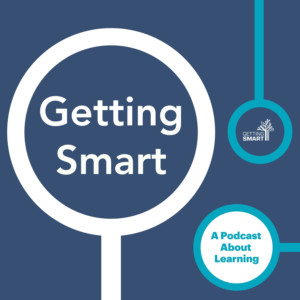
And he just had this big smirk on his face and he’s just, “Follow me and watch.” And that was a moment where I sat there and watched this fourth-grade classroom use space in a completely different way than I had ever seen or experienced in school before. To your point, it was not in straight rows.
It was this idea of: there was movement and flexibility in there, and there was choice in what the students were doing. It started out with the teacher kind of with almost like a huddle. All these kids were huddled up around her, and she explained what they were going to do today, and then they had this break—almost, you know, like they just got their play—and they all clapped and broke, and they immediately knew where to go and went into these groups of three or four. The teacher started just kind of moving through the classroom and kind of dancing between them.
At one point she would get everyone’s attention, and a fourth grader would immediately just do an impromptu presentation to their peers. You’d see some students break away on their own when they had to read or study things. And by the end, she called everyone back together and they recapped it.
And just seeing that—and this was 12 years ago, 12, 13 years ago—is what really started driving this mission-driven approach of: this has to change. Like, I’m seeing what learning could look like, and it is not at all what I experienced or knew of schools before. So that was my early point.
And then we can talk about kind of the evolution of that sense.
Mason Pashia: There’s sort of the fortuitous, strange, also unfortunate timing that we’re kind of having this conversation. We’re having a conversation at a time where a lot of public systems are consolidating, which means their buildings and their idea of space is actually kind of confining in a way. And at the same time, we have these enabling conditions in many states that allow really non-traditional spaces—like homes and other places—to become microschools, where you have this widening of what a space is and inviting people into a living room that’s now a school.
So I think this idea of space is actually a really liquid term, and it’s going to just keep evolving. And so I do want to kind of follow you on your trajectory. What came next?
Kevin Stoller: What I learned is there’s actually a really strong community that has been studying and working on this. And getting involved in that, you really start seeing the science behind it and where it is, and you start learning really quickly that all the data supports this: that true learning is not when you’re being lectured to.
And to your point, it’s not even—and I love, on our podcast we had Prakash Nair on, and he is one of the more well-known architects in the world around schools. And he really reframes it. He goes, “The second we even use the word ‘classroom,’ we are setting it up incorrectly.” Like, the whole idea that learning is classroom-based is really starting that whole conversation down the wrong path.
And it’s those conversations, and being wrapped into that community—it’s really been eye-opening to see: hey, this is not about just slight changes. Slight changes can make a difference, but we really need to even just come here with a totally fresh perspective.
And for the ones who may be hearing this and feel like this is new to them, just know it’s not. This has been going on for 20, 25 years. There’s been a lot of research, there’s been a lot of effort into how do we develop better learning spaces for how humans actually learn. But it does require you to kind of break down some of those foundations that may be built up of, “This is what school looks like.”
Mason Pashia: Yeah, and I’m always torn in between this tension of the intention of a space. So I think when I think of an intentional space that is really well designed for the purpose, I think of big cathedrals in Europe, where it’s like a church—like an old church—had a very intentional purpose. And it was this kind of: you’re supposed to feel a sense of humility when you walk in. You’re supposed to feel much smaller than the thing. It’s like these really high ceilings, this kind of dim light that really almost encourages this idea of ambiguity or this mythic quality.
And I feel like in some ways we’ve overcompensated so far. I think our current schools—many of our current big schools—are actually designed for a purpose, which is like the factory model, right? It’s supposed to be moving people through this almost conveyor belt of a hallway into these little buckets that are siloed, and they all have this declared purpose.
But then really modern architecture almost feels like it’s just a shell of a room and it’s just kind of, “Do whatever you want on the inside.” And that feels challenging in its own different way.
When you’re designing a space for intention, I think there are specific people that are really involved in that work, and you actually have to connect it to the stated intention of the school, or the outcome framework, or any of these things. Whose role is that in our modern society to say, “This is what the space needs to look and feel like”?
Shorts Content
The Learning Space Integrator Role
Kevin Stoller: Yeah, I’ve thought about this a lot, and actually our whole organization has been built around this over the last 10 years. It’s looking at: how do we do this better?
And what we’ve landed on—and what we’re really vocal about right now and really trying to spread the word about—is that especially when a district or a school, wherever it is—whether it’s public, private—wherever it is, and you have the opportunity to start from scratch, because this is when it’s the most important time. Because if you take it—let’s just start with the public school system—if they have a bond that passes and they have an opportunity to build a school, this is a once-in-a-50-year opportunity, and most likely actually longer than that. So their decisions are really important for that entire community.
And what we found is that the way it’s been approached is typically: there’s the architect that is really leading that conversation, and then you have kind of your school leaders that are in there, and they are actively busy being school leaders. And now you add a layer on top of their normal tasks of: you’re in charge of overseeing the building of this new facility.
And what we found is that it was built really based on those silos. And there are attempts to bring in community, there are attempts to bring in voices of the students and the teachers, but nobody really actually owned making sure that the integration was happening between that space and what’s happening on the learning and instruction side.
And that’s really what we’re trying to solve—that problem—because there’s been a lot of times where we’ve gone on tours, and there are a couple of associations that are really about learning environments, and they do a lot of school tours around the world. And it’s a pretty common experience that when we go visit them—and it’s typically a bus that’s going and looking at it and going through it—you’ll be like, “Wow, this is amazing.” Like, the building, the architecture is great. There’s a lot of daylight, views, there’s a lot of science that’s brought into it.
But by the time you get in there and you start looking at what’s happening on a day-to-day basis as far as learning and instruction, it really has not changed. And that’s where the problem we’re trying to solve is: trying to introduce a new model of doing this.
And it’s something that we’ve been doing for the last two or three years, is being that learning space integrator—somebody who is at the table, working on behalf of the district, but part of that design team from the very beginning—because it’s got to align. Those spaces have to align with the learning and instruction. Otherwise, it’s a complete missed opportunity that sets these communities back a long way. It’s devastating and just so sad to see when that happens, and there just wasn’t that connection, that integration, that could have avoided that problem.
Mason Pashia: It almost turns space into a four-dimensional idea, right? Like you have this three-dimensional actual space built with furniture, walls, et cetera. And then you have this other layer, which is: do people know their responsibility and role within the room? Is there a sense of agency among the learners? I think that really starts to develop.
Kevin Stoller: It’s the human element of it. If they’re not part of it and they’re not co-designing it and being part of that collaboration early on, they feel like they just were dropped somewhere and told, “Okay, what do I do now?” And it’s a really common occurrence because if you just think of it from the educator standpoint: I’ve been working doing this for 20 years in one way, and now you basically gave me something that is so different than what I’ve experienced before. And the natural reaction of a lot of people is, “How do I get it back to what I’m more familiar with?”
Mason Pashia: Yeah. Yeah, I think so. For our audience listening to this, I imagine we have kind of three buckets of people in terms of the relationship to space. I think, first and foremost, we have the educators who, just due to the confines of maybe an old building, the most spatial tweaking they’re probably able to do is like a Socratic-method-type fishbowl where you kind of just change into a circle and suddenly it’s much more witnessing and witnessed, and you break the lines and it’s a little more immersive in that way.
Second, we probably have the folks who have succeeded in passing that bond, have worked with some architects who are doing pretty intentional stuff, and have a lot more kind of flexible spaces—walls that roll away, places where you can work at a standing desk—maybe simulating more of the modern office feel. I think we’ve seen that developing over the last 10 to 20 years.
And then I think we have these folks that are probably on this cutting edge of really expanding the school into the community. So suddenly a learning space is also the internship down the street. It’s like the community garden. It’s all these things.
Where does the role of the learning space integrator stop? Is that something that kind of extends all the way through curriculum and outcomes, or does it kind of end at the building walls?
Kevin Stoller: No, it really is part—and again, it’s like when we approach it, we approach it in kind of a three-stage approach. That first part is the collaboration: getting that vision. And we always say that the goal in this one is to get that shared vision, and we want to have all those stakeholders at the table early on.
And this is something that architects can do really well too. So sometimes it’s just us being aligned with that and part of that conversation really well. So we’re not trying to take away what they’re doing, but having another person at the table with the viewpoint of: how does this look on the interiors as far as functionality?
And what you’re talking about is bringing in the community. And I actually think of it the other way too. It’s yes, we want students in the community, but some of the most impactful projects are where the community feels like they own and are part of the actual school grounds as well.
And it’s amazing how many times that’s missed. And there are a lot of reasons why that we don’t need to get into. Most of the time it comes into legal or risk assessment, of course. But when you see communities that are really making sure that they’re integrating into the community both ways—so the students are taking, like, that learning experience doesn’t just happen on the grounds of the school; it does happen throughout the community—but the other way too, where the community is utilizing those spaces, that’s really when we can start seeing the power.
And once we get that in that collaborate stage, that’s when we really get into the design side of it. And again, the design is not just about the spaces. The design is about: how do we build the infrastructure and the training so that these spaces are going to be utilized and understood—that this is part of a bigger philosophy—before we get to that last stage, which is about implementation and making sure that it’s done well and that the legacy continues.
Mason Pashia: Yeah. So to continue that legacy, is there a recommendation to essentially have an internal person owning this going forward? Like, I could see this living in a facilities world. I could see this living in curriculum design. Should there be a learning space integration specialist at every district thinking about this all the time?
Transforming Existing Spaces
Kevin Stoller: I mean, the ideal answer I would say is yes, but I guess I’ve worked with schools long enough to know that their resources are limited, and they’re going to be different. Obviously, there may be bigger districts and you may have someone—like, I love the title whenever I see someone who’s got “Director of Innovation” or something in the district. Usually it’s going to be a bigger district that has a role like that.
But I could see it sitting in a seat like that. Sometimes it could be in the curriculum director; sometimes in facilities. But we found that the more you get it into the learning side of things, the better it’s going to be.
Facilities plays a really key role, and there are some really amazing facilities people that understand and study the dynamics of learning and instruction. But typically, if it falls into the facilities side, it now turns into more of an expense or a maintenance view of it versus understanding the study of: this is how students learn, and how do we intentionally foster that based on what the community wants?
Mason Pashia: Yeah. And I think, again, we are at a kind of unique time where public school systems are going to be indexing their assets to be like, “How can we find new ways to monetize this and bring people in?” And maybe that coincides with this more marketplace-y view to be like, “Oh, we have this room. What are other things that could be? How could we tweak these four levers to redesign the space such that the community can see themselves and get use out of it?”
Kevin Stoller: Yeah, which is exciting. I love those conversations. Those are the conversations that light me up because it truly is—again, not everyone’s the same, but if we just take the public, which still is the majority of students—how can we actually make that a public space, like good for the public, and not just those limited years when kids are in there?
So many communities are dealing with that right now, especially the landlocked ones where they’re just aging out and enrollment’s going down, and now they’re trying to figure out what do we do with these facilities? I think it’s one of the most exciting conversations that’s happening right now in education: what do we do with this? Because this is usually the most prime real estate within a community, and we have a chance to really reimagine: what could that be?
Mason Pashia: Totally agree. Yeah, let’s try and drill in on a couple tangible examples of this for listeners. Asking you to think off the cuff as well, so feel free to just say, “Another one.” But I would love to think of one where a school system has changed their instructional model in some capacity and then tries to adapt their space to fit it.
So assuming this one—maybe there’s no bond. Let’s say that they don’t get the build from zero. Like, they have to transform something. Can you give me an example?
Kevin Stoller: Yeah. I have ones that—what’s been really interesting is I’m in Arizona now, so I’ve had kind of a really cool view to see what Arizona State University is doing here. And I don’t know, have you ventured—have you talked about—they’re a great group of people that are, again, really trying to solve some really big problems that we have in education.
But it’s interesting how the worlds kind of merge in here because they’re really championing the idea of more of a team-teaching model. And their original view into this was to solve problems like teacher retention, teacher burnout, the pipeline of teachers. But where they’re landing is creating some really interesting and impactful results.
And once you start looking at the space not as the one teacher with 25 to 30 students, and you start looking at more of a team-teaching or a co-teaching type of model, now all of a sudden it starts saying, “Well, what would this space look like differently?”
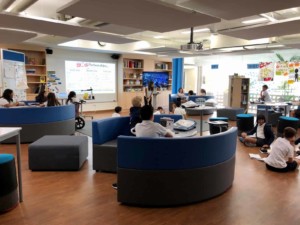
So it starts getting into—and it started out, you know, we’ve done some districts here in the Phoenix area where we’ve done it just on purely a building that’s been around for 50 years, that was built kind of the more standard way, but saying, “Hey, with some slight modifications—maybe it’s just taking down a few walls—and building out some structure here where we have more opportunities for bigger open spaces, but also opportunities to close it off and have smaller collaboration spaces too.”
So doing that within kind of the existing building, we’ve done it. And then one of those districts actually had the opportunity to take that as the model into a new construction and have it built the entire way.
And you start seeing things like decentralized media centers or libraries, where you start saying, “How do we really integrate these spaces?” And then in Arizona we are fortunate that we do have a lot of indoor-outdoor use for the majority of the year. So we could really look at these spaces and say, “All right, how do we do this, but also incorporate it within the ideology of team teaching?”
And it’s amazing how, when you start looking with a different lens, the results you come up with look nothing like a teacher up front with rows of students.
Mason Pashia: Yeah, absolutely. I was just chatting with—we were just in Arizona a few weeks ago—and I was hanging out with Darla Baquedano from Spark Community Schools, who’s doing some really interesting microschool work. And their approach is about essentially developing a microschool within a preexisting community.
So their idea of space is actually going to a place where people have defined community and then occupying a space in it for people to kind of come and use it. So that’s everything from a space within, like, a Goodwill adult learning facility to certain nonprofits across town. And it’s really inspiring to see how people are thinking about space as this place where people can come in and where they can go out—and that’s not just the students, which I love.
Kevin Stoller: Yep, yep. And you think of the impact that has on the community too. And that’s what I think the microschool—it’s such an interesting concept. You put—you know, a lot of these microschools are really popping up wherever they can, to your point: community centers, churches, strip malls. I know. But just the energy that starts coming in—how that affects the adults around there too.
Because I think we just got into this world that we needed to kind of really put kids into this bubble. And I get it—I get the dynamics around safety and things like that. But what it’s done is it’s really isolated the kids and the adults, and what a missed opportunity.
I mean, think about it. You take a microschool and you can incorporate—or you could spend moments in—a senior living center, and the amount of interactions and things that can happen when you just change that environment. And yeah, it’s just not the standard right now. The standard is, you know, like we have to really industrialize this, and we all know the results.
Inspiration from Beyond the Classroom
Mason Pashia: Yeah, totally. We are big believers at Getting Smart in school visits—so going on field trips, kind of like “seeing is believing” for ed leaders. If I were to say, “Name three spaces across the country that you would recommend people go check out”—and they don’t have to be schools—what are three spaces you think people should visit?
Kevin Stoller: Oh, I love this. What a great question. All right. So I would go in a couple different ways here.
I think the people that are looking at the coworking/shared working models that are out there—and I would say in particular, there are ones in the Midwest, and I’m actually going to call out The Hatch, which is a brand that is doing this unbelievably well. If you go into these facilities, a lot of times they are revitalizing historic buildings, so they’re honoring that. But you go in there and it just gives you energy, and you start seeing what it’s like and really what humans want.
Opportunities where they can work alone; quiet areas where they can do group work; areas that open up into bigger ones so you can do bigger events. They’re having makerspace areas integrated in there. I love that, and I hope our schools will start looking more and more like these kind of shared coworking types of things.
The other is: don’t underestimate museums—like children’s museums. You go there and just the interactivity that you can get. That’s one of those areas that I like going to and just kind of trying to get ideas from.
And then the other one is really anything hospitality-related. You start looking at some of the design of some of the newer wave of hotel models that are popping up. They are very much around almost building this community. So some of these—they’re still owned by the big corporate ones—but they have all these different chains that they’re introducing out there that are really looking at a totally different model and trying to foster communities.
So now you’re seeing lobbies that are going to have pool tables and games and setting up games, and just more areas where you can just hang out. So, yeah—great question. I love that. Because I love looking at what we can take from other aspects and integrate into the work that we’re doing.
Mason Pashia: Yeah. On children’s museums, the first place I thought of when I thought of a learning space was the St. Louis City Museum. I don’t know if you’ve ever been there, but that place is—it’s like a wonderland for kids and probably a scary place for parents. I mean, the kid could go in a tunnel and you would not find them for hours. It’s seven stories of wild tunnel ecosystems.
I think, honestly, the provocation for listeners on that front is just: as you’re in a space, do the cognitive work of saying what’s working and what’s not. Like, I sometimes go in those new hotels or new apartment complexes and just no one is in the shared room. And so there’s, one: is this a good idea? And two: is anybody using it?
And I think you can learn pretty quickly what you want to adapt based on asking those questions. But every space is a space worth interrogating and seeing: these spaces are designed for a purpose. Is that the reason? Is that how people are using it? And if not, it’s almost like when you’re in the woods and you see a game trail—it’s like, this is where the animals run, and that’s why that’s where we should build a trail.
Kevin Stoller: I remember in college somebody saying, “If you want to know where to put the sidewalk, look at where the grass is worn down.”
AI, Flexibility, and the Future
Mason Pashia: Totally. Yeah. We don’t have to reinvent the wheel every time.
All right. I want to start to bring us to a close. So, two more questions. One is about the elephant in everyone’s room, which is this AI thing. So I can project out a world in which people respond to something like an Alpha School model by making these really kind of small spaces with a laptop—almost dystopian—where it’s really trying to remove distractions: efficiency, efficiency, efficiency.
What you’ve been saying that I love is that space is fundamentally a space for humans. It is a space for humans to interface with each other and have this relationship. So how do you do both? How do you kind of lean into some of these learning design approaches, which maybe emphasize that distraction is a problem a lot of the time, and also emphasize human connection—sort of emergent behavior?
Kevin Stoller: Yeah. To me, I think of the work of Todd Rose, The End of Average. Are you familiar with that story?
It really just looks at the idea that there is no average. There literally are zero average people in the world. They all have these jagged profiles, and their profiles change literally throughout the day.
So you can say, “Hey, I’m introverted, I need to be alone.” Well, most people—yeah, that may only mean for an hour or two a day, but the rest of the time they are very social and they need to interact with other people.
So for me, it is very much about choice and flexibility, which I would say is kind of the staple of our industry right now: we can’t predict the future, but we do know that we want to be able to change, and be able to change things quickly. So that’s really the core of it.
And again, we don’t go in with the idea with the district yet of what it looks like. We really want to get their collaboration in there, because every school that we work on is totally different. But most of the time they’re ending in: we don’t know what things are going to look like in even a year or three years. So we want to build in flexibility into the plan, and choice, and say: how can these spaces be used a variety of different ways?
Throughout the day, a student’s going to use a variety of different spaces. A lot of people are working from home. When they’re working from home, what are you doing? You’re sitting at your desk when you’re doing computer stuff, but then you’re out walking around and you may be on the phone. You may be in the backyard and doing things. Where are people getting energy, and how do they just naturally process information?
And it is different for everyone. So the idea that we want to have anything kind of more uniform is typically the opposite of what we’re getting when we go through the collaboration.
Mason Pashia: Yeah, that makes a lot of sense. I’m sure that as a fellow podcaster, you get to encounter all of these jagged profiles. Anytime you have a conversation, you get to uncover more and more.
What is one thing that you’ve learned about people from hosting a podcast?
Kevin Stoller: Good question. Everyone has a story. So I would say that piece of it: everyone has a story. Sometimes they don’t even know, and those are probably some of the guests that I like the most.
Our podcast—we have a lot of people that, you know, it’s about education and trying to improve things. But we do have a lot of people that come on from more of the architecture world, or more from the academic side of things too, and they want to talk data, data, data. And podcasting’s usually not the greatest format to talk data.
But when you can break it down and you can ask them for stories and examples—“What was school like for you?”—and you start hearing their personal stories, it’s amazing what gets pulled out of that. And I just love hearing those stories. What are those motivators and drivers that affect people’s lives?
What are yours? I kind of want to put it back to you. What do you think, as a podcaster—what do you love?
Mason Pashia: I think more than anything, it’s shown me the power of a good question. I find time and time again that folks are not forthcoming a lot of the time until it’s presented in a certain way, or that’s when you start to actually get them to say something they didn’t even know about themselves. And it’s sort of like this discovery moment for both of you.
And I think we often kind of phone in our questions, and as just people talking to each other. And so I really appreciate this as a form to craft questions and get to follow curiosity.
Kevin, where can folks go to learn more about what you’re up to?
Kevin Stoller: Really the best place is just starting at our website. It’s spelled weird: it’s kaytwelve.com, but it’s K-A-Y-T-W-E-L-V-E dot com.
And we have a book that’s coming out that is about this learning space integration called Radically Student Centered. It’s available pretty much everywhere, but you can start at our website.
That is really the conversation that we’re trying to drive. And kind of to the point here of people learning different ways, we actually made an album and music videos out of our topic here, and it’s been a lot of fun. You kind of learn in a different way. I’m bringing music back in, hoping that you’re going to pick up the guitar and play.
But I feel like, yeah, as someone who normally is not musical, it’s been pretty cool. We have an album with music videos, and they’re actually pretty good. A few of them have made their way into my Spotify playlist.
But it really is about driving this whole idea that we’ve been missing someone at the table who’s focusing on integrating that learning space.
Mason Pashia: Yeah, I think that’s super true. So, Kevin, it’s great to see you again, and thank you so much for joining us today on the Getting Smart Podcast.
Guest Bio
Kevin Stoller
Kevin Stoller is a serial entrepreneur with a passion for mission-based businesses. He earned a Master’s in Business Administration from The Ohio State University, and a Bachelor’s degree from Miami University. He co-founded Kay-Twelve, a leading national distributor of educational furniture, in 2009. On a personal note, Kevin spends as much time as possible with his wife Darci and their three active children, Grant, Maggie & Tessa. The Stoller Family recently moved to Scottsdale, Arizona–but Kevin still roots for his sports teams from growing up in Chicago and spending 20+ years in Ohio.
Links




0 Comments
Leave a Comment
Your email address will not be published. All fields are required.