

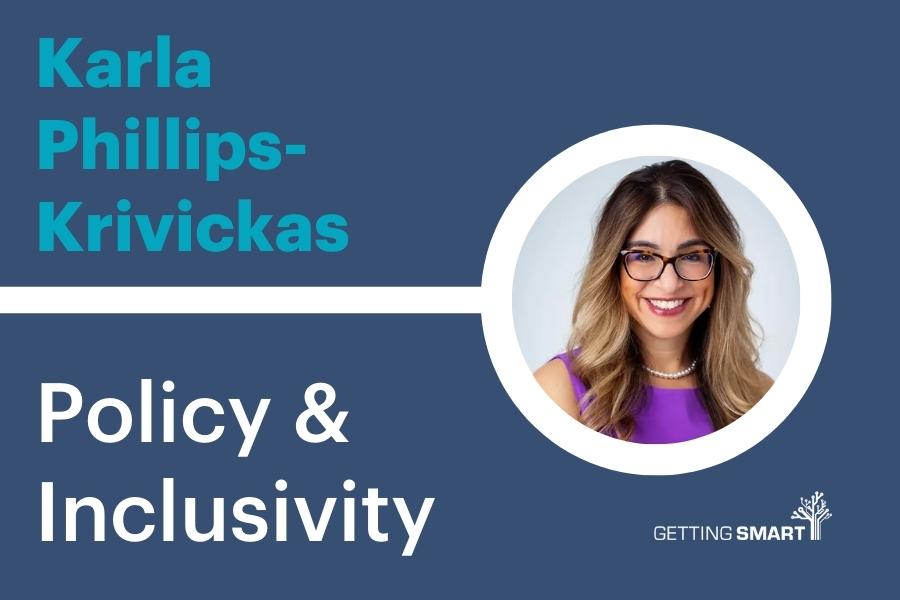
Karla Phillips-Krivickas on Succeeding in Policy and Inclusive Education
This episode of the Getting Smart Podcast is a part of our New Pathways campaign. In partnership with ASA, the Gates Foundation, Stand Together and the Walton Foundation, the New Pathways campaign will question education’s status quo and propose new methods of giving students a chance to experience success in what’s next.
On this episode of the Getting Smart Podcast, Tom Vander Ark is joined by Karla Phillips-Krivickas, CEO of Think Inclusion and member of the Arizona state education board. Karla has spent 25 years leading policy work at KnowledgeWorks and ExcelinEd and is an expert in competency-based education. She also serves as an advisor to Getting Smart.
Let’s listen in as they discuss Karla’s recent policy victories, what truly inclusive education means, Karla’s unique journey and much more.
Links:
- Overview of recent Policy Victories
- Think Inclusion
- New Pathways Campaign
- Karla Phillips-Krivickas Twitter
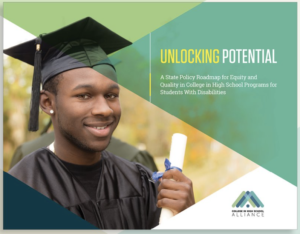
- College in High School Alliance: Disabilities Report
- Postsecondary and Students with Disabilities
- Advance CTE Report
Transcript
This transcript has not been edited for spelling accuracy.
This episode of the Getty Smart podcast is part of our new Pathways campaign. What is something you used to think that you’ve changed your mind about? It’s time for us to do that with all things learning. Previous Getty Smart campaigns have laid the groundwork of networks, place, purpose, and innovation.
Our latest effort, the new Pathways campaign, will serve as a catalyst for an unbundling education to allow for new learning models that are sustained by supporting guidance and embedded in scalable systems. In partnership with ASA, the Bill and Melinda Gates Foundation, Stand Together and the Walton Foundation, the new Pathways campaign will question education status quo and propose
new methods of giving students a chance to experience success in what’s next. Find out more at www.gettysmart.com. Backslash, new Pathways. You’re listening to the Getty Smart podcast. I’m Tom Banderak and today I’m joined by one of the Getty Smart advisors, Carla Phillips-Curvicus.
She is the CEO of a new advocacy and advisory firm called Think Inclusion. Carla was recently added to the state board in Arizona. Carla, for 20 years, has been an education policy expert. She’s one of the leading experts on competency-based learning and has recently become an expert and advocate for inclusive education.
Carla’s been a leader with KnowledgeWorks and Excel and Ed, and we’ve had the opportunity to present together at many different conferences. Carla, welcome to the podcast. Thank you. Thank you for having me.
I want to start with some of the policy victories that you’ve had recently, but maybe this strand of inclusive education really started for you as a mother of a beautiful young lady. Tell us about your daughter and that journey. Thank you. Thank you for that introduction.
I do have about 25 years of policy experience here in Arizona nationally, and sometimes I like to tell people about it, but not to sound boastful, but because it brings me to special education in a very different way than most parents. In the middle of that journey, literally while I was working at ASU, actually, I gave birth to a daughter who’s now almost 15 with Down syndrome.
What’s interesting, Tom, is at that time, so many of my policy friends and lobbyists were like, oh my gosh, you’re probably going to do some amazing special ed working quite differently. I didn’t want to hear it. I wasn’t ready at that time.
It’s an emotional journey, as any parent will tell you. It’s taken a long time for me to get to where I’m at, but through the years, I started seeing all the policies that you and I have worked on. Whether it’s assessment, teacher evaluation, competency, you started seeing them through UIs and eventually just felt also that there was this huge void at particularly state capitals
for voice for special education. I was a plot of people in DC, and so I finally took the plunge. My mission is to ensure that students with disabilities are included in every policy program and initiative, which is different than what most people think of inclusion. They think of parents trying to make sure that their kids are included in general education
classrooms, which that’s important as well. My mission is a little bit different. It’s more about getting them included in the policies. In your personal interest in neurodiversity and special needs, tell us about the advocacy that that led to and some recent policy victories that your work has seen.
Great. Thank you. This year did not evolve the way I thought my first year would happen. I’ve never gone off on my own, quite frankly. I was still putting together a pseudo-strategic plan on my own and thinking, do I want a blog?
What do I want to do? Then a series of random events started to happen because all four of those bills came out in different ways. I want to start off by saying that, one, you can go to my resources page on thinkinclusion.org and read a summary of all four of these under resources.
Ultimately, the passage of these four bills, so Tom really affirmed for me the appetite out there. Especially with all four of them passing unanimously and bipartisan, just really affirms for me that there is a desire to support students with disabilities in ways just outside of just more funding.
Historically, that’s usually been its business. We need more money and this agency needs more money and we need more money for providers. All of those are legit. I understand, but it also affirmed for me that if presented with good policy and strong community support, I could not have done any of these four bills without the fearless parents
who were willing to go down and testify. That great things could happen. They came about in three different ways. I’m really seeing that this is how it’s going to roll in the future. One of which was through my research.
House Bill 2031 was signed yesterday by the governor. As I was writing a report for the College and High School Alliance on how we can expand dual and concurrent enrollment for students with disabilities, I discovered that there was a bill that had been introduced two years in Congress. It was called the RISE Act.
If you boil it down to the nuts and molds, it basically says, if you have an IEP or 504, you don’t have to re-prove that you have a disability when you go to college. Which sounds common sense, but apparently that wasn’t always the case. Oftentimes, I’ve heard from other parents now, they would get to college and if the IEP was, let’s say, over three years old or didn’t have what they wanted, they would
tell them they needed a new evaluation, which one, of course, is an extensive time process. Delaying the accommodations students need, but worse, sometimes it was costing students $2,000 or $3,000. I put in that report, I innocently put this one line that said, states don’t need for a wait, need to wait for Congress to act, they can do it on their own.
I was talking to Representative Michelle Udall. I mentioned that to her because she asked about my dual enrollment work and she said, I love that, that happened to my son. I was like, oh my gosh, you’re kidding me. So our house education chairwoman said I want to do that bill.
She did it and it passed unanimously. I don’t think it had a single no vote in either house because it seemed so common sense. She said, that’s why she loved doing it and it was a personal story for her as well. And so now Arizona is the first state to adopt the RISE Act and so we’re really hoping that other states will follow suit.
But that came from my research, right? And then one of them came from my personal experience. Two years ago, literally two weeks before the COVID shutdown, I was out visiting, looking for schools for my daughter because she had graduated from her K6 or elementary. I had two schools tell me they didn’t allow tours or visits of special education classrooms.
One of them even claimed it was a violation of FERPA and I was like, oh, clearly you don’t know the mom you’re talking to. So I called the department of that. They armed me with guidance from the US department of that and these schools would not budge. And admittedly, Tom, I was in tears.
I was so mad. And again, this was two years ago. I called our house education chairwoman, Representative Udall, and it’s kind of funny now but I remember distinctly her saying, I don’t think I can do anything because of this coronavirus thing.
We might be shutting down, right? And we kind of all know how that story played out, right? And so meanwhile, I wrote a blog. It kind of got, not what I would say, viral, but it got national play. It was called Decisions in the Dark because that’s what I felt they were asking me to
do. But during COVID, I started joining a lot more Facebook groups of moms with kids with disabilities and I threw that out there and got overwhelmed with how many moms that had happened to. So I knew I was kind of onto something. And again, then when I ran into Representative Udall, we were talking about the other bills.
She said, hey, whatever happened with that visits thing? I said nothing. And she said, let’s do it. So again, we ran that bill and it’s just one sentence that says every school district and charter school governing board in Arizona have to adopt a policy in an open meeting
and make it publicly accessible on what their policy is, allowing for all tours visits and observations. So still gives a lot of local control because we know the policy that works in Yuma may not work for downtown foods, but still local control, but they can’t. And it wasn’t a special ed bill.
It was of any classroom. So that was my experience. But then that also really led me to realize that there was ways through social media that I was going to be able to find out really quickly what was happening to other parents. And that’s what happened with another bill was I found out through social media, the
National Down syndrome Society had posted one day that I don’t even know what state it was, had just become the 30th state to ban organ transplant discrimination. Again, not an education bill, but you know, my daughter has Down syndrome, so I’m certainly interested in that. I was like, what is this?
Turns out that people with developmental and intellectual disabilities have historically been sometimes completely prevented from getting organ transplants because of these really outdated perceptions of quality of life. And so I threw that to a friend of mine at the legislature and she said, oh, that’s that we’re stopping that.
And I saw I was I didn’t really work, do anything with that bill except I found some parents because 50% of kids with Down syndrome are born with heart defects. So that hit hit hit the moms hard. And these amazing moms, I believe I wasn’t even following the bill at that point, these amazing moms went back and went down to the legislature and told their stories.
And again, the bill passed unanimously. I don’t think there was a no vote on that one either. And then the third one, I will worry with the details because it’s about Medicaid qualification, which is a really critical thing for our community. It added Down syndrome to the list of qualifying conditions and that was run through the Down
syndrome network. And I was just kind of on the advisory committee, but all to all told a really amazing package of bills that again confirms for me that there is appetite. There are people want to help students and people with disabilities, but policy wise, they don’t know why.
Historically, it’s been OK, let’s give more money. And again, I’m not I’m not diminishing the need for more resources, but there are a lot of other policy things that we can do. But moving forward, I really want to start focusing more on the work similar to the dual enrollment work of really how can we make sure students with disabilities aren’t forgotten
in all these national initiatives, again, whether it’s accountability, assessment, competency based learning, personalized learning pathways, all of these work in making sure that there’s really intentional efforts to make sure that they’re involved. Carly, you know, we’ve launched this new pathways effort and we’re really interested in all students having access to accelerated, supported, intentional pathways to opportunity.
I’d love to have you say a little bit more about about your work in that space for advocating for inclusive pathways. What does that mean? How does it work? And maybe we can start with why is it important?
I think it’s important because so many students have been excluded from from dual enrollment opportunities. Is that right? That’s absolutely right. And I think the first thing that I noticed doing my literature review for that big project,
and by the way, it’s on the College and High School Alliance Web page for our followers, was that we couldn’t even find data. We could not even find any reports, national reports that had disaggregated the data and included students disabilities. So quite frankly, we had to use a chunk of our money to contract with someone I now call
great friend, John Fink from the Community College Resource Center, who did the data dive for us with federal, the existing federal data. And as far as we know, it’s the first national data. So that even tells you kind of the state of the state, right? Was we didn’t even realize.
But of course, unfortunately, confirmed what we believe students with disabilities are probably tied with English language learners as the two most underrepresented student groups in dual and concurrent enrollment. Right. So that was really the first thing that was eye opening for me was that we weren’t even
looking at the data. I think the other thing that I’m really trying to make a focus of mine and all the work I do, and it’s really related to pathways is I’m, the more I’m digging into this work, I’m realizing that there are so many myths of special education. And I’m realizing that for people who don’t know a lot about special ed, which is the
lion’s share of people, even people in education policy, unless they’ve worked in special ed, they just don’t know that much. There’s a kind of an idea that the lion’s share of those students are kids with autism, Down syndrome, death, blind, just those stereo and I hate to use that. So, you know, that’s my community.
So I mean it kind of tongue in cheek, but those stereotypical, even if you look at web pages, what are the stock images that we use, right? It’s a kid, a child in a wheelchair, a child with Down syndrome. But the funny thing is, is that’s less than 20, probably even 15% of the overall special education population.
That is shocking to people that might, what I, what I present on that, because that’s their perception. But if you believe that that’s who special ed is, it affects their, your expectations, right? But to his credit secretary Duncan often used to say that best estimates were
than less than 10% of special ed have any cognitive impairment, which means 90% should be accessing every program and achieving with their peers. 70% of them have disabilities like ADHD, like dyslexia. I call them the invisible disabilities. So that’s a really big thing for me because right, that affects people’s
perceptions of the pathways that they should be open to. And the third thing I would say is we have no research to prove, to tell us that the same theory of change is not true for disabilities, students with disabilities. In other words, pathways lead to better outcomes, right?
College and career outcomes. We know that to be true of all kids. And so those are probably my three big overarching guiding points as I go into this work. Carla, I want to talk about competency based education and then we’ll come
back and, and link the two. But you, you for many years have been one of the two or three leading experts in the country on competency based learning. What’s happening on that front these days? Any states in particular that you’re excited about?
Um, I think the window is still open to make sure a big impact post COVID. I’m not sure it’ll happen, but I think like the state, honestly, that right now I think is moving the fact, not the fastest, but the most thoughtful, most intentional and comprehensive as you talk. They’re taking a really slow, steady progress, thoughtful, including
stakeholders and it’s big vision, right? It’s not just it started off with you and I were there. It started off as just that little pilot program, but they’ve really now started to bake it into their vision for the future of education in Utah as a personalized competency based system.
So that’s the state I would keep my eye on right now. But that I think would still holding in you and I’ve talked about this, you add nauseam over the years. The thing that I think is still the most difficult for people to grasp is what is a competency and how does it relate to standards?
And this is so in the weeds and that’s what makes it so difficult. Is it such a wonky kind of conversation? And it’s so difficult to have with policymakers and state board members like myself because we’ve been so standard space, but competency based is a very different unit of measure, right?
So let’s talk about the link between competency and inclusive education. Um, competency education is, is at least in part, uh, a commitment to meeting kids where they are, right? And helping them create a personalized pathway of success. Uh, what, what’s the, what, what have you found to be the link between your
expertise and competency and, and your, your, um, expertise in, in inclusive strategies? Are these complimentary? If you see them as two sides of the same coin. In theory, yes.
And I, I apologize at the outset that my answer is going to be really cynical and kind of depressing. So I’m just letting you know, but I think, and I think you and I wrote about this actually four or five years ago, what has been the most frustrating to me all the past, what, coming along with seven years, we’ve been working on this.
Everything that we’ve been advocating for in personalized competency based learning is already in place under IDA. It’s already in place for students with disabilities for almost 50 years. What do we want? We want ILPs.
Well, we’ve had IEPs. We want flexibility and assessment and outcomes. We’ve got everything we think we’ve wanted and we haven’t taken a step back and said, okay, I think it’s 45 years later and how many billions of dollars later. And IDA, what are the lessons we could learn?
What has worked? What has not worked? Cause if you think about it, it, it, IDA is individualized learning. It embodies what we say we want personalized learning, but we’re not, we’re not going back and saying what, what have been the downfalls of those
IEPs, what is not, and we’re moving forward quickly with ILPs and I’m working with two states that are have those in place and hearing their concerns or frustrations. It’s just like IEP. So I’m like, when are we going to go back?
And as we even move into like flexibility and assessment and measurement of outcomes, let’s look at what’s worked and what hasn’t worked and what, what can we do differently? I want to go back to the, the four policy successes that you’ve had. Are those all in Arizona?
Yes. Um, so one, one could conclude this is really easy. Um, but I, there, there’s a, you know, these are, um, a remarkable example of, uh, of the right person at the right time in, in the right place.
Um, that’s sort of the culmination of your, your life’s work that have resulted in these, um, in these victories. Um, do you see similar opportunities in other states? Um, tell, tell us about the path forward and inclusive education and, um, what, what lessons can people draw from, um, your recent successes?
Um, one is I want to kind of, it’s not really inclusive education, it’s inclusive policy, which is a little different, right? But I have to start by telling you, even now it’s, I’m getting emotional. This has been a really long personal journey for me. Um, you guys ran the first blog I ever wrote about my journey with an
associate, I’m getting emotional and it was the first time I had talked about it. And so it’s been a really long journey for me. So it is, I don’t want to say that right person at that right time, cause it sounds so egotistical, but I feel like I am doing what I’ve been far, what originally called to do.
I think, I, yes, I’m really hopeful that these go on. So like the national center for learning disabilities was a partner with me on 2031 national downs and society was part of organ transplants. So we’re, I think the biggest thing we, I’m working to overcome is in special education.
We’ve always said, and whether it’s parents, advocates or attorneys or a lobbyist, oh, it’s federal. And so all of the, I mean, if you look at DC, it’s replete with a million organizations working at ADA, all doing great work, all of whom I lean on, right?
But education is inherently a state policy, right? And you know what opened my eyes? I forgot to tell you the story, Tom. Um, and this is how I got involved with Excel and I don’t know if they ever told you the story.
You know, I had met them, Patricia and governor Bush, when I was in the governor’s office in Arizona and we adopted money, their policies. One day I got an email that said Florida had adopted a special education bill of rights. I was like, what?
And I found out that that had come through the foundation for Florida’s promise, right? Excel and I, I’ve never done this before in my life. I called Patricia and said, I want to be a part of what you guys want. But what opened my eyes about that, and that’s how I met Sedner Gardner, who
was the Senate, Senate president at that time and had a stomach down syndrome. And by the way, has done the most amazing package of legislation that I hope to aspire to. I’m not even there yet. He did amazing things in Florida and probably he doesn’t even know this, but
he is like my role model. But what that wrote real, it made me realize that day was that there was stuff that states could do that federal law is, is the baseline. States can add onto it. Of course you can deter from or detract from it, but it’s the floor.
It’s not the ceiling. And that’s what I’m, I’m struggling to get a lot of parents and advocates to understand is that there are a lot that states can do. Carlos, as part of our new pathways work, we’re big advocates for community connected learning, for work based learning, internships,
for community connected projects. What are the barriers for, for students with, with disabilities, with neuro differences when it comes to to these valuable kinds of experiences? Policy wise, I would say sometimes it depends on what level of disability, right?
And again, going back to my focus of a child with dyslexia has very, or ADHD has very different employment issues than a child with autism or student, I should say, or even adult. But generally speaking, I hate to say this because we’ve, we’ve all said this so many times, but it’s low expectations.
It’s low expectations. And I always say that I’m so grateful that my daughter was born in 2008 and not 1998 because so much has changed, but we still have so far to go. Is there a policy opportunity to be more inclusive and in those sort of real world learning opportunities, internships, apprenticeships,
and business connected learning experiences? Absolutely. And I think you’ll love what I’m about to say. Really, it’s the same, same, side of the same philosophy of what we believe with first line learning, that it’s okay that some people need to do things
different, that everybody needs to do things different. So when I think of like what we would call high incidence disabilities, again, like ADHD, like dyslexia, that’s really about companies and schools and colleges being ready to say it’s okay that they need to do things slightly different, that their brain works a little different.
They’re still fully intellectually competent and can do the work. They just may need to do it differently. So that’s on the employer and higher education side, but also for the students, it’s really about helping to empower them to not be scared to say, I just met a mom yesterday who she’s, she’s a professor at a university
and her son has ADHD and he’s been struggling with employment and he’s in his twenties and she wrote a script for him because he was so nervous that to go to the job interview and say, okay, I have this, it’s protected under 8080. I mean, this is what I can say.
This is what I can do. This is what I need. And because the problem is Tom is so many kids, especially in those disabilities, they’re so done with special ed. They don’t want to be a part of that, but they need to be empowered to
advocate for themselves because they may need only a minor thing at work to be really successful. But then on the other side of the spectrum, the students with more complicated disabilities is really about employers and universities just saying every, there’s something we can all benefit and they can benefit from
any level of employment or post-secondary education. It always is going to improve outcomes. It’s never going to hurt. Speaking of higher ed, what’s, what’s the work to be done there to create more inclusive opportunities?
So I wrote a piece about it. I have to tell you, probably my biggest personal accomplishment this first year of my work was the board, Arizona Board of Regents historically had put out a report called the post-secondary treatment report. And for the data nerds on this who might be listening, the ADE would take, they
would take the graduation cohort data from the State Department of Education and match it to the post-secondary clearinghouse, the national clearinghouse, right? And they produced this amazing report that could tell you where every high school graduate in Arizona, if they enrolled in any post-secondary education anywhere in the country.
And because they had been doing it so long, they had six year data. They could see how, if they actually got degrees or certificates. Super powerful data that they had never included students with disabilities. And I called them and I know the present well from my days at the governor’s office and to his credit, Tom, he said, you’re absolutely right, help me fix it.
And so we did. And so that report that came out November, you can also see it on my resources page for the first time, we now know, and we disaggregated by the 13 federal disability categories. So I can tell you of the 2020 graduates who had an IEP with autism, how many of them enrolled in a two year or four year school.
And I can tell you the ones that graduated six years ago, how many got degrees or certificates and you won’t be shocked to know that they are shockingly low. But the cool part of that is now we have a benchmark. Now we know where the room to grow is. So that was probably my biggest one because that’s now going to be the basis.
So when I released that report, or they released that report, I proposed five things that the states could do. So it’s going to your original question. The first one was to adopt the RISE Act, which we did. Two was to build them into what I call their Lumina Foundation programs like in Arizona,
it’s called the Chief 60 Colorado, Colorado, RISE because Lumina has never included students with disabilities in their work either. Arizona did that. Students with disabilities are now built into their metrics for their Lumina goals. Three was states should start thinking about scholarship programs for students with disabilities.
We do it for low income students, you know, other minority students. These are students who need additional services and supports. I think states could also start thinking about budget line items for our higher education institutions. Again, we do it for K-12 and K-12. We acknowledge that these students are going to cost more.
I think we could do the same thing in higher ed. So those are some of the things that I have thrown out there. We’ve been talking to Carla Phillips-Cruvicus. She’s the CEO of Think Inclusion and a member of the Arizona State Education Board. Carla, let’s conclude with a word of advice for a parent who’s struggling with some of the barriers that they see.
What words of advice would you offer? Know that you are not alone. Join a Facebook group, get an advocate. Everybody is fighting the same fight. You are not alone. That’s what I learned with that Tours and Visits.
I thought I was alone on that one. And you’re not alone. But what I would ask of them or implore of them is help me not just fix the problem for my kid, but we need system changes. And Tom, I haven’t talked about that.
I mean, even the federal government, I don’t know if you know, actually funds. Every state has protection and law advocacy. It has parent information training. Everything is funded to help parents. And parents do that.
But here’s a story that haunts me and I’ll end with this. When my daughter was born, all my neighbors wanted me to meet this one wonderful mom who had successfully shepherd her son through our school district. And she was amazing. And but here’s how the conversation ended.
And 15 years later, I’m still thinking about it. She said to me, but as soon as I left the district, everything went away. And here’s why, because she was a squeaky wheel, a great mom, right? Which to me is equal to that. I think her mom was a squeaky wheel, right?
An advocate for a child. So they accommodated her because she was a squeaky wheel. But as soon as she left, they were no system changes. And that’s what I’m really, as I’m starting to reach out to parents more is, yes, absolutely advocate for your child. Make sure your child gets what they need.
But help me make system changes so parents don’t have, we’re 40 years later, we’re still finding the same fights. Even at the district level, don’t just get your child included in whatever extracurricular program. Get the school board to change their extracurricular activities policy so other parents don’t have to fight that. Well, Carla, congratulations on those recent policy victories you’re making Arizona more inclusive. And you’re making Arizona a national example of the progress is possible in creating more inclusive pathways.
Thanks for being with us, Carla. Thank you. I’ve been blessed with a lot of experiences. And again, just finally entering this journey and blessed with great friends like you guys who through the years have supported me. Thank you.
You can learn more at thinkinclusion.org. Is that right? Any other resources you’d point us to Carla? Depending on what you want to see, I would ask people who are interested in pathways look at the college and high school alliance. The disabilities report I wrote there and keep your eyes out for some more follow up there.
And actually, again, back to pathways on if you saw this, but advanced CTE just put out another really good report on how to expand CTE for students with disabilities. Awesome. We’ll add those to our show notes. Carla, thanks for being with us. And thanks to all of you for joining us this week.
Special appreciation to our producer Mason Pasha. And until next week, keep learning and keep innovating for equity. Thank you. Thanks for tuning into the Getting Smart podcast today. We want this podcast to be actionable and insightful and a great way to learn about what’s next in learning.
In order to stay on the cutting edge, we need people in the field to tell us what they’re hearing, what they’re wanting and what they’re needing to learn more about. Got a topic or a guest in mind? Send your recommendations to me, Mason at GettingSmart.com. And if you like what you’re hearing, don’t forget to leave a review in Apple podcasts or subscribe wherever you listen. Feel free to share the podcast on social media using the hashtag GS Podcasts.
Thanks so much. Thank you for listening to the Getting Smart podcast. The new Pathways campaign serves as a catalyst for unbundling education to allow for new learning models that are sustained by support and guidance in embedded and scalable systems. The new Pathways campaign will showcase how learners can shine as difference makers and learning curators when opportunities are intentional, equitable and personalized. Find out more about new pathways at GettingSmart.com backslash new pathways.
Thanks to ASA, the Bill and Melinda Gates Foundation, Stand Together and the Walton Foundation for their support in this campaign.


0 Comments
Leave a Comment
Your email address will not be published. All fields are required.