


Dr. Rhoda Mhiripiri-Reed and Randy Fielding on Reimagined Learning Spaces
 Dr. Mhiripiri-Reed and her team have recently developed the Hopkins Vision 2031, a vision of innovation created with the core belief that every student deserves a brilliant future. It is the result of multiple avenues of feedback designed to find out what our community, staff, and students think a world-class education should look like and what traits each student in the graduating class of 2031 should have. It stats that the graduates that Hopkins will:
- Be critical thinkers
- Be global and well-traveled
- Be confident
- Have a voice
- Be holistic
- Be empathetic
- Fearless teams who are not afraid to fail
- Strategic partnerships
- Idea crowdsourcing
- Reimagining what school can be
- Digital tools to help students and educators
- Mindsets that are open to innovation
- Authentic Inclusivity
- Intentionally Adventurous
- Optimistic Innovation
- Humility of Heart
- Vigilant Equity
- Love
This episode of the Getting Smart Podcast was sponsored by Screencastify. For more information on how you can sponsor the Getting Smart Podcast, please email [email protected].
Transcript
This transcript has not been edited for spelling accuracy.
This episode of the Getting Smart podcast is brought to you by ScreenCastify, a tool made by teachers for teachers that makes it easy to record, edit, and share videos of your computer screen. Educators created over 100 million videos with ScreenCastify in 2020 alone, and it’s likely that some of those videos were created in your district. Contact ScreenCastify for more information on why they’re the premier video solution for educators, and to get a custom
usage data report on your district’s teachers who are already creating with ScreenCastify. Head to ScreenCastify.com slash Getting Smart or click the link in the show notes or the blog for this episode. Alright, let’s get to the show. You’re listening to the Getting Smart podcast, where we unpack what is new and innovative in education. I’m your host Jessica, but before we jump in today, I just wanted to remind you that you
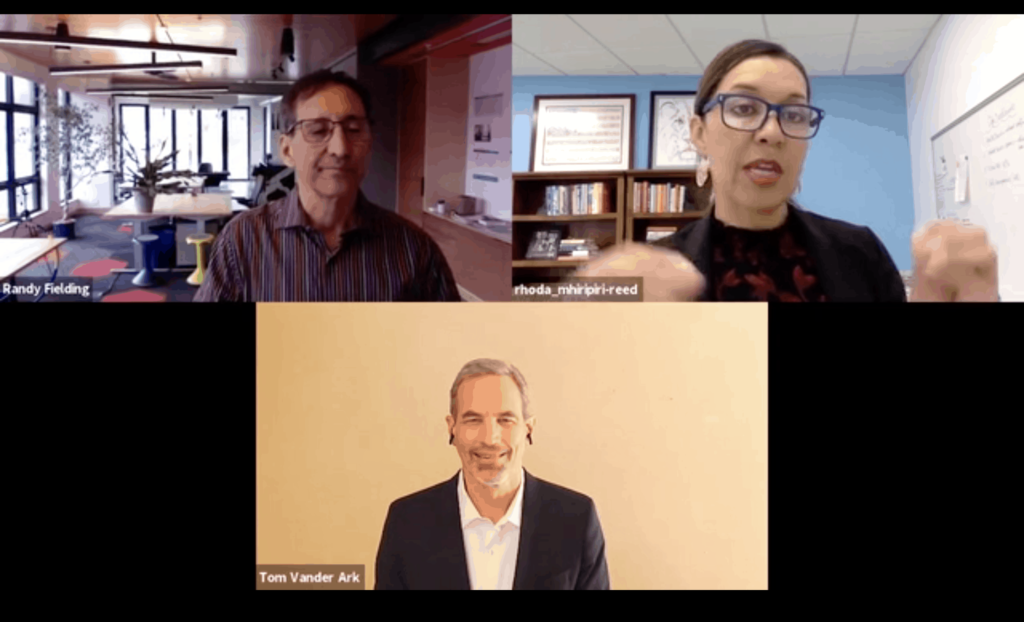
can leave a review of the Getting Smart podcast in the Apple Podcast app. And if you don’t listen to us on Apple, just go ahead and share it with somebody that you know. These reviews and shares really helped to get these conversations in front of more educators, ed leaders, and others who are interested in innovations and learning. Today we’re joined by Dr. Rhoda Marie-Perry Reid, Superintendent of Hopkins Public Schools in Southwest Minneapolis and famous school architect
Randy Fielding, who is focused on pathfinding efforts and making Hopkins a more collaborative space. Let’s listen in as Tom, Randy, and Dr. Marie-Perry Reid discuss transformation, pillars of innovation, reimagining learner experience, and environment and much more. Dr. Rhoda Marie-Perry Reid, welcome to the Getting Smart podcast. Well, thank you, Tom. I’m very happy to be here. Hello to you, Randy.
Hello, Rhoda and Tom. My friend, Randy Fielding. Randy, this is your second or third time on the podcast? Second official podcast. I guess I’ve been on some of your wonderful virtual seminars before. You’ve been on some of our webinars and I’ve been on some of your webinars. Randy is a world famous school architect and is helping the Hopkins Public Schools reimagine learning spaces where it’s really that you could both join us. I’d love to start with
Rhoda and just curious, Rhoda, when you knew you would be a teacher? Oh, sure. That’s a great question. I would say that most educators have responded to a calling. So I was called to teaching during my undergraduate years. I went to college because I wanted to be a judge. I had a dream in high school that I would be a judge. And then in college, after being a poly-sci major for two years and volunteering in the community, I fell in
love with children, working with families, tutoring, working at homeless shelters. And I saw this. So I attended a very prestigious college where you could exit the Black Iron Gates and within two or three blocks, be in almost complete poverty. And I saw this juxtaposition of wealth and the urban poor. And I just, I had a sense that education had something to do with rightsizing that socially and racially unjust situation. So I switched my major to education
and became a teacher right after college. It’s a great story. Randy, I’m not sure. I know your backstory. You could be designing anything. There’s probably a lot of easier buildings to design than schools. Was it an accident or an intention that focused your career so heavily on education? Tom, I think I could use your language probably in difference making. I think it was I wanted to solve a problem, a problem that I experienced first day of kindergarten. Being in schools
really did feel very limiting. You know, I had to look straight ahead. I couldn’t look out the window when I wanted to. I just lacked agency and it was partly the space. And so I thought we need spaces that are more connected to the outside that are more fluid where you can be up and down and you can make things. And so I always wanted to change that. Rhoda, you have, you’ve been superintendent now for, is it four or five years?
Four years, correct. I would love your take on the job. How do you now think about the role of a public superintendent? In the words of the late Clay Christensen, he used to talk about the jobs to be done. What are the jobs to be done of a public school superintendent? That is a really great question, Tom. So I think it really depends on whether you are maybe a perpetuator of the status quo or if you reject the status quo and instead you are seeking
to transform because then the role functions become very different depending on what your intention is. So myself, I see that the system was designed to produce the results that we currently are achieving, which is a high level of predictability in our student outcomes along lines of race and class. So I firmly believe that the job of a superintendent is to right size an entire school system to transform it so that we can interrupt that predictability and get
different results for our kids and ensure that all and each student’s student achieves at high levels. So I report to a board of seven school board directors. I am their only employee and then I have a cabinet. So this is a team of people who are in charge of different departments across the organization and together we manage 10 schools, an early learning center, six elementaries, a couple middle schools and a high school. And really my job is to build an infrastructure
that empowers teaching and learning to occur within and across classrooms of these 10 different schools in a way that ensures that every scholar will learn at high levels. And because the school leader has a very important job in the quality of school, for example, you will not find an amazing school in this country that doesn’t also have an incredible school leader. So my job is also to build the leadership capacity of our school principals. Their knowledge, skill, will,
disposition, everything they need to execute high quality leadership. So it’s a big job, but it’s also very fun. I wrote, I heard three or four different jobs in there. So it’s building the board, it’s building talent, it’s building an organization. I suspect given what we’re going to talk about today, your vision 2031 that there’s also building community is another job that you have taken seriously. Rhoda, you had the benefit, I think, of going to high school and
then teaching not too far from Hopkins. Is that right? That’s correct. Just about 20 minutes away. So you weren’t new to the area, but maybe you could tell us a little bit about what you did in in your first year to get to know the community. And then I’d love to move into the vision building stage and how you approach that work, who you included and what it looked like. Sure. So my first year was a very busy year because not only did I need to introduce myself to all of
my stakeholders, we also needed to pass a three question referendum. And so I took this that year as an opportunity to introduce myself while painting a picture of why we needed voter approval on these three questions. And during that whole time, I also learned a great deal about the current state of Hopkins during that year. So it was an incredible year of learning, both for me and also for stakeholders who wanted to know who I was and who I would be as a leader. And so not only did we
pass that referendum with flying colors and great thanks to the voters in the community, I was able to collect a great deal of information that helped me understand who Hopkins was and what Hopkins wanted to become. And that became the foundation of the vision building. Right. I have to interrupt. I’m smiling from year to year because I also, as a new superintendent, found out that one of my unsated jobs was campaign leader. Maybe that’s the fifth
job. You have to lead the campaign, but you can’t really lead the campaign. So that is a very important job and a great way to get to know your community. So how did you go on to develop this vision 30, 2031? Right. So we knew we needed an outside partner because we wanted to see ourselves. We wanted help seeing ourselves from a fresh perspective. And also we didn’t want to work with a traditional, like strategic planning organization. So we sent
out a request for proposal. And I think there were 16 different organizations that responded. And really we weren’t, we didn’t, we weren’t satisfied with any of those. So we waited. And then through a couple of referrals, we came to know of an organization by the name of Go-Kart Labs. And they had previously worked in healthcare and in higher ed. And we loved that they hadn’t worked with too many K-12 institutions because, you know, we wanted to think differently. So they
really helped us put together a strategy for building our vision, including a two day, like all day retreat with 60 leaders, scholars, parents, board members. And through this like giant brain dump, they were able to help us understand who we were and who we wanted to become. And then through lots of other work like stakeholder focus groups, we had, I recruited 27 high schoolers to serve as royal reps. And so these high schoolers took a whole summer and
engaged in a student design and student executed community engagement, like effort to ask our community members, well, what do you think of Hopkins and what are we doing well and what should we be doing differently? So we took like all of this like massive amounts of data to distill all of that into an audacious vision. And we call it vision 2031 because at the time our current, when we launched the vision, our current kindergartners had 13 years before they would graduate.
And like districts are really great at, you know, planning for tomorrow or next week or next year. But we have to think 13 years out because that’s when our little ones are going to be, you know, entering a world that will be very different from our current reality. And we have to imagine what that world will require of our young people. So we said, nope, we’re planning for the year 2031 so that our kindergartners are really going to be going to be ready to navigate that VUCA
environment. So I love the long term vision. What was the duration of the plan behind it? Was it a three or four year plan? Well, we are now chunking the long term vision into strategic roadmap where we can say, okay, in the next three years, here’s what we’re going to accomplish in the three years after that so that this roadmap says what we’re going to do and when we’re going to do it and what steps we have to take to achieve each milestone until we get to 2031. I love that.
One of my favorite parts of your plan, Rhoda, are the core values. They’re beautifully articulate. They include intentionally adventurous, optimistic innovation and vigilant equity. How did you create those? And I guess in particular, I’m interested in how you got to shared and articulate. I mean, they’re both beautiful and creative and thoughtful, but they also seem to be widely shared. So how did you do that? Sure. Well, we also have love
and humility of heart. Yes. And so what happened is that that organization, Go-Kart Labs, they helped us look at a massive amount of information coming from our stakeholders, internal and external, where people were responding to the question, what are you passionate about? What do you dream for Hopkins? And all of the responses to those kinds of questions helped us articulate the core values, the six ways that we wanted to demonstrate when we show up for work.
And so we started, we didn’t start with six. I think we started with 12. I feel like I have a poster, but so we put a bunch of all of the, all of the contenders on like these fancy little, like, cardboards. And we literally had voting cardboards at all of our schools and staff were supposed to tally which were their six favorite. And that’s how we came up with the six. And then we shared them with our community, but they also, you know, they, they, these six ended up as
contenders because our community said, you know, we love these. So it was, it was an intentional and comprehensive effort. And we really love our core values. And we receive a fair level of criticism on the value around love. But we also receive so much support for using that word because we want to love our scholars and love each other that it, it outweighs the, the critical piece. Well, I’m glad, I’m glad you added that because the tension is that you want these to be
really meaningful and powerful and shared simultaneously. And so I appreciate that you, that you work hard at, at both. You also have six colors of innovation I’d call them design principles. And those are, I think, equally thoughtful. I wonder if those have been valuable in your, in your work together. Absolutely, Tom, we, we, I’m looking at this road map. I don’t know if you can see it, but we use this as a guiding tool in our daily and weekly work.
And so we’re always talking about how we are reimagining ourselves, our departments, and our schools. How are we building fearless teams that are not afraid to fail? Who, who are, who and what are the partnerships that we either have or need in order to do this work at a high level? And how do we build open mindsets so that diverse perspectives are authentically and consistently welcomed into all conversations? So this, this organization really helped us
identify what we thought were going to be significant levers to remaining in an audacious space and significant levers to help us reach vision 2031. So those, that’s, those are the purposes of the, the innovation pillars. So I’d like to move to the question of reimagining learning experience. Both the learner experience and the learner environment and begin to draw Randy into this dialogue. Did your strategic planning process try to imagine sort of a day
in the life of a learner or how did you try to describe what learning would look like in Hopkins? Absolutely. That’s, that’s exactly right. So we had several activities where, so what we did is we designed a lab operating system. And which is a process by which we would test new ideas, but the process starts with empathizing with the end user or empathizing with our scholar, the parent, whoever is the end user. And so we created this process that would
help us you build and use empathy first. And through this process, we identified certain parts of the organization that needed to be reimagined. And we also invited anyone and everyone in Hopkins to use the process to reimagine their own space, whether it’s reimagining a classroom, a curriculum, a particular lesson, a program. And so, yes, scholars have been put at the center of that work because the process requires us to understand the user experience and
develop empathy for, you know, what’s currently experienced versus what is the desired aspects. And when and how did Randy and his team at Fielding get involved in helping you reimagine space? So what we believe is that our schools are physically designed to promote isolationism, to prevent scholars of different age levels from working together, to prevent collaboration between educators. And so we imagine school spaces that are very open and that are conducive to
collaboration, to lots of scholars working together, to scholars working independently and in small group and in large group and being able to fluidly transition between those different learning scenarios. And so we knew that we needed a partner in helping us think through that. And so we put out another request for proposal for a partner because we said that building partnerships was going to be a pillar of innovation, right, in our vision. And we were amazed by the work that
Fielding International has done in creating learning places that are not just learning places of the future, but learning places that promote and empower the types of adult and scholar learning that we imagine and that we imagine for our scholars in Hopkins and that we know is needed. So then I got to know Randy and it’s been amazing to work with them. So Randy, tell us about the process that you went through and I’d love to know about the deck
that I saw last week. You sent me a picture of the plans for Hopkins schools and I think my deck words are holy cow. I need to talk to that superintendent. So what’s the backstory, Randy? Well, the backstory is that I was so excited to first meet Rhoda and understand in our first meeting even before we had the project that we had a leader that was authentically devoted to transformation. We hear a lot of discussion about transformation, but really meaning it
is another matter and I would ground that in where we are. I’m in Minneapolis, Hopkins is right outside of Minneapolis. We’re a known as a creative city and yet we’re also at the center of some of the worst tensions and inequities in the world right now, today, global news. And right in Minneapolis, a lot of that discussion about change, about transformation is focused on this phrase achievement gap, which I think is a kind of deficit approach. It’s focusing first on
achievement and in what I see as at least nine out of 10 times achievement refers to this kind of 1950s model of what, you know, outcomes, student outcomes that really don’t engage all cultures. Engages, you know, a smaller group of people of those, you know, good test scores. Really, they’re the same tests I took many, many decades ago. And then gap, you know, so this is where our focus here in the Twin Cities has been a lot of it is on an achievement gap. And it’s been
depressing. We haven’t been very successful. We’ve worked hard at it. I think we have a lot of smart people with good intentions. We spent quite a lot of money per student here. And yet, I think, particularly our schools in the city of Minneapolis and in St. Paul are in many ways failing. And so to meet Rota, understand this vision, 2031, and to see a word like love, I was just blown away. I thought, how does she have the courage to use that word? Because so often people
and the softer sciences like psychology or education, when they talk about love, the people in the harder science, you know, hard to track that to data. And yet, if you look at the phrase achievement gap and what it’s not accomplishing, and what the word love, the word empathy suggests, they actually lead us to authentic solutions. Similar to your work, Tom, about placemaking and difference making. If we really listen to people, we listen to them in spaces which are fluid,
not isolated, where we can come together. And they’re also quiet spaces. Because when we understand each other, there are times we need to be quieter. We’re not all doing the same thing at the same time. When we listen to people, we understand that things, we have a whole series of design patterns that we share with people. And we find that the number one patterns over and over and over again is we want to be more connected to nature, more to outside. And we want opportunities for
quiet space. And yet, we’re not generally building those. Even when we do these common areas, these labs, these tech focused spaces with beautiful furnishings, and usually there’s a fair amount of glass, they often are not connected to the outside. They’re often big spaces that don’t provide smaller quiet areas. And so in the process of getting to know Hopkins, we’re seeing that they truly do want to listen to people. They want to be empathetic. They want to create spaces that
allow for love and connection for creativity, for collaboration. And so it’s like, ah, yay! Here we are working in 50 different countries and very limited success here. So the chance to work with you, Rhoda, and your district and to work with 10 different schools and a diverse population is like a dream come true. And it’s been awesome. Regarding the deck that you liked, that was about Pathfinders. That was a word I think, Rhoda, you like the word Pathfinder, which suggests the future.
And we also, we have to deal with budgets. You know, there’s a lot of limitations on budgets. It’s something that we as architects are hearing about day in, day out about the budgets, about the budgets. What you’re, what we’re looking to do is not particularly budget sensitive. In other words, we can renovate a building with a old fashioned, more bells and cells isolated model or one with more fluid spaces. And it’s not really going to make a difference significantly in cost.
What might make a difference would be how much sound absorption we have, the different kinds of lighting, some of those connections to outdoors, some of the things we can do to create more smaller rooms and more security, all of those things. And they might be the same in either kind of model. But in, in being sensitive to budgets, we’re not looking, you know, Hopkins hasn’t said to us, you know, build a new school or give us a plan for three new schools and renovating seven schools.
They’ve said, we have really limited budgets. What can we do now? One of your wonderful school principals, Julius at North Middle School, said, I need to transform the school now. In fact, if I can’t come in with a different approach to cohorts, it’s September. I’m not doing, I’m not achieving my goals. And so that led us, Tom, that inspired us talking to Julius led us to do three different plans for one wing of a thousand student middle school. And we took the South Wing,
which had a series of classrooms that supports 240 students and said, what if we imagine breaking that into two cohorts or learning communities of about 120 students each, about four teachers in each of those. And we reimagined that space and we did it at three levels. One would be, it’s kind of like the restaurant menu that, you know, there’s the $1, the $2 and $3. And at the $1 level, we’re going to open up the hallway a bit. And because the hallway to go to your point wrote about spaces
that are designed to isolate us would invite people to actually collaborate outside of those individual cells or classrooms. And so how do we do that? Well, there were simple things that we shared in that deck with you, Tom. Right now, you’ve got full height lockers filling up all the walls on the hallways. So we thought, what if we could go to some half height lockers? Okay, that could potentially free up half a hallway space. And that might mean, that means there might be spaces in
the hallway, which you have these like foam step seating areas that can fold out and kids could gather. We could do some of the short throw projectors that you have inside the individual classroom. So it’s a space we can gather. And these really are the spaces that I think the three of us would be using. If we were stuck in different classrooms, I think Rota, you’d say, well, you know, meet me out in the south hallway, you and I have time can look at something together,
wouldn’t necessarily always be in a classroom. We also looked at small desks for two or four, that could be in in those hallways, and even changing the floor patterns. So instead of being linear, you create a sense of spaces. And within that, making sure there’s at least six foot clearance everywhere. So the fire marshals, not unhappy. So that’s a $1 solution. Part of that $1 solution, some of the walls between classrooms might come out. And it could be you take out half the wall
and put in a moderate replace price sliding door. It doesn’t always have to be the kind of complex folding glass doors like you see at the end of the space here. You know, there’s simple ways to do that. At the sort of $2 level, we’re renovating and we’re taking out some of those individual classrooms. And we’re creating some common areas. And doing that in a way where those common areas become the space that really bring us together. If you were to look at,
so, Rhoda, you originally wanted to be in law, right? So, and I think Cornell West said that justice is love made public, right? Okay. I think of really successful common areas as love made public also. And what we see around the world is empty common areas that aren’t being used often. Because architects have heard that, oh, we need some common areas, breakout spaces, you know, people want that. So let’s put them in and we’ll make them pretty. Sometimes they have connections
to the outside. Sometimes they don’t. But teachers often don’t know how to use them. They often will stay in their classrooms, which always have good, good light because it’s a code requirement, right? Windows. And so often those common areas fail. So love doesn’t win, in that case, architecturally. Instead, isolation wins because of momentum, because of an achievement gap. We want to make sure you’re, you know, studying and staying on track for those tests and
because of the architecture. So in the $2 scheme, we are creating some beautiful common areas. They always have good connections to the outside. And it’s not just natural light. Skylight wouldn’t do it. It is a view and it’s a longer vista to something beyond, something green. It’s not bushes three feet outside the door. And that really ties into who we are as human beings. The ability to look up and change our focal length and focus on something
at least 50 feet away is actually a physical thing that we crave. We want to look out. Like we want to, we want a vision. We want to be able to look out. And so some of those common areas will usually have some doors to the outside and try and create some green space. If possible, we might even cut into a parking lot or make that phase two for the, you know, $3 solution. And in that, we’re also going to put in the $2 or the medium level of expense
where we’re renovating, we’re going to put in some teacher collaboration areas. So teachers, rather than having a desk in the classroom, have some space where they can collaborate together. And we’re going to have small group rooms so that students have that space for quiet. When we create these sort of phone booths or quiet spaces, invariably, they all fill up something that everyone craves. Then in the deck you were talking about, Tom and a Pathfinder,
we also show an option where you might do an addition. So we’re expanding some of those common areas to be big enough to really turn around that whole model of project-based learning. So in authentic project-based learning and community-connected learning, which is part of the Vision 2031, we’re often bringing community partners in that look at those projects that students are generating. And those partners are able to interact with students in a way much
like we adults might do in our kinds of meetings. And the classroom is a little too small for that. So they’re bigger spaces that allow us to go to what we might call the sort of stage three in the levels of project-based learning where we’re truly learning in a more community way. And we can in that, you know, in that sort of $1, $2, $3 in that small renovation of the hallway to the renovation of a wing to renovation and expansion, much of that can be phased. We could do some hallway
work this summer or the summer after next and we can make sure we do that in a way that when we come in a year or two later and we do something more extensive that we can keep those elements that we put in. We can either reuse the furniture or if we did take out some walls, those same walls that we took out still work with a new plan. So the ability to phase it means we can be, we can do it, we can have small successes in order to get to that bigger success that Vision 2031.
But Randy, I wrote, I wonder what was attracted to you about that approach? Well educators love options. And so the fact that there are three options at different price tag points was very attractive because we are in a season of scarce resources. We’re undergoing some budget reductions right now and it’s very, it’s, you know, it’s just not good fiscal practice or nor is it politically viable to spend lots of money on improving
buildings when we’re also having to make staffing reductions. And so the opportunity to use minimal dollars to transform a hallway space, it’s, you know, I would say it’s like low hanging fruit, right? It’s a small, it’s a small activity that will contribute to mindsets shifting of the educators who are in that building because they will be able to see the space differently. And then that’s just an opportunity. That’s a window for, you know, educators to think
differently and other aspects of their work. So it’s really great to have these options and to also have Building International as a guide for our thinking so that we can build a long term plan. So, Rota, here’s a little backstory for you. I had the chance to watch this Pathfinder strategy work out really, really well in Singapore, but the Singapore American School was able over the course of seven years to watch that school transform in part because they work
with Fielding to introduce a set of Pathfinder spaces at six different grade spans from P to 12. And I love to think of it as an opportunity for teacher teams to both illustrate and interrogate the teacher. To both show their colleagues what the future was going to look like in a collaborative, applied project-based world, but also for them to work together just to test collaboration strategies and high and low seating and whether science needed to be connected with math, with a
double door or an open door. And so this working of things out in both learner experience and learner environment in a bit of a fishbowl strategy so that the faculty in the community could see was super helpful. And then SAS began inviting parents in to also see and experience the future. And so this is actually why we featured the Pathfinder strategy last week in a micro school webinar because we think it’s such a neat iterative strategy to test out the future.
So we’re excited that it’s a part of your plan. It sounds like it’s important in your context where you don’t have a lot of money to spend, but you do. As Randy said, you have principles that are ready to rock and want to transform their space. So it sounds like a viable way forward. Absolutely. We have a lot of big ideas, but we don’t have big dollars yet. So how do we maximize the resources that we have? I wrote two quick things on the way out. This Royal Reps idea was super cool.
Is that ongoing or was that just during the planning process? Well, we had Royal Reps like engage in that big effort. And we still have a few Reps right now who help us with those. Those are high school students, right? These are junior high and high school students. Okay. Well, there was like a giant Royal Reps effort, which I described earlier. And now what we’ve done is we are, our charge to ourselves is to consistently provide opportunities
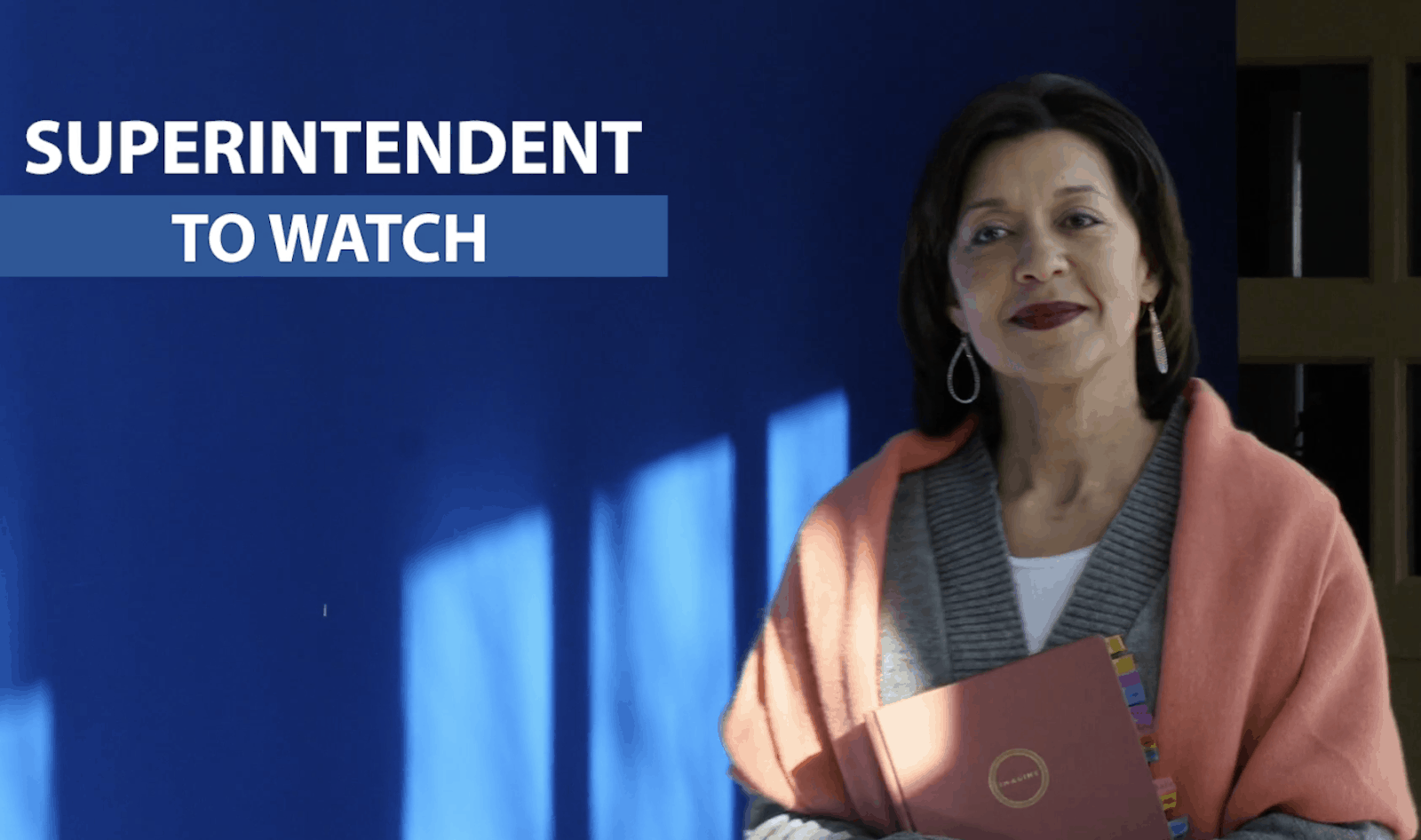
to elevate scholar voice and to give our scholars real and important tasks. And so, we don’t necessarily have the Royal Reps as a unit anymore, but we do have scholars all over the system who are helping us with a number of different things. Important things. Yeah. I love that you mobilized young people as part of the planning process. Every district in the country has an opportunity to do that. You also received a nice award as a
superintendent to watch from the Public Relations Association. I think that may have had something to do with your Royal Report. Is that a weekly blast that you send out? Yeah. We have a small but mighty communications and marketing team led by a brilliant communications and marketing director. And she and the team organize the Royal Report. I think it’s every three to four weeks. So, it is beautifully done. We’re going to link to a number of those
in the show notes. It is professionally done. It’s beautiful storytelling. I can tell that’s an important part of just one of the ways that you are sharing the story of transformation in Hopkins. Well, I’m glad that you’re going to share that. They do good work and it’s important for us to tell our story, not just to ourselves, but to share the story of who we are and what we’re aspiring to achieve for our deserving scholars. We want to share those stories with the whole
world, beginning with the Hopkins world. But if it’s the whole wide world, that works too. Well, we’re going to join them in making you a superintendent to watch. We love what we have seen so far. We deeply appreciate your leadership and appreciate you being on the podcast. Brandy, great work. Thanks for introducing us to Rota and to Hopkins. What a treat. Thank you, Tom. It’s always fun to connect with you and I’m always inspired by all the ideas we discuss.
Another thanks to our podcast sponsor ScreenCastify. To learn more about the power of video to engage learners, check out ScreenCastify.com slash Getting Smart. There’s a link in the show notes as well. Thanks so much to Randy and Dr. Marie Parie-Reed for joining us today. We are so appreciative of their innovations at the level of the district, the building, and the classroom. For another conversation with Randy Fielding, be sure to check out episode 195 on learning environments for the
future. We’ve got a link in the show notes and on the blog. All right, listeners, that’s it for today and just another reminder to leave us a rating and a review so we can help more folks find us. For the Getting Smart podcast, this is Jessica signing off.


0 Comments
Leave a Comment
Your email address will not be published. All fields are required.