

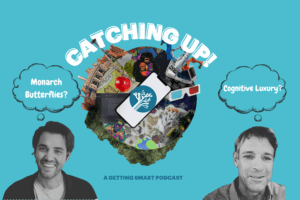
Catching Up: Grey Goo, News Deserts, and Our Predictions for 2026
Key Points
-
Schools could address news deserts and foster critical thinking by empowering students to lead media projects like podcasts or blogs.
-
AI tools are growing in education, yet concerns about privacy and ethics will lead to increased scrutiny and public debate.

Shownotes





On this episode of Catching Up, hosts Nate McClennen and Mason Pashia dive into key topics shaping education in 2026. From the rise of AI in classrooms and concerns about its regulation to a deep dive into the potential of scholastic journalism as a tool for real-world learning, they explore how education can foster connection, critical thinking, and creativity. The duo also shares their top 10 predictions for 2026, including insights on media literacy, work-based learning, and the future of education funding. Tune in for thought-provoking ideas, actionable insights, and even a little inspiration on building forts as adults!
Outline
- (00:00) Introduction
- (01:17) AI Pessimism & Trends
- (05:44) Scholastic Journalism Deep Dive
- (10:48) Top 10 Predictions for 2026
- (22:28) School Choice & Funding
- (29:30) Science of Reading & Work-Based Learning
- (45:28) What’s That Song?
Introduction
Nate McClennen: Mason, welcome to Catching Up. Welcome to 2026. Excited to chat today. We have a lot to talk about. It was a little bit of a time off because we had some vacation time. Hope your vacation and New Year were great. We’re gonna jump right in. I’m gonna talk about some AI pessimism because we always have to talk about AI.
We’re gonna do a deep dive on scholastic journalism. For those of you who are not familiar with that, that’s newspapers, yearbooks, things like that, that we have students do or students run in high schools and middle schools. And then we’re gonna do our top 10 predictions for 2026 and see next December how we do.
And of course, don’t forget to stay tuned for our music at the end. It’s a good one. What about you? What are you talking about?
Mason Pashia: Absolutely. Yeah, we do some fun bobbing and weaving and we end on those top 10 predictions. I also talk about the year in cheer from 2025. Reasons to Be Cheerful is a great solutions journalism outfit, and we shout out some of our overlap. And then I also talk a little bit about the power of building forts as a grown adult with no kids around.
So, stick around.
Nate McClennen: Everybody needs to stay tuned for that. So welcome, everybody. Excited to have you here and stick around for the whole podcast.
Mason Pashia: Let’s jump in.
Nate McClennen: Welcome to Catching Up, first one of 2026. This is exciting. We’re moving into our second year of Catching Up.
Mason Pashia: We are. I know everyone is thrilled.
Nate McClennen: Well, why don’t you start us off? You have some stuff about the year in cheer in 2025 to open us up, and mine’s more pessimistic. So why don’t we start with yours?
Mason Pashia: Yeah. Let’s start on the up then. So there’s a publication called Reasons to Be Cheerful that I really…
Nate McClennen: Love it. I love it as well. I subscribed to it.
Mason Pashia: Yeah, they’re so great. They were started by David Byrne, the singer of Talking Heads, along with some other people, which is super interesting. It’s just this kind of lovely solutions journalism site where people are posting from around the world what’s some good news, kind of pro-human stories. They did a Year in Cheer 2025, basically a roundup of, I think it was 97 things that made them cheerful last year. I just flagged a few that are building on themes we’ve talked about on the show.
Over the last year, we’ve talked a lot about this idea of abundance, and particularly we always get into this place with conversations on micro schools or vacancies of how there should just be a school in so many of the empty rooms and businesses across the country. There’s a ton of places for people to house young people, to have them learn in proximity to the real world.
One place in Chattanooga, Tennessee, has been converting empty classrooms within school buildings to this daycare for these students. So it’d basically be a daycare for the teacher’s kids while they’re teaching in the building. It’s a great story. We’ll have a link in the show notes. There are 12 of these across that district, and it’s just a really cool way to use space and do something that everyone needs, which is childcare.
Nate McClennen: As long as there’s federal funding still going to childcare.
Mason Pashia: Right. Yeah. I think we’ll be talking about that a little bit later. So that’s great. On the subject of mental health, something we maybe have talked less about explicitly, but it’s come up in a lot of our conversations. There’s a Great Falls Public Schools in Montana that has grown a peer mental health support network to about 200 middle and high school peer mentors who now speak primarily with sixth-grade students who are struggling with mental health.
It’s a smaller district, but they have actually decreased the reports of mental health issues in the ER by 95% among sixth graders. Small sample size—in 2023, like 18 sixth-grade students went to the ER. However, that’s still pretty incredible to be able to nip it like that. I think we always… This just brought to mind for me, we’re always looking for this super shiny solution to something like mental health or these gamified ways to make sure people are on the right track. Really, it just comes down to having someone to talk to and being able to voice it. The earlier we can do that, the better.
Nate McClennen: And not only having someone to talk to, but the person being talked to has the tools and skills to respond correctly. Right? So, it’s about connection. When people feel like they belong and the right advice can be given to go seek a professional or whatever the case may be, that matters. Not everything has to be shiny. Fundamentally, I keep thinking one of my goals for 2026 is this continued idea of connection. How do we create and build things that allow humans to connect? This is one of them. So awesome. Any more?
Mason Pashia: The last one I flagged is just on the subject of civics, which we’re always talking about. I think a lot of people were tuned into the New York mayoral election this last year with Mandani, but more than 2 million New Yorkers voted in this year’s election, which is double the number of four years ago.
I think some of this is cyclical. The number was kind of close to what it was in the 2001 election for Mayor Bloomberg. But I think this is exciting—that people are paying attention to civics, people are feeling called upon to show up. Something from the data was that in every single neighborhood of New York, the turnout was up. It was not just a huge concentration from one neighborhood. That campaign really seemed to be speaking the language of the people in a way.
Nate McClennen: Yeah. And the continued work on how do we make sure every young person, as they graduate high school in the United States, is encouraged to vote. We’re not in a voting mandate country like Australia or something like that. How do we help young people see that it is the way to voice their opinions? Because once it happens, it’s done. But we have so many, especially lower-level elections, that have low turnouts. So that’s an optimistic stat. When people get excited and they’re engaged, they’ll vote, and that matters. Cool.
Mason Pashia: Hope wins.
Nate McClennen: Yeah, hope wins. Let’s…
AI Pessimism & Trends
Nate McClennen: I’m gonna counter that. This is more just on an AI kick and just looking at… I think this came out in 74 Million as a summary, but I unpacked this a little bit. In September, Gallup published some polling that showed that 80% of American adults think that the government should regulate AI, even if it means growing AI slowly. This is a very different message than we’re getting from the federal government or the White House, which is about, “Hey, we need to grow, grow. We need to be competitive.” So there’s a reticence and a worry. This is actually not matched internationally. There are other countries and regions of the world that are way more optimistic about AI, but Americans specifically are more pessimistic. Only 17% of Americans think AI will have a positive impact on the U.S.
Mason Pashia: Wow.
Nate McClennen: Yeah. We’re gonna talk later about some of the trends we’re predicting for 2026. I think AI is gonna become ubiquitous, so no matter what people think, it is becoming foundational to a lot of the things that we are doing. Just some thinking about our general perception. As use continues to increase and becomes more predominant in the system, our pessimism is pretty high. Whether that’ll overcome the billions and billions of dollars of investment going into AI, I don’t know. Something to think about. A couple of other things here that I think are helpful for our listeners: for all of you out there who are in classrooms, running schools, leading districts, or thinking about ed entrepreneurship, how does AI play a role in this?
There’s this big picture issue. Jean was at a conference—Jean Lew on our team—in San Francisco, and they used the term “gray goo.” She shared it back with us. I had not heard “gray goo” before, so I had to look it up. I thought it was good for us. Gray goo, according to Britannica, comes from nanotechnology. When nanotechnology solutions are generating things that are then impacting generators, it’s a cyclical piece. This falls into the AI conversation. When we generate a lot of AI content, eventually that AI-generated content goes back into training the large language models that are generating content. This eventually creates some sort of mess that nanotechnologists have called gray goo, which is this messy, convergent, all-consuming nothingness that doesn’t have any real point of view or excitement or energy—or maybe is full of bias, whatever the case may be.
I hadn’t heard the term gray goo used in AI terms. Just interesting. The goal is to do things like this, Mason—continue to produce human-generated content because we are going to become more and more rare. Maybe you and I, if we last long enough, will be the last remaining human-to-human podcast in the world. That should be our goal.
Mason Pashia: That’s great. Yeah. We just don’t look at the metrics ever again. Just run headlong.
Nate McClennen: Just keep going, right? Eventually, we’ll be broadcasting from a bunker somewhere.
Mason Pashia: That’d be…
Nate McClennen: Who knows? The last one is… I thought this was interesting. I like The Economist. With AI and the use of AI tools by students, that has an impact on this very funny market—the blue book market. If we all remember, especially in university or college, if folks went there, there’s this idea that we write essays—or in high school, you write essays—in those blue books. You get them passed out, and you’d all shiver because you’ve got to write and fill them up, etc. From 2022 to 2024, blue book sales in the world have doubled.
Mason Pashia: Wow.
Nate McClennen: They think it’s a direct correlation to the idea that AI is making it harder and harder for people to type things and for educators to understand whether that was AI-generated or not. So go back to the blue book and do your cursive writing or your print writing. That is certainly not AI-generated. There are these funny byproducts of the AI-saturated world that I never would’ve thought of. Hopefully, in 2022, you invested in blue book companies.
Mason Pashia: That’s really interesting, though. That’s definitely a hallmark of people grabbing onto the last piece of a maybe bygone era now.
Nate McClennen: Yeah, maybe. Or maybe as schools go cell phone-free… Who knows? Maybe they’re gonna become more and more technology-free. I have a hard time believing that. Anyway, let’s give a shout-out to the blue book. That was my goal here. We’ll see what happens in 2026 to see if the trend continues.
Scholastic Journalism Deep Dive
Nate McClennen: All right. Well, those are some good openings. You started with some cheer; I threw in some AI pessimism. Let’s do a deep dive. I think I’m gonna start with—we’re gonna do two parts to this deep dive today, I think, Mason. So the first part is I want to dive into scholastic journalism a little bit because I’m super fascinated by this. Number one, I hadn’t heard the term before, even though we talk about it a lot. But there’s some stuff I want to talk about to think about how we connect real-world learning and newspapers and media, etc., together. And then you and I are gonna do our ping-pong back-and-forth top 10 predictions for 2026, and then we’ll revisit them next December and see how we did. What do you think about that? Okay, so deep dive.
All right, so scholastic journalism. This is a field of those who are doing things in high schools, especially where they’re doing journalism projects. And those journalism projects might be TV, they might be radio, they might be yearbooks, school newspapers—things that most schools in the United States have some programs associated with, especially the larger the school is, the more likely they’ll have that.
Mason Pashia: Were you on the school newspaper?
Nate McClennen: I was not on the school newspaper. I don’t even think I was in the school yearbook. Were you on a school newspaper?
Mason Pashia: I was on the newspaper. Yeah, it was a cool spot. We actually—my district, Shawnee Mission School District, Shawnee Mission East—shout out The Harbinger. I think we won nationals all four years I was there. Not because of me, but we won a lot back in the day, so it was great.
Nate McClennen: Okay. Do you still think that Shawnee Mission still has a school newspaper?
Mason Pashia: I’m sure that they do, but I bet a lot of it has pivoted. When I joined, part of my role was digitizing and starting an online media beat for music and the arts in the high school. So I think that’s probably where they spend most of their time now—on an online footprint.
Nate McClennen: Okay. Do you remember any articles that you wrote?
Mason Pashia: All right.
Nate McClennen: If you don’t, it’s okay, but I’m just curious.
Mason Pashia: I’m trying to think if I remember. I remember covering a lot of freshman bands and trying to be like, “Are they the next big thing at high school?” I think those were always really fun because, like, first of all, who cares? But also, it’s just a delightful thing to try and predict. I did have a friend who had a film column called Reel Talk, and the byline was, “I just know more about movies than other people,” which I thought was so funny. So yeah, incredible programs though—high school journalism programs are great.
Nate McClennen: And there are many, many of them. And, you know, we’ve occasionally talked to Palo Alto High, the journalism program there, which is really exceptional, and across the United States, we’ve found examples of that. But let me throw some facts out at you about newspapers in general and scholastic journalism.
Number one, newspapers are declining. We all know this. Since 2005, the U.S. has lost about a third of its newspapers. That leaves about 6,000 newspapers left—actually a little bit less than that. That’s 3,200 since 2005. So that’s about 3,200 print newspapers disappearing at a rate of more than two per week. It doesn’t mean that they’re all going online; some of them are just disappearing. In the past year alone. And that then leaves these news deserts—areas where there’s no local media coverage. We’ll come back to that.
The second thing that’s happening is, despite your stories of awesome experiences in high school with student media, scholastic journalism programs have significantly declined over the last decade. There’s a great program that I encourage our listeners to check out if you’re interested in this, called the Center for Scholastic Journalism out of Kent. They have a whole set of resources around researching and tracking what’s going on with scholastic journalism. Yearbooks stayed about the same—over 90% of schools have them. This is over a 10-year period, from 2011 to 2022. Newspapers dropped from 64% to 45% over the survey period. TV programs dropped from 29% to 26%, and radio was less than 5% across the board. The big change was in these newspapers, and they’re not being replaced by digital news. This was not just print; it’s any newspaper.
We have 50 state organizations that support this journalism across 46 states. There are scholastic journalism state associations. So we have the infrastructure there, but we have a significant drop. Then you tie that into these news deserts, especially in rural areas where there’s no local or regional news. To me, my hypothesis is that there’s a super interesting opportunity to take all the thinking we’ve done around real-world learning and trying to give students real-world opportunities. Why not, especially in news deserts, have schools and districts that don’t have programs start a student media program where they are doing podcasting, blogging, running an online newspaper, and doing reporting? They could even do other types of media activities, advertising, etc. It feels like it connects increasing literacy, addressing literacy issues, and addressing media issues. How do you actually understand what’s true and what’s not true—fake news versus real news? It addresses these news deserts. It addresses opportunities for students to do anything in the media world and run it as a business out of the high school.
There’s my proposition for you. What are your thoughts? What am I missing? What excites you about that?
Mason Pashia: I’m passionate about this topic all the way back to high school journalism days. We talked earlier in the Catching Up series about the websites that are fading at a steady clip too. That number was like 35% of online local newspapers vanishing annually too. So this is happening to physical and digital. Just because you are up to date does not mean that you are permanent. I’m curious about other forms of media, like if schools have invited students into managing their social media accounts or starting podcasts or these other… Are we missing things on the margin due to the mediums changing, or is this a true picture of students just not being as involved in the external-facing reporting and documentation of school life and the school day?
Nate McClennen: Yeah, that’s a really interesting question. I think when I work with schools and districts, and we’re thinking about real-world learning opportunities, it’s not often that school leaders will say, “Oh, the school district itself is a site for real-world learning.” So your idea that getting a media team that is a real-world learning experience that will give students credit and they’re actually doing the work of promoting the school and the district, I think, would be incredible. Right? I just don’t think it’s that common.
Mason Pashia: And it seems incredibly important in this moment with school choice kind of on the rise. You’re gonna need people to tell the story of your school, and who better to do that than the student body? So that seems like a huge opportunity for me. I think the other piece I love about this is it just makes students lean into their community with curiosity. That’s the best thing about journalism—you just start asking questions, and you start to actually get to know people or stories or undercurrents. This kind of makes me think about some of the student-led podcasts we’ve heard, like on Textbook and some of those, where students are having these really curious conversations and really trying to narrativize something.
And my last thought, just because I’m a sucker for libraries and other public institutions like that—I’m envisioning a future where this works, and we have these media centers run out of schools, especially in places that are news deserts. But how cool would it be if those students then also were asked to teach media literacy courses at a public institution, whether that be the school or the library, to people who were maybe older and have not had that media literacy training? Because I really do think—I looked at a survey pretty recently from the Seattle area, and people over 60, only 5% of them were concerned about misinformation, and everybody under 60 was pretty—it was like 95% were concerned about misinformation. So there’s sort of an unknown unknown for the older folks in certain communities around media literacy, where they just don’t know what they don’t know. If we could have students teaching them about this as they’re learning sort of the most up-to-date version and doing the work, I think that would be a really healthy way to grow and facilitate a democracy.
Nate McClennen: You know, Mason, that ties nicely into… I’m drinking a cup of tea, and my cup of tea has a little saying on it right here. The saying, as you were talking, says, “Every neighbor can be your teacher.”
Mason Pashia: Oh my gosh.
Nate McClennen: That is… It was… That’s profound. But yeah. So, okay, so now our idea is a student-run media agency that’s doing education out in the community to help with media literacy for all ages and all generations. They are running internal media for the district or the school, and they’re running external media for the region or the local community. That would be really awesome. If you think—if that was in every single high school in the United States, and I would even posit that maybe it replaces junior year English for every student in public schools in the United States, and every student had to go through that for the course of a year—think about that. The education that population would get as they moved up to become adults, right? Because they’ve all done reporting, and they’re all asking about bias, and they’re all saying what is the truth and not the truth. It feels so fundamental to me. And yet the data is suggesting that we’re not headed in that direction.
Mason Pashia: Yeah, it seems so fundamental, and I feel like there are just so many knockdown effects of that. Like, you start to—if you take this kind of random idea that I had about using that as teachers for the community—you start to bridge some of the elder care problems in terms of loneliness, and you get young people into those spaces. At the same time, when we’ve been talking to a bunch of microschools over the last two years, they’ve been thinking about how building a school identity and a pride of school is really hard just as an idea. I wonder how this kind of program would make you more proud of where you come from in a way that actually starts to get rid of some of that negative competition piece and really just makes it like, “Oh, I’m actually from this place, and I know a lot about it, and I feel really connected to it.” Very close to the power of place work, but how does storying become fundamentally an act of place, I think, is a really interesting question to ask in this conversation.
Nate McClennen: Yeah, all sorts of good ideas. We’re actively sort of starting to drum up how we could create a pilot program for this and see if we can get some traction here. So stay tuned. I’m pretty excited about the possibilities. It just feels like it has tentacles in a lot of different areas that I think are really, really important and creates a hopeful agenda, which is, again, gonna be one of our themes for 2026.
Mason Pashia: And if you don’t have the infrastructure to make a whole program, you should at least have a couple of students start a student-led Catching Up for your community.
Nate McClennen: You know, I think that’s a really good idea. We would be happy to support that, and we would even invite people—we could invite people into the Catching Up studios.
Mason Pashia: Yeah, the Catching Up cinematic universe. We would be honored to have it grow.
Nate McClennen: Exactly. Exactly. It’s already the Getting Smart channel, but then the Catching Up subchannel of that or something like that. Okay.
Top 10 Predictions for 2026
Nate McClennen: Let’s talk about our predictions. So we’re talking about predictions for 2026. We’re just gonna ping-pong back and forth. I’m gonna start us off. My prediction for 2026 is that we already know that 35 states and D.C. have some laws banning cell phones. We’re not sure how successful that’s gonna be, but we know it’s in process. I’m predicting that more and more states will do that. I’m predicting that the impact on school and teaching will be positive. I think students will have a higher level of engagement, and I think we’ll see lower issues of bullying. It won’t disappear entirely because they’ll have their devices outside of school. It’s not like Australia recently, which banned social media for 16 and under. But I think during the school day, we’re gonna have more attention, more focus, more presence, more connection. That’s prediction number one.
Mason Pashia: All right, so number two, we talk about this all the time, and this is not a surprise, but I think AI infiltration will be everywhere and in everything. You cited a stat here that 80% of teachers and students are using these tools in 2024 and 2025. That’s only gonna keep growing. But I think my sort of Trojan horn—I think that one’s kind of like a duh in some ways—but I actually think that we’re going to see a lot louder backlash this year about where the lines need to be drawn for what an AI tool can and cannot have permission and access to. I think that the privacy thing is really gonna ramp up this year, both student-led and teacher-parent-led. I’m expecting to see a lot more news stories about people severing ties with certain AI products for not meeting those conditions or kind of having to start back up from scratch to figure out what AI means for their community.
Nate McClennen: And that leads us to number three, where I think there’s going to be continued work towards getting to this holy grail of an AI tutor—the one-on-one piece to especially teach basic reading skills and basic math skills, so fundamental literacies. I think the data is suggesting that AI tutors, especially in partnership with a human, can be really, really helpful. They can increase the frequency of feedback, etc. So I think we’re going to see continued progress in that area.
That’s in direct contrast to number two, right? So what access does this AI tutor have about the student? Now, we already have adaptive software that’s been in place for 10 years that uses basic algorithms and AI to figure out where a student is placed and give them appropriate learning, like iReady or something like that. So I think that’s going to be on this side of the boundary. I think the Alpha Schools model might be, as we’ve talked about before, on the other side of the boundary because it has visual recording and things like that. Regardless of where the line in the sand is drawn around privacy, I think we’re going to see, on the science side of things, the research side, more and more progress towards tutors as effective ways to increase literacy rates, math, reading, etc., in young people. That will ideally maybe budge the data on this, right? Because we really haven’t done it—nothing’s changed in the last 30 to 40 years in the literacy area.
Mason Pashia: Yep, I think that’s right on. This next one, a little bit of a softball because we’ve already had news break this year on this subject, but I think there’s going to be continued funding murkiness in the federal government. As we alluded to earlier, there’s already been a freeze on some pre-K funds, and there’s just going to be, unfortunately, more of this to come through kind of confusing and unclear changes. I’m less concerned about the actual funding pools drying up, but I’m kind of concerned about just rampant delays that really stall people out and make progress really hard in some of these things that kind of just need momentum to keep iterating and growing.
Nate McClennen: Yeah, I think that’s the case. Everything will be surprising, and schools and systems don’t do well with surprises and lack of predictability, right? Districts especially are on budget cycles that are a year out, etc. They sometimes pass two-year budgets. There are all sorts of things that are dependent on clear rules and predicted amounts of revenue streams. Even though the federal resources are only, on average, 10% or less of local funding, it still is significant, especially if you have a larger district. But even smaller districts—it can mean the difference between programs that can change a student’s life or not change a student’s life.
What does that mean? I saw something that crossed my feed this morning. LA Unified is looking more and more towards private funding sources to cover gaps. Now, LA Unified has other issues because their enrollment declines are significant as well. So not only is there federal murkiness, but then there are enrollment declines. I think the predictive ability of districts is going to get harder and harder. Those that are in the finance world and the superintendents—it’s going to be tricky, I think, in how to do that in a cautious way, but also in a way that serves students well. That will be challenging in 2026.
Mason Pashia: Totally agree.
Nate McClennen: All right.
Shorts Content
Science of Reading & Work-Based Learning
Nate McClennen: I’m going to go back to something really, really fundamental—science of reading, right? We have this pendulum of literacy that happens when we look at the history of education. It goes back to the—we had the sort of workshop model, Lucy Calkins, and then that blew up because we were not teaching the fundamentals of phonemic awareness and the basic science of reading. Now the pendulum has swung, and I’m predicting in 2026… So we already have 40 states who have passed science of reading laws. Legislation does not necessarily mean good practice, but it is saying that we need to pay attention to how students at the early stages of reading learn to read through the building blocks of reading. There’s some really good evidence around that.
My prediction for 2026 is that the rest of the states will pass some sort of law. The second prediction is that we will have to see some connection of those that are successful not only be those that teach learners to read early on in the second, third—typical time that you would teach students to read—well, kindergarten through second or third grade. But the magic will be when you combine that with all the core literacies that are out there. So you’re learning to read for a purpose, you’re getting the mechanics, and then you’re applying that across all your other disciplines or projects, etc. If it’s just about learning to read and I can go pronounce a fake word because I know phonemic awareness, that’s not going to help me very much. I need to know how to apply it. So my prediction for 2026 is the rest of the states will create laws. The most successful states will have the science of reading combined with, as American Enterprise Institute had a great article that I linked in here, the science of reading combined with the science of learning. That’s interesting. So that’s my prediction around reading.
Mason Pashia: Totally agree.
Nate McClennen: All right.
School Choice & Funding
Nate McClennen: We’ve talked a lot about ESA growth, especially in red states. I think that almost all red states have an ESA law, which allows money to backpack to the student in some way. There are variations of it and where it can go and the income requirements, etc. My prediction around this is that we are going to see continued learning ecosystem infrastructure growth to support this. If dollars are backpacking with students and students are then spending that money on something, now what the data suggests is that a lot of the ESA money is going to existing private school tuition rather than ecosystem spending. But I do think that there’s going to be a growing fraction of students who are looking to stack different opportunities together.
In order for that to work, we need an infrastructure in the community to support that. This is a little bit of a maybe left field, but I think we’re going to see communities think about what learning ecosystems look like, which is nice. It connects to our framework in terms of—we believe learning ecosystems and expanded ones are important. I also would say that I don’t think the infrastructure in most communities is set up for that.
Mason Pashia: Yeah, I agree. This one is super related, but the ECCA school choice law—I think the governors are going to have to start making decisions this year, and that’s going to be probably a little bit split along party lines. But some blue governors are going to have to say yes to this just from pressures from their communities and their constituents. I think we’re going to see that spread out. Similarly to what you were saying about ESAs, there’s just really not an infrastructure for this at all on the backend yet. I think there’s going to be a number of people who enter that space really trying to help facilitate the federal dollars to flow to both private but also really public schools, which I think you and I are kind of bullish on—how can school public foundations and SGOs play a role in receiving some of this ECCA money?
Nate McClennen: Yeah, and maybe that’s part of the infrastructure play. If it’s a community that’s trying to build a learning ecosystem, you want to make sure that there’s one or more SGOs—scholarship granting organizations—that are in the community, that are set up and designed to fund the public system. There may be some that fund the private system as well, and that’s fine. But if it’s just funding the private system, then we’re going to have inequitable federal dollars coming from that ECCA money out into the system.
Because the rulemaking is still happening on this, I’m very curious. I think it’s going to be really interesting in 2026, especially if there are governor elections coming up in certain states. I think it’s going to be a policy decision that’s sort of hidden in the closet right now. I think most blue state governors—I think red state governors are just going to say, “Yes, we’re going to do it. We want it.” That’s fine. I think blue state governors are going to have a really interesting decision because they’re going to get pushback from, say, unions and strong public school supporters who look at ECCA as only a private school choice. Then, as you and I have talked about, which you just mentioned, the other piece is to stand up an SGO that supports your local district or districts. Most schools—many schools—already have school foundations. Make them SGOs, and then you support summer learning time, after-school learning time, scholarships for university—whatever the case may be—that help provide awesome access to students. It’s a lot of money. It is only limited to $1,700 per taxpayer, right? That’s the limitation. When you add that all up, it’s billions and billions and billions of dollars that could come into the public system.
Mason Pashia: That’s a good one. I’m going to knock out the next two real quick. So, one, we’ve been talking about this for a long time, but work-based learning is going to continue to grow. But I think potentially interesting—there’s this supply-side problem here. Like, if the supply of these work-based experiences can keep up with the demand. We’ve seen a lot of intermediaries who are doing really great work in this space, but it’s hard to keep up, and it’s asking people to do things that they haven’t really had to do before in terms of serving communities they haven’t had to interface with directly. So I think that’s a really interesting one. We’ve already seen the federal government kind of invest a lot of money into internships and apprenticeships going forward, and so I think that’s going to continue to trickle down and kind of reach the classroom setting.
And then, similar to that, I think we’re going to continue to see movement on the LER (Learning and Employment Record). Again, we’ve seen some signals from the federal government. They have a new Department of Education challenge about connecting talent to opportunity. That is kind of a government-led state initiative to do better talent signaling and better communicating. We’re going to continue to see progress and adoption. I don’t know if we’re going to continue to see progress in terms of people using it. I think we already have state initiatives that have been going for about eight years, and all of them, while they are good tests of the technology, have not proven to be a super great signal for hiring immediately beyond just the kind of social capital that happens. So I think we’re still a few years out from those being probably a super good indicator of whether you could get hired in a space where people don’t know you, but they are useful for bridge building and for testing the interoperability, which is critical.
Nate McClennen: Right. And I’ll go back to what you said, I think, in a prior Catching Up or in just a general conversation we had. Even reflecting on our own use at Getting Smart of a rudimentary digital wallet, the barriers of “Why would we do this? Why are we doing this?” were really evident. And we were just filling in a spreadsheet—it was a really good experiment. I think your suggestion of how learners are involved in building whatever is the most useful thing is going to be really important. Even if all the technology problems are solved, which I think we’ll solve those and that will continue to improve in 2026, I don’t think we’re going to have widespread adoption unless we make it contagious and interesting. That’s going to require learners to help guide us.
Mason Pashia: Totally agree. Yeah, it’s like, why do you go… It almost is like going to populate a dating profile. It’s like, what makes you want to make that accurate, and why do you spend a lot of time crafting that? How do we do that in a way that is ongoing, iterative, and for professional or personal progression gains?
Nate McClennen: Of course, you’re assuming that people make their dating profiles accurate, which I’m not quite sure is always the case.
Mason Pashia: Of course. No, I think that is totally not true. Yeah, so maybe it’s not a good analogy at all, like doing it…
Nate McClennen: But in the LER world, we’re talking about validation, right? So validation of experience, validation of competency. It’s a little bit more verified than the dating app, where you might have less truthfulness going on.
Mason Pashia: Yeah, thinking more about the part where you’re making the profile.
Nate McClennen: I’m going to finish this off with number 10. You might have a bonus, but this is our official end—growth of competencies. We are seeing—I’m going to predict in 2026—more and more districts adopting portraits of a graduate. So, number one. The second thing is more and more districts saying, “How on earth are we going to evaluate these?” So we’re going to move from poster-on-the-wall into saying, “How are we going to evaluate these?” And these are going to be done in two ways: validation, because students do real-world learning experiences that develop some of these competencies; and I think increased effort from edtech companies and perhaps larger organizations, national organizations like America Succeeds or ETS, that are thinking about how do we give practice rounds on these so that we can evaluate at a quicker rate in a more formative way.
That could be virtual reality, where you go in and you’re interacting with a group and you’re demonstrating your collaboration skills before you go out into the real world and do it, because that’s going to be an easier way to do reps. So we’re going to see more edtech companies doing this at the high school level. My prediction is for 2026, mirroring what we’re seeing in the work world, where they’re doing upskilling using virtual reality-type tools around these durable-type skills. So that’s my prediction there.
Mason Pashia: Okay. So this is something I’ve been thinking about, and I think it’ll be fun to see how wrong or right I am. I think this year we will have our first AI celebrity. So somebody who is in a movie that is fully AI but is known, like a Timothée Chalamet, but it would be an AI person that then is in other movies later, or an artist that puts out a song that is a fully AI performer. I think it will become like a household name that will just be like a person that is known as AI that makes things. People will have lots of strong opinions, but I think this is the year we see one.
Nate McClennen: Okay, so from a performer standpoint, that’s already happened, right? There are influencers that are fully AI that are out there. What we haven’t seen—and I would agree with your prediction—is we’re going to have an actor or actress that is a fully-fledged series or movie AI person.
Mason Pashia: Right, and I think they need to actually exist within a media format that has been longstanding. Like, I think if they just live in social media, I think that’s too easy to go viral. But I think they need to exist in film or on the radio or something like that, where it starts to blur the line a little bit about new and old. I think people are going to start to ask some questions.
Nate McClennen: Or even a podcaster. A podcaster could be…
Mason Pashia: Yeah, I think we’ve seen that as like a gimmick, but not as an actual person who is recurring. So I think that’s…
Nate McClennen: Okay. So if this works, then I’m going to do a bullish long-term prediction. By 2030, you and I are going to have AI guests on our podcast for Catching Up, and we’re just going to invite them in, and they’re just going to be AI-generated. Maybe they’ll become famous through Catching Up.
Mason Pashia: That’s the goal. Yes. Or maybe they’ll make us famous by talking to them. Maybe we’ll need serious permission to invite them on.
Nate McClennen: Right, right, right. All right, let’s finish up with some human expression and then some music, shall we?
Mason Pashia: Let’s do it.
Nate McClennen: Let’s finish up with some human expression and then some music, shall we?
Mason Pashia: Let’s do it.
Nate McClennen: All right. Over the break, I went out to my parents’ place in Durango, Colorado. I was very struck by the last time I went to Arizona and visited Taliesin West, the Frank Lloyd Wright Architecture School out there. One of the core projects for the architecture students was that they had to basically roam off the campus to some of the property that they own in the desert and build a hermitage and just live there. They had to make sure it did not take away from the landscape and was built fully of organic materials, which I love.
So, my brothers and I took it upon ourselves over break to do the same thing. We walked up on the ridge behind my parents’ house, and we built this fort with a maybe-suspect but functioning stone fireplace. We made it kind of in the hollow of a tree, so it’s hard to find. I just love fort building. It really makes me return to my roots as a kid. Also, it was just a really lovely way to spend time with my brothers doing something ridiculous that felt like it was actually making something in the world.
Nate McClennen: I wonder how many… And I’m going to challenge our listeners out there. So if you’re listening and you, as an adult, have built a fort lately without kids around, definitely send us notes.
Mason Pashia: That’s important. Yeah.
Nate McClennen: And we will give you some sort of Getting Smart swag or something like that because that is, Mason, super unique. There are not many adults that are doing fort building, so that’s pretty awesome.
Mason Pashia: Underrated way to spend a few hours.
Nate McClennen: I think it’s awesome. I’m going to riff on that. I had another one, but I’m going to riff on the fort building because it really jogged my memory for when I was involved in a school out here in Wyoming. The school was built in this cool, small valley, and the campus was there. Then, on either side of the valley, obviously, there were the hills going up. One side was full of aspens, and there was the most incredible fort culture that I’ve seen in any place.
When the students from, say, second grade to fifth grade—they sort of tapered off when they got to middle school—they had an amazing subculture of forts that were up in this woods. We all knew about it. They’d go out to recess, they’d all go up to the forts, and the forts would have names. There would be allegiances, and they’d actually have a bartering system with different branches and leaves and whatever else was out there.
The coolest thing that I thought happened is that every fall, when all the leaves fell off the aspen trees and then the first snowfall came—not enough to bury—you would see all the beaten-down trails that actually intersected and connected all the forts. There was this really awesome web of trails that showed connection as they traveled from fort to fort to fort to fort, and they interacted with each other. Totally organic. There was nothing planned about this. But it made me think about how these are miniature civilizations that young people were modeling. They were experimenting, learning how to communicate, and learning how to negotiate—all those kinds of things. Just probably like what you and your brothers had to do when you were building your stone fireplace up in the woods.
Mason Pashia: I love that. And also, I think we might make a poet out of you yet, Nate. That was a pretty poetically beautiful image—the snowpack revealing the trails.
Nate McClennen: Let’s finish off with some music.
What’s That Song?
Mason Pashia: All right. This one has a slightly longer intro than normal, but I do need you to listen to the full minute because it’s great.
Nate McClennen: Full minute—you got me.
(Music plays)
Nate McClennen: I love it. “Every minute there’s a brand new…” Now that’s quite a lyric.
Mason Pashia: “And I’m drinking my coffee, and the world’s on cup 19” is a pretty great one too.
Nate McClennen: I mean, these people that write our lyrics for us are pretty amazing.
Mason Pashia: Pretty on. Yeah, they’re pretty…
Nate McClennen: I mean, clearly roaring ‘20s swing band, something like that. It feels like swing dance or something like that.
Mason Pashia: Pretty spot on. Yeah, it was just big band swing with fiery horns.
Nate McClennen: Oh, fiery horns. Love it, love it, love it.
Mason Pashia: That’s pretty awesome.
Nate McClennen: Well, that was a good one. Thanks, Mason. Awesome to catch up today, and I’m excited for 2026. Let’s think abundance, let’s think hope, and we’ll be back in a couple of weeks with our next episode.
Mason Pashia: That sounds great. Good to see you, Nate. Looking forward to this year.
Links
- Watch the full video here
- Gallup polling – 80% of Americans favor regulating AI
- Pew study – Only 17% believe AI will have a positive impact
- Grey Goo – Britannica explanation
- Economist article – Blue book sales doubling due to AI
- Child Care Micro-Centers Filling Empty Classrooms in Chattanooga, TN
- Peer Mental Health Support in Great Falls Public Schools, Montana
- Local News Initiative – Vanishing Newspapers
- Center for Scholastic Journalism – Decline in Scholastic Journalism
- State of News – News Deserts
- Cell Phone Bans in Schools – Campus Safety Magazine
- AI Infiltration and Use in Education – Center for Democracy and Technology
- AI Tutoring Development – LearnLM DeepMind Report
- Science of Reading – AEI Article
Guest Bio

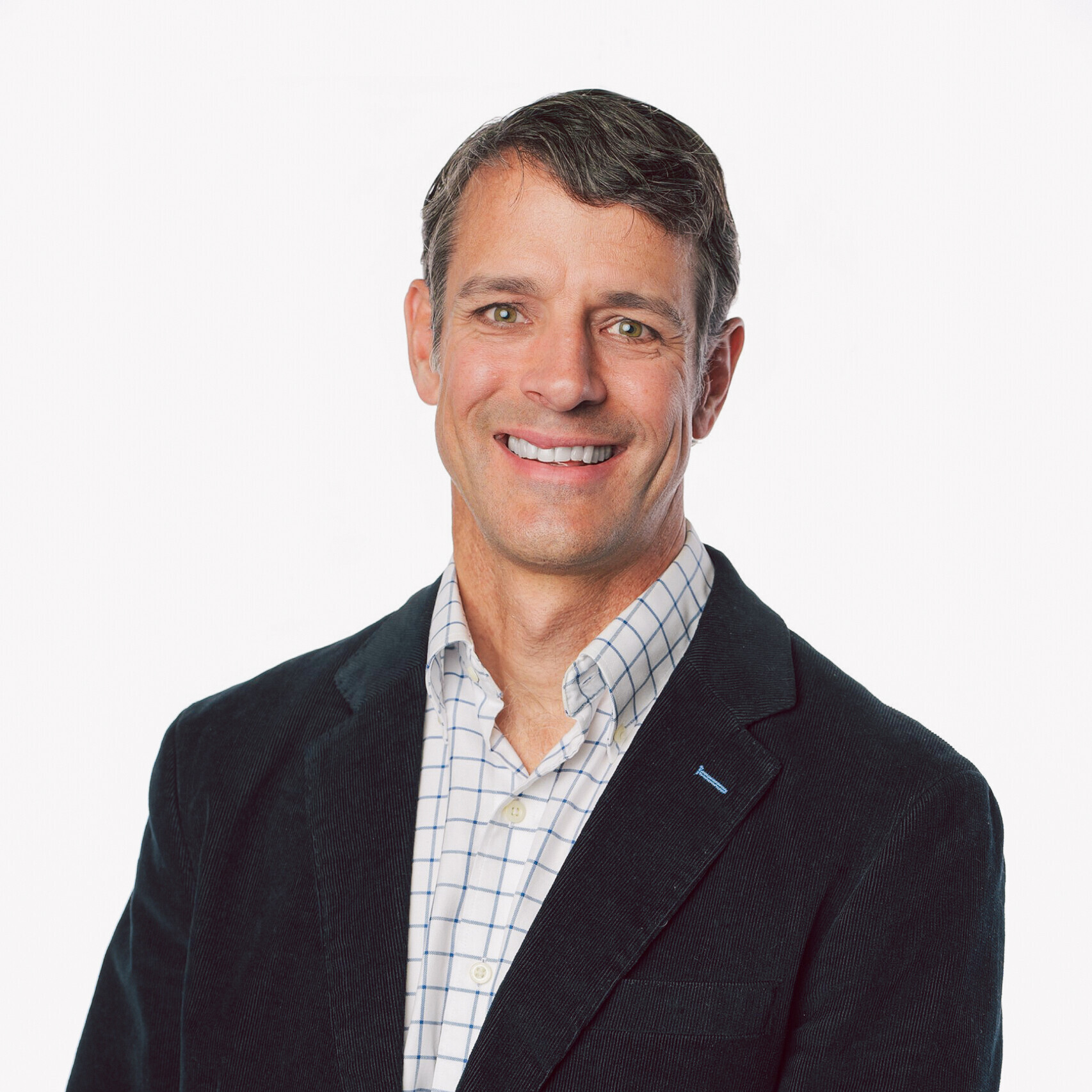
Mason Pashia


0 Comments
Leave a Comment
Your email address will not be published. All fields are required.