

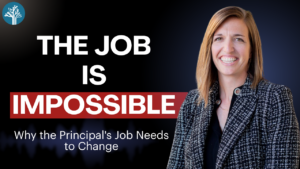
Asaf Bitton and Beth Rabbitt on the State of Health and the Parabola Project
- Screening, distancing, cohorting, hand washing
- Overcommunicate with families and stakeholders
- Testing/tracking/tracing – one of the 9 core principles in the Parabola Project
- This is coordinating and information sharing capacity
- Trust in science and expertise.
- The Parabola Project
- Beth Rabbitt
- Asaf Bitton
- Learning Accelerator
- Ariadne Labs
- Building the Car While We’re Driving It: Lessons Learned and Back-to-School Priorities in Four Districts
- Always Ready For Learning: Meeting the Rapidly Evolving Needs of Educators Throughout COVID-19
Transcript
This transcript has not been edited for spelling accuracy.
You’re listening to the Getting Smart podcast, where we unpack what is new and innovative in education. I’m your host, Jessica, and on this week’s episode, Tom is talking with Dr. Beth Rabbit and Dr. Essoff Bitten about the state of global health, how it relates to schools, and a new initiative called the Parabola Project, which offers education leaders tools and strategies
to minimize health risks while maximizing learning when reopening schools. Dr. Beth Rabbit is CEO of the Learning Accelerator, a national nonprofit that is working to make the potential possible and practical for every teacher and learner. Underpinning TLA’s work is a drive to ensure each student receives an effective, equitable, and engaging education that supports them to reach their full and unique potential.
Dr. Essoff Bitten is executive director of Ariadne Labs, a joint center for health systems innovation at Brigham and Women’s Hospital and the Harvard T.H. Chan School of Public Health. Let’s listen in as Tom talks with these insightful guests about what schools should be doing during the pandemic and what the research shows.
Dr. Beth Rabbit, from the Learning Accelerator, welcome to the Getting Smart podcast. Thanks, Tom. Thanks for having me. We’re joined today by your partner in the Parabola Project, Dr. Essoff Bitten. Welcome to the podcast.
So happy to be here with you. Tell us about your lab. It sits between Brigham and Women’s and the Harvard Chan School. Is that right? Right.
Yeah. So Ariadne Labs is a health systems innovation center. What we try to do is take major issues and problems in healthcare, in childbirth, primary care, surgery, end of life care, and build, test, and scale solutions that bridge the gap between what we know we should be doing in healthcare and what we actually do on a day-to-day
basis. So we’ve been building, testing, and spreading solutions, everything from checklists in the operating room to new ways to visualize data for policy makers, both in the US and in about 26 countries globally. We appreciate the mission of the lab and the practical ways that you’re applying science
to try to improve outcomes nationally. Dr. Beth Rabbit leads the Learning Accelerator. Many of our listeners know that TLA is a national nonprofit. Beth, have you been around for 10 years now? Almost eight.
So we’re coming up on it. And TLA’s really been a national leader in innovations and learning. We’ve launched a number of high-impact projects that have really helped schools and school systems around this country. I was interested to know about seven or eight months ago, Beth, that you really stepped
up very, very quickly when the pandemic launched and helped organize a really terrific response. So you could describe that broadly and then the origin story of the Pradelove project. Yeah, absolutely. So the Learning Accelerator is a national nonprofit. We believe every child in this country should have access to a highly effective, engaging,
and equitable education, an education that lets every kid fulfill their full and unique potential. Our role is to connect educators, teachers, and leaders with the knowledge, tools, and networks they need to make that vision possible. When COVID-19 hit, like so many, we were kind of shocked at the pace and scale of school
closures as well as the myriad problems that educators were suddenly facing. There was a lot that we could learn from innovative school systems that had been exploring technology-enabled, hybrid models. But one of the things that we noticed immediately was just the sheer disruption of support for education leaders, whether they be working in the classroom and now trying to figure
out how to launch remote instruction or at the system level. So we launched three different programs that all sit under a new initiative called Always Ready for Learning. The first is a national coaching network. We brought together 13 organizations from across the country to offer pro bono sustained
coaching to any school leader or district leader in the country. We’re working with almost 150 schools right now in a sustained way with many of the schools and school systems we’re working with actually connecting with the same coaches or teams of coaches for five, six, seven, eight calls over the period of COVID to just figure out how to continue to respond to changing dynamics as well as figure out what resources exist
that they can tap into. The second thing we did was we launched a new initiative called the Strategy Lab made up of seven districts that are all trying to figure out how do we look past the immediate needs in COVID, though certainly they are addressing those, and really start thinking about what would it look like to build more resilient and equitable systems on the whole
and providing them with coaching and strategy support to do that, developing longer term plans that others can learn from. And then the last narrowly aspect of the problem we knew we had to tackle was just that education is faced with a challenge we actually don’t know a ton about. It’s actually, of course, schools have always been places where kids develop in their health.
It has been a place where we have provided essential supports to kids to keep not just their minds but their bodies whole. But in terms of figuring out coherent responses to the pandemic, figuring out safer ways to approach reopening, how to understand risk, we really lack the knowledge and expertise we need to do that.
And so we thought there was an opportunity to actually work in much deeper partnership with the healthcare sector to do that. Through that work and with the support of the One-Eight Foundation, we were connected with Ariadne Labs and for the last seven months, eight months, have been working just side by side trying to begin to untangle the problem, but more importantly, put meaningful, actionable
guidance and tools in the hands of school leaders and system leaders so that they can make informed choices and begin to implement as they reopen, if they choose to reopen, in ways that minimize risk while actually still maximizing learning. And that’s actually the origin of the Parabla project as a name for the work, in terms of focusing on the nerdy math of the curves, but also as a soft likes to point out, every
Parabla has a focal point. And for us, it’s about delivering the best we possibly can for kids during a really challenging time. Well, we are talking at a really challenging time, a time when many schools around, you know, the country were getting ready to open back up.
Many of them had opened, promoted and had scheduled to go back in person around now. And what when cases are spiking around the country. And so I guess I’ll cut to the chase, Dr. Bitton. Should kids be in school right now? Most kids should probably be in school right now.
Now, you know, because I’m a doctor and a public health guy, there’s always going to be, it’s complicated because it is complicated. But I think that we’re buttressed by the fact that there are a couple of things going on. Number one, we know that there’s a playbook of public health strategies that when followed well, and we’ve been working on that at the Parabla project and with, you know, many other
state and local and federal officials, there’s a good playbook. It’s evidence based. And when followed, it really reduces transmission. The preponderance of evidence across the U.S. and the world is that schools are not a nidus for infection in communities, especially when they follow the playbook.
And that kids, for the most part, are at lower risk of transmission and severe infection than adults are. So because there’s a playbook, because there’s a risk differential and because there is such a value in so many ways, not just health, but in social emotional learning and socialization, mental health, community perspectives to kids being in school, barring out of control transmission, which does exist in some communities across the U.S.,
and barring not following what is now clear public health guidance on best practices. You know, the majority of communities in my mind can have their schools stay open. Thank you for that. It does seem safer to have kids in school in a well-disciplined school, taking safety precautions than to have them having them out in the community. What about staff members? Dr. Bitten, can we do enough to adequately
safeguard staff members in a physical school setting? You know, again, I think that the very short answer is yes, most of the time. There are staff members who have sets of chronic conditions and reasons that it might be prohibitively risky for them to be in school. But I would say that most staff members, like other workers, like other essential workers, to be honest with you, can and will, if given masks distancing good ventilation
practices, safely go about the business of doing their job in an effective manner. And it’s, you know, as a healthcare worker myself, you know, I don’t preach what I don’t follow. You know, I have to go to work in my clinic, in my hospital, when called on. You know, it would be, frankly, against my self-interest to go into situations which were unsafe. And, you know, we’ve managed in the healthcare system to generally make it extremely safe to deal with a lot higher risk of COVID
than most teachers are going to face, the same in other essential parts of our workforce. So I think, again, following a playbook, having protocols in place, understanding that there are going to be some exceptions, but then, you know, really moving along in a format that says we have to rise up to this moment as a workforce for our communities and our kids and do this important work is my perspective. Dr. Bitton, I was on the phone this morning with an urban superintendent,
predominantly African American, both teaching core and student body. Their concern was they believed that they could run a safe program at school. They were actually worried about ancillary transmission when kids go home to grandparents, extended family members, caregivers. What about that extended circle that are interacting with both teachers and students in a school environment? The infectious disease dynamics would always
say that more circles of interaction do confer some risk. The question is what kind of risk and what’s the baseline community transmission level? So, you know, what we do know is that schools in which kids are wearing masks 100% of the time or as close to 100% of the time as possible, in which there are at least some routes made toward better ventilation in which cohorting occurs, in which distancing is respected, they’re highly unlikely to be major sources of transmission
to augment that transmission that’s already occurring in a community. Now, there are going to some communities that already have transmission rates that are at levels that make it not safe or sustainable for schools to happen in person temporarily. And everybody wants to know what is that magic level? And I don’t have that answer. It has to do with the rise of infections. It has to do with the underlying density of communities and socioeconomic factors and other factors that
make this disease exquisitely target inequities in our society and make those who can at least afford to suffer suffer more. And I am, as a provider who takes care of a population in an urban community exquisitely sensitive and aware of that. So, this cannot be a one-size-fit-all, fins-all sort of prescription here. But again, we have to come back to also what the science is teaching us, which is that barring a few situations in which protocols have not been followed and
barring, you know, massive overwhelming community-level transmission, schools are not where the majority of community transmission is happening. That’s happening mostly in people’s houses, in people’s social environments in which distancing and masks aren’t respected, and in indoor settings like bars and restaurants in which people are taking their masks off and on. Yeah, and I think, Tom, to piggy back there when we’re talking about the inequities of this situation, what we’ve learned working
with the READ&E teams, and it’s been such an amazing experience to get to hear from them every week, is that there are meaningful practices we can put in place in schools, screening, distancing, washing our hands, wearing masks, that cohorting, that dramatically improve our chances of decreasing transmission. And it’s the choices that we have to be making both in school but also in the compact outside of school, as parents, as community members, that really matter here to keeping schools safe.
And if we don’t do that, we have to also acknowledge that we are shutting down vital opportunities for kids for whom they don’t have an option outside of school. I live here in a large district in New England. They don’t have devices for remote learning right now for kids below the grade seven. Kids who are not going to school are not making any meaningful connections with peers or teachers, and there are, if they are at least a hybrid model, only getting two days a week of instruction.
That’s the calculus we have to begin to consider when we think about risk and behaviors in school, but also importantly, behaviors out of school. Beth, let me ask you a tough political question. One of the things that I sense from the system heads that I was on the phone with this morning is the tension between their interest groups. I think they understand the advice from Dr. Bitten that in a safely run school, kids are safe, that they’re safe being there and they’re not likely to
spread the disease. But most superintendents are feeling pressure from their teachers who are really concerned about going back to school. There’s this tension between parents that want kids in school and teacher groups that are concerned about going back to school. Do you have advice on how can a superintendent frame a community dialogue to help make the right decision for those different interest groups? Yeah, that’s a terrific question.
And I will note that the interest within those groups we’ve actually seen data can be strikingly different depending on folks’ experiences in public education, their experiences with racial injustice. So I want to be careful not to paint with too broad a brush, but I think the biggest lesson we have heard from schools and systems that have reopened well is that that creation of the dialogue, the over, we heard that someone say
obnoxious over communication is a critical step for any school leader or superintendent this moment. We heard from one school system who was early reopening in South Africa over the summer and they said one of the instincts you have as a school leader is to protect your staff and your families from the churn of information and the context for decision making. And so there’s sort of something we all learn as education leaders, which is sort of smooth out the bumps
and like communicate only when necessary. And the opposite is true in this situation. Over communication, explaining changes in policy, clearly explaining the why behind reasoning, creating opportunities for bi-directional communication, and really importantly with teachers bringing them into planning early as partners and figuring out how to get the work done well has been incredibly critical. And I think a lot of school districts, particularly for
teachers and for families, it’s been felt mostly as you’re the last person to receive the information and it’s really tough to trust it when you’re in that position versus in schools and systems where there was a superintendent in Kootenai Washington that we profiled who said I had Zoom meetings once a week for an hour and a half with every single staff member on, you know, in our district. I had Zoom meetings for parents. We reached out. We had conversation. Importantly,
we said when we didn’t know something yet. And those types of communications, I think, increase trust and increase partnership as opposed to perhaps what we’re all trying to do, which is to be more quiet and wait till we have the absolute answer. Dr. Bitten, Beth mentioned some of the things that are really essential for schools to do well. We haven’t talked about testing, tracking and tracing. Is that something that
schools should be paying attention to? Absolutely. You know, it’s actually one of the core principles of which there are nine in the parabola projects work. You know, testing and tracing has to be part of the remit of a school and a district’s plan. But there’s a nuance there. People hear the word test and some people say that means I’ve got to have the capability to test my students once a
week. And that’s actually not what we’re saying. What we’re saying is really coordinating capacity and information sharing capacity, a capacity to understand that if and when you get your first case of COVID-19 in your school community, that you have a plan both as Beth articulated communication wise, but also you’ve got the trust and the interlinked protocols with your local health board, public health agency that says, okay, how do I initiate contact tracing? How do I get
the people who were exposed to quarantine and give them a route to get accessible, affordable, timely testing? So, you know, a test is worthless if it’s a week from the point of contact and takes another week to come back. And that’s what was happening in the spring. Now, luckily in most parts of the country, that’s not the barrier, although it’s still not always easy enough to get a test. But it’s important to get that timely, actionable test and those results fed back
so that schools and the communities can make good choices and then to track the individuals who might have been exposed so that they can make the right choices to keep them and their families safe. We totally appreciate the work that you’ve been doing in support of school districts around the country. But Dr. Bitten, I’d have to say that on behalf of school system heads, I’m really disappointed at the public health response in America. It seems haphazard and patchwork,
ranging from effective in some places to non-existent in others. When you look at the data, it looks like we’ve failed as a country in terms of our public health response. What should we be doing better? And do you see things getting better in the next few months in terms of coordinated public health response? It’s a great question and it’s time to put everything on the table here. I’ve been doing public health globally and in the US for over 20 years. And I can tell you that
this has been a public health failure. Rule numbers one and two of public health responses to pandemics or to challenges like this. Rule number one is coordination and information sharing. Rule number two is to trust in science and expertise to augment the ability to coordinate a unified policy because the virus that we face doesn’t give a darn about what our political divisions are. It’s actually perfectly delighted to exploit whatever inadequacies in response may be
caused by political schisms in this country. And when we as a society made the choice overtly or not to politicize what is a biological and epidemiological phenomenon, you can see the catastrophic results. And there is a difference between countries that have taken a coordinated robust whole of society integrated response and seen economic and health derivation and responses. It’s interlinked, not oppositional, and have believed and trusted in science scientists,
physicians and public health experts. They have experienced a very different road than we have. And I’m very sorry that we’ve had to see the counter of that, the opposite of that in the U.S. and its impact on amongst many parts of our society on schools because schools already have enough challenges. And to put this one on them has been so difficult. And so, yes, I am hopeful in the next three to four to five months, we are going to see a very different
set of coordinated, scientifically based responses that actually, and we can take hope in this, build off of a playbook. There is a public health playbook here. We know what we need to do. We have developed effective treatments. We’re developing effective vaccines. We need to enlist everyone on board with these basic strategies, depoliticize them to the extent possible, and get our communities back into the business of doing business, going to school, and going about their daily life.
We deeply appreciate the work that you’ve been doing this year on that front. Beth, let’s get super practical. What are you telling schools about sports? What are we telling schools about sports? Well, our opinion based upon what we’ve learned from the READ&E team as well as others in the sector is that close contact is a bad thing. Shouting, yelling is a bad thing. Being outdoors are good things. Being masked is good things.
It’s really tough. I have a five-year-old and a seven-year-old right now enrolled in public school, and it is a question for me about what do we do about their physical health, because it’s certainly not hanging out while my husband and I are working with screen time. And it’s painful as a parent to say no to things that feel like the norm, but the reality is that any extracurricular that is not necessary that may increase risks of transmission
is not helpful, particularly when communities are experiencing already increases in transmission. Now, every community and every parent has to make their decision, but I think schools should definitely do their best to encourage those behaviors that we know are safest. And there are opportunities here for us to innovate as a sector and to think about how do we engage students in different ways that allow them to engage with one another, to develop, to create, to move their
bodies, but in safer ways. I think we’ve seen tons of amazing educators doing that, coral over Zoom, the sudden uptick of archery as a sport in schools. I mean, we’re seeing this, and I think it’s possible. And I think we have to be patient, understanding and creative to the extent possible. And there are a lot of opportunities for creation, creativity right now. Those are good guidelines for right now. I appreciate that. Beth, if a school or a district
doesn’t really have room to bring all their kids back in a safe and distance way is a hybrid schedule where kids are at school two or three days a week still the best approach? What are you seeing there? So I think that there is a question around which schedules are best for which students under which paradigms, right? So the most of the schools that we see going back to not have physical capacity nor staffing capacity to serve all students in a socially distanced way at once.
We are seeing some schools get really creative with the use of space and staffing to figure that out. But for most schools, it is a hybrid schedule. One of the things we like to say is hybrid is a context, not a learning model. And so there have to be meaningful differences between how kids are working remotely and what they’re doing in school. And we know this from actually the learning science around online learning and in-person learning. They’re not interchangeable.
We can’t just have kids zooming in. But importantly, I’d also note that this depends developmentally on where kids are and how well they can be self-directed in their learning, what supports they know need. We know our youngest learners actually need a lot of synchronous support for learning phonics, for exploring together, for using their bodies versus high school students. We could be thinking a little bit more creatively about hybrid learning models. I would argue having
them come in for the most important work such as advising, wet labs, maker spaces, and actually thinking more creatively about how to use their time in places outside of school. We unfortunately haven’t seen a ton of that happening. But I think that’s something that school districts should consider exploring for kids in upper grades. Dr. Bitten, we’re at a difficult time in a number of respects, not just a health crisis, but in many respects a political crisis, a crisis of
polarization, where we have very different views of reality. I wonder if, from a public health standpoint, if you have advice for local health officials and school officials on how they can build a sense of trust about the path forward in terms of precautions, protocols, vaccination strategies, how can we at a local level get people on the same page and acting in a collective action in ways that are really productive?
I mean, all that you say is true. This is a moment in which the temperature is so high across the nation. And what I suggest, particular for local leaders, is to first of all, focus on that trust dividend and that trust quotient. Trust is where we are trying, what we are trying to build in order to together move toward any of our other shared goals. We cannot do it without trust. And so first is that realization that they’re in the trust game and trust building game.
And second, in order to build trust, trust requires deep empathy. It requires deep awareness and a non-judgmental take on how we approach problems that incite high passions on all sides of the political spectrum. If you want to take an issue like vaccines, I don’t talk about vaccines and people who have a lack of trust in vaccines as anti-vaxxers. I don’t believe that labels that pejoratively segment people into one group or the other are
useful in our common effort. And that’s what is really important on the third point, that the empathic leadership that’s required to de-label and to decrease the temperature then requires us to basically restate, and Beth said this earlier, that we are in a social compact together. And right now, we need to triage our way through this mess, this morass, to recreate a new social compact in which the opposing factions are so angry at each other, in which every seemingly reasonable
community effort gets politicized. We need to have a moment in which we say we respect, we deeply understand the concerns on all sides. And in order for us to get across this narrow bridge, we have to agree on a couple of common basic facts. The fact that we’re all in this together, the virus exploits our differences and will pick us apart if we do not take it seriously enough. And that we can respect each other’s differences, but disagree and then commit,
disagreeing and then commit to working together, whether it’s in schools, it’s on public health issues, or it’s on the other critical issues that we face, not so that we all of a sudden have a magical playland in which everyone thinks similarly about politics and everything else, but because we are facing our stiffest challenge as a nation since perhaps World War II. It is that bad. And if you don’t believe it, just talk to anybody in healthcare and they will tell you right
now is feeling even worse than the spring. And the spring was very bad. And the only way out of this is to work together to disagree and then commit to respect for each other, to understand that there are going to be differences, but that everyone’s going to have to give something in the common effort for the common good in order for us to emerge relatively less scathe on the other side. Beth, in speaking of things getting bad, it’s looking to me like we’re
in the middle of an education disaster. There’s millions of kids that are disconnected, tens of millions of kids that are now six or 12 months behind what we’ve considered normal progress. I guess how should school and system leaders think about these gaps that appear to be accelerating, particularly for our most vulnerable kids? What kinds of advice are you giving or formulating on that front? You paint such an optimistic picture, Tom. I mean, we all feel it.
This is a disaster. And I think that I have, first off, a huge amount of empathy and a huge amount of just humility around the challenges our education leaders are facing and teachers are facing and how hard this work is. So I don’t want to offer any of what I’ll say next as easy. The first is, we’ve won, we’ve got to look at our inequities first. The fact that we are nine months into this and we still have not provided every student in this country with access to learning at least at a
remote level is a travesty. And that’s something that I hope that we can continue to act on to together. And I’m hoping folks in positions of power can really look at and help resolve. The second thing is we have to focus on connection, both literal, like the internet connection, but also the metaphorical, can disconnection that students are experiencing between each other, between their teachers and their disconnection from the feeling of why does this even matter?
It’s a tough year to be a senior in high school pushing through with so much uncertainty. So we’ve got to reconnect in the many ways and in every way possible. And part of that will require freeing teachers and leaders and students from working in kind of calcified ways and exploiting the many other ways that we can offer connection through technology, but also frankly through having advisory periods outside at school, for example, even if we’re not offering full day
options. And then the last thing is like, we just got to do the next right thing as educators. It’s just about saying, okay, what is the one step forward that we can take in this moment? How do we come together around it? You know, I really, I really love a soft notion around commitment. What is what we are going to commit to? And let’s just get it done. And from there, we will figure it out next because our children and our communities demand nothing less than us
continuing to committing to forward action, particularly as it relates to closing equity, but also in keeping our students engaged. Now, what I love to be able to say, and yes, let’s figure out how to accelerate six months of learning loss of, you know, in three months, that’s going to take a lot of innovation, a lot of commitment and frankly, a commitment to finding resources and places we’re not used to. At the Prabbo Project,
we’ve talked a lot about what should the role of summer schooling be next year, particularly given the dynamics we know about the virus. So I think we’re just going to have to think creatively, but we cannot let this moment petrify us to the point where we don’t take action for kids and for families. It’s great advice. And we know with a name like the learning accelerator that you and your team are going to be at the middle of helping America sort of create a new path forward.
Dr. Benton, maybe we can close with some holiday advice. We’re moving into the holiday season. Lots of people had plans to celebrate with friends and family. What should we keep in mind in the coming months? We’re almost every state in the Union is in the thick of things right now. And, you know, when we’re in such a tough time across our communities, we need to all do our part. And
doing our part means making ourselves a little less comfortable, a little foregoing. Some things that we usually like to do. So, you know, in-person gatherings for the holidays are just not a good idea. You know, there’s just not an easy or safe way to do them. Many parts of our country are swathed in cold right now. If you’re lucky enough to not be in the cold, then be outside widely distanced and don’t share utensils. But if you’re in the cold,
then this might be the year for the Zoom giving or the, you know, Christmas Hanukkah, Kwanzaa on Zoom. And that feels rotten. I mean, that stinks. And I get that. But I also want people to know, and this is, you know, for your listeners in education space, you know, from us in healthcare, we’re barely hanging on. We are triaging things that we shouldn’t frankly be triaging. We are not doing, you know, procedures and doing all the things that we should be doing because our hospitals are
now filled with COVID. And if people really want to contribute, if they believe that healthcare folks are important and they want to help the cause, then they can do what they can to help the cause by making themselves a little less convenient, happy, and satisfied by just taking one for the team this year and not having those in-person gatherings that’ll just keep filling up our hospitals later next month. Yeah, Dr. Asaf Bitten is the director of the
Tarionty Center. We really appreciate your work this year in the middle of a crisis. You’ve really benefited America’s school kids and families. So thanks for the practical, collaborative, tireless work that you and your team have been putting forward. Beth, where can people learn more about the Parabola Project and your work? Yeah, the easiest place to go is parabolaproject.org. And that’s all one word with the org on the end. And that will also send you over to some of the
other resources that are available at alwaysreadyforlearning.org, which is where you can find a lot of different resources on remote learning, places and people to turn to for free support, and as well as a whole bunch of just general resources on how to move forward. So thank you so much for the opportunity to share more about the work. Beth, thanks for your contribution this year. You guys mobilized in a hurry with great partners like Ariande. And you’ve just been doing terrific work
on behalf of schools and school districts. And lots of us appreciate it. Thanks for being on the podcast. Thank you. Thank you so much for all your doing, Titha Tom. A big thanks to Beth and Asaf for joining us this week. We appreciate their essential work and leadership in helping us navigate the unknown. That’s it for today, listeners. Thanks for tuning in and be sure to check out all the insightful resources at alwaysreadyforlearning.org. For the Getting Smart
podcast, this is Jessica, signing off.
0 Comments
Leave a Comment
Your email address will not be published. All fields are required.