

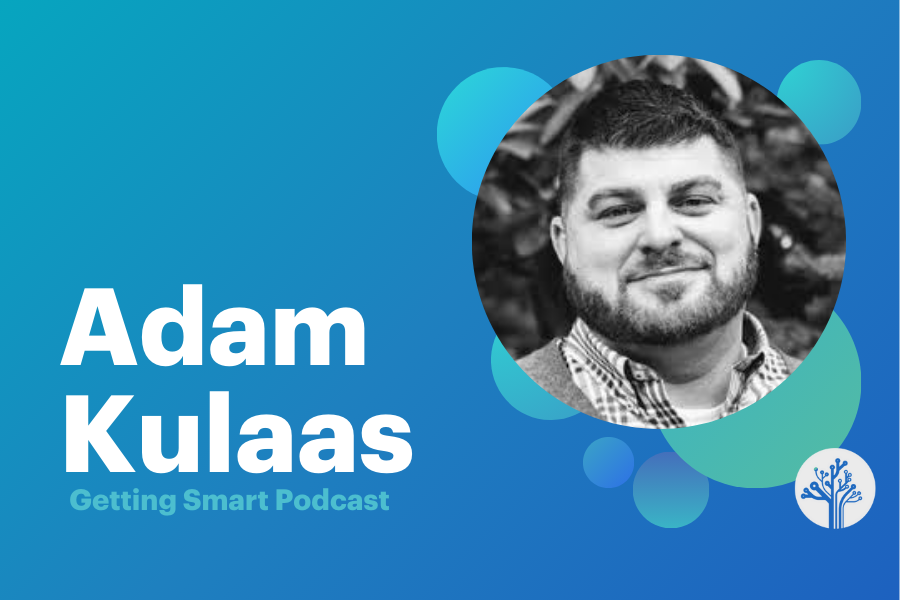
Adam Kulaas on Tacoma Public Schools Being a City-Connected, Career-Connected District
Key Points
-
Tacoma Public Schools has effectively integrated college and career readiness into a unified pathway that emphasizes life readiness. This innovative approach empowers students to focus on current engagement while preparing for future opportunities through practical, real-world applications and partnerships.
-
The district’s commitment to expanding and personalizing education through dual-credit opportunities, community partnerships, and a broad range of pathways ensures students are prepared for high-wage employment and lifelong learning, contributing to a more equitable and accessible education system.
Shownotes



In this episode of the Getting Smart Podcast, Tom Vander Ark explores the innovative educational approaches of Tacoma Public Schools, highlighting their commitment to integrating college and career readiness into a unified pathway. Partnering with Tacoma, Tom speaks with Adam Kulaas, Director of Innovative Learning, who shares insights on how the district is empowering students for life readiness. The focus is on engaging learners in meaningful work today while preparing them for future opportunities through practical, real-world applications. This approach is not just about bridging the gap between education and industry but fostering a mindset that values both the “now” and “next” stages of a student’s journey.
The conversation also explores Tacoma’s strategic partnerships and the diverse pathways available to students, such as the Jobs 253 program and dual-credit opportunities. These partnerships, including collaborations with local industries and educational institutions, are key to providing students with hands-on experiences and credentials that are relevant to the current job market. Tacoma’s approach embodies an asset-based model of education, where existing resources are leveraged to create robust, personalized learning experiences. This episode serves as an inspiring example of how intentional pathways can transform education, ensuring all students have access to high-wage employment and lifelong learning opportunities.

Discover the latest in learning innovations
Sign up for our weekly newsletter.
Outline
- (00:00) Introduction to New Pathways
- (00:29) Tacoma Public Schools’ Innovative Learning
- (02:07) Life Readiness and Career Tech Education
- (08:51) Comprehensive High Schools and Pathways
- (17:46) Future Projects and Community Partnerships
Introduction to New Pathways
Tom Vander Ark: New Pathways link young people to opportunity. They’re purposeful, applied, well-supported, and often accelerated. You’re listening to the Getting Smart Podcast, and I’m Tom Vander Ark. Today, we’re talking about New Pathways, particularly New Pathways in Tacoma Public Schools.
Tacoma Public Schools’ Innovative Learning
Tom Vander Ark: We partnered with Tacoma on a New Pathways convening last October and invited our friend, Adam Kulaas, the Director of Innovative Learning, to come back and give us an update. Adam, welcome.
Adam Kulaas: Thanks for having me.
Tom Vander Ark: There are so many cool things happening in Tacoma. It’s a very exciting time. I think you’re now in your fifth year back in Tacoma, right?
Adam Kulaas: Yep, year five.
Tom Vander Ark: Adam, we should disclose that we’ve got about a 25-year relationship. I still appreciate the work you did as my daughter’s pathway advisor back at Todd Beamer High School in Federal Way.
Adam Kulaas: Yeah, it’s been super fun watching her continue to blaze trails.
Tom Vander Ark: I think you were the first one to let her know she could be an entrepreneur, Adam.
Adam Kulaas: You’re welcome.
Tom Vander Ark: She’s still dreaming big, and I think you gave her the bug. Adam and I have had many chapters in our pathway relationship, and it’s been a real joy to watch the work you’re leading in Tacoma with Josh Garcia, the superintendent there.
The exciting headline about Tacoma’s work is that, historically, we’ve thought about a college track and a career and technical education track. Over the last couple of years, especially the last two, you’ve really fused those together into a college and career readiness pathway.
Life Readiness and Career Tech Education
Tom Vander Ark: You talk about this commitment where each learner is empowered for life readiness, focused on their “now,” while partnering to design their “next” phase in living and learning beyond the diploma. That’s beautifully stated. I’d love for you to unpack that idea of life readiness. What does it mean to help kids think about their now and their next?
Adam Kulaas: Yeah, it’s been an exciting journey going on three years now. I had the opportunity to transition after spending some time building out infrastructure for our digital learning platform and other systems. I was fortunate to move into Tacoma’s Career Tech Ed world, which has an incredibly talented staff.
It’s a big district, and it’s been exciting to offer students a variety of relevant, industry-recognized credentials and dual-credit opportunities through articulations with many post-diploma providers. The work revolves around the concept of continuums—thinking about the “now,” “next,” and how everything we do for learners today impacts their future.
We’ve been intentional about building pathways, leveraging successful components to create holistic, student-centered designs. Words always matter to me, and the more intentional we can be in maximizing partnerships, the clearer and more relevant these pathways become.
Tom Vander Ark: Adam, I appreciate the focus on “now” and “next.” It resonates because of your interest in learner experience. You’ve significantly improved how you engage learners across schools. This approach shifts the perspective from focusing solely on long-term goals, like college readiness, to ensuring students are engaged in meaningful work today while linking it to their future. Is that part of it?
Adam Kulaas: Absolutely. One of Tacoma’s standout strengths is its intentional partnerships. Tacoma is an urban district with 28,000 beautifully diverse students. Our partnerships enable us to create programming that allows students to apply what they learn in hands-on, real-world experiences. Whether it’s our Jobs 253 program or credentialed summer opportunities, we continuously expand pathways based on local assets and relationships.
Tom Vander Ark: The city of Tacoma has been a real partner in Jobs 253, right?
Adam Kulaas: One hundred percent. We’re entering year 13 of that partnership. It’s a program that wouldn’t happen without the city’s support.
Tom Vander Ark: Tacoma has been nationally recognized as a whole-child district for over a decade, particularly for K–8. Are you extending that approach into high school and beyond?
Adam Kulaas: Absolutely. We’re incredibly proud of our whole-child initiative, which serves as a launch pad for developmentally appropriate advanced skills. This includes exploring future career options with a “what if” or “yes, and” mindset. Personalization is key—we aim to give students access to diverse opportunities now rather than waiting until later.
We’ve also begun developing competencies around 21st-century leadership skills. While I’m not a fan of the title, these skills are grounded in whole-learner development. The goal is to create a continuum that spans early childhood through adulthood.
Comprehensive High Schools and Pathways
Tom Vander Ark: Let’s talk about the bulkier high school population, which is in some large comprehensive high schools. I will note that they’re some of the most beautiful schools in the country—a really cool mixture of classic architecture that’s been tastefully updated and some spectacular new buildings. Your community has really supported you in a beautiful way. So, what’s happening in those comprehensive high schools in terms of pathways?
Adam Kulaas: Yeah, I think it’s been really exciting to watch across the board. Like you said, it’s almost from a design perspective. It’s very intentional in terms of a “one size fits all if you create enough sizes” approach. Everything from—and I agree, I love the aesthetics of our learning spaces—everything from Stadium High School, which has a reputation nationally for its historical aspects, to some of our newer builds that are really intentional around learner experience and catering to the individual students that attend.
I think from a pathway standpoint, it’s been really exciting to double down on assets, right? And from a design standpoint, I always travel through this sort of MAPS process, right? So it’s mindset, assets, practice, and then systems. And a lot of times, we put systems at the front end, where I would argue that they belong at the end.
So, it actually travels through that progression. From a mindset side, it’s getting folks on the same page, right, around youth. And then we spend a lot of time really looking at the assets. Lincoln High—I love to talk about Lincoln High School, right? We have shops that, in terms of a physical footprint, aren’t often able to pull off in kind of new builds, whether it’s just sheer physical size and things like that. And so to walk through our construction trades or our manufacturing welding programs is really exciting because, aesthetically, the shops have been there for a long time. But the magic, once inside, is absolutely a community asset.
And then we can travel to the other side of the spectrum in terms of our Science and Math Institute, which is a partnered building within our local zoo. And the aesthetics are well-balanced with the base location of the portables. But this environmental learning center is just this beautiful space that’s rich in not only the aesthetics but the actual application of learning. And so you have, like, we added a vet science program to maximize the asset that is having a school within a zoo, and it’s just taken off like wildfire.
And so it’s been fun to be really intentional school by school and looking at that. I could go on for days. Like, I look at Mount Tahoma’s auto tech program and a really rich partnership with the local car dealer that covers just about every brand. And so they’re delivering the Ford ASSET program for the second year, and kids walked away with Ford curriculum modules, basically over 700 certificates attained last year, with a target of 1,000 this year.
So, really looking school by school and doubling down on not only physical assets but then there’s the human side, right? So we have—I’ll say it a thousand times—we have a lot of talent. And when you marry those two, then the human side of the house really takes off and can thrive.
Tom Vander Ark: Adam, you might remember when we worked together 25 years ago, one of the first things I did as a superintendent was I closed a bunch of the shops and auto programs, assuming those were dead ends. And it’s really exciting to see that Tacoma not only kept those programs but has really done a great job of updating them. They really are world-class programs today that are accelerated, supported, and applied pathways to high-wage employment very quickly after high school. Talk about the health careers that you have at several schools, but Mount Tahoma has an updated health careers path. What’s new there?
Adam Kulaas: Yeah, I think for us, in terms of our HCA program, it continues to just create access, once again, back to this personalization piece, right? So, whether it’s CNA or whether it’s LPN or whether this last summer we brought in this home care aide certificate, we’re just continuing to expand basically access for students because there are so many varied pathways in terms of healthcare. And talk about in-demand.
I think that’s the other continuous piece: really leaning into data and really leaning into our industry partners. Workforce Central is an overarching kind of consortium that serves all of our county. And so it’s been fun to be really intentional with growing lanes that we know are in demand, livable family, livable-wage jobs. Health Career Academy at Mount Tahoma has been amazing. Stadium High School is starting to take off. We’re looking at scaling to multiple schools, full circle back to the partnership side.
So, MultiCare has a health center at Mount Tahoma High School, a beautiful facility. We’re opening additional ones. We have a brand-new build for Oakland High School, one of our alternative programs—they’ll have a clinic there. Lincoln High School is about finalizing their space. We’ll launch a health care center there also.
So, it’s this inside-out scenario where, yes, we’re prepping kids, but it’s been fun and exciting to bring in partnership in the actual building, where students get to go and travel through a full-on working clinic.
Tom Vander Ark: You’ve mentioned a couple of pathways that include dual-credit opportunities. Talk more about the acceleration opportunities and your community college partners.
Adam Kulaas: Yeah, I think the exciting part around dual credit is, once again, it’s—sorry to sound like a broken record—but it’s intentionality. And so if a student can travel through a three- or four-year progression in terms of this pathway, then we can help them make an informed, empowered decision to gather credits in each of those classes with one of our post-secondary institutions.
Then they can physically walk across the stage and into one of those post-diploma institutions, whether it’s a technical school or a community college, and be halfway to an A.A. or an A.S. degree in some of these different programs. That’s been fun—a gift in terms of just access. But we’ve also gone the other direction and been really intentional with some of our programs to go out and seek, within our state and the I-5 corridor in our region, the strongest programs.
Getting feedback from our instructors has been fun, and also just building partnerships with the schools. So, we’re up to—we have seven different articulation partners and are continuously exploring more as we build out new pathways. That’s important, too, being really intentional with that.
Future Projects and Community Partnerships
Tom Vander Ark: I want to go back to one of your partner schools. We talked about SAMI, the school at the zoo. That’s a must-visit for everybody. SOTA is the School of the Arts downtown. And the most recent one is IDEA, the industrial design school. Did I hear right that they’re working with Project Lead the Way on their design pathway?
Adam Kulaas: Yeah, they’re diving into the Project Lead the Way work, which has been exciting. I think IDEA really—all three schools embrace a lot of the same kind of learning philosophies and practices. But it’s been exciting to watch IDEA really double down on this sort of interdisciplinary approach, with a lot of co-teaching in terms of taking what would be a traditional academic class and partnering with one of our innovative pathways and really bringing that part to life.
And Project Lead the Way has been a nice layer over the top in terms of just the instructional growth and the framing. It’s tried and true. Historically, I’ve worked in some schools that were really strong. I did a stint at Decatur High School in Federal Way, and it was exciting to watch that aerospace program.
And yeah, they’re diving in. I was just having a conversation with one of the co-directors over there, and they’re extremely optimistic about being a positive enhancement to the work they’re doing.
Tom Vander Ark: So, just to review, this is a very cool pathway portfolio that we’re talking about. We’ve discussed a layer of comprehensive high schools that each have unique pathways to ensure students have access to key pathways spread around the city. Then you’ve got these partnership schools that take advantage of local assets, adding another dimension.
Another layer to your pathway portfolio is Tacoma Online and Tacoma Flex, the online schools that you’ve led, adding course choice for kids in Tacoma and now, I think, around the state. Is that right?
Adam Kulaas: Yeah, we’re working on the external expansion. But yeah, internally, the Tacoma Flex program has been fun because, at this point structurally or by design, every high school student and middle school student has access to Flex courses. So, it might be an offering that doesn’t exist in their traditional or comprehensive brick-and-mortar school, and they can access that through Flex.
Tom Vander Ark: Let’s talk about your most recent project that you’ve been working on for the last three years. This is the new skill center down on the tide flats. I think you call it Maritime 253—253 is the area code, by the way, hence Jobs 253 and Maritime 253. I just read today, Adam, that you’re going to start serving students next year, and the building opens in 2026. Is that about right?
Adam Kulaas: Yep, 2026. It’s a really dynamic partnership with the Port of Tacoma, which has been phenomenal at every step in terms of this state-of-the-art campus. They’re actually moving their operational and administrative offices to the same campus.
Tom Vander Ark: A little bit like the zoo and SAMI, where you have that benefit of being in the same building. That’s exciting. What are the pathways going to be there?
Adam Kulaas: So, right now, it’s fun because this is the year of program building. But we’ve highlighted transportation logistics. It’ll have a full manufacturing fab lab. We’re getting the mechatronics program there under this umbrella of maritime technologies. It’ll have full robotics and ROV unmanned vehicles.
We’re doing a cyber stack because it’s land, sea, and air, which is the fun part of the skill center. And so, we’re excited about that. It’s been rich from a learning standpoint because our different pathway advisors work on all of these projects. But specifically, maritime—it’s a huge asset. We have a global port in our backyard.
It’s been really exciting to travel through all the prep work for program design and the countless vendors in terms of tech integration around simulators. It’s a totally new world for me, but it’s been enriching in terms of truly how we infuse tech to amplify the opportunity. It will serve 14 districts from around South Puget Sound and Pierce County. And so, that’s exciting, too—it’s not just a Tacoma venture but one that’s good for the entire sound.
Tom Vander Ark: I imagine in terms of infusing technology, it’s a timely horizon to be opening a center. You have both the rise of AI and the rise of sustainability tech. All the pathways you described increasingly incorporate AI and robotics, but they’re also increasingly mindful of sustainability. I imagine those are well incorporated into how you’re thinking about these pathways, right?
Adam Kulaas: A hundred percent. Yeah. I think, as you and I used to—and still do—talk a lot about, it’s about the rate of change. It’s not like when the internet hit the scene, and we had plenty of time, with training wheels, to adjust. The rate of change now is scary and exciting at the same time.
So, we lean into the exciting part and focus on preparing kids to use it for good, to use it for better. That requires intentionality in infusing it into programming. Holistically, as a district, it’s been fun to pull together efforts with our CTO and ed-tech team to pilot different initiatives, not just in our online schools but also in our brick-and-mortar schools, to see what works from a learner’s perspective.
Tom Vander Ark: Adam, you also have a couple of schools that serve kids with special needs, with exceptional needs. I think you’re also in the middle of updating and reformatting a couple of those. Is that another part of the portfolio picture?
Adam Kulaas: Yeah, we have our community-based transition program, and it’s exciting because, once again, it’s not a siloed lane. It’s infused in all of our work. In terms of our Career Tech Ed team, we’re integrated in that. There are rich job experiences for our 18- to 22-year-old population of students with disabilities. So, that’s been exciting.
We also serve Raymond Hall, which is our county youth detention center. It’s been really fun to maximize our learning and growth in terms of digital integration with high-quality Tacoma teachers in an online environment to maximize access for every student.
When we say “every student, every day,” we mean it. By being intentional in designing for all these different environments and meeting learners where they are, it’s been really fulfilling. We had our first Raymond Hall graduate this last summer. It was one of the richest graduation ceremonies I’ve ever been to. And it’s been fun, once again, to fuse tech and maximize it for good to better serve kids.
Tom Vander Ark: Adam, a question about teachers. I would guess 60 percent of your Tacoma teachers—or more—have, for the last 20 or 30 years, had a focus on college preparation, and they’ve done a really good job of it. The Tacoma comprehensive high schools have had a reputation for offering strong, traditional college preparation programs. What’s their response been like to efforts to infuse career and college preparation? Because you’re trying to move away from just bolting on a few CTE programs to really integrating them. What’s this been like for your teachers?
Adam Kulaas: Yeah, it’s been fun. I think, even stripping it down further, right, it’s this idea of sometimes program lanes—like Career Tech Ed—can be very siloed in a district and almost unintentionally put that lane on an island. So, we’ve started with that—just beginning to infuse the work.
One thing we don’t talk about enough is the equivalency opportunity. We often talk about dual credit and industry-recognized credentials, but there’s also this really cool piece where a student who successfully completes something like third-year auto tech can get lab science credit. Similarly, we have a strong agriculture program across many of our schools. So, it’s been fun for students passionate about that pathway to also get credit in science.
I mention this because it helps bridge the gap professionally and creates a common platform for collaboration. For example, at Silas High School, we have two talented ag teachers, one of whom is also science-trained. They’re being intentional in building out this robust program. That’s helped a lot.
Even from a designation standpoint, I just had a conversation the other day—it was an exciting one. Ultimately, career sometimes gets siloed, but everything we do in education leads to some iteration of a career. We go to school to learn and grow, but it all connects to landing in a career we’re passionate about. Dispelling some of the traditional contexts of career and college readiness has been a cool bridge for creating more collaboration.
Tom Vander Ark: Adam, you’ve been leading a big, complicated change process. Has your school board and superintendent been on board for the change?
Adam Kulaas: Absolutely. None of this happens without the fusion and lockstep responsibility for better outcomes. Our school board has been phenomenal in supporting this work. They also ask tough questions that push us to be better.
You mentioned Josh, Dr. Garcia. We’ve had a longstanding history of working together, and none of this gets done without his leadership. Our board and superintendent are present at every one of our events. The relational support has been rich and instrumental in making these changes possible.
Tom Vander Ark: From a distance, it seems like your board and superintendent have been key to not only the positive culture you see among Tacoma teachers but also the strong, longstanding community partnerships. These include partnerships with employers, the civic sector, and higher education. A lot of that traces back to having a productive board and a great superintendent.
Adam, as you think about district leaders who want to lean into this pathway work, what advice would you give them? Where do you start? What levers are most important? And where are the landmines you have to avoid?
Adam Kulaas: That’s a good one. I think, for me, it’s about taking some time. I have a lot of urgency and not a lot of patience, but being disciplined to really celebrate the assets you have is key. These aren’t just physical assets but also human assets.
Taking stock and celebrating those assets fuels the bigger picture and arms you with ways to either blow through barriers or strategically move around them. So, I think the starting place is really about defining what you’re trying to do and celebrating the folks and resources coming with you to make it happen.
Tom Vander Ark: I appreciate that. That’s an asset-based approach to citywide change. I hope, in a small way, this podcast can help celebrate the teacher leaders, school leaders, system leaders, and community leaders that are part of what we think is one of America’s best pathway stories.
So, Adam, we appreciate your leadership in Tacoma. We appreciate Dr. Garcia and all your colleagues. Thanks for joining us.
Adam Kulaas: Appreciate it. Thanks, Tom.
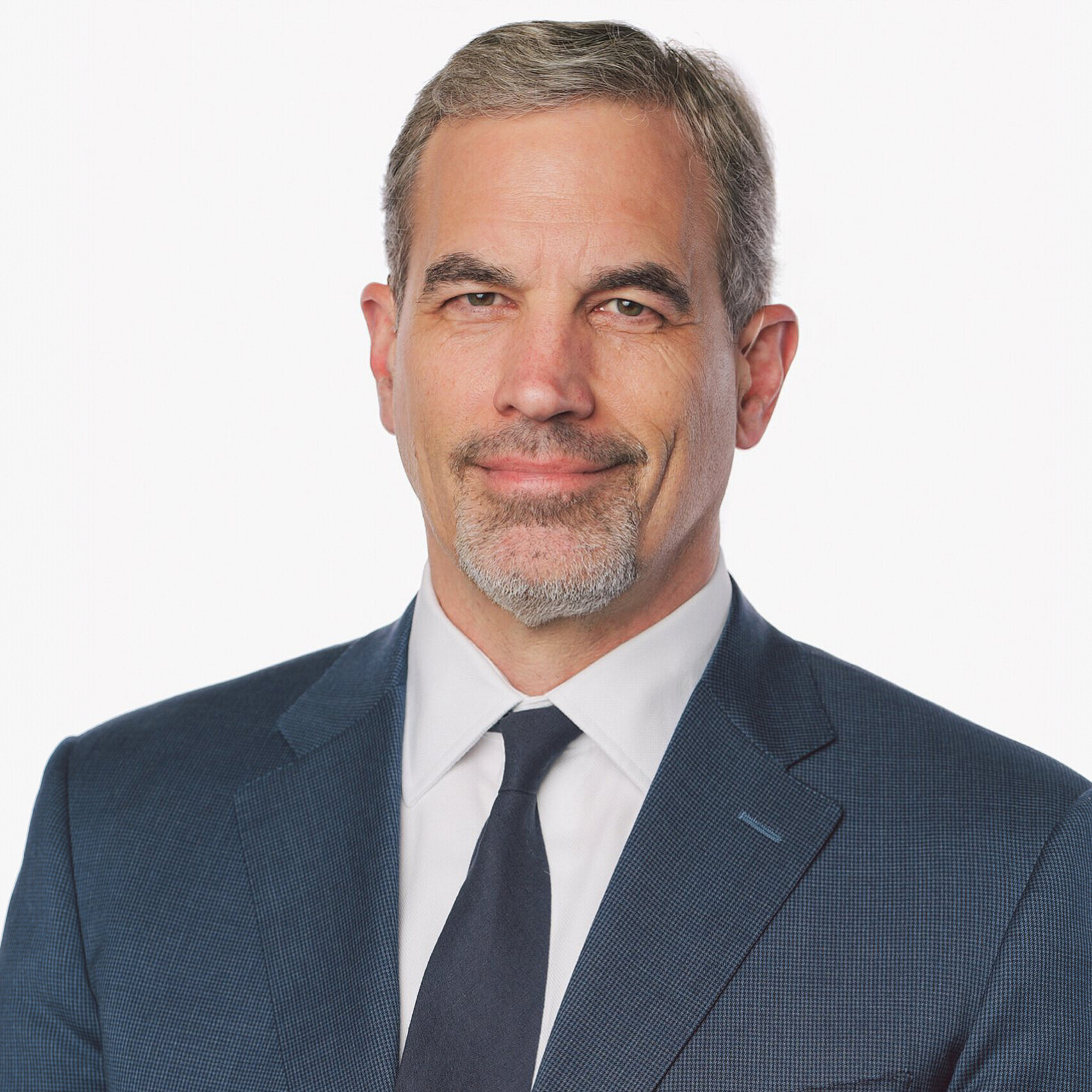
Adam Kulaas
With over 20 years of opportunities in a variety of roles along the PK12 continuum, Adam has experiences as a leader, teacher and learning designer to serve a diverse group of partners in their mission to transform holistic learner experience.
Fueled by his forever mantra of, “dream, design, deliver” and a mindset that only sees possibility, he is at his best when armed with a pen, “canvas” and platform to amplify the knowledge in the room. He is a whole child champion and is driven to serve learners across a limitless continuum to open pathways at the intersection of the future of learning and work.
Adam holds an EdM in educational leadership, an MS in curriculum, instruction, and assessment, and a BA in special education and business administration. Previous Experiences: K-8 Public Montessori Principal, High School Principal, Middle and High School Assistant Principal, ASCD Faculty Member, Instructional Coach, AVID Coordinator and Teacher [Special Education, AVID and Leadership].
Links:



0 Comments
Leave a Comment
Your email address will not be published. All fields are required.