


Kelly Coffin on Leading Through Vulnerability
Key Points
-
Create routines that keep leaders close to classrooms (walk-and-talks, student lunch conversations, weekly staff notes) and listen for what you aren’t hearing.
-
“Test the system” with small prompts and expectations, then let ideas emerge from those closest to students—supporting, stretching, and resisting micromanagement.
Shownotes





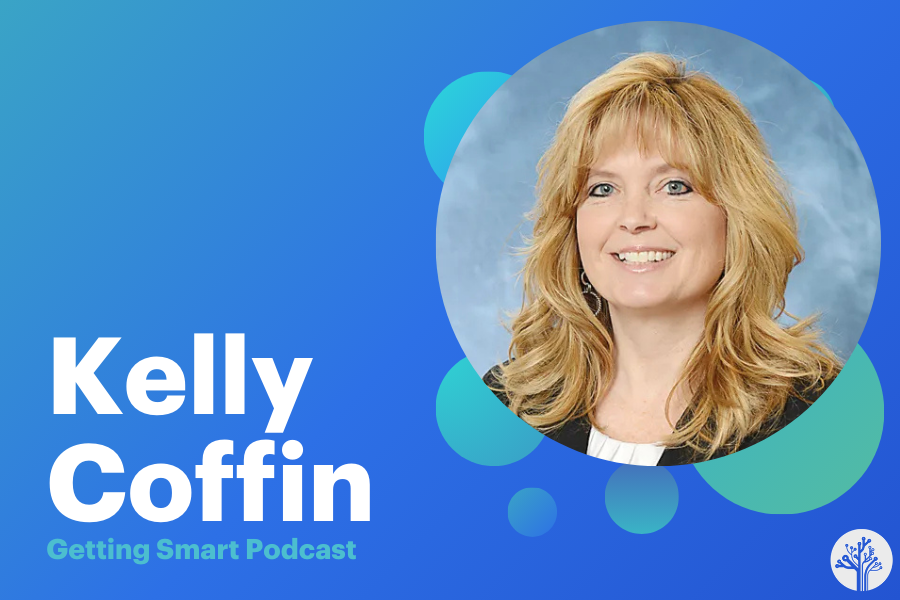
In this episode of the Getting Smart Podcast, host Rebecca Midles talks with Kelly Coffin, superintendent in Farmington Hills, Michigan, about what it really means to “go slow to go fast” in district transformation. Coffin shares how leaders can build trust and capacity through co-design with educators closest to students, stay connected through daily visibility and listening routines, and “test the system” for readiness without defaulting to top-down control. The conversation centers on authentic leadership—grounded in clarity of vision, coherence, and the courage to be vulnerable in public—so teams don’t just implement change, they own it.
Outline
- (00:00) Introduction
- (04:08) Leadership Evolution
- (08:35) Daily Leadership in Action
- (15:15) Building Trust and Capacity
- (17:18) Advice for New Leaders
- (28:26) The Bravest Leadership
Introduction
Rebecca Midles: You’re listening to the Getting Smart Podcast. I’m Rebecca Middles. Over the years, both leading the district and now supporting leaders across systems, I’ve seen the same patterns surface again and again. Transformative work doesn’t happen to a team. It happens best with a team. And although that sounds easy, it’s much harder than it sounds, and it’s often more difficult because of phrases that we say, like “go slow to go fast.”
But we rarely unpack what that means. It’s about really creating space for co-design. It means inviting others into the thinking. It means resisting the pull to do it yourself because it would be quicker. And we live in a world that really honors quick and efficient, which I think raises the bigger question.
What’s the difference between a leader who builds something great and a leader who builds a team that builds something great? That tension is at the heart of today’s conversation. My guest, Kelly Coffin, leads in this way. She’s a superintendent in Farmington Hills, Michigan, and serves on the board of the Future of Learning Council.
But more than that, she’s a leader who walks alongside her team, building capacity, trusting instincts, and knowing when to step in and when to step back. Welcome, Kelly.
Kelly Coffin: Thank you, Rebecca. Thank you. So excited to be here.
Rebecca Midles: Thank you for making time. I know you’re busy as a superintendent, so we always appreciate this space.
For anyone who hasn’t had the privilege of being in the room with you, give us the Kelly Coffin origin story. Where did it all begin?
Kelly Coffin: Sure. I was thinking about this, like, how did I even get involved and engaged in this type of work? And I think it was in high school. I had the opportunity. Somebody saw something in me that said, “You know, I think you’d be a good educator.” I didn’t come from a family of educators, so I don’t have that story.
And so, my senior year, I was really lucky to be able to spend half my day in an elementary classroom, and that’s when I realized maybe that I enjoyed teaching. I didn’t think I wanted to work necessarily in elementary, but I did enjoy seeing kids read, and all of that. So I think that’s where it started, continuing my progression through college, getting my degree, and then being able to work at a middle school, teaching math, working with students with special needs.
My first job was in a school system, or a system, where it was for adjudicated youth. And I was young, out of college. And those five years really set a foundation for me when I look back. I don’t know if I knew it then, but I worked with girls ages 13 to 21. And they were all there because they had committed some crimes.
And so, when it would be easy to look at all of the things they did wrong, it required me to truly find their strengths because everyone else was looking at what they did wrong.
And so I learned from them how empowering it was for people to see beyond what they see on the surface, or what they read about them, and really get to know who they are as a person.
So as I reflect back now on my career, I’ve been doing this a long time through central office positions, building principal positions, and now, most recently, as a superintendent. I still can go back to that experience that says it’s easy to see the things that don’t go right. Right? It’s really hard to see people for their strengths and really help them see what they can’t see.
Rebecca Midles: I mean, all those experiences you just lifted, so impactful. But the common theme is really leaning into the potential of humans that you were serving at that time and how that’s translated. Thank you for sharing that. So you’ve shared what led you to education.
Leadership Evolution
Rebecca Midles: Was there a moment that reshaped how you understood your role as a leader along the way?
Kelly Coffin: I think there are opportunities for that to happen a lot. My first classroom, having my first building as the building leader, my first superintendency—I think it always kind of helped me to step back, and I learned from all of those experiences.
So I think when I think about how did I come to this space and what experiences were there, I think it was all the firsts. And I think that, again, having to balance having your ideas as a new person coming into a system, wherever you’re at, and listening to those who have been there—and how do you start to bring the past and the future together so everyone can access it and not come across as it’s all about me or it’s all about my ideas.
It’s really not that. Well, it can be, but that’s not going to get you very far. And so I think I had a lot of opportunities to learn from that—maybe being a little bit like, “Oh, I know the way,” when I really didn’t—and how I realized I could find others to join me in this work to ensure that we kept the students at the center.
And I think that’s what I had to grow in as a leader: never forget why I wanted to do this work. I wanted to make sure every child had access to experiences and learning opportunities for them that matched their strengths and their talents and their gifts. And not because they were in a certain program or they came from a certain neighborhood—that should in no way determine their potential in our public school systems.
Rebecca Midles: I agree. I’ve always appreciated your graciousness about sharing your journey and the lessons learned, and how transparent you’ve been about that. I think it builds a lot of trust and access into that thinking.
Thinking about your role now as a district leader—let’s just stay with district leader—how would you describe that difference between how you started and then how you would describe your role now?
Kelly Coffin: I think how I started, I always knew that I couldn’t do it alone. It wasn’t about me. I did observe people try to do that. And there was maybe an appearance of it working, but that just was not my style. That’s not who I am.
I’m very collaborative in nature. I can make a decision. I can be decisive. It’s not that. It’s more about: I believe the organization only needs one of me. We don’t need a lot of Kellys. We just need one, and we need one of everybody else. And so we bring those strengths together.
So I think that’s really helped me shape, when I think now about the work we’re doing at Farmington, is that I’m always curious and always interested in perspectives, especially when they’re very different than mine. And so I’m always curious and intrigued, like, “Tell me more about that,” because it’s never about what it’s about.
But I believe, especially as we’re talking about this significant system change work and really transforming a system, it’s the people closest to the students that must be part of that work. And I can say, I’ve worked with a lot of other superintendents, and some are more directive—“This is what we’re doing”—and then nobody owns it, and everybody feels like it’s being done to them. And that’s just not been the path I’ve ever wanted. I didn’t like that when it was done to me, so I don’t want to do that.
Of course, we have to make decisions. We’ve got to keep kids safe. All of those things. I’m talking about the real design of moving a system. That is not going to happen without our educators and those right at the center.
And I think that’s, for me, when I started seeing the joy on the teachers’ faces because I helped them see something in them they didn’t see themselves—“I didn’t think I could do it. I was so surprised. Oh my goodness, I’ve been underestimating my students. I wasn’t sure they could do this, and you helped me see they could.”
That’s, for me, the motivation to keep going. So again, I’m not at the center, but I want to help people see what they can’t see in themselves.
Rebecca Midles: OK. So one of the reasons why I have you on today is exactly what you just highlighted. I mean, I think you have a gift. And I know that it didn’t just happen overnight. You have cultivated that. You have had a learner stance, which you shared. You’re curious. You’re known for that type of leadership.
Daily Leadership in Action
Rebecca Midles: What does that look like for people on a regular Tuesday in Farmington Hills? What does that look like in action?
Kelly Coffin: So one of the things that I’m very focused on is: I can only control me, and I can control my behaviors.
And so one of the things I choose to do is come to work early and spend about an hour just getting things wrapped up so that I can spend the rest of my day being present. I think that’s a conscious choice that I make. I don’t see my time when students and staff are here as office time for me. So I’m always trying to be out and about.
I stay connected to our staff in different ways. I listen to their feedback. I send out weekly notes to them, and that was kind of new for me because I didn’t know: Would they like it? Do they think it’s kind of crazy, corny? But what I’ve realized is that I am working on my own vulnerability with them.
I think if we are going to have this relationship—because this is deep, meaningful, personal work—for me to be able to have a fun little note, but also show a little bit about who I am as a person. And I thought, well, I’m going to give it a try and we’ll see how it goes. But it’s that interaction, so I can hear. I get back feedback from people: “I relate to this.”
So I had to find multiple ways to stay connected. One of the things that I knew stepping into this role: before this, I was the assistant superintendent, so I worked directly with principals, and now I’m not, and I miss that terribly. But I’m also not going to step in because I have very amazing assistant superintendents working with them.
However, I said to them, “I miss you guys. I miss you.” So we do walk-and-talks. So I go in and I just talk to them. So on a Tuesday, you might see me in a building walking around with a principal saying, “Tell me what you’re most proud of. Show me what you tried. You were trying something—show me that. Show me where you’re most proud.”
And then also, it fills my bucket for sure, but it also shows me what’s important to them. And it’s all—some are similar, but some are different. And then you might see me in lunch-and-learns. I have a couple board members, and we go and we just sit and talk with kids and see: Do you feel like this is a place where you feel noticed and heard and seen? What do you want? When I say “success starts here,” what do you guys think?
And so the answers and the things that our students are sharing are just incredible. So I had to really think about: How do I stay connected to the adults, the students, the parents? We have an ambassador network. I look forward to those meetings every time we meet because our parents just are—they’re also curious and want to be engaged.
So when I think about my days, my days don’t consist of me thinking of it as office time, office time. It’s: How do I connect? How do I connect with the people here at central office all the way into the classrooms each day? And that’s really my goal. And I hold myself accountable to being out there and not getting—I don’t want to be disconnected to the work. I don’t ever want to forget what it feels like for a teacher in those classrooms every day.
Rebecca Midles: I hear that. And there are a lot of great takeaways of things you shared. I appreciate you giving some great examples.
OK. I’m just going to honestly ask you, because this is tough. At this stage in your leadership, do you feel the pull to just sometimes do it yourself? I mean, I think that a lot of people can relate to that. What helps you resist that feeling?
Kelly Coffin: So I do feel that every day. I’m not going to lie. I’m a doer. And again, I’ve done a lot of reading around knowing that I sit in a strategic position, and I need to create the space for myself to be able to think strategically. And that’s not going to happen if I am micromanaging everything.
So I think one thing I do is I make it very verbal. I verbalize that to my team. “I’m going to have the tendency, and it’s OK. You need to tell me, ‘Kelly, I got this,’ and I am going to trust you, so help me let go.”
But also recognizing and realizing that we will never get this system in a place where we want it to be truly transformed with only my ideas or only my input. So I have to step back.
And what I’ve learned is everybody has different ways of doing it, and most of them, if not all, are better than mine. So I have a lot of self-talk to say, “You know what? I’m just really curious how this is going to go. I’m going to help. I’m going to guide. I’m going to say, ‘Did you think…?’ or ‘What about this?’” But at the end of the day, I have to let them go.
And what I realized was, as I was thinking about some simple things on reimagining some teaming structures in our district—you know, I would sit with the principal and we thought we had the ideas. Oh, we weren’t even close. What our teachers came up with was so much better, and they were so excited, and it was so much better.
So I put myself in a lot of those situations to trust others. And what I’ve actually realized is, by me stepping away and doing the work I need to do at the strategic level, it’s letting these ideas really flow up and then be supported. But when it starts with the people closest to the work, those will always be the best ideas.
I’m going to help them. Like, “Yeah, I wouldn’t start there. Maybe go here,” you know, a little guidance. But outside of that, I just need to create the space for them to run.
Rebecca Midles: That’s great. While you’re talking, I have the privilege of getting to know some of this more closely because of the work we do in Michigan. And I’m thinking about a recent presentation of yours—your awesome assistant superintendent and a middle school principal that shared—and the way you have practiced: the way you challenge, but also step back and support.
I mean, there’s an art to it. There’s an art to knowing when to step in, when to stand beside someone, when to step back. How do you read a person or a team to know what’s needed? What are you watching for?
Kelly Coffin: That’s a great question. I think that I take time, again, to know what their strengths are, and never putting them in a position where I don’t think—like, I don’t want to be put in a spot of something that’s all the things I don’t feel good or confident about.
So when I look at situations and the example you’re using, that really came about because there was a request for some additional FTE, or teachers, to help support some of these ideas. And so my answer was, “Of course we’ll do that, and you’re going to have to stretch a lot farther.”
And I didn’t tell him where or what, but just set that expectation. And again, it was another example where he took it farther than I—I wasn’t sure if the system was ready.
So that’s one thing I do: I test the system in places to see where our readiness is. They don’t know that, I don’t think. I don’t go and say, “This is a system test.” I don’t say that. But I start to see, like, “OK, so what if we did this? What do you think?” And let that message just get there and let people ruminate on it. And then I can kind of tell where the readiness is.
And so that’s how the principal there got it. And then it started as one grade. Within that whole conversation, it was a whole building. So that’s how I know the system’s ready.
So I do these little tests around people with their ideas. So not me saying, “Hey, you should do this,” but when there’s a request coming in, I can do this and say, “Tell me now how we’re going to move one step closer to the vision we have.” Not just stay stagnant, because we don’t need to stay stagnant. But we can support that.
And I’ve been pleasantly surprised in every single case where I’ve been able to test. And it might not be where we started, but we find our path for that.
Rebecca Midles: Yeah. I imagine a lot of leaders can relate to what you just surfaced, but making it transparent in that awareness so that you’re testing the system.
We, as a group in Michigan, often talk about high capacity, high commitment, and knowing where to start. Knowing you now, where you are, I say this: You have high levels of commitment. And so it’s interesting to be in a place now where you know that, and now you can intentionally dig into that capacity and readiness piece. It’s exciting to see.
Building Trust and Capacity
Rebecca Midles: I know that requires a lot of trust. We use that word trust a lot in leadership. What does that look like in practice? I mean, I think you gave a pretty good example with school leaders. What do you think that looks like in practice, maybe outside of your circle? How would you explain that?
Kelly Coffin: So I think, internally—and again, I know the gift that I have right now in that I could talk to most anyone in the organization: parents, paraprofessionals, teachers, administrators. They’re very clear on the vision and mission and where we are going and where we want to go.
They may not know how they fit, but that’s how I know they know, because they ask me about that. I track and monitor how people are interacting with me. Again, I stay very intentional about connecting to people where they’re at—so in the buildings, at events, all of those things.
But I think the biggest piece for this, for me, is really kind of staying aware and listening. I listen for what I hear, but I also listen for what I’m not hearing, and that helps me know where I need to go.
Also, this is the biggest district I’ve worked in. We have 18 buildings, so it’s a lot. And so there’s a little bit of competition too—not in a bad way, but that everybody can have this.
And I think sometimes in school systems, it’s this teacher and it appears like they get everything, or this administrator. And I don’t believe that we are there. People are always asking, “Oh, how come they get to do that?” Bring me an idea. Whatever you want to do.
We had a thing in this district where it was all top-down and everybody had to be the same. We’re not the same. Our buildings have different strengths, different talents, different communities they serve within our larger community. The expectation that everybody should be doing the same thing is unrealistic, and it takes away all of the agency from those who want to serve our kids.
Everybody comes here every day to do their best work. And so what I discovered here is there was a little bit of, “Well, if they’re doing it, how come we’re not doing it?” Well, let’s figure that out.
And I absolutely have zero expectation that you do it the same as they do. I can share what they’re doing. I can give you ideas. Where do you want to start?
And I think that, for me, the piece that I’ve been seeing is everybody understands they have an entry point, and they’re now going like, “Oh.” And it doesn’t have to be the same because we’re constantly sharing all of our stories that are very, very different—but started with 2 people who had an idea, or 3 people who had an idea, went to their administrator, and then here we are.
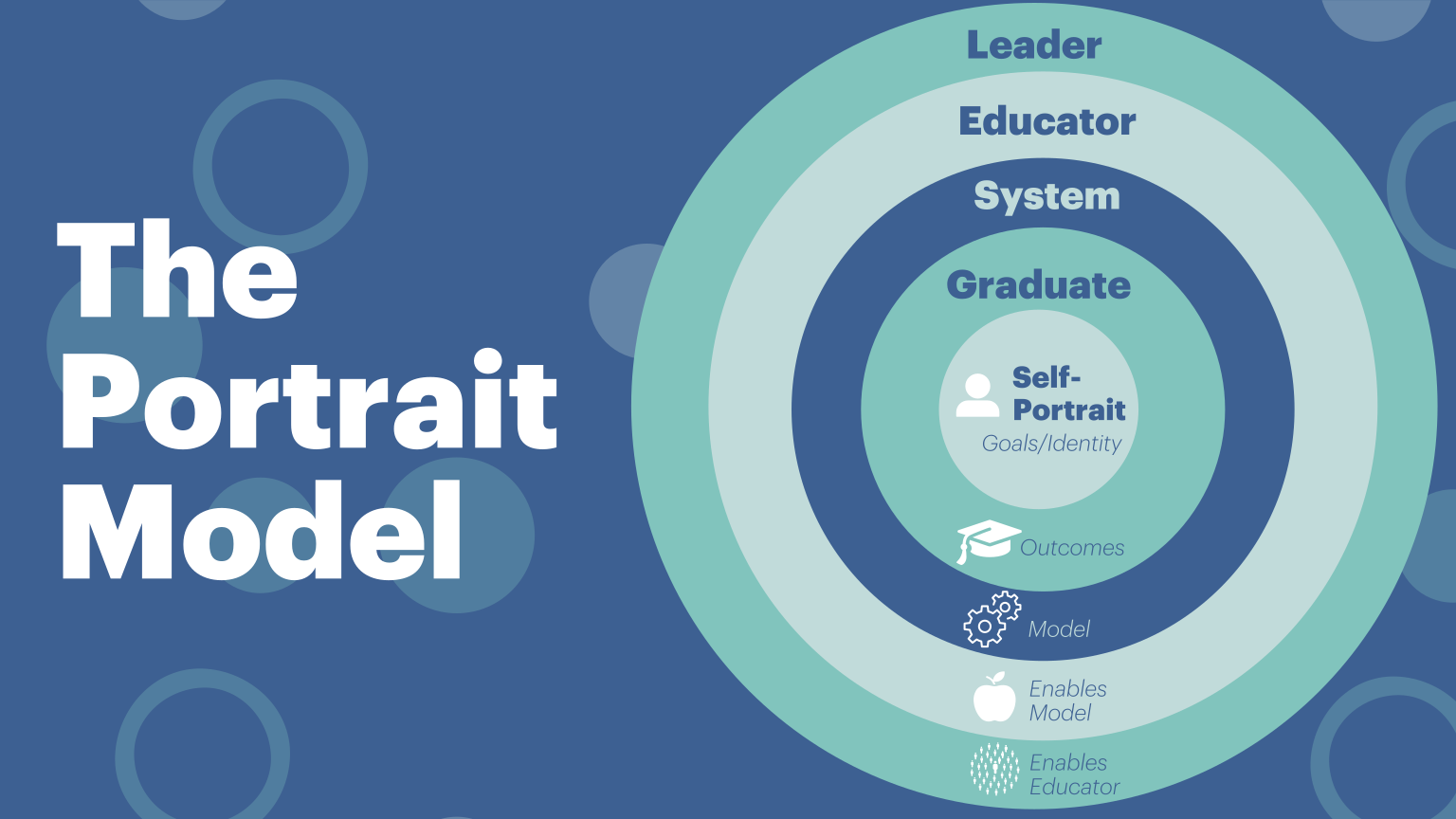
Rebecca Midles: That’s really good. I should have said this in the beginning: The work you have done as a district—and maybe you’ve got something we could share in the show notes—but the work you have done around alignment and coherence with your vision and your portrait and your instructional practices, I was able to see that recently, last month, again, in that same presentation with your team sharing, and really that thoughtfulness about that piece.
And like you said, knowing that you’ve got high commitment—it comes from people having a shared understanding of where you’re headed and what that looks like. That gives you that trust too, like you said. And I think I want people to hear that. And so maybe we can show some examples.
And I also love that you’re highlighting, by that process, knowing how fast people are ready to go, testing that urgency.
Advice for New Leaders
Rebecca Midles: So let’s say I’m a district leader. Maybe I’m new. Maybe I’m in a new system and I haven’t led before, and they’re wanting to do more change, and I haven’t led that kind of change. And I’m listening. What are some things that you would want people to know to help them not default back to kind of what a more traditional view of leadership looks like, but to lead in this way? What would you say to them?
Kelly Coffin: I think, for me, it took me a little bit to have the confidence that I could just be my authentic self, because that breaks down a lot of barriers. So I am not just a position. I’m somebody who comes out there fully wanting people to engage in what they love.
And I think that’s one thing that sometimes, if you’ve grown up in a positional system, it’s hard for people because what I’m not saying is there aren’t times where you say, “This is what I need you to do,” and you want people to do it. But this work is not going to go that way.
So I think you, as a leader, being true to who you are. And I think also always looking for opportunities, no matter how big or small, to help someone think a little bit different.
So, you know, I remember I came into the district during COVID, and people would say some things as if they were true, or as if they were a rule, and they weren’t. They weren’t.
And so I would just question that. And sometimes they would be like, “What are you talking about? What do you mean?” And so I didn’t have to go and figure it out. I just knew it wasn’t. And then they would report back like, “You were right. We didn’t have to do—” I’m like, “Yeah.” How do you help people start to see that there are some freeing moments in this work? This work is exciting. Yes, it’s scary. Yep, we’re letting go of some things.
You know, I talk to teachers all the time. We all grew up in a system where we were reinforced with traditional things and we were told we were a good teacher, and now I’m coming in and saying, “Forget all that.” Like, “Forget all that.” Your relationship with the students is most important. Your understanding, your compassion, your ability to help kids see things they can’t see. All those things are what we’re going to encourage.
And so it’s really focusing—and you have to start with yourself as a leader. Am I sending out mixed messages? If I am saying, “Go ahead, try. Go ahead,” and then all of a sudden, in my case, an administrator says, “Stop doing that”—there’s not going to be that coherence with “I’m hearing this, and that did happen in the beginning.”
A lot of people would check me on that: “You say this, but my administrator is saying that.” I’m like, “Thank you for letting me know.” That means not that I go and tell the administrator to stop. It means I go in and say, “What professional learning do our administrators need?” Because that’s their area of weakness, or feeling like, “I’m an administrator because I was a good teacher and I did all these things, and now I’ve got to make sure they do it.” It’s so ingrained in us. Yes.
And so I think it’s not looking at it just face value: “Stop doing this.” Not, “Do this curriculum.” It’s not about that. It’s: OK, so we’re implementing this. What are going to be the biggest challenges for you? What do you have to let go of? What are you worried about? How do we do that?
And I think it’s just: Do what you say, say what you do. Accept accountability when things don’t go that way. When there’s a part of the system that’s not acting the way you’d like it to yet, address that or acknowledge it. Don’t pretend like it’s just their fault.
They are being courageous and coming to you as the leader to say, like, “Hey, you’re saying all this, but it ain’t happening.” And that does happen. We know that does.
And so now it helps me understand what additional learning or space I need to create for those who are leading, at whatever level, to have more confidence that it is OK, and I mean it.
And that’s the part that I think sometimes leaders, especially as things start pushing on it—we celebrate pushes on the system here. We celebrate it. Somebody’s pushing. Those are the right conversations. We might not get what we were thinking we were going to get, but we’re finally having the right conversations. We will eventually get there, but we’re not shying away from tough conversations around time, around space, around contracts, around all of these things.
We are going in and talking about that because everybody’s not where I am, of course, in my way of thinking. But I celebrate every time we have tough conversations.
Rebecca Midles: That’s good. Yeah. I love that you are redefining or revisiting the understanding that needs to be done around leadership as strength. What does strength really look like? And that level of transparency and vulnerability.
And you also brought up the word courage. Really, I love that. And that really helps the system grow.
So let’s finish. I haven’t done this before, so I’m going to try something with you, and we’re going to finish this conversation with you finishing the rest of the sentence.
The Bravest Leadership
Rebecca Midles: The bravest thing a leader can do is…
Kelly Coffin: Be vulnerable in a very public way.
Rebecca Midles: You’re inspiring me to get—I don’t want to just say women leaders, but you are kind of inspiring me to get more district leaders on here that are leading in this way to share this because we need to counter that other narrative.
Kelly Coffin: Well, and it’s not grievance leadership, or it’s not “we’re better because we’re not men.” Like sometimes I—exactly. You know, it isn’t about— I wasn’t going to go—it doesn’t matter.
But when you ask what shaped me, I’m like, I’ve really got to think about it. A kid, yes, I’ve dealt with all this stuff, but that—it just maybe made me more determined, but that’s not why I lead like that. It’s not why.
It’s because I truly just believe in the people. I believe that they can do great things. They come every day wanting to help people, even those that struggle with it. And I have to set the tone, and I have to set the narrative, and I have to show them that I’m accountable to them.
And I appreciate when people call us out on stuff. And I do. And I tell the principals, “You’re lucky. You’re lucky that staff member came to you. What a growth opportunity for you.” And at first when I did that, they were like, “You are crazy.” I said, “No, you don’t see it yet. You don’t see it yet.”
And that’s part of—you go through and you take your lumps and you’re like, “Ooh. It was there. I just didn’t see it.” Now I am trying to help others see what’s right in front of them.
Rebecca Midles: That’s good. I definitely heard that today. Thank you so much for sharing all of this information. I’m looking forward to people hearing about this style, and I think this is how you lead big change in a thoughtful, long-term way. Thank you for making time today.
Kelly Coffin: Thank you so much. Thank you.
Guest Bio
Kelly Coffin
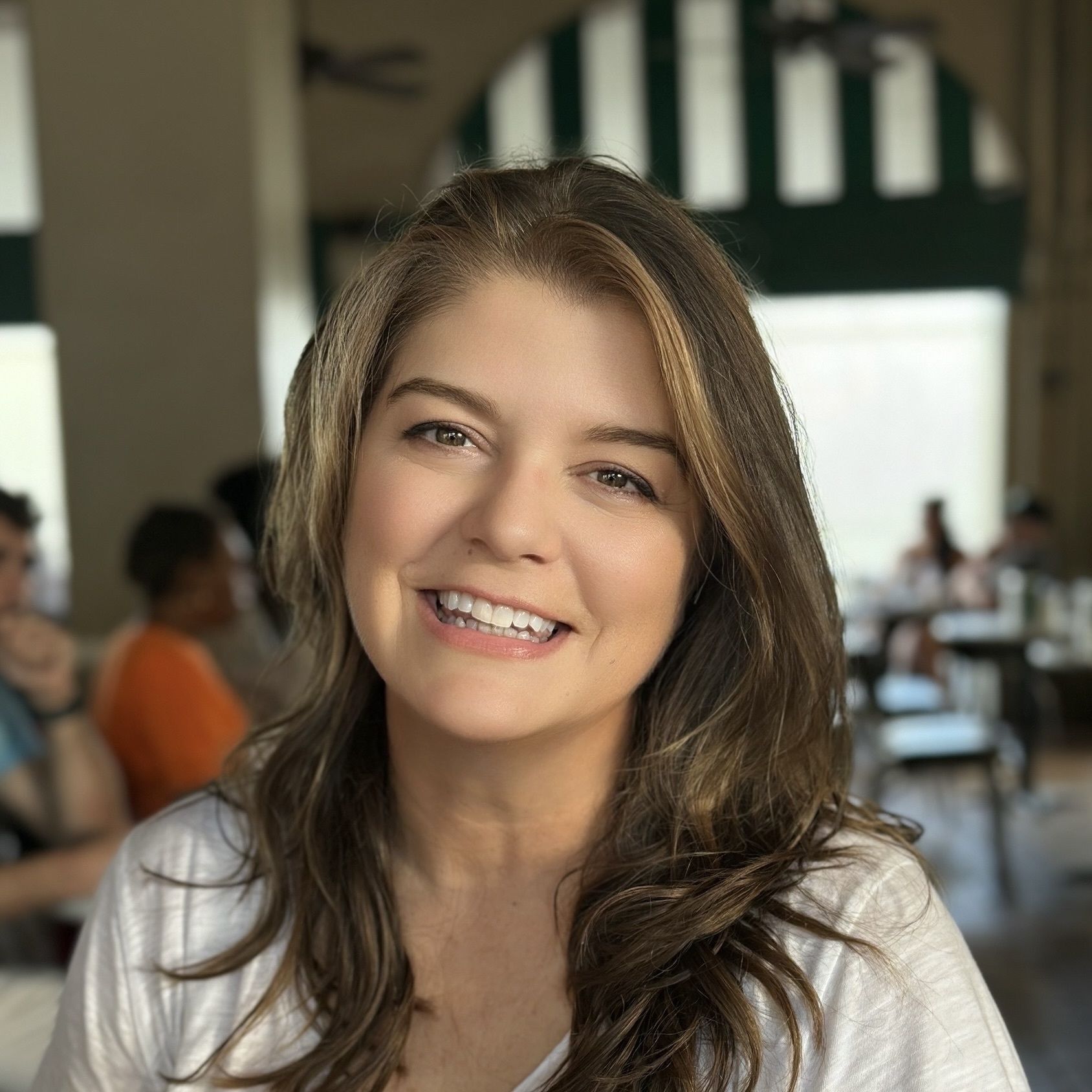
Dr. Kelly Coffin has been in education for 30 years, serving as an educator in both general education and special education, a building administrator at the elementary and secondary level, local and intermediate school district assistant superintendent, adjunct professor for Eastern Michigan University’s Leadership and Counseling department, and a local district superintendent. Kelly is involved in many organizations, including a founding and current board member of the Michigan Future of Learning Council, a group of K-12 superintendents and district level leaders committed to personalized, competency based learning. Kelly also has worked most recently with Michigan Virtual to support educators in the work of embracing remote/virtual learning and adopting a learning management system to enhance the K-12 instructional delivery model across the educational system. Professional publications include the book, Necessary Leadership (2018). In addition, Kelly was a member of the inaugural Google + GSV Education Innovation Fellowship Cohort which is a fellowship of top-level instructional leaders dedicated to the use of technology as a lever for innovation and impact. Dr. Coffin currently serves as the Superintendent at Farmington Public Schools in Farmington, Michigan
Links


0 Comments
Leave a Comment
Your email address will not be published. All fields are required.