


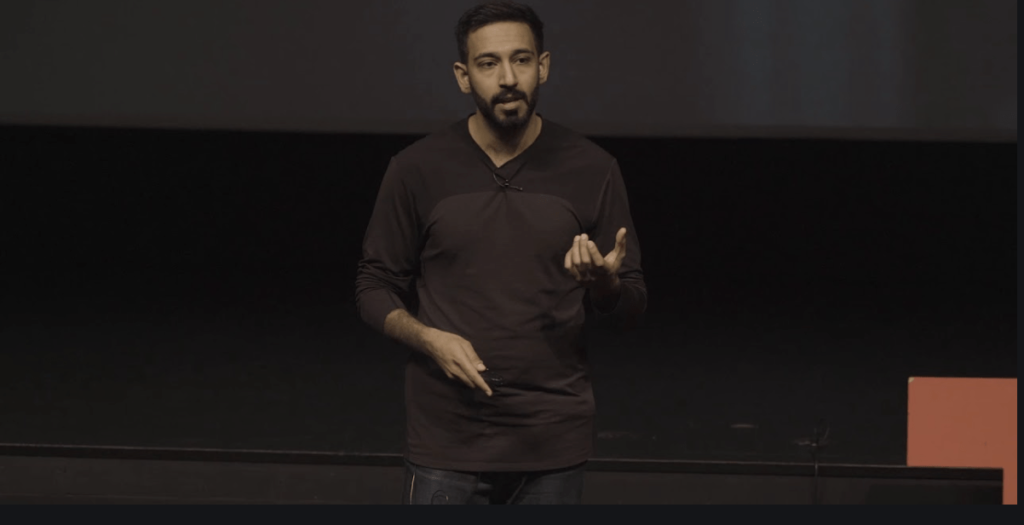
Navid Nathoo on What Education Can Learn From The Real World and The Knowledge Society
 If you want to learn more about The Knowledge Society, check out our recent blog post, Equipping Youth to Change the World.
Key Takeaways:
[:09] About today’s episode with Navid Nathoo.
[:48] Tom Vander Ark welcomes Navid to the podcast!
[1:25] Navid shares about his background and his upbringing in Canada.
[2:21] About the previous companies Navid has founded.
[3:19] Navid shares how he first became interested in the space of artificial intelligence and data science. Navid also highlights the importance of honing the ability of problem-solving as well as using emerging technologies to solve problems.
[7:10] Navid offers insights on how you can skill up in a new area.
[9:47] Why did Navid decide to start The Knowledge Society?
[13:20] One of the top key indicators of what makes someone successful, and the mission of The Knowledge Society.
[14:35] About The Knowledge Society program and some of its major goals.
[16:39] Would Navid say that students have to be self-directed in this program?
[18:00] How do they match students with projects?
[20:00] How many learners are in the program? And where are they from?
[21:36] Navid talks about their business model and scaling aspirations.
[23:05] Would it be possible to use this model to rethink high school and college?
[26:29] Tom and Navid share what they love about The Knowledge Society.
[28:18] Navid shares some examples of impressive student projects.
[32:02] Tom thanks Navid for joining the podcast and Navid shares where you can learn more about TKS online!
Mentioned in This Episode:
If you want to learn more about The Knowledge Society, check out our recent blog post, Equipping Youth to Change the World.
Key Takeaways:
[:09] About today’s episode with Navid Nathoo.
[:48] Tom Vander Ark welcomes Navid to the podcast!
[1:25] Navid shares about his background and his upbringing in Canada.
[2:21] About the previous companies Navid has founded.
[3:19] Navid shares how he first became interested in the space of artificial intelligence and data science. Navid also highlights the importance of honing the ability of problem-solving as well as using emerging technologies to solve problems.
[7:10] Navid offers insights on how you can skill up in a new area.
[9:47] Why did Navid decide to start The Knowledge Society?
[13:20] One of the top key indicators of what makes someone successful, and the mission of The Knowledge Society.
[14:35] About The Knowledge Society program and some of its major goals.
[16:39] Would Navid say that students have to be self-directed in this program?
[18:00] How do they match students with projects?
[20:00] How many learners are in the program? And where are they from?
[21:36] Navid talks about their business model and scaling aspirations.
[23:05] Would it be possible to use this model to rethink high school and college?
[26:29] Tom and Navid share what they love about The Knowledge Society.
[28:18] Navid shares some examples of impressive student projects.
[32:02] Tom thanks Navid for joining the podcast and Navid shares where you can learn more about TKS online!
Mentioned in This Episode:
- Navid Nathoo’s LinkedIn
- The Knowledge Society
- TKS’ Twitter
- Getting Smart Podcast Ep. 284: “Joanne McEachen on Contributive Learning”
- Equipping Youth to Change the World.
Transcript
This transcript has not been edited for spelling accuracy.
You are listening to the Getting Smart podcast where we unpack what is new and innovative in education. I’m your host Jessica and today we’re talking with Navid Natu, an innovator, entrepreneur and creator of the new program and platform, the Knowledge Society. Navid has a track record of rapid learning and solving interesting problems.
He started his career in investing in consulting and wound up selling his company AirPost to Box and now has created the Knowledge Society with his brother Nadim. This after-school program helps learners navigate interests and encourages them to contribute to their communities as well as the global community with a series of projects. Let’s listen in as Tom and Navid talk about what the future of education could be and
how to get learners to find their spark and lean into difference making. Navid Natu, welcome to the Getting Smart podcast. Thanks, Tom. It’s really great to have you. I was really thrilled to learn about the Knowledge Society that you and your brother have created.
It was also really cool to find a finance guy that’s been an entrepreneur and done some consulting similar to my own background, finding your way into this difference making career that you’re in today. I love your pathway. I’d love to find out a little bit about your background.
You grew up in Canada? Yeah, grew up in Calgary, which is growing up is very focused on oil and gas. Didn’t really know much about what you could do in the world in terms of career opportunities, in terms of what was out there. Went to school in Ontario at Western.
I took the business program there, but up to that whole journey had no idea what I wanted to do in life. I think everyone goes through that exploration stage, but one of the things that always got to me is why is that the case? Why is it that by the time you’re done high school, you don’t really know what you want
to do in university. By the time you’re done university, you don’t really know what you want to do in life. Isn’t at the point of those two institutions. Right. I always thought there was something missing on that side of things.
Well, for somebody that didn’t have a really clear sense of purpose, you had a really great career that started in finance and then moved into consulting. You started a couple of companies. Tell us about those. Sure.
My last company was called Airpost. It was a cloud security company based in Palo Alto in the Bay Area. Basically just worked with large companies on protecting their data that was stored outside their corporate network. Grew that company for a few years and then exited to a larger company called Box.com,
a public billing dollar company. At Box, joined their or ran their AI team and did some other cool stuff with big data and other pieces like that. Then some stuff in between and eventually started TKS, the Null Society, which is what I run right now.
Before we dive into that, tell us how you backed into artificial intelligence and data science. How does a finance guy with some consulting chops? How did data science and machine learning register for you? How did you learn about it and how did you move into that space?
I think my whole life has been not being qualified to do the thing I was going to do next. One of the key mindsets and skills that we really focus on at TKS is learning how to figure things out. Kids always ask me, what’s the most important skill that we should be building? I tell them the same thing, learning how to figure things out.
That is the number one most important skill. If you don’t have that skill, you’re never going to solve problems no one else has solved before. You’re never going to challenge yourself to do things that you think you’re incapable of doing.
I think if you know how to build that skill, you can do anything you want to do, anything you’re passionate about. If you don’t have that skill, that’s going to be your greatest limitation. That’s where fear comes from. If you’re scared of taking the risk, it’s likely because you’re not confident in your
skill to figure things out. To build that figure out skill, I think you need a couple of foundational mindsets. We talk about the word grit, we talk about the word resiliency. Those are all components to be able to figure things out because you don’t figure things out on the first time.
Finance to entrepreneurship, I knew nothing about entrepreneurship. I knew nothing about starting a company. I don’t think anyone does before they start their first company. That’s the point. Going from building a Q&A tool to building an enterprise security software tool or company
was another huge step. I remember being at RSA, which is the world’s largest security conference. I’m on a panel next to me is a 60-year-old guy, a 75-year-old guy, a 55-year-old guy. Then there’s me, a 24-year-old kid. We’re all talking about the future of cloud security.
I’m just thinking, how the heck did I get here? Because two years ago, I had no idea what cloud security even meant. I even cut scene to now heading Box’s AI team. How the heck did that happen? Because two years before that, I didn’t even know what AI was.
It was constantly really about problem identification and then figuring out how to solve it. Just to answer that question now, that jump to cloud security to AI, it was really about solving problems in cloud security using predictive analytics, which eventually became machine learning and then leveraging that tool to solve that problem. That’s really what emerging technology is.
It’s not fancy toys. It’s not buzzwords. It’s tools. If people learn how to use these new tools that are emerging technologies to solve really important big problems, we can make the world a much, much better place.
We can eliminate a lot of suffering. We could have a lot more advancement in the world and I think job creation as well, which I think a lot of people might disagree on, especially when it comes to AI. The problem is we’re using a lot of old tools to solve new problems. You can’t do that.
It’s like using a hammer and screwdriver to build a tower. You’re never going to build a tower. You need to have the new tools. That’s really how I see emerging technology. I’d love to go on a quick tangent and just talk about how you skill up in a new area.
When you spotted machine learning as something you wanted to know more about, what did you do? How did you learn about it? The first thing you have to do is just do some basic understanding and that’s easy with Google.
One thing I tell our students is you have access to 99.999% of the same information as Elon Musk. There’s nothing holding you back. With the internet, it puts everyone on a similar playing field. Do the Google search.
Do the YouTube search. Learn some stuff. As soon as you know the basics, the second step is to go all the way to the experts. Contact some of the smart people in the world and understand what’s happening at the cutting edge of that industry.
What that also does through those conversations is it helps you understand what’s actually important. One of the things that we get taught in school, which is not necessarily the best thing, is learning all the fundamentals first before learning about the applications. We learn about all the different types of math, like logarithms, geometry, calculus,
all of these things before actually learning the applications of it. Why not the opposite? Why not build some basic foundations in the subject? Then go understand what are the problems that can be solved using these tools and then work backwards from there.
That’s what I did. I understood the foundations. Then I went and understood what the experts are thinking and talking about and where’s the limitations of the industry. In this case, AI, what was the cutting edge at that time?
Then looking at the application, the specific problems that we are working on and saying, okay, what could be applied to these problems? Now what do I need to learn specifically to solve that problem? Through that quote unquote project-based learning, you’re able to accelerate your pace of learning an insane amount.
If you take that process and you apply it to every topic, every subject, it’s no different. That’s what Elon Musk did with SpaceX. That’s what some of the greatest inventors and whether you’re a researcher or a startup founder, it’s a similar process you do. If you’re too busy studying the core components for too long, you never really get to the
application of it and therefore it’s hard to work backwards to understand what’s actually important here to use it, to use the tool. That’s a really great description of skilling up. I appreciate that. You sold a company to Box.
You and your brother have a little bit of money. You got some options. Why in the world did you start this company focused on helping kids make a difference? It’s called the Knowledge Society. What’s the backstory there?
Yeah, the Knowledge Society. For those listening, tks.world, as I’m talking, you can check that out. The initial foundation for that is my brother and I just asked ourselves, what do we wish we had? What would have made our lives better?
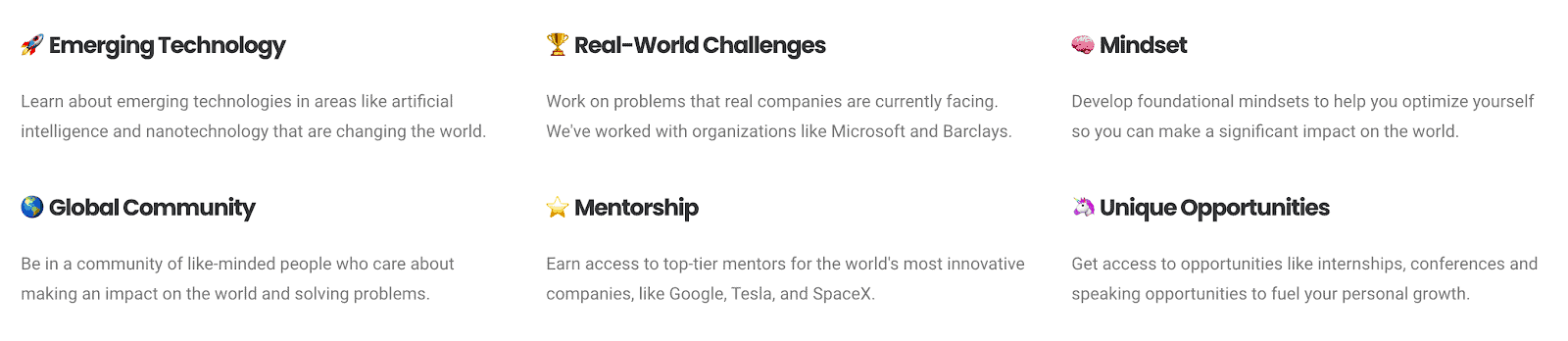
And ultimately, it was this. It was the idea of four main components. The first one is we wish that we were instilled with stronger mindsets early on. When you look at the education system, it’s very focused on information, specifically information remembering and an application of that specific information.
Whereas when you look at some of the most successful people in the world, whether you define success as financial success or happiness, all of them have one thing in common. They have very strong mindsets, but you never really get taught those mindsets. You just have to learn them. And if you’re lucky, you learn them from great mentors or you have great experiences.
But now we know these mindsets. We know some of the most important mindsets that you need to build to have a successful life. And with mindsets also comes philosophies, an example of a philosophy that could be very useful to some people with stochism, an example of a mindset that could be very useful to
a lot of people as gratitude, appreciation, or even anti fragility like Naseem Taleb talks about. And so the first piece was mindset. How can we teach and learn mindset? The second one was emerging technologies because when we were younger, like we mentioned,
the group in Calgary didn’t know anything about technology, didn’t know anything about the internet, had no idea how Facebook and Google were even started. So there was a 0% chance we would have ever built the next Facebook because we had no idea what the internet even was, like how was it created, or we didn’t know what code was.
Now, coding is more important than learning any other secondary language because it is the most used language in the world. It is the language of computers. It’s the language of machines. And there are more machines than human beings in the world today.
And so we should learn to talk to these machines. And so the equivalent to what coding was back then is now artificial intelligence, now technology, blockchain, quantum computing, all of these different emerging technologies young people don’t know about. And if they don’t know about it, they can’t use them.
And if they can’t use them, then the problems that exist today that could be solved by them are not going to be solved. So one of the examples of that is like cancer or even COVID. If we can apply things like CRISPR, you know, genetic engineering, nanotechnology to solve these problems, I think we have a very high chance of solving these really important big
problems. The third one is real world skills. There’s a lot of real world skills that we don’t get taught. Things like how to network, how to use LinkedIn to connect with people, how to write one-pages, cold emails, how to be productive, how to use time management, how to deal with stress.
Those are all very important skills that we never really get taught. And then the last piece was networks. And I would argue this might be one of the most important indicators for successful people is their network. Who do they know?
And when you look at the world’s CEOs, I think what differentiates them versus everyone else is their network, the people they know. And you know, there’s that saying your network is your net worth. And why does your network have to be, why does it have to be probabilistic, right? Oh, I just happened to run to this person at an event.
Do I happen to go to school with this person? Why can’t you be in a network full of like-minded people? And that’s really what TKS was. It created a network of curious, driven, ambitious young people to network with each other. And the reason why we started it for younger students, so ages, you know, 13 to 17, and
we have a program ages 11 to 13 is because that’s where we think that network, that mindset, that knowledge, those foundational pieces start building. And so we wanted to instill those mindsets and start building those networks at that age because we think, and I strongly believe in compounding. And I think once you understand those things early on, they can compound to get stronger
and stronger over time. So those are beautiful pillars to TKS. Tell us about the program. Is it an after school or summer school or both? So TKS is a 10-month program from September to about June.
It runs, it has once a week sessions. So every session is based on a different topic or we have like challenges with real world companies. But then throughout the week, they’re also engaged talking to other people around the world.
We have 800 active students. They’re working on different projects. There’s a lot of different events that happen throughout the week. There’s speaker series that goes on. We do something called Brain Pods, which is like different discussions or workshops on
different topics, whether it’s blockchain or human longevity, basically extending human life. There’s about 30 or 40 plus different emerging technologies that we’ve created something called Explore Modules on. So we have our own platform called TKS Life where students can actually learn on throughout
the week at their own pace so that when they come into the sessions, they’re bringing unique knowledge into that sessions. So ultimately, the way we’ve structured TKS is to be structurally unstructured. So there is guidance, but within that guidance there’s flexibility. And I think that’s how you’re going to unlock human potential.
And that’s probably something I should have said early on. The goal of TKS is to unlock human potential so people can solve big problems in the world. But unlocking human potential is really that big piece there. And what we did is we worked backwards from first principles to think, what do we need to do to unlock people’s potential?
And I fundamentally think that most people operate at about 30% to 40% of their full potential. And I think it’s because we were never trained to unlock our full potential. And so what would happen if we actually had a system built specifically to unlock potential? What would people be doing as they grew older?
That excites me. That’s what gets me pumped every morning. It sounds like learners that participate have to be pretty self-directed. Is that fair? They don’t have to be self-directed.
They have to be self-motivated. So one of the key pieces that I’ve come to understand about people is desire is the basis for motivation. If you don’t want anything, if you have no desire, it’s really hard to make you do something. Then I kind of have to force you and then you do it, but then you fall five hundred
feet after. And so that’s actually one of the things we look for in our students. What do you want? Do you want to make an impact? Do you want to solve problems?
Do you want to leave your mark on the world? If that’s not part of a desire you have, you’re probably not going to succeed in this program. If you just want to get into university, there’s much better programs out there. If you want to make an impact, if you want to solve problems, great. We’ve built a whole program to help you get there.
The reason why self-direction isn’t necessarily a piece is because we have directors and they’re basically, we call them Olympic level coaches because they’re trained to help you get that direction, to help you once you have that desire and motivation, to fuel it and push you in the direction. And so you at least need a spark and we’ll throw fuel on that spark.
But if you don’t even have the spark, fuel is not going to do anything, right? How do you connect young people with projects? Do some kids come with projects or do you go find projects and match them with kids? Or is it a little bit about? I would say maybe less than 5% come with projects.
The rest go through our process and find their passions and find their interest areas and build projects from there. Like I mentioned, we have a structurally unstructured system. And so instead of specific homework that kids would usually do, that’s kind of what you’re used to, right?
Everyone has to build this project. What we do is we give them a process and we say, okay, if you are, you know, pick a topic, here are 40 plus different topics. As I mentioned, we have whole explore modules built for them where they can learn about these topics to see if they’re interested.
Once they’re interested, they do something called a focus. So they say, okay, I want to focus in AI. Once you focus in AI, there’s four different objectives that you complete. And those objectives are mostly project based. And so within that project, it’s not, it’s not heavily prescribed.
We don’t say this is the exact project you build, you have to choose. And you should choose what you’re interested in. But in each project, there’s specific, I should say guard rails into what you should do in some guidance because the process we built is really about how to get from zero to one and then one to 10 and 10 to 100.
And so it’s built to help people accelerate through mastery. And that’s really what we focused on a lot in TKS. How do you get to mastery in the quickest way possible? And so these kids choose a focus and through that focus, they end up building interesting projects in areas that they’re passionate about while our directors, you know, these
coaches guide them along those lines and help them connect with mentors in the field, help them answer questions they have or uncover certain barriers that they run into. And you said there’s about 800 learners in the program? Yeah, currently 800 active students. And where are they from?
Are they mostly North America or are they all over the world? Mostly North America, but this year we launched a virtual program. So we now have kids from around the world. So New Mexico, South Korea, Singapore, India, China, Ukraine, parts of Africa, it’s pretty crazy. And I think what’s really fulfilling is actually seeing people develop close relationships
and friendships with like-minded people from around the world. Because once you’re in a certain place like North America, for example, you live in a bubble and you forget what the world’s like in China, what the world’s like in India, what the world’s like in Indonesia. And now these kids are not only connecting at a deeper level and building authentic relationships,
but now they’re sharing knowledge and perspectives of what it’s like to actually live in a different part of the world. What are the values and belief systems that they’ve grown up with? What are the challenges and problems in their parts of the world? And it gets these kids to start thinking globally from a young age.
And that’s something that I think is incredibly valuable, that concept of I live in a world of billions of people. So I should think billions, I should act billions. Why do I need to just act locally if I have the potential to act globally and help not only my community, but also the global community, which I think is amazing.
And I’d love this program. What’s the business model and your scaling aspirations? So because we built this program, how we wish we had it, it’s not really built to scale. At 800 active students, this is a very, we’re at basically capacity. It’s tough to scale this model. And so basically how TKS is going to grow, this model is our filtering system.
You have to apply and do an interview to get in. And so we just want the most ambitious, curious kids and create this network of these very smart kids that want to change the world. But what we’re working on next is kind of like a TKS light model that is more scalable. And so we’re building it out this year to enable access to more people at a lower price point.
David, I’m already trying to figure out how do we get this to a billion young people on the planet? I think you and your brother have invented what high school and college should look like. I mean, I think you guys have really brought some important insights to how we can invite learners into complex problem and help them use their motivation as you described as an engine to really learn much more rapidly in a much more applied way than is typical.
I’m wondering, parts of this could be used as a way to rethink high school and college. I mean, could half the high school day look like TKS? So now you’re going to poke out some of the controversial beliefs that I have. So one of my problems with education is it’s not education. High school is the core priority for people.
And this is not a fault of anyone, but the priority is to get to university. That’s the priority when you’re in high school. It’s not to learn. And that’s the reality of things. And humans were goal driven, right?
For what? We always ask ourselves, why? If I’m going to spend time on this, what’s it for? If I’m going to spend money on this, what am I going to get from it? In high school, it is university.
So the goal for most parents and students is university. I want to get to the best university. Then once you’re in university, the goal is jobs. I want to get to the best job. I want to have a stable future and make money, which is why organizations or universities
like Harvard, Stanford, et cetera, are the most sought after because they provide the highest level of certainty. It’s certainty that people are chasing. Now we’re getting a little bit more philosophic about how the world works. But I think one of the reasons why a true education system is going to be difficult
to replace the existing system is because it doesn’t fit the criteria of helping you get into university. Unless universities change their filter system. Instead of asking for grades, if Harvard automatically said, I want to see your projects, all of a sudden now schools can start adapting new systems.
And it’s not about replacing schools, but schools can evolve and iterate. But the limitations that iteration is what do universities look for? And so one thing that I strongly believe to be true is that universities have the power to change the high school education system through changing the filters they ask for from high schools and valuing them differently.
And then companies can actually have the power to change how universities filter because if companies say, I’m looking for IQ, I’m looking for teamwork skills, I’m looking for communication skills, I’m looking for emotional intelligence, all of a sudden universities need to create mechanisms to evaluate those things. And to do that, now you have to teach those things.
And so it starts from the top and it goes down. And so if some of the biggest companies in the world started saying, this is what we need to look for, hey universities, please give me these metrics. Now they create courses to do that. And then if universities said, hey, high schools, instead of giving me your gesture math grade,
I also want to see projects. And what students are doing and building and creating now create a system based on that, will start to shape the world a little bit differently. But if the filtering mechanisms don’t change, if the criteria to get to the next step doesn’t change, then the system won’t change.
It feels like the world is changing. In this pandemic year, we’ve seen a lot of places go test optional. And I think a lot of learners and parents are beginning to see that you may not even have to go to a traditional college. So it feels like the world is opening up to the future you described.
I want to see if I can highlight a couple of things that I love about this program, see what you’d add to it. I love the way that you combine knowledge and skill building opportunities that you put in front of youth with sort of directed learning activities. I love the way that you match up sort of interest-based learning with projects that you’ve identified
from the community. It seems like you do a nice job of self-directed learning with mentor-directed learning and self-identified work with projects that you’ve lined up with community partners. It feels like you’ve done a really nice job of scaffolding both interest and sort of real-world learning opportunities around subjects that matter.
Is that fair? Yeah, totally. I think you do have to have that mix, especially at a younger age. So we work with companies like this year we worked with Lego, we worked with Instacart, we’ve worked with Walmart, we’ve worked with Microsoft.
And what we do with them is we say, what’s an important problem you’re working on right now? And their exec team gives us a problem that they’re working on today right now and there’s no solution to it. And then we give it to our students and we train them on how to use frameworks and mental
models to solve those problems. And then they end up building a deck like a consulting style, McKinsey style deck and deliver it to these big companies. And so we work with real problems with real institutions as well as train the students to uncover problems that they’re passionate about and create projects and initiatives
to solve those problems. And I can give you some examples if you’d like. That’d be great. So I’ve, you know, there’s a long list, but I’ll give you a few. One student Isabella, she started her passion in cellular agriculture at LabGroD Meat.
Basically, how do you replace animal meat? And you know, if for those of you that don’t know, animal meat is one of the largest contributors to greenhouse gases. In addition to just general respect for human life, and if you’ve ever seen how cows have been treated or pigs, it’s some of the most horrific things.
And so replacing that whole industry with LabGroD Meat through stem cells is a huge billion dollar industry. Companies like Impossible Foods and Beyond Meat are pioneering the way in that area. And Isabella was actually working in that field. But she went from that and eventually identified another problem she was also passionate about,
which was maternal mortality in Nigeria. She found that a lot of women were dying at birth. And so she looked into, you know, why are women dying? And she was the same mental models and processes that she did when she was learning about cellular agriculture.
And eventually she discovered a potential solution to optimize for decreasing deaths during birth. And she recently was awarded a $20,000 grant to pilot her solution in Nigeria. And she’s working with the Nigerian medical team there. And it’s incredible.
You have another student, Ben Ashman. He’s an alumni now. He started a company called Cinex Medical, which is using a ring to measure your glucose levels and other blood metabolites noninvasively. So no needles, no blood, nothing.
He just raised, I think, $7 million series A round from some of the leading investors in the world, including Sam Altman, Naval Ravikant, Radical Ventures, some incredible, incredible people. You have people like Shaggan, who Shaggan and Alishpa, who started this company called BoltX.
And, you know, these guys are maybe 18 years old, 17 years old, and they’re developing technology to improve production of supercapacitors and batteries using machine learning models. And they recently won an award of like $15,000 in some youth competition. But I mean, it’s a huge, huge industry. And not just the award, but they’re talking with real companies and real customers about
how they can use and apply this model. And there’s tons of examples of students working on really interesting problems in the areas of chain, in the areas of optogenetics, brain-computer interfaces, on problems like cancer and Alzheimer’s and places like that. And it’s just incredible to see how, once you unlock human potential and then expose
them to what they can do, what are the problems in the world, what are the tools you can use to solve those problems, you’ll be amazed at what humans are capable of. And I think that’s what I’m, that’s what blew my mind. I didn’t know that, you know, a 15 year old would be building a blockchain solution to be able to detect fake pharmaceutical drugs in emerging countries.
I never would have guessed that before starting TKS. But now that, you know, I’ve seen students, a student do that, and I’ve seen students do other incredible things, it’s very clear to me that we need to optimize our education systems for unlocking human potential. Not for knowing information, but for knowing what you’re capable of, so you can then go
and learn what you need to do to solve problems, if that makes sense. That makes all the sense in the world. David, I’m so glad that we found you and the Knowledge Society. Where can people learn more about the program online? So our Instagram at the case society, our website at tks.world.
I would say those are the two best places. And then if you’re on Twitter, it’s also at the case society. We love everything about this program. I love the rapid pathways to contribution that you’re creating for young people. Love the examples that you gave.
Great the pillars of the program about how it starts with mindsets and skill sets. We love the mentoring that young people get, where you’re walking alongside them, helping shape next steps. It’s just a super, thoughtful, timely program. We just have to figure out how to make it available for a billion young people.
That’s great. Thanks so much for being with us. You’re welcome. You’re welcome, Tom. A big thanks to Naveed for taking time to talk with us on this week’s episode.
We’re super excited about the Knowledge Society and are eager to see what happens next. For more stories on contribution and difference making, check out episode 284 on Contributive Learning. We’ll be sure to put a link in the show notes. And for more on all things innovations and learning, you can head over to the blog at
GettingSmart.com. And last but not least, don’t forget to hit subscribe so you’re sure to not miss out on any future episodes. And every Wednesday morning, our latest interview will be ready for you to press play. That’s it for today, listeners.
For the Getting Smart podcast, this is Jessica, signing off.


0 Comments
Leave a Comment
Your email address will not be published. All fields are required.