

Book Review: How We Thrive
Key Points
-
If people are overtapped/overworked/overstimulated/overwrought, the solution isn’t more grit—it’s redesigning time, expectations, and supports.
-
If schools want authentic engagement, competency growth, and purpose-driven learning, they must create conditions for rest, reflection, connection, and contribution.
A student asleep during third period.
A teacher answering emails during lunch.
A leader staring at a calendar with no white space left.
We call this normal. We call it busy. We call it commitment. Stephanie Malia Krauss calls it something else: a storm we were never meant to live inside.
In How We Thrive: Caring for Kids and Ourselves in a Changing World, Krauss extends the holistic framework she introduced in Whole Child, Whole Life to include not only the children in our care but the adults walking beside them. The question at the center of this book is not how to optimize performance. It is how to remain human in systems that steadily challenge our capacity to feel, rest, connect, and belong.
Krauss, a Native Hawaiian descendant of Polynesian wayfinders, grounds the book in a navigation metaphor. We are all at sea. The weather is shifting. And many of us are navigating without a harbor.
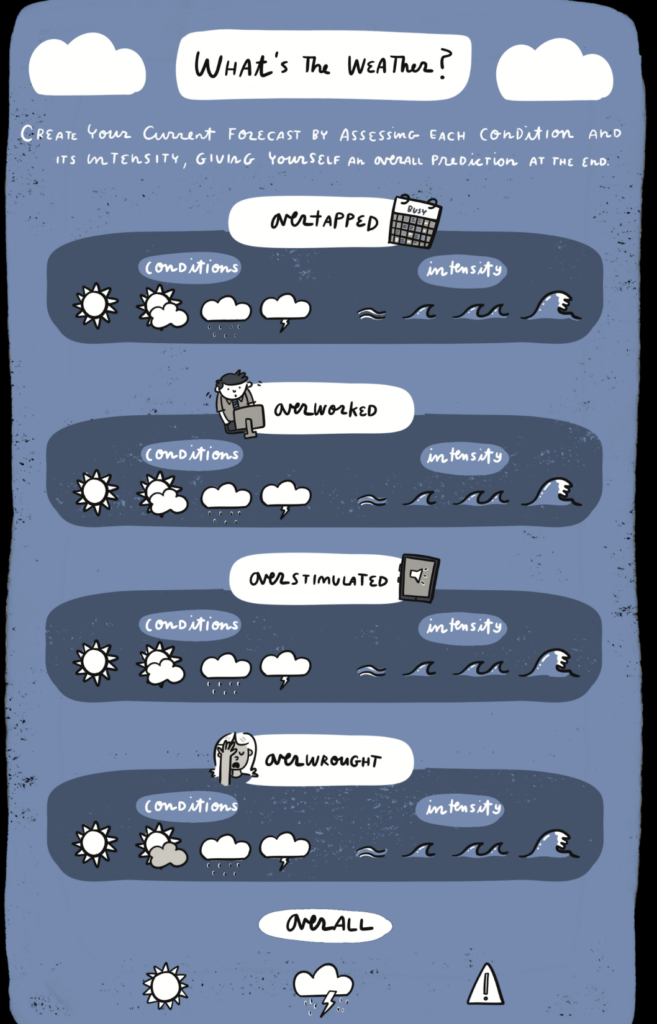
She names four conditions shaping modern life: being overtapped, overworked, overstimulated, and overwrought. These are not personal failures. They are environmental realities. Naming the storm, she argues, is the first act of navigation.
Rehumaning as a Systems Imperative
The heart of the book is what Krauss calls “rehumaning.” It is a return to the evolutionary essentials humans relied on long before industrialized schedules and institutional constraints reshaped daily life.
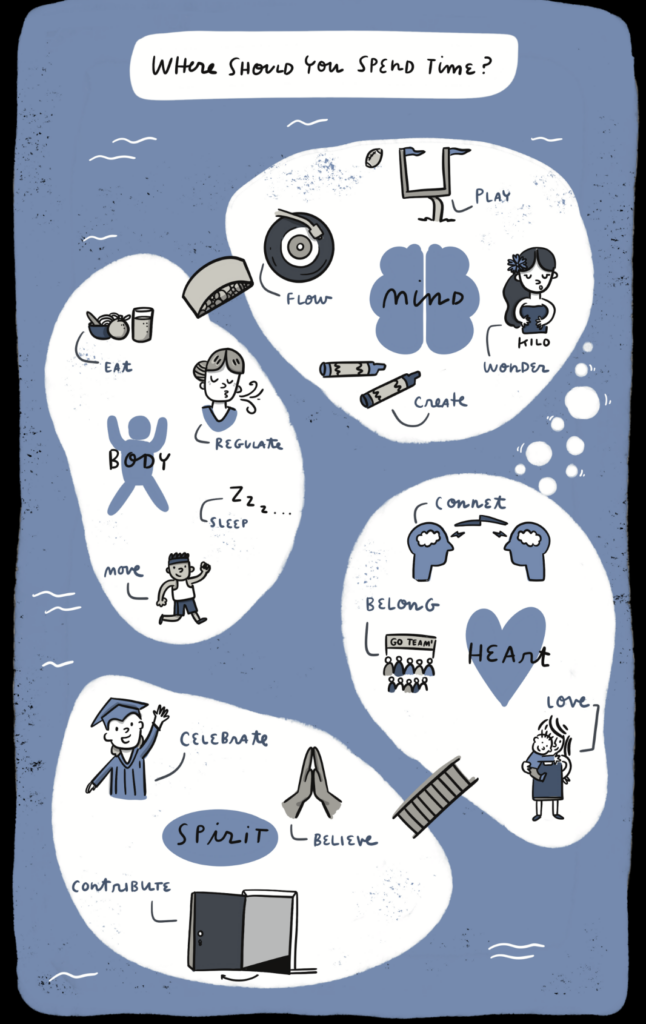
She organizes these essentials across four domains:
- Body — eat, sleep, move, regulate
- Mind — play, wonder, flow, create
- Heart — connect, love, belong
- Spirit — celebrate, contribute, believe
Reading these chapters, I found myself pausing often. Not because the research was dense, but because it was deeply resonant. I saw my own experience in her pages. I recognized our systems.
Krauss weaves research, expert insight, and her own lived experience of homelessness and recovery into a narrative that feels grounded and earned. She does not romanticize resilience. She questions why so much resilience is required in the first place.
Schooling, Exhaustion, and Authentic Learning
For educators, the implications are significant.
Much of what we call “schooling” is tightly managed, time-bound, and rarely authentic. It asks students to comply before they can contribute. It fragments their day into short bursts of cognitive output with little space for regulation or reflection.
Is it so surprising that students disengage in environments that restrict movement and compress curiosity into static blocks?
Krauss does not shame schools. She asks hard questions. What does a typical day allow? What does it restrict? What are we asking children to endure in the name of achievement?
Her framework makes a case for expanding learning beyond the artificial boundaries of “schooling.” Internships. Community-based projects. Real conversations with adults doing real work. Experiences that engage body, mind, heart, and spirit at once.
At Getting Smart, we often advocate for real world learning and expanded ecosystems. Krauss adds an important lens: authenticity is energizing. Artificiality is exhausting. If we claim we are preparing students for purpose-driven lives, how are we honoring the human conditions that make purpose possible?
Wayfinding, Agency, and Transparent Competencies
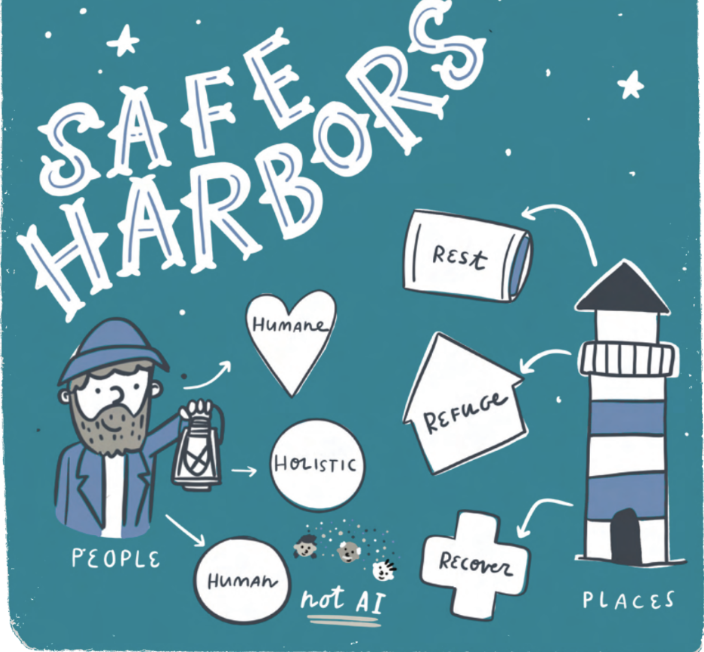
The navigation metaphor runs deep. Wayfinding requires both direction and self-knowledge. It requires a safe harbor before a long journey.
Belonging is that harbor.
Without belonging, there is no risk-taking.
Without regulation, there is no reflection.
Without reflection, there is no agency.
This is where Krauss’s work deepens our conversation about personalized and competency-based learning. Transparent competencies help make growth visible. But agency is more than clarity of outcomes. Agency requires self-awareness. It requires space to understand one’s strengths, interests, limits, and motivations.
In systems with no room for wonder or rest, agency is squandered. Rehumaning reminds us that purpose-driven work is not built on acceleration alone. It is built on identity formation. On belonging. On opportunities to contribute meaningfully.
Rehumaning Adults for Sustainable Change
We cannot design human-centered systems while operating in survival mode. Rehumaning is not a wellness initiative. It is a systems strategy. Sustainable transformation is impossible if adults are depleted.
In our Portraits of a Graduate work, we often talk about alignment between vision and daily practice. If we want graduates who are resilient, reflective, collaborative, and courageous, adults must model those traits.
That modeling requires psychological safety. It requires pacing. It requires leaders who treat rest not as weakness, but as stewardship. We cannot ask students to thrive in systems that adults are barely surviving in. Storms are real. But so are safe harbors. Schools can be either.
When adults are overtapped and overwrought, innovation becomes compliance. Risk-taking disappears. Vision shrinks to maintenance. Rehumaning is an act of leadership. It is a choice to design schedules, grading practices, and professional cultures that sustain human capacity rather than drain it.
Questions for Leaders and Designers
Krauss’s work invites reflection. It also demands action.
- If rehumaning is essential, not optional, what are we willing to stop doing?
- Where does our daily schedule promote regulation, and where does it undermine it?
- Are our grading systems aligned with growth or speed?
- In what ways does our version of schooling energize learners, and in what ways does it exhaust them?
- How are we cultivating belonging for adults, not just students?
- If purpose is our aim, where are students practicing contribution now?
- What would it look like to treat rest as a leadership strategy?
A Final Reflection
We are living in stormy conditions. Our students feel it. Our educators feel it.
Rehumaning is not soft. It is disciplined work. It asks us to redesign schedules. To rethink grading. To reconsider expectations. To examine our own pace.
Rehumaning is essential, not optional. What are we willing to stop doing?
For more information on How We Thrive, visit stephaniemaliakrauss.com.


0 Comments
Leave a Comment
Your email address will not be published. All fields are required.