

Donna McDaniel on Real World Learning
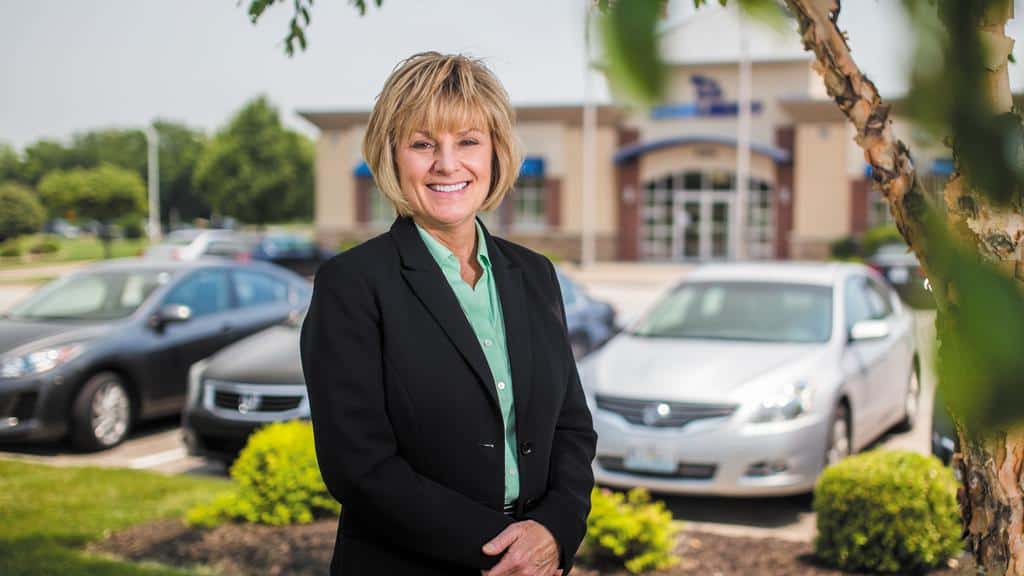
- Donna McDaniel
- Blue Valley School District
- Blue Valley CAPS
- Ewing Marion Kauffman Foundation
- Rashawn Caruthers
- Northland CAPS
- Ewing Marion Kauffman Foundation’s Real World Learning Initiative
- PREP–KC
- Hickman Mills School District
- Getting Smart Podcast Ep. 265 — “Corey Mohn and Shameka Montgomery on Next–Gen Career Education”
Transcript
This transcript has not been edited for spelling accuracy.
You’re listening to the Getting Smart podcast where we unpack what is new and innovative in education. I’m your host Jessica and today we’re talking with Donna McDaniel on professional learning and real-world learning. Donna is a longtime educator that has bridged the worlds of business and education.
Through experience in numerous school settings as well as sprint, Donna has invaluable experience for knowing the ins and outs of what qualifies as real-world skills. She took this knowledge to create the CAPS program in the Blue Valley School District, which has gone on to create a network of more than 70 professional learning-centric schools in the United States.
Donna is now supporting Kansas City’s Ewing Marion Kauffman Foundation as they seek to implement a novel regional movement towards ensuring that all students graduate with valuable professional experiences. Let’s listen in as Tom talks with Donna about her journey and the importance of professional learning and market value assets.
All right, Donna McDaniels, welcome to the Getting Smart podcast. Thank you. Hey, Donna, we’re joined today by Rashaan Carruthers, another Kansas Cityite. Donna, it’s always great to see you. Rashaan knows a lot about the real-world learning initiative from her own experience, so I’m
excited to have her join us. Rashaan, I think we actually met as a result of this real-world learning initiative because we went and visited a bunch of schools together, right? Absolutely. It was like I was a part of the Getting Smart team early because every time you all were
there, I was there and I loved every second of it. I learned a ton. Don’t you remember, Tom? We were chasing after her. She’s coming through the buildings and high heels.
Do you remember that? Well, we did the fastest 5,000-step school visit in recorded history where we visited manual and we did the whole building in about 12 minutes. Three steps of exercise. Rashaan was leading both manual high school as well as career and technical education
for Kansas City, Missouri. We’re really thrilled that she’s joined us here at Getting Smart. She knows a lot about and is really passionate about the real-world learning, so she’s agreed to help me out here today. Donna, let’s go back in the wayback machine.
I’d love to know why you decided. You grew up in St. Louis, right? Right. I should do it. You decided to study education and do it in Kansas City, so why education?
Yeah, I grew up in an entrepreneurial home where we pretty much dream big. But I will say that just helping others started early on. So teaching gymnastics when I was in high school, working with special ed, folks in S-shelter, so some early caps like, if you will, experiences provided the opportunity to really feel like education was my passion.
And the other thing is school wasn’t easy for me as a kid. And so I think that was another really important piece to building my career. Donna, you struggled as a reader, so it’s interesting that what caused you, for somebody that may have struggled with parts of school, what attracted you about being a teacher and then a school leader?
When I had teachers that were very hands-on and we could experience the world outside, when I really thrived, it was so much different than writing. It was one of those passions of mine to say, can’t school be like authentic work and authentic hands-on experiences? Donna, you went on to be an educator on both sides of the river there.
Did you start in Shawnee Mission? I really started in Grandview, which I think that’s, Rishon was there at one time. Of course, she’s way younger than me, but that was my first job, was in the Grandview School District and it was 31 first graders and their teacher had left. And so like at mid-semester, oh my God, for a first-year teacher, that was hard.
Yes, it’s never easy and that’s absolutely where I started. And so we definitely have similar paths and you started off kind of mid-year when I asked it, I, and it’s very difficult to come in and kind of pick up the pieces, but you seem to have done a really great job just obviously judging by your career path. So, but we also had another similar path where you were this friend and you started off as
friend before you were a district administrator spending half a dozen years in marketing and customer service, which I did too. So can you tell us a little bit more about that experience? How did you get there and what did you take away from it? I think the most important pivot I made was moving from the world of education.
I was a principal and that was, that was sprint. And so the two different cultures were immediately juxtaposed, I guess, and learned so much about the fact that I didn’t know what the world of work really was. I had been preparing myself and the team to prepare students for a world that I hadn’t even lived in.
And that was a aha from the very beginning. And I really honor sprint for all the training that we had and many of the things that have built my latter years of my career, I’ve taken right from the business world and brought those learnings into the world of education. So very grateful for those times.
I think it’s definitely great to have that balance and any time that you can balance the business world with the educational world of students win every time. Yeah. I think all three of us are. Because I didn’t realize in that environment how far off we were as educators and what
we thought was important for students to learn and measure was we were really missing the mark. And so, yeah, so living in that world, I’ve always thought how important that should be for teachers or administrators to live in that world for a little bit, just to understand the perspective of what your young people are going to face when they move into the
world of work. Donna, you went on to be a district administrator in Colorado and then we’re glad that you came back to Kansas City. You had the opportunity to start a new program in Blue Valley, which is on the Kansas side of the river called CAPS.
What’s the origin story of that program? Yeah. At that point, 2008, just imagine we’re in the height of the recession and I was coming back to Kansas City. Tom Trig was a superintendent in 2008 and working on a program idea for high school
students, juniors and seniors, and they felt like that they were really not maximizing their community. They had parents that were engineers, they had parents that were in the world of medicine or construction, all kinds of different, but they weren’t pulling them in at all to be involved.
And so, the program purpose was to provide some connection to the authentic work world and give or maximize the amount of community that they had around them. He, Tom Trig, let me do something that I don’t know that if we wouldn’t have been able to do, we wouldn’t have what we have today, and that is we let industry lead everything. And he was willing to look beyond what the traditional education rules, regulations,
structure systems, and say, if we build it in that school system structure, we’re going to end up with another school. But if we allow ourselves to be building through the eyes of industry partners, partners from nonprofits, government, et cetera, we’d end up with something very unique and that letting him or having him let us do that, that’s why the program is so fundamentally different
than a traditional school system. I remember walking into CAPS for the first time in Blue Valley, and I was just in total eye. I had never seen anything like it, and this was just a few years back when I was working in Kansas City, and it was just amazing.
When I walked out after I learned about it and saw it, I wanted to be a student there, and I was, you know, an adult. And so, I could only imagine the experiences that students were able to have in that space, which is just so powerful. And so, you’ve written a lot about the entrepreneurial mindset.
How does CAPS develop it? Well, a few reasons why. Number one is the kinds of people that were hired and continue to be hired are a blended approach. There are industry partners that are teachers.
There are teachers that are nurses. So, in other words, at one point, I think it was about 50-50. You know, you had these masterful high school teachers that kids absolutely loved, but then you mixed it up with industry partners as teachers also that were there every day doing the same type of work as a master high school teacher.
So that was one thing. And that created a mix-up or a mash-up that allowed it to be very entrepreneurial and almost a prototyping atmosphere. We also were very keen on, and we called it rapid prototyping as far as curriculum. So you know, you can imagine curriculum in a high school never really changes maybe seven
years or the way, you know, that kind of cycle. Well, ours could change in a week or a day, depending upon what Cisco was saying as far as what was important now versus what was important a month ago. And that iterative entrepreneurial type of thinking was prevalent all the time. We also let students explore.
So we were trying to solve problems that were out in the world, and there is no one answer. And so that created that opportunity to really explore way beyond. And I’ll never forget the first time, because we did a lot of projects for clients. You know, this is how we built the muscle of entrepreneurship. There was a group of kids that created an app for a client, and they began to realize
we’re good enough to be able to do this on our own and create a business. And that was the light bulb all of a sudden went off. And now that I’m at the Kauffman Foundation, one of the most interesting things research-wise is that entrepreneurs have, the best entrepreneurs, have had some time in the world of work and understand some of the nuances before they innovate and really hit a entrepreneurial
stride. And that’s exactly what we saw with students. Once they began to see what they could actually produce, whether it be prototypes of design or video or film or whatever it was they were producing, they began to realize they had the capacity to start their own gig at the 17th year old.
Donna, CAPS is kind of a next generation career center. Most students are there for about a half a day. Is that about right? Yes. They’re two and a half hours, either in the morning or the afternoon.
And we are giving high school credit for that and college credit. So they are allowed to, you know, really this is a part of their day. And the only thing that I would add is when you say a career center in the history, that was just for some kids, you know, the some kids that went to the career center. It caps us for every kid because there isn’t a young person that doesn’t want a successful
career. And that exploration early on almost fast forwarding them into that career really helps them understand and I thought I wanted this, but I can’t stand the smell of blood. Or this is my juice. I love this stuff.
I now know what is going to create such an amazing opportunity for me in the future. So yeah, it was it was half and then some programs now across the nation that have replicated some of those programs actually give core credit for some of the. So it is a instead of program. So I can get my English senior year credit this way versus, you know, a more traditional
way. So this professions based learning program, you not only created this amazing new center, you created a second one in the north part of the city called Northland Caps and our mutual friend Corey moan who’s taken the leadership of caps has now turned that into a national network.
I think there’s about 70 school districts around the country that have taken that framework and and made it their own. So we just want to acknowledge that you really launched what has become a national movement in in real world learning. So we really appreciate caps and what it has what it’s become.
I want to talk about a second sort of a national movement that you helped to create in Kansas City called the real world learning initiative. A few years ago our mutual friend Susan Wally from prep KC wrote a piece where she described a set of valuable learning experiences that every student should be able to access and she called those market value assets.
These valuable experiences include internships and client connected projects and industry credentials entrepreneurial experiences as well as college credit. How did that idea turn into a regional initiative sponsored by the croppen foundation? Well, I’m so grateful that you give the wisdom of Susan Wally and her team because that’s really where this fundamentally started with six urban high schools in our region and some
charter schools. And she was able to prove really through a study that followed these young people beyond their high school years and could could really say that these assets are beyond the diploma and there was a correlation between having those assets and being successful after high school.
And so one of the things that the coven foundation asked me early on to do was a landscape across the six counties in the Kansas City region and we found that there were multiple programs that were providing these assets. So it wasn’t as if this work was not happening. It was happening.
It was happening across the region for some students and that was the issue that the found at Koffman Foundation had. We had strong strong values around equity and we couldn’t understand why it wasn’t happening for all students. And so that was how the coalition began.
And we thought that if we could provide some catalytic funding, not big money, but some catalytic funding to get districts to really look at how they could expand and enhance or create new opportunities with the audacious goal of 100 percent of all students leaving high school with one or more of those market value assets. I think the reason why it took off is two reasons.
We were not as a foundation saying here’s a program now you all need to do it. What we were trying to coval us is outcomes and agreement on what those assets would be. So how a district got every single kid to leave high school with one or more. That how was up to them.
And we all know that those run in some boundaries of I mean you have to do high school different to be able to allow all students to participate in those types of that. So we did not put that it was a loose tight type of a model. The loose part was how the districts would actually move forward and escalate and accelerate but they were already doing well and add on new.
That was the loose part. The tight part was the tight definitions of what those assets would be so that all students leaving high school with an internship could have equity in the quality of that asset across our region. We thought we thought three superintendents would take well that was way more than we
thought and we ended up with a lot more. And part of the reason why is we let them invite each other in. We didn’t do any inviting. It was very organic among those superintendents bringing each other on board. I definitely think that was the key Donna with the superintendents.
I know that’s no easy feat but the fact that you let it be organic is definitely a huge win for the region. And I like that you didn’t put structures but like when you said that you made sure that the definitions were consistent because I know one of the goals of real world learning is regardless of if a student’s in shiny mission or Kansas City or Grandview that the
definitions of what counts as college credit what counts as an entrepreneurial experience is all the same because we understand that sometimes our students are very transient. So having the same experience regardless of what district they’re in definitely went along goes a long way in creating that equity. And you’ve had such a remarkable remarkable response from school districts and employers.
You’ve gotten school district or superintendents in the same room. You’ve gotten board members in the same room across all districts. You’ve got post-secondary in the same room. So everyone is speaking the same language. Why do you think there has been such a strong support across the region for this real world
learning initiative? Well I believe that the common language is one of the most powerful tools that we can begin to use. And quite frankly we are surprised that it went as fast as it did. We knew that we couldn’t do this just teachers.
It needed to be the whole system. Relationships with superintendents and also relationships that were already there with superintendents. And quite frankly they are competitive. And so they wanted I think it became this one know about what this is I want you to know
what we’re doing in our district that’s really exciting and special. So there was a real sense of pride because again we did not say this program is right and this program is wrong. It was however you as a district as a community going to create more opportunities. So I do think that that’s one reason.
The other reason is that there had been enough almost a decade or more of districts reaching out to employers across the region. And it is very transactional but there had been enough of that happening over the years that we had an employer base that was supportive and positive. They wanted it streamlined but we at least had that employer base.
And then I also think that because we as a Kansas City region very focused on you know prosperity for all. So the civic part of this work also was on an accelerator too. And so all of those things pretty much collided to help support the movement or the momentum. Donna how many high schools are involved now?
Now there’s over 75 high schools involved. It’s 30 districts and or charters and the most exciting part I find is that it’s all kinds. It’s rural, it’s urban, it’s first range suburban, it has been fascinating. That was one of my goals.
I moved up to open and the Northland Caps is I wanted to make sure people knew that this type of real world learning works for any kid. It doesn’t matter what or where this type of real world learning where educators, students, community, business partners all are working together. It works anywhere.
It doesn’t just work in an area that’s fluent and has high achievement levels. And so yeah it’s quite a large group, quite a large group of educators and employers. And you have to be excited about some of the individuals that sexes that schools are beginning to have but in your opinion what has gone better than expected? I think that what we knew from some of the iterations of these early programs is if a
district had a connector that was housed inside of the school district and their role was to really be that outside face to the business community, to the non-profit, in other words creating and really almost soliciting those types of partnerships and that’s all that person did and that seemed to work really well. And so through these design and plan grants many of these districts have actually hired
someone to play that business to education connector and that constant drumbeat of bringing in those partnerships and some of those hires were business people. They were headhunters before, they were managers before. So it was almost like those bridges began to be built between education and the world of work like super rapidly and because of who they hired that has gone better than I had
expected and now we’re to the point where most all of these districts have a focused and dedicated person that’s pretty high up in the district level that is totally dedicated to those partnerships and I think that has, it’s like accelerant that we put on this work. And I’m glad that the Kaufman Foundation has been so gracious to provide those funds to help those districts put that position in place.
Don, it’s been fun to watch those opportunity wranglers make a difference in their community. I think of Dylan and Fort Osage, more of a rural community and the way that she and the team have been creative about connecting kids with opportunities. Some opportunities inside the district of thinking about the district as an organization that can provide rural world learning as well as that expanded community I think of Jake
and Hickman Mills and the way they’ve rallied the business community there. It’s really been exciting to watch. Yeah, I think that that is role modeling for high school teachers what those relationships could really look like and we knew that if there was enough prospecting or wrangling as you say.
These people are out working it. They are. They are. You know a lot of them are, well I will tell you early on, do you know that the second person that was ever hired in the CAPS program was a retired GE national account sales manager
and he and I, John Newcomb and I, we were wrangling as many businesses as possible. He would never take no for an answer and there are now 30 or more of those kind of people sprinkled all across the districts in those six counties and that’s making a big difference. What have been some of the challenges that high schools have faced trying to expand access to rural world learning?
I guess one of those challenges you can add is trying to do this during a pandemic which has made it hard but how do you think about some of the general challenges that schools have run into? Well I think that at one point it was transportation which is interesting and now with the virtual project work that students are doing or the virtual internships, yeah they might not
be as effective face to face but wait we kind of got rid of that transportation issue and that created and created in interestingly enough created less friction for students, teachers and for that employer. So but I will say with the pandemic and the economic cycles that we’re in right now, employers are doing their best to still put this at top of mind but you know that’s a little bit
of a struggle. So we really are having to work hard at creating project work that really benefits that business or that non-profit so that they can feel like they can justify in all of the work that is important to do. I think the other thing that we, this is a locus of control shift for teachers.
There’s much more locus of control with the student, the student teams, there’s some control from an outside employer. That’s different than what we have traditionally seen in a high school classroom and I think so I think that’s a shift and then just the pandemic itself is that we’ve got now teachers that are having to make that shift into a virtual environment so it’s been pretty compelling.
I have not seen a slowdown though you know people we thought that once you know this whole shutdown happened that real world learning would be like put on a back burner but from what we’ve seen and heard from superintendents and high school principals that’s not the case and that I find interesting because some of them are saying that this is the type of work that’s keeping students engaged, that’s keeping them connected because it’s authentic
work with real people from the community. Rashawn as a district leader in Kansas City you I think like some of your colleagues experience some of the challenges of doing this, of trying to create real world learning experiences but inside the old policy confines of a master schedule so C time was an issue sometimes certification was an issue.
What were the other challenges that you yourself faced but that you saw others face? Yeah luckily we were all trying to figure it out together it just wasn’t a one district problem so coming together as a region and as a state was very helpful to be able to lean on each other. Yes those challenges were an issue that you stated as well as how do you get students to be able to have their performance based assessments in a non-safe environment
what does that really look like fortunately as well the state of Missouri was with us as far as how can we be more flexible how can we extend time for students to get their credentials how can we eliminate some of the barriers that once existed that a student had to do before they could get a credential so it was just a matter of just working together working inside of the school district working inside the region with the other careers and our directors
and then helping students counselors administrators to understand that we know that this is important to you lots of communication and we’re going to do our best to help you figure it out so that you can get the credentials that you’re looking for especially those seniors. I want to just underscore that I’ve never seen a region work together in the collaborative sort of way that it’s really really remarkable. The superintendent still get together on on a video call every other week
there’s a lot of job-alike connections that are happening across the the region. I just don’t think we’ve seen a high school initiative like this in America and and Don I think you deserve a lot of credit for creating the the conditions for that to happen. Don I have you you’ve talked to the commissioners in both Missouri and Kansas do you find them generally supportive of what the districts are trying to do? Yes we knew that some of this fully implemented would require some level
of legislative regulations that needed to to make this easier and so both commissioners in Kansas and in Missouri are very much in support of this work and what’s interesting is that there were efforts going on in Kansas in a redesign through their commissioner and real-world learning is now embedded in that across the state of Kansas and then there were multiple CAPS programs all sprinkled across in Missouri and so that commissioner and that governor also have seen you know evidence of
this working in all different parts of Missouri and so both of them have been very supportive of this work and but I do think it’s interesting because the thing that is still a challenge is we still fund on seat time and so even though both of them are very supportive of having seat time not restrain so there is a there is some work to be done from a legislative standpoint if we are ever to see this in true fruition. And Donna you’re a strong advocate across the region for
getting kids core credit for these real-world learning opportunities because in so many settings they’re actually developing and demonstrating writing and communication, problem solving, science, social studies so you’ve been a great advocate for much more flexibility on the credit front right? Yes and I would say with our current state in both hands in Missouri there are no excuses for not offering core credit. They have their flexibility and certification of teacher,
their flexibility in how you take standards and demonstrate that those are a part of a core credit so it is so they’ve opened the gates it’s the will of the districts to and then the support of administration inside of districts to give core credit for this there’s nothing standing in our way. And even if it was standing in our way you would find a way to move it out of our way so we’re extremely grateful for that. Could this real-world learning initiative be replicated in other states?
I believe it can be replicated in other states and the reason why is because high school across the nation is very very similar. So if you look at why CAPS has spread across in other areas it’s the same thing. Now what I would say is that to replicate this it’s not just schools so you really have to have a community and employers and civic that are interested in young people and talent coming out of those high schools to really make this work education we just can’t
do it by ourselves. Yeah but I do think it can be replicated because strong similarities in any of the cities that you might want to take a look at. Well you’ve done a lot for it for these first couple of cohorts and to move this work forward and I kind of hesitate to ask this question because I’m sure the people in 2015 were asked the same question they had no idea that 2020 would look this way but I’m going to ask anyway. What do you hope to see in the next five years as it relates
to real-world learning or just education in general? One of the most important pieces is we need to know if this is working and we need the data that would support and show that because of these efforts these young people five years out have a much higher propensity of having a quality wage and a quality career than if they did not have these experiences so that’s a huge for us to really make the biggest shift we need the data we need to be able to prove that so I’m
hopeful it will have that mechanism up and running and be able to demonstrate but second my hope is that this propels all the way back into pre-k and so that it’s not we knew all along that this is not just in high school you can’t this needs to be a systemic opportunity for young people all throughout their years and so that would be my other hope is that it would spill into the continuum of pre-k12 and then my final hope would be that there would be no transition from high school to
the world of work or to higher ed or it would be totally seamless like kids could make those transitions at any time at any point and move within and learning and yeah in five years for Sean let’s get that done got it I just want to underscore one of the coolest things about the real-world learning initiative and that’s the emphasis on entrepreneurial experiences the Kauffman Foundation has been a national advocate not only for education but for entrepreneurship
and what I deeply appreciate about this initiative it’s not just about helping kids get a job or think about what job they want it’s also about making a job making a difference finding a way to make an impact in your community and and so entrepreneurial experience is one of those uh for valued market uh market valued assets and uh I think that’s a terrific part of this and it it really goes to the the values and commitments that are so important at the Kauffman
Foundation so yeah I I think that um we we’re we already are in a time of where you’re putting multiple gigs together to create a sustainable income and I believe that this pandemic interestingly enough has created even more of an opportunity for people to make a job and that job may be multiple dimensions where young people are not only coding but they’re doing this they’re doing that and then that is a whole pie of an income that is the sustainable for a family um this is
this is what we believe in is that type of entrepreneurship is and can be started very early in a young person um humans are typically entrepreneurial until we crunch it out of them in third or fourth grade so if we can just start when they’re young and and and again that would be a hope of mine that this pushes into our all the way to pre-k. Dona McDaniels we uh we really appreciate your leadership in Metro KC as I said at the outset we think this is the most important
high school redesign initiative in America it’s so exciting that you have 75 high schools working with you in a collaborative and creative regional enterprise it it’s transforming high school education in the region and I think it’s going to help America think differently about what what high school should be. Rishan closing thoughts on on on having been part of starting this out? It’s truly an honor it’s it’s going to be life-changing for kids that already
has and the connection that kids are now able to make in a very clear and defined way the the conversations that they’re not now able to have because they have the definitions and the terminology to do so will be powerful so I’m excited like you to see what’s going to happen in the next year in the next five years and beyond and the the impact that it’s truly going to have on the Kansas City area students is going to change the trajectory of their families and that’s important.
I would be remiss Tom and Rishan and Rebecca and all other getting smart colleagues to say if I don’t say this you all have been with us side by side learning and working together from the very beginning and we deeply appreciate that expertise and support and just your connections nationwide has made this this work so much more compelling so we thank you and continue to thank you as we plow this new environment together. Hey we’ve visited a lot of schools together Donna I just
hope we can do that again in the very near future. Yes I I do but wave a wand and we’ll be back. All right thank you Donna. A big thanks to Donna McDaniel for joining us on this week’s episode. We appreciate her commitment to the intersectionality of education and the workplace. For more on professional learning experiences and the CAPS network check out episode 265 with Corey Moan and Shamika Montgomery. We’ve got it linked in the show notes and on the blog and like
always make sure you rate and review the podcast and hit subscribe. All right that’s it for today listeners thanks for tuning in for the Getting Smart podcast this is Jessica signing off.

0 Comments
Leave a Comment
Your email address will not be published. All fields are required.