


The Return: Leading Systems Towards Healing with Love with Kristi Dominguez and Ellen Dorr
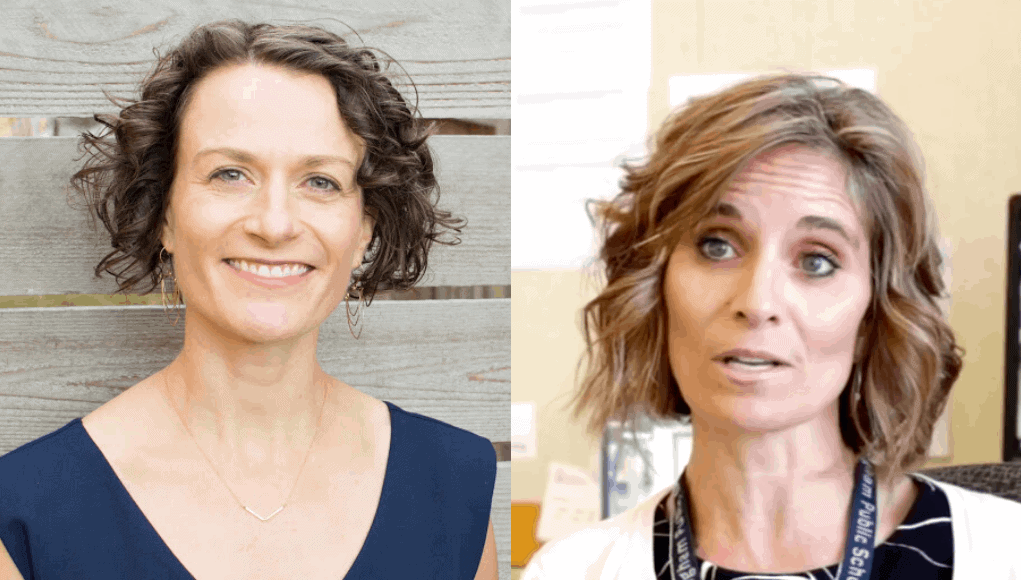
In today’s episode, Kelly Niccolls, Learning Design Manager from the Getting Smart team, is joined by Kristi Dominguez and Ellen Dorr for a follow-up podcast on leading school systems towards healing with love.
Building upon their first discussion in episode 252, Ellen and Kristi focus on the commitment of leadership practices and tending to the exhaustion of students, staff, and stakeholders. In addition to the uncertainty of the pandemic, Kristi and Ellen also talk about the current state of the nation and how they are taking action as leaders to ensure all students and their families know that they are seen, heard, and loved.
This episode dives into the depths of leading with love; that love is truth, love is a commitment, love is being clear and direct, and that love is making tough decisions. This relentless love is what Kristi and Ellen lead with to ensure that all students are the center of decision-making and that they continue to work towards the future of school systems that will heal better. In their conversation, they talk through the leadership challenges of planning for the return to school this fall, in light of COVID-19 safety regulations, discuss the ways that they are learning, how they are leading practices towards anti-racist outcomes, and how they have been finding ways to nurture through such times of pain and peril.
Key Takeaways: [:10] About today’s episode. [2:22] Kelly Niccolls welcomes Kristi and Ellen to the podcast! [4:33] What preparing for the fall semester looks like from dealing with the unknowns to continuing to do the right things for kids and providing relevant, meaningful learning experiences that they’ll want to be engaged in. [9:57] How Kristi and Ellen are taking into consideration the current protests and BLM movement when thinking of their next moves as leaders of school systems. They share how they will be serving the students that are harmed in systemic oppression and racism through being intentional in their actions as leaders and tending to the hearts and souls of those who are hurting. [15:56] About the Getting Through microsite. [16:37] How Kristi and Ellen are identifying the key pillars that they need to lead through and be really diligent about, not making any negotiations to ensure that school systems do come back new and changed in ways that are necessary to uphold the liberties of all children and to be exemplary of what high-quality teaching and learning really look like. [20:18] How Kristi and Ellen are able to hold the space to honor conflicting important suggestions by stakeholders, students, teachers, leadership teams, and the community while co-designing. [26:35] Bright points of their collaborative work, outcomes that they’re pleased with, and things that are on the horizon for teaching and learning. [29:29] How Kristi and Ellen are leading with love through the work that they’re doing; where they are seeing love, hope, and optimism; and how they are feeling and experiencing love throughout the community. [35:20] Kelly thanks Kristi and Ellen for joining the podcast and sharing their insights!
Mentioned in This Episode: Kelly Niccolls Ellen Dorr Renton School District Kristi Dominguez Bellingham Public Schools Getting Smart Podcast Ep. 252: “Kristi Dominguez & Ellen Dorr: Leading Central Systems Through COVID-19 with Optimism, Hope & Love”
For more, see:
- Jeb Bush on Digital Learning Now
- Getting Clearer: Our Students Need Sponsors, Not Saviors
- Getting Clearer: Human-Centered Design
Stay in-the-know with innovations in learning by signing up for the weekly Smart Update.
Transcript
This transcript has not been edited for spelling accuracy.
You’re listening to the Getting Smart podcast where we unpack what is new and innovative in education. I’m your host Jessica and on this week’s episode we’re bringing you a discussion between Christy Dominguez, Ellen Dorr and Kelly Nichols as they come back together to talk through the leadership challenges of planning for the return to school this fall in light of
COVID-19 safety regulations. Depending upon their first discussion featured in episode 252 which included the themes of optimism, hope and love, Christy and Ellen focus on the commitment of leadership practices and tending to the exhaustion of students, staff and stakeholders. In addition to the uncertainty of the pandemic, Christy and Ellen talk about the current
state of the nation and how they are taking action as leaders to ensure all students and their families know that they are seen, loved and matter. They discuss the ways they are learning, leading practices towards anti-racist outcomes and finding ways to nurture through such times of pain and peril. This episode dives into the depths of leading with love, that love is truth, love is commitment,
love is being clear and direct in holding difficult conversations and making tough decisions. This relentless love is what they lead with to ensure students are the center of decision making and that they continue their leadership steps towards the future of school systems that will heal better and brighter for future generations. Let’s listen in.
Well, hello. This is Kelly Nichols from Getting Smart and I am here with a follow up podcast with two of my dear colleagues, Ellen Doar who is Chief Technology Officer at Renton Schools and Christy Dominguez, Executive Director of Teaching and Learning for Bellingham Schools. The three of us talked a few months ago about leading in a pandemic and right at the beginning
of the times of COVID-19 closures for schools. Here we are in early June and many things have happened between our first conversation and now. Wanting to check in as we not only are thinking about the reflection of leading through this spring with school closures but also in preparing for the fall and still continued uncertain
times. So Christy Ellen, I’m grateful for your time and I would love to just kind of check in. How are you? Well, that’s a great question Kelly. I find that I laugh a lot more now and I’m not sure if it’s nervous laughter or exhaustion
but it’s been, I am not going to lie, it’s been difficult, it’s been hard and at the same time I can see silver linings of that idea that we were thinking back two months ago around optimism, hope and love and I can begin to see the fruits of some of those seeds. I love hearing that. I also have been exhausted, I guess.
That’s the word. And I feel it with the other leaders of my work. I sent a note to some high school principals yesterday because, or high school administrative teams because they had pivoted and made this amazing graduation celebration for our students. They had to set up these drive-thrus with tons of balloon arches and really made a meaningful
experience for students and families and it was no small feat. And I just sent them all a note saying, that’s amazing, the way you care for your students and community is really, really powerful. And one of them replied, we’re all so tired so this note meant so much. We have to just keep finding those places to tell people we see them, we see what they’re
doing, we appreciate it, that it’s recognized and it’s meaningful. Because watching I went for a few hours and got to cry tears of joy and pride with school teams and with families, whole families in the back of a pickup with their graduate wearing their gown and their cap, it was really, really beautiful. It was such a moment of real optimism.
It’s really great to hear in terms of the celebrations. And yes, so thinking about exhaustion, here we are, we are central office leaders, we’re exhausted, we know our school teams are exhausted, we know our families, we know our students are exhausted and we also know that we have a major sprint to run in terms of preparing for a fall semester and trying to get things established to help inform families and students
what they will return to school like, like what it will be and all of these logistics and details and of course the learning ideas as well. So tell me, both of you guys are different types of positions and also still very much part of these centralized leadership teams. What are some things that you’re talking about?
How are you inserting your leadership around human-centered design and tending to the known exhaustion of the people doing this work? Ellen, do you want to go ahead and go and share some of the frameworks that you’ve shared? So I think there are so many unknowns and I think that’s really tough for a lot of us. It’s really hard to think through what are the things that we can figure out and what
has to hold for later. I think like I have said to it, when we’ve been doing some planning with people, I was like, if you want to get yourself stuck, try to think through the logistics. So let’s not do that. Instead, let’s really think about opportunities that we have to really focus on meaningful
learning for students. And I think one thing that we’ve done that I really appreciate is we’ve taken a really collective approach to this. So we have over 100 teachers working in 16 work groups to kind of make learning recommendations around what we could be doing if we’re in a full remote model and if we’re in a partial
in-person model. And of course, there are all kinds of connecting pieces to this. But what has been energizing for me and I think for our steering committee and for our work group facilitators is just the amount of energy around trying to figure out what we can figure out so that we can respond when we have more information from the state.
And people have not, even though they’ve very thoughtfully listed all the considerations and all the different pieces we need to be thinking about, they haven’t been stuck there. We’ve been really focused on the how do we continue to do the right things for kids? Like how do we continue to provide meaningful, relevant learning experiences that kids want to opt into because there will be some competing demands on their attention?
Yeah, I think that resonates a lot with me, that idea that it can become really daunting. I was just on a meeting about the reopening with labor leaders and we were just talking about if we get too mirrored down with the details, you just want to stop. And there was a great quote that one of my colleagues shared with me that it is possible to prepare for the future without knowing what it will be.
The primary way to prepare for the unknown is to attend to the quality of our relationships to how well we know and trust one another. And that was by Margaret Wheatley. And that resonated a ton with me and that idea that, you know, one of the things we’re saying is that in this new reality, the compliance will matter, but it can’t drive the bus, right?
Like we need that freedom to think differently than policy and law has thought before, than the structures that were created and we know it was broke, right? The system wasn’t working before and so this reimagining of what’s possible and that’s huge because, you know, it took 100 years to create this broken system and we think in two months we’re going to, you know, change it.
But it’s a colleague of ours, Trevor Green, Superintendent of Yakima Public Schools, you know, he talks about this analogy of really COVID has been stretching the rubber band. And if you let go of the rubber band, it’ll just go right back to the shape it was before. And so being thoughtful and intentional about where to put the stakes now. So as we begin to let go, we have a new shape, a new form.
And it’s really going to be based on the fact that it’s happening amongst the collection of the people in the room and especially the collection of voice around student and families. You know, they’ve been telling us for a very long time this isn’t working. And this is really our opportunity to raise them up and listen in a way we’ve never listened before. So that part’s exciting and how to do that in a couple months does seem a little bit daunting.
So it’s going to come with laughter and some tears, but also just that ability to allow ourself grace to know that we’re constantly just stepping forward. And, you know, if we keep moving in that direction with a really clear focus on what it is we’re trying to accomplish, I believe we can get there. I don’t have any doubt. That’s, well, that’s really hopeful, right? And I appreciate this, like, concerted resilience
in this is that, you know, we will get there, right? And naming challenges, so not going into idealistic, but also, you know, being protective of your energy and being concerted in terms of where your efforts and steps are to ensure what needs to get done does get done. And talking about, you know, the needs of our families and students and really, you know, listening to them and amplifying our work in response to the communities and students that we serve.
I do want to name the fact that, like, you know, this is a conversation being recorded during a week of protests and weeks of protests and a lot of dismay in the United States and furthered uncertainty in terms of our social structures and social safety and with, you know, the uprising of people very angry of police murders and, you know, the death of George Floyd. And I would love to kind of talk about that in terms of, like, this is another consideration and
real important aspect as we think about our next steps as leaders of school systems that are parts of communities and serving students who are harmed by, you know, systemic oppression and racism. And how are you tending to the hearts and souls of all of us who are hurting and in the best ways that you can? And how are you being intentional in your leadership and steps of action to support this work moving forward?
So important. I mean, I think, like, number one is talking about it. I feel like we’re in this, right, like people name this isn’t new, right, it’s just being recorded. But what is new is the amount of people who are saying and doing something now. And so, you know, all 50 states and 18 countries holding protests shows that, you know, hopefully we have, like, real collective action around advocating for the very simple statement that Black Lives Matter. And then I
think, like, what we need to do as leaders and what we’ve been doing this week, what I’ve been doing with meetings I’ve been in is speaking about it, like, giving voice to it, naming that this is the context that we’re in and that it’s hitting, it’s landing on people in different ways. So, when we met with our steering committee and work group facilitators on Tuesday morning, I named, like, like, a lot of us are really tired, a lot of us are really hurt, some of us are numb.
There are different ways that this is happening for us or different ways that we’re experiencing this. And we need to be cognizant of that. And someone texted me later to be like, thank you so much for even saying it because I like, I don’t like when it feels like it’s glossed over. And then our technology meeting that night, we kind of just talked about how we were, how that was, how we were doing. And I think it’s important that we continue to have humanizing practices as part
of how we are in, in community together. Yeah, Ellen, that is, that’s huge, right? And we’ve, we’ve heard that call all week, like, name it, be vocal about it. And I think what I’ve experienced before is, you know, it’s, it’s not like this hadn’t been brought to the forefront at moments in time. And that symbolic, oh, we, we see you, we hear you, and then we move on and continue to do what we’re doing. And the reality and what I’m seeing our leaders and teachers putting names of our
students in the space, saying, how is this any different? What happened to this child or this family in our system? Any different than what we’ve been, what we’ve been allowing to happen in, over time in this country and, and it’s real, it’s raised the sense of urgency, right? Like, leaders are like, we cannot afford to just live in an academic book study on racial inequities anymore as leaders, right? Like, what is our call to action? What, what are we going to quit
doing in our systems that perpetuate racism? It happens all the time. And that idea that, you know, a teacher came to me, she goes, do you know how many times I sent a child to the office for breaking crayons? And when I really began to think about it, it was always my little, you know, boys of color who were headed to the office. And I just thought, they need to learn how to behave. And, you know, so now she’s going through this cycle of seeing herself in the problem. And I’m hearing
those stories come out over and over and over. But what I’m still maybe not seeing, which I, that’s on me to help lead through, is how are we elevating the voice, right? Like, it’s still a bunch of us processing it and, and being paused long enough to really listen. And what does that look like for us? What does engaging our community really look like? And it’s calling into question some of our past practices. So no answers, but lots of reflection, lots of honest dialogue,
lots of anger, lots of tears, lots of emotion, which is all good. It’s that progressive tension. Hey, listeners, it’s your host, Jessica. I wanted to just take a quick break to share an important resource with you. Recently, our team launched the Getting Through Micro-Site to support educators, leaders, and families on the path forward during this unprecedented and uncertain time. There’s something there for everyone, whether you’re just getting started with your transition to
distance learning, or you’ve had plans in place for a while, and now have the opportunity to share your work and guidance with others. We hope this gives you a place for your voice and an opportunity to learn. We know we will get through this together. Check it out at GettingSmart.com, slash Getting Through. Okay, now back to the show. I appreciate that both of you doing immediate diligent work in response. And I think
talking about this element of how do we sustain and continue to do the work, knowing that this is not something new. And how do we again take advantage of this opportunity to put stakes in the ground that allow our school systems to return in the fall different in ways that are truly like living up to the expectations of the American education dream, which is that all kids can show up and be seen and loved and provided learning that matters in ways that allow them to
navigate their next steps in adulthood and achieve and be what they want to be. And we know that’s super complex and nuanced. So how are we, you know, as central office leaders, how are you tending to those stakes and identifying what are the key pillars that I need to lead through and be, you know, really diligent about not negotiate to ensure that our systems do come back new and changed in ways that are necessary to upholds,
you know, the liberties of all children and to really be exemplars of what high quality teaching learning can be under any circumstance. It’s a great question. And I was just when I was in a conversation with some leaders and teachers today, one of the philosophies that we put out is that, you know, who’s going to be privileged in the reopening, right? Is it going to be the staff who are content experts? Is it going to be the schedule? Is it going to be, you know,
who are we going to privilege? And how do we elevate the student at the center of what is it the child and the family needs in order to reenter the system in a way that we are elevating who they are and also not just glossing over content, but for the first time having a hard conversation about what does it mean to have high quality instruction that delivers for all students. And so those are the types of questions we’re starting with is being very intentional about the
fall and making sure that it’s not, you know, contracts happen, right? Like labor negotiations will need to happen, MOUs will need to happen. And I think oftentimes the adult needs of those who work in the system get privileged over the client in whom, which we serve. And so we’ve made that clear all the way across and everyone’s in agreement that we’re going to hold each other accountable, especially for the 10% in our system who are furthest from opportunity in the way the
old system worked. So how are we elevating them and privileging those students in the reopening and it’s designed for them, with them? Yeah, so it’s so important and so tricky. So I know that like we’re struggling to, and this isn’t new, but we’re challenged in terms of co-design with community. I think we’re better at getting input, you know, but real co-design is a reach for sure. So thank you. And so I like this idea of talking about and not to like
keep talking about challenges, but this element of co-design and not only the co-design and real collective practices of engaging our, you know, community and students and stakeholders, but also this co-design of our collaborative spaces, of our, you know, subcommittees and larger scale leadership teams and teacher teams and organizations. How are you holding this space to honor conflicting importance where people are coming to the table and everything that they’re suggesting
matters? How do you hold that in a way to love what they’re contributing and also knowing that important priorities and decisions will have to be made? I think some of it is just in being really clear and honest about that. Like one of the conversations that has happened once or twice when we’ve been working with our groups is like, well, what about grading? To be fair, like that’ll show up in our collective bargaining agreement,
and those are things that we have to think about, and we continue to push back to let’s think about what real meaningful feedback looks like based on assessment. And so it’s a little bit, it almost feels like a non-answer, but it is actually an answer. Like that’s what grading should be about, and like that’s not new. Trying to figure out grading practices is not a new challenge, but it is one that isn’t necessarily the place where we just want to spend all of our energies,
because what we want to be thinking about is like, how will a student know if they’re making progress? How will a student and family know about their learning? And that is where we’ve tried to reorient, I guess. Maybe that’s the verb, reorienting to the core beneath something, rather than the technical application of a grading policy. Yeah, I think we thought about it in our area as, you know, we created a county-wide coalition
to begin with to bring together seven school districts who are going to continue to push each other and serve as thought partners and bring the collective wisdom of the entire county to begin to have this conversation in partnership with key stakeholders who are at the county level. And then from there, developing some type of structure that provides for a different layer of voice that’s more focused on our immediate system. And I think, you know,
I got this actually from Ellen, is how are you making sure that people who want to be engaged in the work have a space to be engaged in the work? And, you know, that idea of differentiating opinions just makes us stronger. So how do we provide ample opportunity and space to have some of those conversations that are providing some, you know, really hard, honest dialogue? And, you know, I’ve had labor leaders at the table from the design of our structure. You know,
I see them as a key member of this and making sure that we are being honest with one another so that, you know, the transparency, so there are no surprises. So everyone has ownership. And so as the stakes are going in, there’s multiple hands on every stake. So it’s not being done to anyone, but with everyone. I appreciate that, you know, real explicit reference around with, right, and really an opportunity and access to be part of the decision making process. And especially as that is
those areas of transparency and collective impact and action aren’t the norm, right, of the previous educational context and to really be concerted around ensuring that voices are invited and have access and are part of the conversation and driving the work is so key to be that shift in the way that we lead and engage in schooling moving forward. Yeah, I would share one of our principles mentioned, you know, she’s shifted to a virtual parent meeting and she was a family meeting and she said, you know,
in the past, I would have an attendance of like, you know, 10, 15 families. And she did her first virtual meeting, she had 75 families join. It’s since been, I think it’s gone down to like 30 or 40 each time, it’s different people. She’s like, this is so much more powerful than when I ask people to come to the school. Like with this model, I’m saying login when if you can join if this time works for you. And so she’s she has started sort of cataloging like what are the things I
would keep from this time period. We’ve had to make those shifts, but this is actually even better. We thought it had to be in person all the time. And of course, there’s some real power in being in person. But there’s also sort of more of an equity of voice when she said, you know, however it works for you, like you’re home with your three kids, but like really hard for you to come into the school, but for you to log in while you’re still able to care to them a bit. Yeah, that works
better. And we can we can chat this way. Yeah, I love that. That’s an excellent point. We’ve started every meeting with every group about what are the strengths, what what do you want to hold on to and not change before we go into the concerns or what didn’t work. And it’s amazing how many things that I think we would not have considered before ever, right, like that idea that we don’t need to hold family conferences in space, you know, the families who couldn’t access before, you know,
it’s been an open door now for them. And and the idea about what is a school supply, right, like the technology barrier that many families experienced and continue to experience. What does that say? And so I think a lot of good came out of it. And it will be important to capture that as one of the stakes. So let’s talk about what is giving energy. Where are bright points of work? What are some outcomes that you’re really, you know, pleased with or things that are on the
horizon? That is kind of the fuel that you tend to to help you continue this marathon of leadership. What are some some highlights, some energy, bright spots that you want to share? One that I can think of, and I hear from my teacher leaders all the time, is the collaboration and alignment in practice that was not there before, like it was desired and people talked about it, and they would meet and you know, your very traditional PLC type models. Whereas this,
during this COVID period, there was a sense of survival to collaborate and be aligned and have filled community in a way that they had never had to before, or people could choose to opt in or opt out. And that was not necessarily the case. And so the powerful conversations around teaching and learning, the conversations are building leaders are happening. I would even say, you know, both of you have been incredible colleagues during this time, just the the partnerships across
districts, right? Like so when we think about the students, particularly here in Washington State, how are we ensuring that no matter where you live in this state, you have the opportunity for high quality education, and it’s elevated that conversation in a way that has never happened before, unless people were choosing to happen. And by now, it had to happen. It was a it was a means of all of us getting through this together. Yeah, I would echo that and add like just the exponential
amount of learning everyone has done, like, all of us have had to figure out how to do things differently and how to do them, you know, with new partners. And I am super impressed by how much people have have just figured out in the last couple of months, like, I think our teachers have made really incredible, like, digital learning opportunities for students. And of course, I would I would also echo like what our students are are producing in terms of their learning and their
thinking and also in their active engagement in protests and in marches. And I I also like that pains me a little bit because I had, it’s ironic to me, we need 11 year olds to tell us what we should be doing. But we do like we should be listening to kids way more than we do. Like, they know they know a lot. And so I think that that’s a real opportunity in a bright spot, like kids keep showing us what matters. So I, you know, our theme before around optimism, hope, and love,
and I really like to kind of dig into this leading with love, especially now just knowing, you know, this isn’t that, you know, frivolous love or superficial, you know, romance of, right, this is the hard, you know, grind of commitment and nurturing together and and to really have that resolve that that type of love. How are you feeling loved? Where are you experiencing love? And and what are ways that you are being intentional and you’re
leading with love with others, especially knowing just the severity of of loss and pain and need and confusion that is really amplified in like these days, like literally these days. And and also knowing that we will continue to have uncertainty, especially around the pandemic dynamics for for some time to come. Such a good question. I mean, I feel love from you too, for sure. I appreciate being able to check in with other people, even if it’s just like a quick vent.
But when I when I see other people and their fierce leadership, it gives me a huge amount of energy, like it makes me feel like I can I can keep doing this, like it matters, all of that. I think one of the biggest places where I mean, I think leading with love is about having like loving honest relationships with people and trusting people. And so that’s one that I keep thinking about, like trusting people to have hard conversations, trusting people to do better.
I think that’s about love as well. I love that idea, Ellen, the fierce leadership, like that has been huge. And, you know, speaking the honest truth to someone about what the current events are, that is a form of love, right? Like caring about someone enough to say, we’re not getting it done. And these are the, this is why that’s been a level of love that I’ve seen this week, just really hard, honest conversations. I think about what you shared
earlier, Ellen, about your high school graduation all across our country, right? Like people have outpoured to show this class of 2020 and really been thoughtful about how are we going to show up for them in this really crazy moment of time and say, we love you and demonstrate that in just the most creative ways. And I think families, I was trying to, you know, I was reading a bunch of dialogue that some families had sent in just about their experience and the mutual appreciation that
teachers have for parents, but also now that parents, you know, they have for teachers and just this incredible bond they have experienced together during this time has formed relationships that previously, you know, I think on paper and in calendars, you know, engagement existed, but now it has had to be true engagement and partnership around trying to figure this out. And you’ve just seen now pouring of communities come together. I sat on an hour-long meeting today
where we had philanthropists, family engagement teams, principals, district leadership, trying to figure out how are we going to help the families in our community pay rent, you know, who else needs to be at the table. And so questions and areas that perhaps schools weren’t talking about before and as schools really have always served as a hub, what does it really truly mean to show up for an entire family and wrap around and support? And so I, it’s been a
pretty beautiful thing in so many ways to see the different levels of love, but it hasn’t always felt good, right? Like sometimes the love means I care about you enough to tell you the truth. And sometimes it’s enough to say, I love you enough, I’m just calling to make sure you’re okay. And also people talking about social and emotional health as a key part of an education for a child and a key part of the work environment for the adults. It doesn’t feel like a fluff ad anymore.
It feels like something that people are, people are elevating in a way that they understand the key or the essential need to really take care of a person’s social and emotional health as well. Yeah. So, you know, really important to highlight these elements of love is a form of respect, right? I love you and I respect you. And so when I respect you, I hold you dear and close to a standard of an ability that we can work through things, we can get to where we need to go.
I trust in you to be part of that with me because I love you. And that we are seeing that not only on a person to person level, but we’re seeing that systemically where we are trusting organizations, trusting levels of collaboration, trusting processes of trust and patience, much more exponentially and explicitly than we ever have before. And that will shift the way we return to school because we are, because that’s what love is,
right? Love is that commitment and that tending to the process and to each other. Yeah. Oh, I love that, you guys. Love, love, love. Well, I really appreciate you both taking the time to dive into the complexities and again, not in a way that overwhelms, right? But gives real specific examples of things that you’re doing and things that you’re seeing and real intentional steps to ensure that our families and students return to a learning system,
however that looks, that cares for them, that’s providing high quality learning and instruction, that’s nimble in times of pandemic response. And that shows love for who they are, what they need, and what they hope for, for themselves and for their children and community for the future. Thank you both so much. I appreciate your time and your energy. And I am so honored to be in the leadership community with both of you. So thank you. Thank you. I feel so blessed by both of
you. And really, you have been two key people during this time for me. So when I think of love, you two are at the top of the list. Same, I agree. I appreciate you both so much. I just keep thinking about how this time feels like a lot of heaviness, but also a lot of hope. And so I appreciate you holding both. A big thanks to Christine Ellen for joining us this week. We appreciate their leadership and everything they do to lead with love. If you haven’t already, check out episode 252,
which features an earlier conversation with Christine Ellen. We’ve got it linked in the show notes and on the blog. And before you go, make sure you leave us a rating and review. We love reading them and it helps more people find the show. That’s it for today, listeners. Thanks for tuning in. For the Getting Smart podcast, this is Jessica, signing off.




0 Comments
Leave a Comment
Your email address will not be published. All fields are required.