

Martin Reeves on The Imagination Machine


Key Moments from the Podcast
“Becoming skillful at harnessing imagination means becoming skillful at exploring and moving things from the unreal to real.” “In a healthy business, no one thinks that they have the answer.” “Impart curiosity – celebrate questions. My family celebrates especially if [I] don’t know the answer… and if mankind doesnt know the answer.” “Algebra takes out the most important part of problem-solving — framing the problem. It already tells you what kind of problem it is.” “Complacency and fear kill imagination in an organization.” “Technology can power up our imaginations by detecting anomalies and serving as fuel for creativity. [Educators should ask themselves] is what’s being taught in the domain of things that machines will/can do? Or are they uniquely human traits?”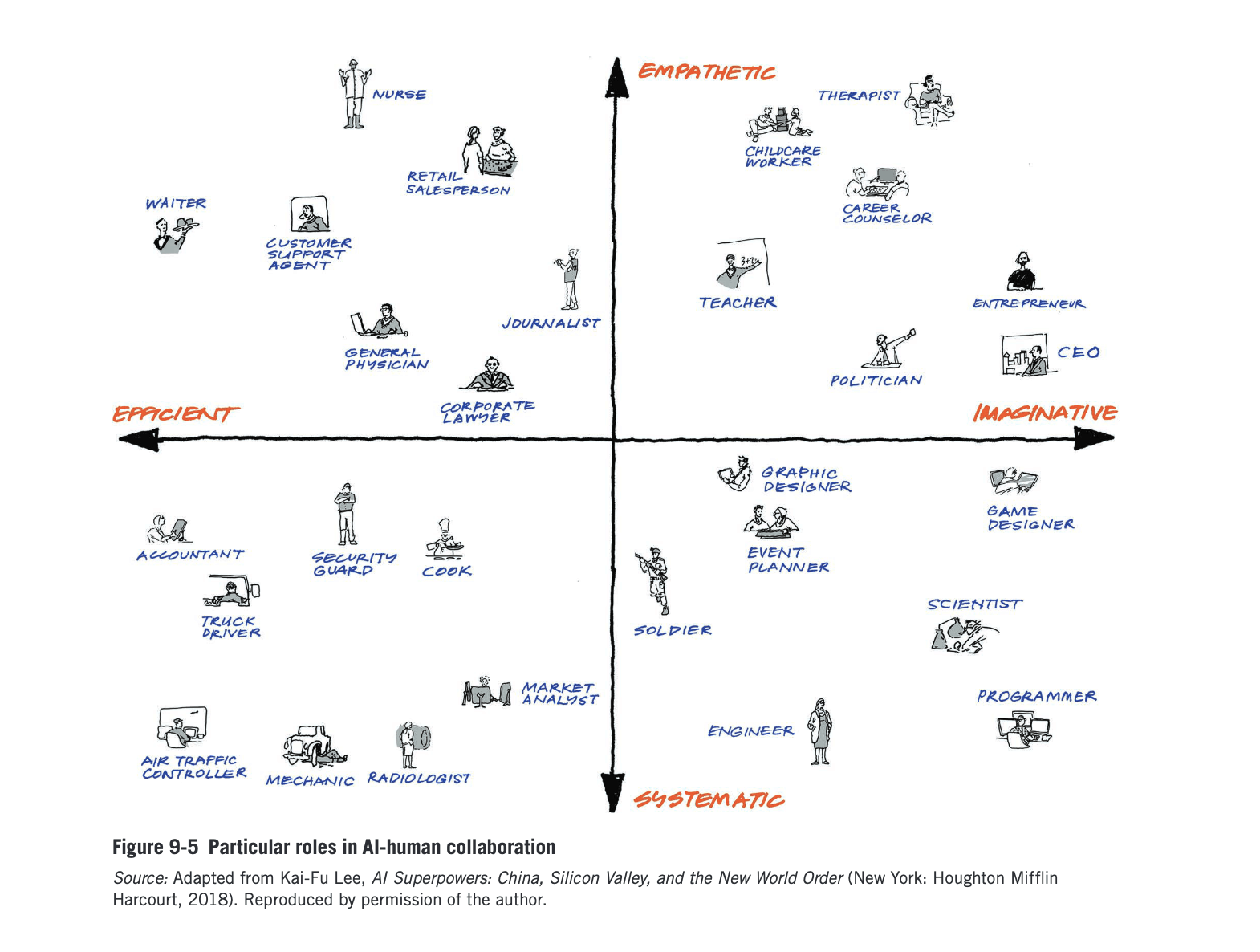
Transcript
This transcript has not been edited for spelling accuracy.
Hey there! The Getting Smart team recently released a new resource, Designing Micro Schools, why launching small learning environments is a big idea. You can download it at gettingsmart.com slash microschools. Also, if you’re interested in further exploring microschools, our strategic solutions and school design projects are tailored to support you from ideation to scaling. Email Jessica at
gettingsmart.com if you’re interested in learning more about how we might work together. All right, let’s get to the podcast. You’re listening to the Getting Smart podcast. I’m Tom Van Der Rik. I’m joined today by Martin Reeves, who’s had a long career and strategy consulting with the Boston Consulting Group. Martin is also the chairman of their think tank, the BCG Henderson Institute.
Martin recently co-authored a book called The Imagination Machine. It’s a terrific guide to harnessing imagination for organizational reinvention and rejuvenation. Martin, thank you for joining us. Thanks for inviting me. Martin, you have long been known as a leading organizational strategist. What does imagination have to do with strategy? I think my defined strategy is any deliberate pattern of thought or action which produces
favorable outcomes. We typically associate strategy with a very analytical, deductive set of activities. But of course, there’s a creative side too. When an entrepreneur creates a business for the first time, something new to the world, that’s a part of strategy. Now, there is this separate discipline of innovation, but one of the things I was trying to do was to link innovation and strategy and also to link the mental side of strategy to strategy
and also to do that in the context of the changes that we have in the world. So, it should be the rise of AI, which can take over certain routine cognitive tasks. So, that’s essentially the essence of the book, saying what is imagination and how do we harness it and how do we do so under the contemporary conditions? I’d love to have you speak more to those contemporary conditions. Would you argue that
imagination is more important than ever given the vukka conditions we’re experiencing? Yeah, I think it is for a couple of very important reasons. One of them is that the what we call in strategy the fade rate, which is the duration of advantage. So, if you have a successful business model, how long does that last? Well, in a fast changing world, that doesn’t last very long. So, advantage in business nowadays lasts about a year,
as opposed to historically about 10 years or more. So, what does that mean? That means that large organizations need not only to perpetuate yesterday’s business model, but they need to reinvent themselves. So, reinventing the business becomes an ongoing, not an episodic activity. And then the second big reason is that we now have cognitive technologies, machine learning and so on, which are taking over some of the routine managerial tasks. And so, we must ask ourselves,
what do organizations do? What do the humans and organizations do? So, that’s the second reason for visiting this. And then the third big reason is that demographic aging of almost all parts of the planet, including many markets that we call emerging markets, is proceeding such that we’re likely to see less consumption driven growth in the future. And therefore, growth needs to be not merely participated in, but it needs to be created through innovation
and imagination. And you put all those three things together and it says, you know, where’s the guidebook for imagination? And we don’t really have one, which is a paradox because as humans, we all have this potential for imagination. It’s actually uniquely human capability. I’m a former biologist, so I can speak to that. And yet, it’s something we do intuitively rather than a codified way. And doing things intuitively in large organizations generally doesn’t happen, doesn’t
end very happily. It is an intuitive, it has been an intuitive art. I wonder why there has been so little research into imagination, curiosity. Why so little codification? What’s your take? Yeah, there are probably a couple of reasons. One of them is, I think it was economically rational for large organizations to be focused on exploitation of yesterday’s business models and yesterday’s organizational models because in a slowly changing world, that’s perfectly
rational. Actually, the past does predict the future in a slowly changing world. That’s not the case now, however. I think a second reason we have to thank the romantic movement of 100 years ago. It gave us the idea that imagination was some special divine gift to unique individuals and that received sort of momentary divine inspiration. And it invites us to believe that you couldn’t possibly harness this systematically, which I don’t actually believe is the case.
And then the third reason is there is, of course, a large literature on creative thinking, on creativity. But more precisely, our book is not just about imagination, it’s about harnessing imagination. So we deal with all steps from the conception stage, the idea stage, through the spreading of ideas, through the exploitation of ideas, through the displacement of the previous set of ideas. And the creativity literature has been a little bit separate from
that sort of total life cycle of ideas, if you will. It has. And I’d love to dive into a couple of examples of that. One example that we run into in education quite frequently is a two-sided market, that you’re not only imagining a new experience on the supply side, but you’re imagining a consumer of that experience, an employer, a college, receiving information about some learning experiences in a new way. And so you actually have to build this two-sided market.
So you’re not only imagining a new experience, you’re imagining a new way to capture that experience, and you’re imagining a new recipient experience. So that is an act of imagination, not just at a unit level, but really an ecosystem level. I think you could probably point to the same thing in healthcare and other complex markets, right? I think so. I think the ideas we laid out on how to harness imagination are applicable to all organizations. And in some way, you might say,
especially to the two bastions of inertia in the economy, which are healthcare and education. Both are a substantial proportion of gross domestic product. Both are very important, because essentially they determine the health of the population and the future capabilities of the population. Both of them have, for different reasons, resistance to change, partly to do with regulation, partly to do with convention, partly to do with very slow and vague feedback cycles.
I think the difference for education is that indeed you have this sort of double applicability, the idea. You have to reimagine education, and you also have to imagine a way of imparting the skills of imagination to the participants in the system. So it applies probably, in a sense, more than it does to business, because we have this sort of double imagination problem. Martin, I think until I read your book, I was trapped in the great man theory, or the great person
theory, and thought of this as a individual, solitary, momentary, the blinding flash of brilliance. Your book helped me think about this more systemically. And I loved how it opened up for me a sense of imagination as being collective and collaborative, that it could be, it’s the art of helping a community come to see something new and different. Talk about how imagination can be collective and collaborative. Yes, well, I think obviously some people are
more gifted at imagination than others, but I just don’t think it’s a very helpful operational theory to use that as your primary explanation, because it doesn’t really tell you what to do. In fact, it tells you that you probably shouldn’t even try if you’re not one of those people. Now, it is true, of course, that imagination is a little unruly. We don’t know what new systems we could invent, which don’t currently exist. And when we conceive them, we can’t know fully
whether they’re going to work and how they’ll evolve. So it’s not completely well behaved. But my point would be, A, we need to figure out a way of harnessing imagination more effectively to solve very intractable collective problems like inequality and global climate change. And also, there’s no reason why we shouldn’t be at least as ambitious in harnessing imagination as for any other unpredictable aspect of human affairs. So, for example,
companies don’t shy away from thinking about personnel policy, human resource policy, consumer psychology. So why shouldn’t we aspire to harness the imagination as a capability? And the science, we now begin to have increasingly good science on the topic. The science says that there are certain predictable features that can be exploited. And if it’s helpful, I can tick through some of the ways in which the science guides us as to a systematic approach to imagination.
Tell us more about the pre-conditions, the context variables that a leader can try to alter in order for more people to enter into an imagination and creative state. Well, I think the intuitive proof that leadership is extremely important in relation to imagination comes from if you think about complacency and fear. What are the two things that are almost guaranteed to kill imagination in an organization? One of them is a fearful mindset, a fear of
making mistakes. We get punished for trying and failing. Or the other extreme, complacency that our institution is number one, we’re financially sound, we employ the best people. What is the problem? There’s no reason to imagine anything different. In fact, to a successful and an arrogant enterprise, anything which is more speculative than the current business model looks unfavorable. And then if we go into a little more detail, I mean, the six steps that we outline from cradle
to grave for an idea, if you like, are all very tractable to an influence by culture and the tone set by leaders. So the first one is encountering surprise. So from the point of view of neuroscience, the reason why we imagine is that we see an anomaly. We see something that doesn’t fit, something that doesn’t work. And that spurs us to be motivated to think of a better way of doing things, a different mental model and a different business or organizational model. And of course,
if a culture is very introverted, if it’s not looking for those signals, then it won’t find them. And the second step is working the mental model. Working the mental model means going from a headline to something which is testable, elaborating the model in the mind. If an organization doesn’t value that, if you’re in an organization where that sort of thinking, counterfactual thinking is shot down as being impractical, then you’re never going to imagine. And then the third step is
what we call the collision. It’s where you collide an idea in the mind with reality and experiment. And of course, experiments fail, even in the hands of these great people like Steve Jobs. I think his hit rate was about 20%, about four out of his five of his ideas didn’t pan out. And in the hands of the models, it’s worse than that. So if you have a culture that punishes failure, that’s a tone set by the leader, that’s very influential. And then we have the
spread of ideas. It’s very efficient in an organization to divide execution. It goes right back to Adam Smith. If the person making the pin, if one person makes the shaft and the other makes the head of the pin, then it’s more efficient for execution. But those silos, those organizations silos prevent the spread of ideas. So that’s again a very, that’s a leadership choice. How do we structure? How much do we communicate across silos? And then the fifth step of the six is
codification. How do we make success scalable and replicable? And that’s a sort of a discipline that some organizations have and some don’t in a particular set of skills. And then the final one is very susceptible to leadership philosophy. And that is what we call the encore, which is the ability to not only be successful once with an imaginative creation, but to disrupt the basis for your previous success and to adopt new ideas. That propensity for self disruption
is a tone set by leaders. So in your part of the world, Jeff Bezos talks about day one, the humbleness of day one, imagining that you’re a fragile business which could disappear at any time and needing to remain humble and observant and prepared to self disrupt. A leader can set that tone or they can set a tone where it’s only about efficiency of exploitation of yesterday’s business model and you get a very different result. Thanks for walking us through those steps. And each of
those is a beautiful chapter in the book. And each chapter has a really concise chapter summary, which I love. If we go back to the idea of being open to innovation, you note some really important blockers. One that I loved is Busiest the New Stoofit. Tell us about that. Well, often in the short term, we see the role of an organization as prosecuting whatever it is supposed to do most efficiently. So it’s about efficiency maximization, output maximization.
And there’s of course no limit to how efficient you can make processes. So some organizations are almost entirely focused on doing what they currently do more and more efficiently. And with the current work ethic in the Anglo-Saxon business world, that’s become a new norm. We’re all on 24-7. We can communicate. We can meet. We can do business 24-7 from anywhere. The problem with that is you end up with high efficiency but low evolvability.
You don’t build social capital. You don’t build intellectual capital. You don’t build future optionality. So that’s the sense in which I use the phrase Busiest the New Stoofit. If you don’t carve out time for reflection, you won’t indulge in the messy counterfactual thinking, which is the basis for a healthy business in the future. But another blocker that we’re very guilty of in education is having only answers, not questions.
What would an environment that really welcomed good questions, what would that look like? Well, I think if you’re in an emerging and fast moving business, nobody thinks that you have the answers. I was speaking to someone in the video gaming industry and they said to me that it was video apps. They said to me basically, not only do we not know who’s going to be number one next week, but our expectation is that we might not have even heard of them. So these people are
completely inculturated to the idea that anyone that thinks they have the answer has a problem. You’re better off with questions. Questions are a very useful thing because questions can signal to people what’s important here. They can signal how do you think. They can be somewhat structured, but remain open to serendipity and possibility. And also, questions are very concise. You can boil any problem down to a handful of questions. Or if
you try to write the answer, you’re probably going to write pages. So I found that somebody does think a lot about questions. So in strategy, for example, my favorite question is, well, it’s a pair of questions. One of them is what is this an example of, which is the generalization or the conceptualization question. And the other question, which is the opposite of that is what is an example of that? So I’m a somewhat conceptual
thinker. So I ask myself, what is an example of that very often? And I actually had those pinned to my office wall when I went into the office. But good leaders nowadays have good questions because they know that they don’t know the future. Martin, we’re seeing a growing number of schools adopt and use across their curriculum design thinking strategies that adapted from the D school at Stanford. Is a structured problem-solving
approach like design thinking or computational thinking? Can that be an efficient way to kickstart an imagination process? My previous book was called Your Strategy Needs a Strategy. And it was about the idea that you don’t need one school of thought or one type of strategy. You actually need different types of thinking under different circumstances. And so, for instance, there is the planning school of
strategy. Let me analyze and make a plan. But you can’t do that in a highly unpredictable environment. There’s the adaptive school of thought which says, let me experiment and learn my way towards a goal. There is the visionary school of strategy which says, let me look at the world and look at something which is absent, something which is present by its pregnant silence. And let me imagine a new way of filling that implicit need. So that’s a very creative sort of strategy. And
then you have collaborative strategy, ecosystem strategy. Seven of the world’s largest companies today are multi-hundred company ecosystems. So the unit of analysis is not the individual organization anymore. So that’s a completely different way of thinking. That’s about shaping a system, a collaborative system of companies as opposed to imposing a strategy. And then, occasionally, we need renewal strategy too, which is urgent pragmatic fixes against the
backdrop of existential challenges. So translating all of that into the realm of imagination, I think design thinking can help. But because design thinking is about anthropological observation, it’s about observing usage in practice. And one of the very important things about imagination is that we often see harbingers of the future in the anomalies and accidents in the present, should we choose to observe carefully enough. So I think observation of what people actually do
with products is very important. And I can imagine that could easily be applied to education too. And of course, we have a modern incarnation of that, which is visual analytics. We now have analytics which can take huge fields of unstructured data and help us to see needles in haystacks, anomalies that may be interesting to pursue. I appreciate that answer. It’s really the practice of pattern recognition of what is this an example of so that we’re applying the right tools to the
right problem. And the interesting thing about the question, what is this an example of, is that it’s half art and half science. So there is something which is observable. And what is observable is a value because it may imply certain possibilities. But we can’t see the actual possibilities. You know, we can’t see the consumer that says, I want precisely, you know, a computer with three processors with this number of megahertz. We get a weak signal. So there needs to still needs to be
interpretation of the possibility. So we need a second type of thinking for that, which I call counterfactual thinking, which is the ability to think about that which is not, but could be the case. And, you know, there’s a whole discipline of counterfactual thinking. It’s about imposing constraints in order to force new thinking. It’s about removing constraints in order to free up thinking. It’s about visual representation and recombination of elements. The problem here is
a very educational one, which is we probably haven’t really been taught to do that, at least in my personal experience, since kindergarten. Creativity exercises are much, much prized in kindergarten in the part of the world that I come from. But pretty soon when we get into the mainstream educational system, we’re more likely to be dealing with functional knowledge or solving deductive problems. Martin, a couple of times in the book you mentioned Montessori, can I assume
that you find the bones of that approach conducive to promoting imagination? Well, some people may or may not like it as an educational philosophy. I’d say actually my son benefited greatly from it. So I’m personally a great fan just to reveal my bias. But I was imputing it as an example of imagination in that the founder of the Montessori method observed children playing and observed things which were not well annotated in the educational
literature and imagined a new way of teaching people and sequencing skill acquisition. And then of course they didn’t stop there. It wasn’t just an idea, but there are now thousands of Montessori schools worldwide. So the idea was scaled and codified and indeed evolved further in the light of Montessori practitioners. So I think it’s a great example of imaginative reform in the context of a high inertia system, the education system. So if it can happen once,
it can happen again. I’d love to spend a couple of minutes thinking about the sort of high school and collegiate experiences that might promote the sort of thinking that we’ve been describing. I jumped to the case method that some of us experienced in graduate school. It feels like that had some relevance for pattern recognition, asking the question, what is this an example of? And as a result, what tools might we apply? Are you a fan of the case method for…?
I think the case method is interesting and a little bit counter to much of the teaching I experienced in that it is somewhat open. There’s not necessarily one answer. And I always find it suspicious that the algebra problems at school came labeled as algebra problems and they were in the algebra textbook. But telling you what type of problem it is, in a way defeats half of the purpose of problem solving, which is to determine what sort of
problem it is. It essentially takes out of the picture the most mysterious and powerful part of problem solving, which is framing. I think that should be part of the problem solving. So I like the case method because it invites you to not only solve the problem, but to first frame the problem. And I think it is a… If I ask what is the case study method an example of, I think it’s an example of getting out into the world and observing the way things are. I think idealized
representations of things absolutely have a role. In some senses, imagination produces idealized representations. But the idealized representations of real world observations and anomalies. So I think you could say that in the same family as the case study method, it would be things like going outside the classroom and observing the real world and looking not only for the trends, but looking for the exceptions to the trends and the inflection points in the trends. Not
trying to get to some super clean Newtonian representation of whatever one is talking about because it may not always be available. My last two books have dove into this topic in some detail of walking into the power of place and inviting learners to experience complexity and inviting them to frame up problems, problems that are important to them in their community. Strictly that we need to do a lot more of that if we want to promote creative problem solving.
And for another reason too, I think, which is currency. I know some educators that are still using the same course materials that they were using 10 years ago. And in some cases that may be efficient and justified, but the world is changing an awful lot. Getting out there and making sure that your content is evolving and meeting current needs, I think, is an important attribute too. And one of those, of course, is to acquire the skills of counterfactual thinking.
What is it that artificial intelligence will not displace? It probably will not displace things that rely on empathy, human interaction and reading human intentions. And it probably won’t replace counterfactual thinking because you can’t analyze the data for things that don’t yet exist, the products of imagination. So more than acquiring eternal and unchanging functional knowledge, at least in the realm of business, I think more emphasis on teaching counterfactual
thinking would be a good thing. I’d love to do a follow-up on that question. It strikes me that in almost every sector, big problems are taken on by teams working with smart machines. So given that new way of working both in diverse teams with smart machines, how might we help those teams think better using imagination and creativity? Well, perhaps I can start off with a toy problem, a toy model of education, and then add in some contemporary ingredients. So if we think about,
first of all, an unchanging area of problem solving, it could be anything, it could be personnel management or algebra, and we have somebody who knows the teacher who imparts that to the individual and does so in a fairly well-honed and constant fashion. So if you call that the classical model of education, what ingredients do we need to add into that? So I think we need to add in the ingredient of currency, which is, well, personnel
management might be changing. We need to get out there and find out what is changing. So we somehow need to bring the world into the classroom or the other classroom into the world. And then another thing we need to bring to the mix is that indeed, we’re working with machines and analytics and technology. And our final chapter in the book is about the prospects for artificial imagination, or at least the supplementation of human imagination by machines. And I think
education is often slow to adopt new technology, but technology can power up our imagination. I was describing these visual analytics that help us to detect anomalies, for example. So we need to make sure that we’re using the latest tools. And then I think there is what I call cognitive partition, which is we must ask ourselves whether what is being taught is primarily in the domain of things that machines will or already are able to do better than humans, or whether they are
focused on uniquely human traits. So making sure that we’re focusing on the aspects which will be important to the individual’s future human contribution to the organization is another element. And then another element is collective problem solving. So in industry nowadays, everything is solved by teams. And the cognitive diversity of teams is very important because my downhill move may be different from your downhill move. And if we combine your thinking
with my thinking in ways that don’t contradict but complement, we can go from something very abstract to something to very concrete, to something very appealing, to something which is well diffused, to something which is well managed. And I think self-awareness and having a set of social moves so that we step away from the model that education is putting unchanging knowledge into individuals’ heads and instead think about it as a set of capabilities to be deployed in a
changing social context. So those are some of the elements we may want to add to enrich the classical model. I appreciate that. Just in the last 12 months, we’ve seen very good examples of teams co-authoring or co-constructing with new capabilities like GPT-3. Seeing them produce video written pieces very quickly, taking the best of both the human and machine intelligence. And of course, if you ask why, there are some reasons why we wouldn’t do that. We may say we
don’t have a budget to buy that technology. But interestingly, some of the reasons which are given for not proceeding aggressively with the agenda that we just outlined, it seems to my way of thinking, are about the convenience of the educator and not necessarily the efficacy of the problem solving. So for instance, one reason is given is that if you have group problem solving, it’s harder to assess the individual contribution. But that’s really an inconvenience to the educator.
And another one is if you’re dealing with perpetually changing knowledge, it’s harder to objectively assess and grade people. But again, this is inconvenient for the educator, but more fitting to the real world, it seems to me. We’ve been talking to Martin Reeves, the author of a great new book called The Imagination Machine. Martin, you’re a parent. I’m curious in closing, if you have advice for parents out there, what should they be thinking about and doing to promote
imagination and creativity in their kids? Well, I’ve only got a personal view of that. As always, we try things that we only learned many years later, whether we’ve been successful and it’s very hard to establish causality. But I guess what I tried to do with my kids is, in part, curiosity is one of the main things. So with my kids, we celebrate questions, for example. So we celebrate when we ask a question and we celebrate especially if dad doesn’t know the
answer to the question. And we celebrate moreover if mankind doesn’t yet know the answer to this question. Trying to foster intellectual boldness and curiosity. And I try to shy away from rote learning and factual knowledge because I think these will become trivial in the machine age. That’s a terrific answer. Martin Reeves, author of The Imagination Machine. Thanks for joining us on the Getting Smart podcast. Great conversation. Thanks for having me.


0 Comments
Leave a Comment
Your email address will not be published. All fields are required.