


Mark & Alex Milliron on The Sugar Chair Stories
- Western Governors University (WGU) Teachers College at Western Governors University
- College of Education at the University of Texas at Austin Catalytic Conversations Blog
- Catalytic Conversations Podcast
- Dripping Springs High School
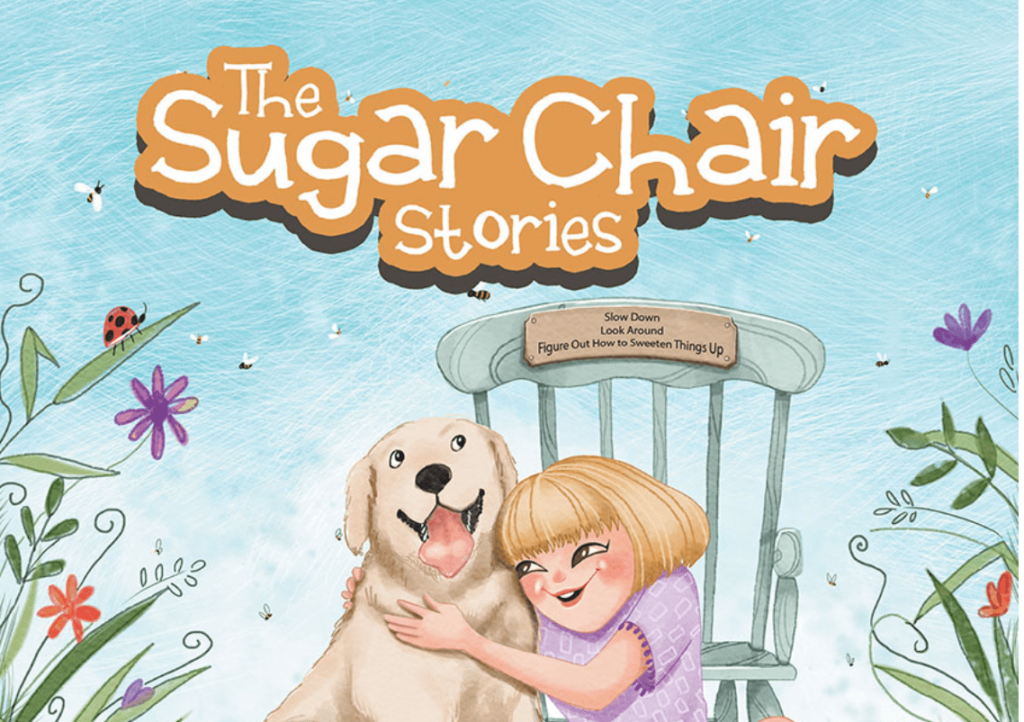
- The Sugar Chair Stories, by Mark Milliron and Alexandra Milliron
- MarkMilliron.com
- TheSugarChair.com
- @MarkMilliron on Twitter
Transcript
This transcript has not been edited for spelling accuracy.
You’re listening to the Getting Smart podcast where we unpack what is new and innovative in education. I’m your host Jessica and on this week’s episode, Tom is talking with a father daughter duo Mark and Alex Milleron. Dr. Mark Milleron serves as senior vice president and executive dean of the teachers college
at Western Governors University, also known as WGU. In addition to his work with WGU, Mark helps catalyze positive change in education through his catalytic conversations blog and podcast series and also through service on the boards and advisory councils of leading edge education organizations. Alex Milleron is a rising senior in the College of Education at the University of Texas at
Austin. During her time at Dripping Springs High School in Texas, she was an honor student, a three-year varsity basketball player and high jumper and a regular community volunteer. And now they are both authors as well. Let’s listen in as Tom talks with Mark and Alex about their new book, the sugar chair
stories. Dr. Mark Milleron and Alexandra, Alex Milleron, great to have you guys on the Getting Smart podcast. Glad to be here. Yeah.
Mark, I want to start by talking about what the heck is happening to higher education. We’re still in the middle of a pandemic and most schools are seeing enrollments down, budgets hammered. What’s your take on the state of American higher education right now? I think we’ve been going through a, obviously it’s one of our black swan events, right,
for all of American higher education. And we’re seeing the power of those who have built infrastructures to allow themselves to be more flexible. The colleges that have really done the work like the UCS, the ASU, the SNU, the Western Governors, that have set up the infrastructure for online and blended learning are obviously
better positioned to weather this. But people in the world of higher education across community colleges and universities are working hard trying to provide learning for their students during this time. And the hard news, the hard thing for them is to try to figure out where does this end. Like what kind of processes are they going to have to go through?
And I think in the beginning they thought maybe it would be a short term thing. And then a lot of hope casting happened in the summer. And then in the fall, the realization is hit that, wow, this is actually still here, still hard, we still have to be flexible. And I think now the realization is hitting, this is probably for next year and figuring
out how we have digital options, blended options for a while. So we’ve had kind of a forced orientation to a digital world and learning. People are innovating like crazy. There’s some inspiring things going on, especially around the equity challenges and trying to meet students’ needs where they are.
And there’s also some really troubling things for people are scrambling because of the, especially if you’re in a complex star one with your auxiliary services falling apart, it’s just really tough. And so there have been millions of American families that have had a lot of together time. It sounds like Mark, you have four children?
Four children, yeah. So you’ve had a lot of family time in the last seven months? We have that. And actually, I know today we’re going to talk a little bit about the sugar chair stories. That really came out of some of that family time.
We have a house in the mountains in Western North Carolina where my wife’s extended families are anchored. And so we really rode out the pandemic up in those in the Blue Ridge Mountains and have with my sixth grader, my sophomore in high school and my two adult children, including Alexandra.
And truthfully, there’s some serendipity in that. I travel a lot and I have not been on a plane since March of last year, this year. So the idea of us being in one place and being connected, I’m never going to get that kind of focused time with these kids again. There were some real blessings in that even in the middle of all this hard stuff.
Alex, was the sugar chair your ideas or Mark? I was kind of a joint idea. Dad kind of used the ideas of this book when I was younger for me. And when I was in high school, we started talking about the framework for the book and we were very passionate about this idea and really until the pandemic, we hadn’t had enough
focused time together to get it done. And suddenly just clicked, we were like, we’re going to be together for months. We might as well start getting this right now. Dive in and do it. That’s awesome.
All right, let’s come back to the book. Mark. As we were discussing before we went on air, this year you joined Western Governors University. It’s really your third go round with the organization. You, like me, were an early board member at WGU in 2011.
I think it was. You launched WGU Texas. Is that right? That’s right. And this year you returned as an SVP and Dean of the School of Education.
Yeah, executive Dean of the College of Ed. Yeah. And is it the biggest school of education in America? Yeah, it is. Now the College of Education, which you know, founded in 2003 with a $10 million grant from
the US Department of Education. As a crazy idea to really kind of meet the teacher shortage and also some additional funding in particular to kind of move their professionals and TAs in the teaching. It has since grown to 30,000 students in all 50 states. 50,000 graduates since its inception.
I think this study in 2015 said 5% of all STEM teachers at the bachelor’s level came out of our university and 15% of all the master’s level teachers came out of our university. So it’s been pretty powerful to see the impact of this model and the ability to kind of really kind of meet needs for states in different ways. What do you think about the value proposition for learners in the School of Education?
Well, our big, our kind of mantra is the idea that we want to change the world by changing, changing the way people learn and lead. And the way you do that is really by helping tomorrow’s teachers and leaders experience next generation teaching and leading. So we’re actually trying to have them experience that as they get ready to go out there and help
provide it. And so we’re deeply committed to this idea of making sure that our students are experiencing the best of online and blended of virtual reality and a host of other kinds of tools. So when they get in the space, they’re able to really think about how they can innovate and inspire learning at a pretty high level.
Have you seen as big a jump in enrollment in the School of Education during the pandemic as other parts of the college? I think we’ve been one of the fastest growing parts of the university, but our entire university is up. Of course, as Western governors is well suited for the challenges we’re facing right now. And when we’re, you know, of course, we have a race tuition in 10 years, we’re incredibly low
cost and nonprofit. So I think all of those make us pretty suited to meet the moment. But the College of Education has been uniquely growing. And I think part of it is it’s a tough time in the K-12 world. A lot of teachers did not come back.
And a lot of schools are scrambling to fill their, fill those seats. We, and we are particularly well suited to help with working learners. So as people are using paraprofessionals and others, we can help team up with those districts and help them get their paraprofessionals ready to roll and also help them think about their STEM programs, their special education programs, their learning and technology programs.
Those are all real skill sets of ours. Mark, this morning I noticed that your colleague Scott Pulsifer had an op-ed on skills-based hiring. It’s an unusual topic for a college president to write about. And further, WGU was really the anchor partner of the Open Skills Network that’s really advancing this idea of skills-based hiring.
To what extent has your School of Education really embraced this idea of competency and focusing on important skills? Is that an important part of your School of Ed? It’s deeply ingrained in the College of Education. Across all of Western governors, of course, you know firsthand that we were founded on the idea that people
should progress based on learning, not based on time. And the idea that we want to break learning down to its constituent parts, including how you pull it all back together in capstone integrated ways. But because of that, we have been champions of this idea of learning centered education for a long time. Scott has been the real champion out there saying, hey, we’ve got to engage with the employers and help them
understand that this kind of learning matters for them because now they can understand the competencies that their employees will have. And if they begin to hire on that as the signal, as opposed to the degree as the signal, of course, degrees are going to stay there. But if we can really get into skills-based hiring and allow for micro credentials and associate degrees, bachelor’s degrees
and everything up, you change the ecosystem. And now people really value learning. They don’t value just the aristocracy of a degree. And the entire ecosystem of learning because of change. Now as a college vet, you nail it that we have got to be making sure that we are preparing our education, our
education providers, the people who are trained, the teachers and the leaders, that those folks are ready to provide that kind of learning centered education and able to work with those employers to create that sink and link, which means we have to be able to understand what are the needs of those employers and how do you architect learning to be able to drive that. And that’s going to be an important skill set going forward.
I think folks are going to want somebody from a place like Western Governors who understands that kind of architecture is standing up. Alex, did your dad come home to talk about this stuff at the dinner table when you were growing up? Yes, yes, there are people who have been hearing a lot about education, higher education and having them with pathways to success. So I’m curious, having grown up with one of America’s great educators, what caused you to go into education and why didn’t
you run the other direction? Well, I actually started UT going into physical therapy or sports management and some of that degree included a few education classes. And I quickly realized the only classes that kind of piqued my interest for education. And I switched majors after my first semester and kind of went full scheme ahead for education.
That’s great. And are you you’re a senior at UT Austin? Yeah, I am. And are you going to teach after this? You’re going to grad school. What’s next for you?
I actually plan on joining the master’s program at WTU for the teachers college. So it’s kind of convenient. It took me a while. I started to work her over as you now she’s in and she’s ready. That’s awesome.
I was I was going to find I’m glad to know where you’re going. You have confidence that it’s a great high quality program, right? Yeah, I really do. That’s exciting. And are Alex, are you thinking of after your master’s, will you teach?
And if so, will it be in K-12 or higher education? What’s your plan? I teach at high schools and then possibly if I get enough credentials behind me, I’d love to teach at a college someday. But for now, that’s my plan.
Well, I think your dad and I both agree that you’re doing a good thing with your life by choosing teaching. So we thank you. Thank you for doing that. Let’s let’s talk about this.
The book that you’ve written together, it’s called The Sugar Chair Stories. What is a sugar chair? The idea of the sugar chair actually at its core came from a longtime educator, a woman named Becky Hodges, who was the wife of the college president. I worked under in my early days.
Becky was a 40 year educator in that state of Alabama. Who went when we started raising a family, she immediately talked about the idea of the sugar chair, which is much to use in her classrooms as a kindergarten teacher. And the idea of a sugar chair is this and she was the white rocking chair. It was the idea that instead of being put in time out, the kids would be put in to a chair.
And the idea was they had to figure out how to sweeten things up. And we just thought that was the neatest thing in the world. I kind of got them active, got them thinking. And so actually when Alexandra was a little one, we had a sugar chair in the house and then we used the sugar chair.
And the funny thing about Alexandra, I was a brag on earth, is if anybody did something wrong in the house, she’d go grab them by the hand and she’d take them over to the sugar chair. What about the rest of the slogan, Alex? The sugar chair has a little slogan on the back of it. But it’s slow down, look around and.
Figure out how to sweeten things up. All right. Jealous about the first two. Where did that come from? So it’s just kind of the basic idea of what you’re doing when you go sit in the sugar chair.
Obviously, he used it on me when I was a kid. So I was very familiar with the idea. So instead of going to time out for a punishment time, you sat in the chair, you slowed down, brought down your emotions, kind of took out the initial reaction of the situation. You looked around, kind of looked at the other people involved in the situation you were in
and how you might have hurt them or how you can make things better. And then figure out how to sweeten things up. I mean, obviously the play on the word sugar chair, but you figure out how to make the best of the situation. How to kind of look at it in a more positive light and make it better for everyone. Well, who came up with the idea for three stories, the leveled stories.
It’s such an interesting structure for the book. So we, as we started reflecting on this, she was coming out of a childhood development course at UT. And we were talking about how we structured one of the things I wanted her to go through is the process of writing a book. So we actually went through the entire scaffolding and like what stories we want to tell and how do we want to tell it. And we, so we structured them together, thought maybe we’d do them as three separate stories.
But then we said, you know, they actually work really well together. And we actually sent this out to be reviewed by people around the country. And they really gave us some feedback about how well these hung together. And so we created the idea of the sugar chair stories, really, because the first story is really talking about the idea of you as a new learner. And the fact you’re going to make mistakes.
And this gives you the ability to figure out how you can recover from that. Use the story of the puppies and a small child to do that. The second story is really about you’re going to have moments in your life where stopping and figuring things out really matters. And you’re going to want to do that. You’re going to need to do that.
And the third story, as the characters get older, is really an intergenerational story. And it’s about the idea of you, because you actually get to do this in a way where you can really in hard happenings in your life get to a much better place. And the neat thing is Alex really brought for child development work, the idea of things we were seeing in higher ed. Tom, I don’t know you know this, but I’ve spent 25 years in the world of higher ed on student success initiatives. And by the time you get to students in the world of higher ed, often they have habits of mine that are really tough to break.
And what we started talking about, she was talking about in child development, realized, wow, these ideas of reflection and introspection. Of empathy and understanding other folks, of developing a growth mindset, or all things we’re talking about in student success courses in higher ed. And we’re saying, wouldn’t it be neat instead of reinforcing a punishment, which is time-consuming? We could use a certain chair to reinforce a process and get that habit of mine going. And then it just started rolling from there.
I loved having the three leveled stories, because it’s in a way that I’ve never seen in a book before, can make it a family book. Right, it’s one that siblings can share. It’s one that an older sibling could read with a younger sibling. So it’s, I think it’s neat in that way. Did you have that in mind? That was part of my ideas to make the center generational, to figure out how it was good for little kids.
We call them littles, medals, and elders, as you know. And the idea is we wanted to make this a useful story for all generations. And Alex was really good about really driving the idea of what any of the education ease we were talking about was not going to be anywhere in the book. And the idea that we wanted to make it accessible at each of the different levels. And so we, you know, you were really, really tough about this idea of word choice and structure.
So that the little story was written to the littles, what he did, the middles for the middles and that kind of work. And it was really intended to be a family conversation piece. Alex, did Mark pull his weight on this project or did you really write this and just add his name to it? I think it’s a very equal contribution. He definitely helped me figure out the process. And then I think I had some good insights for it.
I was just coming out of coaching a karate class, a six year old. And I think that really helped me give him perspective on how to kind of slow down the littlest story. To kind of bring it to that level and then make it broader so we can reach a lot, a very broad audience of children. That’s interesting. Alex, I noticed that you’re an athlete and have had, you’ve been in a lot of different sports track and field, as well as martial arts and basketball.
Anything that you brought from your athletic experience to writing the book and some of the lessons that are included in the book? Oh, completely. I mean, it sounds bad to say, but if anything, some of the bad experiences in sports kind of helped to write the book. Because a lot of times in sports, I feel like coaches have a hard time pushing that growth mindset and it can become so negative. Like this is what you’re doing wrong. And there’s no really framing of how to make it better, how to fix the situation. It’s like, well, you lost this game. You killed this play. You know, you’re not going to be a good player.
And so I really went to make it a thought process like, OK, this went wrong. Now how can we make it better for next time? Mark, what did you learn about Alex in the process? What did you come to appreciate that maybe you didn’t know quite as well before this? Well, one of the things I already got to knew before you saw him practice is just her level of tenacity when it comes to getting projects done. Alexandra’s always been one of those kids that is two weeks ahead in school, kind of driving projects, getting things done. And so you work right alongside her. You don’t realize, wow, she really likes to get projects done.
I thought I was a pretty productive guy. And then, you know, she’s like, she is on it, which is kind of great to see. So we work pretty well together. And I think we complimented each other pretty well on this. And was also, she’s not shy at all. So she didn’t like the way something was going. She literally be texting me or calling me like, no, no, no, that’s not going to work. Was Alex with the editing process the worst part of this?
Honestly, I enjoyed the editing process. That has always given me the ability to speak my mind, not maybe feel scared to share how I feel. So it was honestly fun getting the kind of butt heads and be like, no, this is how it should go. It can be like, I think this is how it should go. It was kind of an entertaining, but fun process. I think it made us get the best product. So you can make sure we literally wrote most of this book sitting on a deck over a trap pond with a waterfall and arguing.
We didn’t like, we were sitting in this beautiful setting. There’s like, oh, and then we’d like fall in love with something. You’re like, oh, we just got to go after it. So it was really kind of neat. And actually, he calls back to when Alexander was a little, little girl, we literally used to sit on the deck and sit out on the front porch.
And we would do these things called wonder stories where I would literally just say one sentence. She would say the next, I would say the next, we just built on a story and we could do that for a half hour and drive her mom crazy. She can take that over to it. There’s always our way, right? I find when I finished writing a book that I’m so done with it by the time I get to the editing process,
I can’t stand it anymore. I just want to get to the next book. And didn’t it feel like it took forever to come out? Yeah. Yeah. Well, and we had some hard processes.
We went through three illustrators by trying to put because we really had an idea of like the spirit we wanted to bring in. We just weren’t getting it out of the first one. And Alex had it goes through the process of actually letting somebody go. We’re not going to use these. So by the second one, she was ready to pull the trigger.
And then it was a third one. It was like it was literally like a hallelujah moment because the illustrator captured Buddy the dog, really captured the spirit of the intergenerational family, really kind of, you know, the combination of kind of heart and smarts of the book is what we wanted in the pictures. And we just love the illustrations.
That’s awesome. Alex, what do you think you learned writing a book? Is it something that you want to try to do again? It’s a long way to go. I don’t know.
I would love to continue with these series of stories. I really like the message in them. And even though it was a hard process, I think the biggest thing I learned is it is worth it. I’m so proud of the product and so happy with how this book turned out. And yeah.
We still want to keep the conversation going because we’ve had some neat reactions to the book where people have talked about how it’s opened up conversations within their families. We’ve had some people who have spectrum kids. You’ve talked about how this has been really good for reinforcing some of the things that they’re doing with them. And, you know, I just think the heart that comes through some of those. I think one of our favorite reviews was Buddy and Taylor Rock, right?
Yeah. That’s been kind of fun. We’re hoping it does the work of starting good conversations in other families. Well, I love the sentiment in the book. It feels very timely, right?
The idea of slow down, look around, figure out how to sweeten things up really couldn’t come at a better time. Yeah, exactly right. We all need a little shirt and shirt right now, Tom. I think this is a message for American families right now. So go get this book.
It’s called The Sugar Chair Stories by Mark and Alex Milliron. We really appreciate you guys being on the podcast. It’s been fun to share your stories. Mark, you’re one of America’s great education leaders. And it was such a treat to find out that you’re a dad and now author of a children’s book.
So thanks for sharing your story with us, guys. Thanks, Tom. Yeah, thanks so much. You can’t exactly do a book tour now. Are you going to launch a little bit of a virtual book tour?
Yeah, so we’re trying to do a virtual book tour. We’re trying to kick it off here. And we have a website called TheSugarChair.com. If you go to TheSugarChair.com, it’s where you can do your ordering and bulk ordering if you want to do that. And we’re really just trying to start the movement and the conversation around this.
It’s going to be fun to see how this ends up being used in lots of places. But we’re going to start dialogues with people around it. We think it has all kinds of applications across education and childcare and sports and the host of other things. So we just want to stir things up a little bit. So that’s TheSugarChair.com?
That’s right. Check that out. And if you want to join Alex in our grad school, it’s wgu.edu. That’s right. And you can follow Mark on Twitter at MarkMilliron.
Is that right? That’s right. Great. Thanks for being on and getting smart podcast, guys. We appreciate your work.
Thanks, Tom. Take care. A big thanks to Mark and Alex for joining us on this week’s episode. We appreciate their contributions to the world of education and look forward to the many more contributions to come. That’s it for today, listeners.
Thanks for tuning in. For the Getting Smart podcast, this is Jessica signing off.





0 Comments
Leave a Comment
Your email address will not be published. All fields are required.