

Antonia Rudenstine on RedesignU’s New Vision for Education
Stay in-the-know with innovations in learning by signing up for the weekly Smart Update.
Transcript
This transcript has not been edited for spelling accuracy.
Before we jump in today, we wanted to tell you about a new campaign and newsletter from Getting Smart. It’s called What If, and it’s all about encouraging educators and ed leaders to think differently about education and learning. Every week we will send you a What If question about the future of learning, leading, and
community. This campaign is all about engagement, so we’d love it if you’d sign up and share your thoughts on Twitter or send them to editor at GettingSmart.com. Sign up for the list today at GettingSmart.com slash What-If. We can’t wait to see what you come up with.
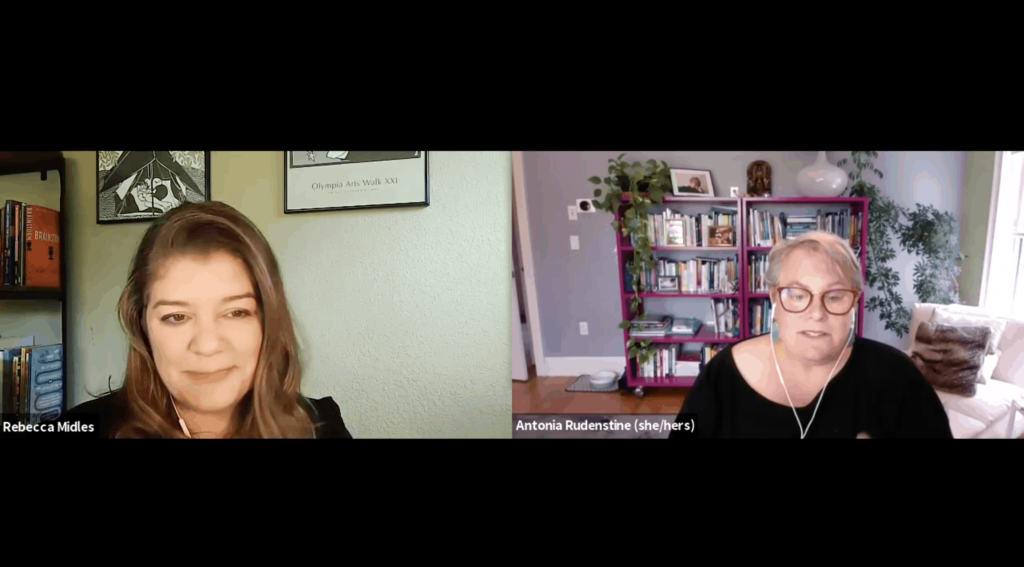
You’re listening to the Getting Smart podcast, where we unpack what is new and innovative in education. I’m your host, Jessica, and today Rebecca Middles talks with Antonia Rudenstein about redesigning you and a new approach to K-12 content mapping. Antonia Rudenstein is a former high school teacher and is now the director of Redesign
LLC, a consulting group that focuses on creating new school designs and program models, in addition to supporting leaders and teachers in the work of instructional and curricular improvement. She has over 25 years of experience supporting schools and thinking deeply about teaching and learning as it applies both to young people and adults, and experience as a school founder
and leader, a teacher, and a founder of a consulting practice. Let’s listen in as Antonia and Rebecca talk about curriculum, school models, and learning ecosystems. Antonia, welcome to the Getting Smart podcast. Let’s jump in.
Why education? I thought I was going to be a lawyer all the way through high school and all the way through college, but it turned out that all my jobs in college were tutoring, substitute teaching, and then local high school. I taught a class at Oberlin where I went to college.
I was a teaching assistant. All these things I was doing and I really loved. Finally, I woke up in my senior year and said, what is this lawyer thing? It’s really the idea of how people learn. That’s fascinating to me.
That was that. I went to grad school and education instead and that was in 1989. Here I am. I appreciate that. That’s authentic.
It’s like your body was telling you what you were going to do, subconsciously drawing to that field. You have experience as a school founder, a leader, a teacher, and even a founder of a consultant practice. How do these inform each other?
A lot. I would say the drive. I had my first teaching career in an urban adjacent community, a bedroom community. It was a fairly conventional, large high school. I was teaching special education students from self-contained classrooms as well as English
language learners students. I was totally unqualified for both of those jobs. Really came into this question that has been really the question of my life, which is how do we make places where kids go to learn actually about learning? It’s informed every thread of my life.
I worked in this relatively conventional high school. Then I moved to New York City and we started this small, groovy, interdisciplinary public school in East Harlem, all like a four-hour block for a multidisciplinary study and all these things. It was standards-based.
It was prior to competency-based. But again, bureaucracy, the needs of policy environment, the ways in which the system is shocked when you do something radically different, all pushed us. We all found ourselves becoming more and more like the conventional high school that I had gone to.
It wasn’t only external forces. It was our own internal drive. We don’t have to solve this problem. We bid off more than we could choose. It was the whole ecosystem around us.
But again, pushed me into thinking about how do we make this about kids and not about all the other stuff? Then I started a fellowship. I didn’t start it. It was started by a small nonprofit.
I was hired to design it and be the director of it. I joined that thinking, well, what if you start at the very beginning with designers? Could you then make a school about young people? Would you then really get to it’s all about the experience of the learner? That was actually an amazing experience.
People came with completely different perspectives on what good teaching learning was looking like, what a good school should be, what should happen with young people. We had this amazing dynamic interactive learning experience over the course of the year. Some of those schools actually are, they still exist. We’re doing some amazing things.
That to me was an example of designing from the beginning helps. But it’s not enough. Then I moved on to redesign and have been working more as a consultant and supporter of people who are doing this work. It’s all around the same question, which is what does it take to be about learning?
It’s really hard. It’s just really hard. It makes sense that you are fond of that term designer. I noticed it on your website with your staff and the people you get to work with. Then the name of the company.
I’m sure that’s not accidental and very proactive stance, instead of a passive. How did you find your way from that to curriculum development? I actually found my way to curriculum development in the very beginning of my career. Even in college, the class that I co-taught was on women and body image. It was 1985.
It was a pretty radical arena at the time. Not a lot going on around that. Not a lot available. We just designed a course and then we ran it for four semesters. That was the beginning for me of that.
I was amazing, totally empowering, exciting experience and very much about what’s our experience as opposed to here’s the content and it needs to be mastered. Then in my teaching career, when I first started, I unfortunately had a supervisor who was very racist. When I asked him what I was supposed to do with the English language learner students, most of whom were young men coming from Laos, Vietnam, Cambodia. He said, just teach them the Pledge of Allegiance and how to do it. There was nothing.
The classroom was empty. Then the other students I taught were Irish-American, Italian-American, mostly or exclusively low income. I just decided we need a curriculum that’s about power, that’s about how you understand the system around you, that’s about how you think about the world and how it works on us and how we can work on the world. I just wrote a textbook, which I would never show anybody now. I don’t believe in it now in the same ways, but I was 23 years old, my students were 21 years old.
I was trying to figure out what to do. But that was the beginning for me of curriculum and storytelling, it’s ways to think about the world, it’s ways to unpack what’s happening in the world. It should speak directly to student experience, learner experience. That was far more prescriptive than I would ever be now. It was the same idea, we need to unpack our own experience and we need to unpack what we’re going through inside of a context of academic learning.
I appreciate the vulnerability of sharing that because I think that’s a great mix of tension of intent and knowing you wanted to do better and then what resources are available and it gets back to our favorite Maya Angelou quote, when you know better you do better. The grace about like the intent was there and you were doing something other than the pledge of allegiance, so I think that’s appreciated. I think who can’t relate to the story if you’ve ever been a part of transformation, we were all at a starting point in the journey and you didn’t lose sight of that intention. So when we think about, and I know, and maybe you’ll also bring in some examples about how you had students rewrite history, we can bring that in maybe coming up here. When you think about content mapping as you were sharing K 12.
So where do you start with that. I mean, I think our feeling at redesign as you start somewhere and it might not be the best place but it’s the best place we could figure out. And so, we’re very much, you know, people in some of our webinars around this project have asked some incredible questions and pushed hard on like why are you doing disciplines why aren’t you breaking down those barriers. Those are. We ran across recently a library in Ontario, that is totally recataloging their whole library around kinship circles as topics. So we clearly have a, like, I do not feel like redesign has an answer here.
I feel like we’re, we have a starting place that is going to evolve. And we see this as a multi year project, and where we started was somewhere between conventional and not so conventional. So we are doing disciplines but a lot of these disciplines are somewhat interdisciplinary. So we’re doing, you know, the history of human, basically of human societies that will include things about the United States and the United States history but is not a, we don’t have a US history that we’re doing as a content area. We have a history of humans. So that’s interdisciplinary and it’s, you know, doesn’t center the US is the most important thing.
So we’re trying to shift some pieces. We’re doing 15 disciplines, not the four main disciplines of K 12 and that’s partly because the world doesn’t. We need more complexity young people need more complexity. I think part of disengagement is related to oversimplification. It doesn’t, it’s not relevant to the world it’s not relevant to the world that we live in anymore. It made a perfect sense at the time maybe, but it doesn’t so much anymore I don’t think I think understanding anthropology understanding archeology, understanding different kinds of visual arts under like this is all how you’re going to make meaning of the world.
I share some, I pulled something from what you’ve written included the and honor the multiple perspectives cultures and ways of knowing that are central to full participation in the current world that’s what I hear you really expanding upon. And certainly can see how that would even show up in the ways that we teach history and evolution of not just a country but just as a society. There’s another one I think privileges when your culture is taught as core curriculum. Yeah, exactly. And then when others are taught as an elective if you’re lucky. Yeah that is like that. Yeah.
Why is learner centered then so important to the mission of redesign I’m hearing it but would love you to capture that as well. I mean we have a particular definition of learner centered at redesign. It’s echoed in lots of different places and it’s certainly not invented by redesign, but the language of learner centered. The ideas are not invented by redesign. We’ve put them under learner centered, and that that definition isn’t exactly the same across the field obviously different organizations different people individuals have, you know, sort of put their own definition underneath that for us it means three things it means developing relevant competencies.
Developing critical consciousness, really being able to look at the world, really being able to analyze one’s own experience where we fit into something broader, being able to understand oppressive structures understand the ways in which people as voice or taken away and their cultures are, are destroyed but also celebrated and so it’s not all a negative but it is definitely like we’re living in an oppressive system, and some people are benefiting from that. So developing that and then the final piece is really connecting and being part of community, which is not to us the same as like including parents in school decisions. It’s, it’s much broader and deeper and and although I do think there should be parents deeply involved, but it’s, it’s also about connecting to community, having, where you came from what your lived experiences, whatever it is, the honored be respected be celebrated be known.
Be studied and be included both in the intellectual life as well as the kind of human life of not just young people but the adults mean we’re a majority white female profession. And although we have diverse lived experiences. We also have some some similarities and there is so much that we have never explored understood celebrated even like spend a minute, you know connecting with not not necessarily for faults of our own, but just, but it’s something that if we’re really going to be great, great creators of a place where young people are going to thrive, then that’s a boundary that I think we all should be pushing on. How do you think this work would lead to global transformation with that in mind. So it’s interesting, I, you know, I would never be so kind of bold as to say, I’m about global transformation that feels to me kind of imperialist and colonial.
I. And I think there’s a, there’s a lot of people already engaged in this work globally, and in the US and some for hundreds of years. So I don’t think it’s so much like the world needs redesign, as it is, we want to be part of a transformation that I think is going on. So to give you an example we had a meeting yesterday with the Department of Education of Middle Eastern country. And they were asking, you know, could, could we develop could, could, could the designers and residents program that we’re launching this summer develop some of the things that they would like to have in their own
model. And when I said to them was, well, you need to send people you need to send the people who know your culture, you know your community, who know your families who know your young people and have them develop the things that are going to serve them best, and we will work with them to make sure that we do understand some things about scaffolding about how to build in higher order thinking and not reduce things down, build things up. So I think we do understand some things but by no means do I think I’m kind of the right person to be designing for the world, or that redesign is so. I don’t know what will happen there but there, we have people applying from Sydney we have people applying from England from Spain from South America, so I would say that
this small piece of this work that redesign is spent your I personally and redesign generally have spent over 20 years trying to understand which is, how do you really scaffold things in a way that even if I’m 18 and I read at a so called fourth grade level. I could actually have an amazing learning experience. And be completely excited and engaged in what it is I’m doing. I do think there’s some, and we’re not the only ones who understand that, but I do think there’s something about the scaffolding piece of it around academic reading and writing that we have we, we have something to say we’re not the only ones.
And so, so I do think it could be, it could be exciting. But we really do come into this with a very humble perspective that the answers. There’s, you know, if there were easy answers, we wouldn’t have such a disaster on our hands in terms of yes, taking care of young people. And so, to that I think there’s definitely systems that get highlighted in our work of competency based learning. And many of those early systems held their local culture as important as core curriculum.
Right alongside parallel to the expectation was that that would be brought in across the system and that students would have to meet that requirement. And that sometimes gets overlooked when we talk about competency based learning that where it’s been most successful is when it’s been most responsive to the community it serves and I hear you highlighting that in a much global way and I’m excited about the work ahead for you and the organization and what that will bring. Yeah, I mean when I talk with people about I try not these days to not use the words competency based learning as much. It’s just learning. But when I talk to people about this, I, who are not familiar with the term because it’s kind of a weird ed term.
It is. I just say, you know, what are the things you want your young people to get really good at that you think you’re going to make a difference for them and make that help them, like, live wonderful lives and be able to sustain themselves and if they have families their families and like what are those things, then getting really good at it is competency based learning, whatever those things are. That’s all it is. It’s just getting really good at stuff. Yeah, I appreciate you calling out a term that’s evolved right, I mean it was standard space, it was standard stripping that was performance based and it’s competency based but really, like you said, what do you want your students to know and be able to do and, and in some ways, I like to add for me like what do you want them to have a role to lead their own life.
Exactly. Exactly what we promised them when they walk in the door. What do they need to be leadership. Yeah, yeah. And I don’t think you can have agency without celebration of community and development of critical consciousness. I just, I don’t see that. So I don’t, I think kind of an estimate neutral education doesn’t give agency and ownership is in my worldview. I know that’s just my worldview. But I think with, without exploring all the structures that are in place that either benefit us or for this in complex ways, not always by intention, but often.
I just, I don’t know where agency comes from then. Right. So otherwise it’s done to and it’s completely counter to the point of, yeah, I agree. So we’re talking about learning ecosystems essentially what did founding a school teach you about those. They’re brutal.
I mean really they just are. And I don’t mean like that there’s venal people involved. I mean, you know, in every profession there are, but it’s not that I think, you know, educators are evil at all. I’m a lifelong educator, but the system is, is not about the individual who’s working inside the system. And so, you know, I think probably starting a school didn’t teach me as much about ecosystems except I when I left the classroom I just thought, or when I left the school. I did think like I, I can’t really see how transformation happens here. And so, you know, it does, I think it’s sobering.
We talked recently about lessons extracted and the tensions of the pandemic. And you’ve talked a lot about things have learned and how to lead schools in the systems and where it’s been brutal and where it’s been inspiring. What are your dreams for the learner centered virtual school, and how do you see that rooted in community. So I want to preface this by saying, so far these are ideas. And that have not really had an inclusive like we haven’t had feedback from people we haven’t put these out into the world. So, these, these will evolve dramatically.
But I can tell you some of the pieces of it that for me I find exciting. I think a lot about what are the barriers for teacher for teachers what are the barriers for young people, what are the barriers for families. And how do we move those out of the way. And, you know, part of the reason why the ecosystem is so complex as there’s barriers at every level so the feds put barriers, the states put barriers the districts and the schools and teachers and family, you know, and again, not necessarily from out of. It’s all out of a commitment to young people, but it is not always working on young people in that way. So I’ll just give you a really, really simple example. In most states or all states you have to report grades on a, on a quarterly basis, or semester basis, you cannot develop, you cannot support developing competency.
If that’s one of your policies, you literally can’t. Everybody has been stopped in their tracks by that. And so, and that doesn’t seem to be going away. And so, you know, as long as I have to give a student a grade after 10 weeks and I’m not allowed to change that grade as they become more competent. I’m not I have put a major barrier in young people’s way. And for many kids it’s fatal, like a lot of redesigns work in New York City was working with overage under credited high school students so students who are 16 to 22, who had less than a freshman year of credit and they were working in schools where the goal was to try and build
competency and like no time at all right I mean there’s there 21 years old they’re aging out of the system. And so, you know, to diminish the dropout rates and so competency doesn’t look the same I mean the timeline doesn’t look the same quarterly reporting for those students have literally almost age them out of the system, because they could not. They were always at an F. They could never keep so so it feels like such a small thing like oh yeah that’s just one of the things we do it literally is like stops young people in their tracks. I keep thinking about like all these other and that’s just one of, you know, however many a regular calendar year a school day.
You know, only having a certain kind of certified teacher to work with young people at a certain time. That’s all in the US and I’m not that familiar with what’s happening in other countries around these things and, but they hope they’ll have their own sets of things. So that’s if that’s the context and the very and the goal is to remove it. My view is like my fantasy is something that lives above states. And that’s why it’s virtual.
Because it, it, and, but rather than compete with districts and schools. I’d rather partner. So there’s certain circumstances going on in the US right now that are creating a major problem for regular schools, one of which is an incredible teacher shortage, and especially in certain disciplines. And so what, what is this, what’s the plan, the other major problem that everybody talks about is there’s not enough black indigenous and other people of color in the field. Honestly, would you go into this field. I mean, it’s everything. It’s so hostile to teach your lives to well teach your well being. If you’re an elementary school teacher you can’t even go to the bathroom regularly, because you have to be with the kids all the time.
I mean, literally at the level of bodily functioning. It’s brutal. So, and again, like nobody’s trying to keep you locked in your classroom, but that’s the reality because kids have to be supervised. So that’s like those are constraints, those are barriers. Those are ways in which, you know, teachers are attacked constantly. I mean it’s just a very, very tough as a profession and the pay and the status are, are, you know, not commensurate with job. So if I was a person of color and I could go be a banker or I could go do an architect or I could be a community activist. I would choose all of those things. Where I if I could like directly help my. So I don’t think saying we were people of color into the system is going to work unless we change the system.
It’s a racist system. So, I don’t think I don’t, I wouldn’t recommend to somebody who wasn’t a white lady, honestly, to go in. This is a tough place. This eats people up. And I desperately believe that the that what young people need are people who don’t look like me. Or not only. So, so that’s a huge dilemma. But I do think like if we rethink about what the position, what the job is and how we think about it. So virtual school can do all of that, right, because you could have teachers who are certified doing the things that you have teacher enough teachers for, but you could have, you know, young people who are in college tutoring adolescents at one in the morning when they get home from their job, or they
can’t go out with their friends and they need help because there’s somebody there who wants to do a night shift. You can have a teacher in India, where it’s 12 hour difference in time, teaching a class on Indian history or Asian culture, you know, any number of things, or just physics, right, we have a shortage of just we do. Right. And it could be at noon in the US and it could be a good night in the US and noon, noon in India, or 8am and 8pm. I mean, it could be any number of things you have infinite capacity to think about where learning happens who’s doing the teaching. Who’s an appropriate person, and then the connections to community like I, I think amazing. If you ask a lot of people where is your most powerful learning happening. A lot of people will talk about things outside of school. And so, why do we believe that the only legitimate learning is certified teachers inside of school buildings.
Why are we still doing that what and why does a policy environment in force it. And, you know, there’s lots of reasons why I’m not, you know, it’s not that I don’t have any understanding of those things, but it’s not necessarily necessary. And if you and a teacher shortage is a good reason to rethink, because you can’t. We don’t really want to say well let’s just lower the standards and any one body will do. It’s better to say, let’s rethink this whole thing. Yeah, it’s the right problem.
So let’s do it let’s like, let’s get people who are excited to be with young people. Let’s give them opportunities to do it in the way that works for them. Let’s have people from the young people’s communities, wherever those are the offering things. Let’s make it the grandmother let’s make it the neighbor let’s make it the mother. Let’s make it the church. And why does this need to be the way it is. It doesn’t. I mean there’s no research to support that it’s working. Great points. Great points. I mean, I didn’t want to stop you because you’re on a roll.
We’re not doing so well out there. And so, certainly surface now right we’ve certainly seen a lot of these. This is the time. Yeah. Yeah, so the last two things I’ll say about it and I know I’ve gone on too long is what we’re imagining with the content mapping is that the content map will inform the virtual school so it will actually be a place to figure out what’s not working about the content map to evolve it to change it to shift it and to have it change over time. And so, we’re not going to throw stuff out into the world that have never been in front of young people and gotten feedback. We’re going to, we are, we do believe in practitioners developing this. We do not believe in perfection.
We do not believe that there’s a way to develop this. We do believe that there’s a way to develop this. That have never been in front of young people and gotten feedback. We’re going to, we are, we do believe in practitioners developing this. We do not believe in perfection.
We do not believe that there is one way to teach something. We don’t believe you should shrink wrap curriculum inside of like PDF docs and programs that can’t be like modified like this has to be the stuff that communities can put their hands on and adapt. And so the key connection is, well, what if we’re doing something on, we did some work in New York City where there was young people did me documentary videos on policing in New York City, in their own communities. And so we built a curriculum that showed teachers how you could do policing but it was built in such a way that you could take policing out and put in any topic you wanted. So think about doing documentary video making in your community for the issue that is sailing into the young people and when you do documentary filmmaking, you are doing research, and you’re telling story you’re doing all the most important things that we’re trying to do in college and you can
represent it if you really, you know, if you want to hit that piece too. So that to me feels like what we need to give to teachers is 80% 70% of the house being built and believe in their expertise their commitment their knowledge of their community and their needs, their own passions to do the last 20% so it’s really about their community and what they need. So, you know, I redesign think is best for the world. Thank you.
Where can people find more about you find out more about you and redesign and this work that you’ve mentioned. So we have a we just put out our new website that actually is an update account of what we’re doing. We’ve had a very outdated website for a long time. Your website looks beautiful I just it looks great. Thank you. Thank you. So that is an easy place to find us. And we have a blog on there, and people can sign up. We do not spam anybody so you can just sign up and you’ll get occasional updates from us you can you know, we’re, we, this is going to be an iterative process. So it’s not that we do a content map this summer and then we publish it. We, a lot of people are booked for this summer. You know, we’re doing things.
Last, you know, I mean, not totally last minute but we will have, we will need to create more opportunities for more people to weigh in to give feedback to add their thoughts over the next few years. This is really a first step it like how can we begin the map. And so we will keep people posted we’re going to have, you know, we’re going to ask for feedback from a lot of different people, young people, parents, community members, church members, academics professionals, and it over time, you know, we’ll meet with groups will have will post things publicly and ask people to give feedback. So this is really just a beginning launch into the into the space.
And with the intention that we’re going to learn a lot about this and improve our own ways of thinking about this as we do it. I love the commitment. I love the commitment to being vulnerable and the process and acknowledging that true learning and hard work is messy, and that you’re bringing people to the floor and it doesn’t have to be perfect but it needs to be intentional and, and relatable as it is really important to the work of the people that you’re trying to serve. I encourage people to go to redesign you.org to find out more. Thank you for making space and time to share not only your story but the work of your organization. Thank you so much. Thank you. So fun to talk with you.
Thanks to Antonia for being with us today. We appreciate her leadership and dedication to learner centered education. We’re super excited to see what redesigned five year plan will do for education. For more learner centered conversations, be sure to check out episode 303 with Randy Ziegenfuus on learner centered leadership. We’ll put a link in the show notes and on the blog. All right listeners, that’s it for today. But before you go, don’t forget to hit subscribe and leave us a review. This is Jessica signing off.

0 Comments
Leave a Comment
Your email address will not be published. All fields are required.