


Podcast: Eric Williams on Empowering Students to Make a Contribution
 Pictures of Contribution
In elementary school, Williams looks for students working in small groups to solve a problem. They might consult an expert to develop a knowledge base and then share the solution with that expert.
At one Loudoun elementary, a student was struggling with cancer. His classmates developed projects to learn about his type of cancer and raise funds for a cure. “We want to see learners choosing a problem and coming up with solutions across content areas,” said Williams.
Another elementary school developed pitches for Amazon’s second headquarters. Students did a ton of research on local geographic and economic strengths. Executives came and listened to the student proposals.
Middle school students developed pitches for historical markers. Based on a student proposal, the state approved a monument at the Ashburn Colored School, a standout during the era of segregation.
At a Loudoun high school students developed a project to test road de-icing materials. The driving question was that chemicals commonly used are bad for the environment. Students experimented with alternatives and shared their results broadly.
Future of Learning
Williams wants to change the way students experience high school. “The traditional structures get in the way of authentic work,” said Williams.
He’d like to add learning opportunities outside of school connected to learning in school. That could include senior year capstone experiences where young people would have a choice where they’ll work.
As students headed back to school, William made a statement about equity: LCPS is committed to providing a safe, empathetic, respectful and supportive learning environment in order to empower every student to make meaningful contributions to the world.
Key Takeaways
[2:33] How and when did Williams realize teaching was for him? When did he start his career as an educator?
[3:23] Tom and Williams speak about when they first met.
[3:37] Williams speaks about the work he was proud of when he served as Superintendent at York County School Division.
[4:14] What attracted Williams to work at Loudoun?
[5:44] How was Williams able to keep the focus at Loudoun on teaching and learning and not let himself and his board get preoccupied with simply managing growth?
[8:21] William describes their improvement agenda at Loudoun.
[10:15] How did Williams’ belief in empowering students to make meaningful contributions become so prominent in his work as an educator?
[13:30] Williams talks about Loudoun’s emphasis on the four Cs and why they don’t add the fifth C, citizenship.
[16:20] What a day of authentic learning looks like in the elementary schools of Loudoun County.[18:40] What a day of authentic learning looks like in the middle schools of Loudoun County.
[19:55] What a day of authentic learning looks like in the high schools of Loudoun County.
[21:36] Williams gives some examples of students contributing in Loudoun County, both in and out of school.
[25:43] Williams speaks about his recent statement about equity in Loudoun County.
[26:35] What’s next in Loudoun?
[27:22] Does Williams anticipate seeing changes in the traditional master schedule in secondary schools?
Mentioned in This Episode
Loudoun County Public Schools
Dr. Eric Williams’ LinkedIn
The Kern Family Foundation
Fairfax County Public Schools
For more, see:
Pictures of Contribution
In elementary school, Williams looks for students working in small groups to solve a problem. They might consult an expert to develop a knowledge base and then share the solution with that expert.
At one Loudoun elementary, a student was struggling with cancer. His classmates developed projects to learn about his type of cancer and raise funds for a cure. “We want to see learners choosing a problem and coming up with solutions across content areas,” said Williams.
Another elementary school developed pitches for Amazon’s second headquarters. Students did a ton of research on local geographic and economic strengths. Executives came and listened to the student proposals.
Middle school students developed pitches for historical markers. Based on a student proposal, the state approved a monument at the Ashburn Colored School, a standout during the era of segregation.
At a Loudoun high school students developed a project to test road de-icing materials. The driving question was that chemicals commonly used are bad for the environment. Students experimented with alternatives and shared their results broadly.
Future of Learning
Williams wants to change the way students experience high school. “The traditional structures get in the way of authentic work,” said Williams.
He’d like to add learning opportunities outside of school connected to learning in school. That could include senior year capstone experiences where young people would have a choice where they’ll work.
As students headed back to school, William made a statement about equity: LCPS is committed to providing a safe, empathetic, respectful and supportive learning environment in order to empower every student to make meaningful contributions to the world.
Key Takeaways
[2:33] How and when did Williams realize teaching was for him? When did he start his career as an educator?
[3:23] Tom and Williams speak about when they first met.
[3:37] Williams speaks about the work he was proud of when he served as Superintendent at York County School Division.
[4:14] What attracted Williams to work at Loudoun?
[5:44] How was Williams able to keep the focus at Loudoun on teaching and learning and not let himself and his board get preoccupied with simply managing growth?
[8:21] William describes their improvement agenda at Loudoun.
[10:15] How did Williams’ belief in empowering students to make meaningful contributions become so prominent in his work as an educator?
[13:30] Williams talks about Loudoun’s emphasis on the four Cs and why they don’t add the fifth C, citizenship.
[16:20] What a day of authentic learning looks like in the elementary schools of Loudoun County.[18:40] What a day of authentic learning looks like in the middle schools of Loudoun County.
[19:55] What a day of authentic learning looks like in the high schools of Loudoun County.
[21:36] Williams gives some examples of students contributing in Loudoun County, both in and out of school.
[25:43] Williams speaks about his recent statement about equity in Loudoun County.
[26:35] What’s next in Loudoun?
[27:22] Does Williams anticipate seeing changes in the traditional master schedule in secondary schools?
Mentioned in This Episode
Loudoun County Public Schools
Dr. Eric Williams’ LinkedIn
The Kern Family Foundation
Fairfax County Public Schools
For more, see:
- Project-Based Learning Provides Path For Increased Awareness of Self, Others and the World
- ConnectEd Links Learning to Career Pathways
- How New Models are Preparing Students for the Future of Work
Stay in-the-know with innovations in learning by signing up for the weekly Smart Update. This post includes mentions of a Getting Smart partner. For a full list of partners, affiliate organizations and all other disclosures, please see our Partner page.
Transcript
This transcript has not been edited for spelling accuracy.
We’re listening to the Getting Smart podcast. Where we unpack what is new and innovative in education. I’m your host Jessica and today we’ve got an episode all about contribution, empowering all students to make meaningful contributions to the world. That’s the remarkable model of the Loudoun County Public Schools, a big Virginia district
west of Washington DC, serving about 84,000 students in 94 schools. Dr. Eric Williams has been superintendent in Loudoun for five years. While many districts reference citizenship as a goal, Williams likes the term contribution as it incorporates careers in the private sector, civic engagement and community service. Williams believes in engaging students in solving authentic problems as a means to developing
knowledgeable critical thinkers, communicators, collaborators, creators and contributors. Let’s listen in as Williams talks with Tom. Dr. Eric Williams, welcome to the Getting Smart podcast. Thank you. I’m happy to have the opportunity to chat with you.
Eric, why did you study history at William and Mary? So when I was in the fifth grade, I had a teacher, Mrs. Green, who did a series of historical simulations particularly around the American Revolution and included Boston Tea Party, Continental Congress. Those activities ignited both the love of history in me, but also led me to decide in
the fifth grade that, hey, I want to become a teacher. Years later than in high school, when looking for a college, William and Mary, in addition to being a great school, obviously sitting adjacent to Colonial Williamsburg, fit my love of history. And so I went to William and Mary in order to earn a license here to teach social studies.
Isn’t that interesting? Fifth grade is such a formative time. I lived in Washington, D.C. in fifth grade and just having a great history teacher and being able to visit all the museums and battlefields in Virginia and Maryland made me want to be either an architect or an archaeologist.
Those are formative periods. Absolutely. More evidence that a great teacher can really inspire learners for life. So you decided early on that teaching was for you. Did you teach after college?
Yes. I started my career as an educator in Fairfax County. I taught American government and history. And probably the single most memorable day was when President George Bush, the first Bush, came and visited my students and spoke to the students.
And so that was an incredibly exciting experience for them and for me as a first year teacher. Wow. That is exciting. What a treat to have a president visit your classroom. And Fairfax is home of a lot of great educators.
A lot of great superintendents have been there. I think we met when you were superintendent in York, Virginia, 10 years ago. Is that right? Yes, that is correct. I served as superintendent.
What work are you proud of in that coastal community? I’m most proud of our emphasis on project-based learning and really sending work, working with principals and the school board there to try to move away from the test prep mentality that really was particularly strong across the nation at that point in time. And obviously we still deal with significant pressures that can lead towards that.
But that’s what I’m most proud of in terms of my time in York County. So Eric, you’ve been in Loudoun for five years. Is this your sixth school year? Yes, it is. So Loudoun for listeners that aren’t familiar is a big county northwest of D.C.
You’ve got more than I think 84,000 students this year in 94 schools. It seems like you knew the neighborhood there, Eric. It just seems like an intimidating place to be a superintendent. It’s affluent and high achieving by traditional measures. What was attractive to you about that job?
What attracted me was the clear sense within the community of not wanting to rest on its laurels educationally and really wanting to improve. And you mentioned the size of the school district. One unique aspect is just the rapid growth. Many years were the largest, fastest growing division in the nation.
So we typically add a couple of thousands of students a year and open one to three schools a year. And so the important part of leading in Loudoun is making sure the focus is on instruction and not just with managing growth. That is really tough. I remember I’ve been to Las Vegas many times over the last 30 years.
And there was a decade there when it was just the complete preoccupation of everyone in the central office building of just keeping kids in school buildings. I wonder how you were able to keep the focus on teaching and learning and not let yourself and your board get completely preoccupied with that. How did you do that? A key strategy in terms of keeping the focus on teaching and learning is really a focus on the joy of teaching and learning.
You know, all too often teachers are pressured by outside forces, their principals, their superintendents, their state, the nation, just to prepare kids for a standardized test. And that’s not fun. That’s not engaging for students or for teachers for that matter. And so we need to give constantly remind ourselves and give ourselves permission to recapture the joy of both teaching and learning. And when we do that, that makes the focus on the main thing easier in terms of education as opposed to just managing growth or some other operational matter.
Yeah, Eric, when I was a superintendent in the 90s here between Seattle and Tacoma, it was the same situation we were adding a school or two a year. How do you, I remember what was really contentious is boundaries. Do you guys end up redoing boundaries every year and how do you do that in a way that doesn’t drive the community crazy? Well, we are very transparent in terms of what’s being considered. And so community members are able to go online, see proposals under consideration, but they’re also able to play with geographic information systems, data, GIS data themselves, in order to create their own plans and make suggestions to school board members. And so the community members absolutely are very passionate. It is very difficult every time you go through a boundary process. I come in the board though, because they are willing to make the difficult decisions and because they go through it practically every year, they both manage to be good listeners and have tough skin at the same time, thick skin.
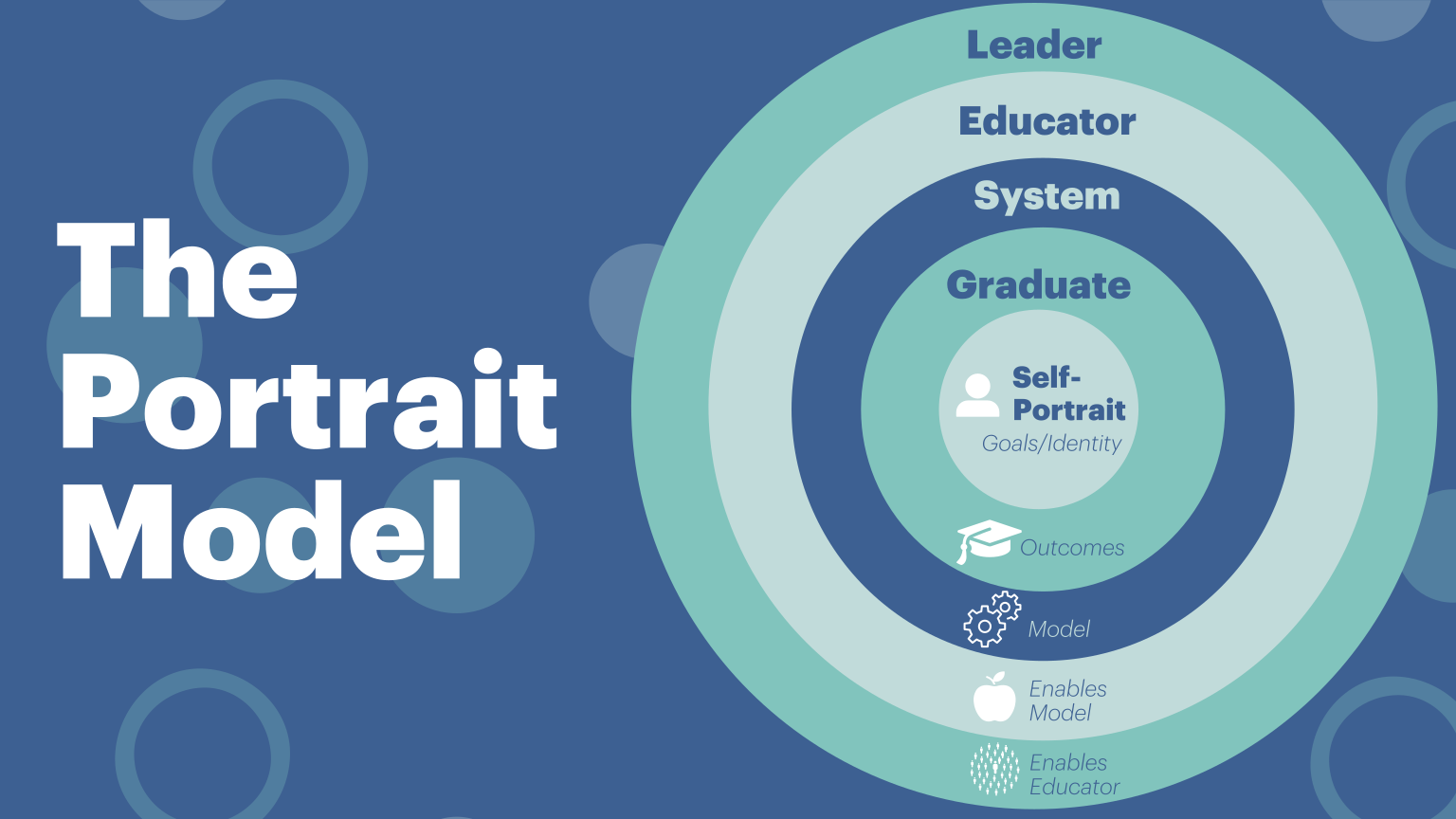
Yeah, back to teaching and learning. How would you describe your, the improvement agenda there and Loudon? So really we start with our mission. So five years ago in setting forth our strategic plan, we articulated as our mission empowering all students to make meaningful contributions to the world. And that really drives our instructional focus because we asked, okay, what are the competencies that students need in order to be able to make meaningful contributions to the world? And let me just back up and observe what we mean by meaningful contributions. We think of meaningful contributions through three means. One through careers, so careers in the private sector, the governmental sector, not-for-profit sector, through careers or through civic engagement or through community service.
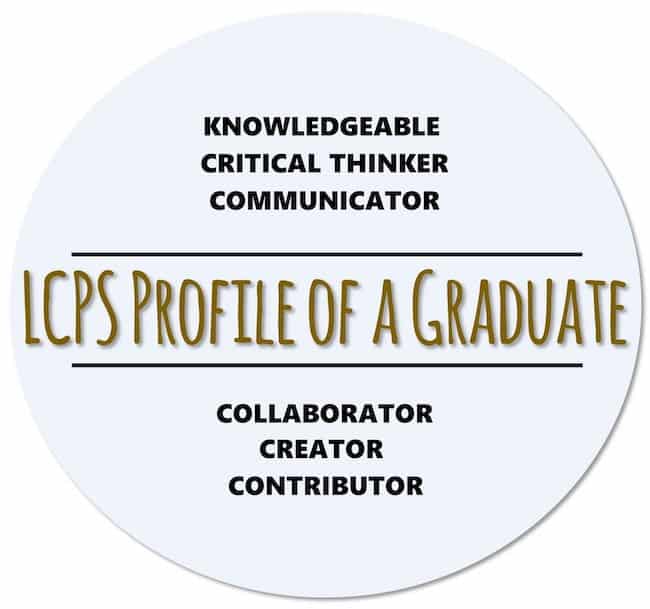
So that’s what our focus is, not just on preparing kids for state test. So we articulated, at the same time we articulated the mission, our Loudon County profile of a graduate. And we want to develop students who are knowledgeable, who are critical thinkers, communicators, collaborators, creators, and contributors to the world. And in order to do that, we want to put authentic, challenging problems at the heart of teaching and learning. And so really the instructional approach is all about authentic learning experiences for students. So they develop the knowledge and competencies they need to be able to make contributions to the world. Eric, I love the fact that the first sentence in your bio after telling where you work is that Dr. Williams believes in engaging students and solving authentic problems as a means to developing knowledgeable, critical thinkers, communicators, collaborators, creators, contributors.
I love that you keep the joy of teaching and the focus on contributions so prominent. I’m just, I’m wondering if there’s more of a backstory on how that came to be so focal for you and your community. So it really comes down to the sense of the importance of authenticity in terms of having students do work that they care about. And the reason that that’s so incredibly important is student engagement and ownership of their work. So Loudoun County, you know, we’ve had great test scores. We exceed national averages, state averages on tests. But students can have really more of a compliance based level of engagement. And they’re really not committing themselves and we’re leaving so much untapped potential there when we just have more of a test prep approach. And so having students focus on solving authentic problems is a game changer because students have such a stronger sense of ownership. And that sense of ownership is important because when the work gets difficult, they’re more likely to persist rather than just throw in the towel. And also because of that sense of ownership, their learning is going to be deeper.
They’re not just memorizing something for rote regurgitation. And because it’s deeper, it’s then longer lasting. They’re not just forgetting it for getting it the next week. And so really the backstory is the power of giving authentic, authentic challenging problems to students. When we say we don’t want to just prepare you to do important work in the future, but rather we want you to do important work now. We want you to make contributions now. That’s a game changer in terms of student ownership and ultimately deeper learning. Yeah, we are really attracted to that idea. Our study of the future of work helps us conclude that authentic community connected projects are unusually efficient at building the sense of agency and that students with a sense of agency, their own ability to understand themselves and manage their learning and actions and relationships might be the most important skill that we can give them in this complicated world. And that’s why we articulated in our profile of a graduate being a contributor. And so when there’s different iterations of the four C’s or four competencies or five C’s and people often add a fifth C of citizenship, but we felt being the focus on contributing
is broader and more important and includes contributions through citizenship, community service and careers. And so that was powerful. Yeah, it is. It is. I think it’s related to our friends at the Kern Foundation talk about entrepreneurial mindset. And they’ve stood up a network of 50 universities that are teaching engineers as entrepreneurial mindset, but they think of it not as starting a business, but the ability to spot an opportunity and to deliver value. And that seems very similar to how Loudoun County thinks about contributors. Absolutely. I would say that the the qualities of an entrepreneur are ones that are reflected in our profile of a graduate. And that’s so we want to develop entrepreneurs, both for profit entrepreneur entrepreneurs and social social entrepreneurs.
And and it’s so exciting that your your community is such a great place for both right. Loudoun and Prince George’s County that Metro DC is now one of the world’s best tech hubs. It’s rich with venture capital. It’s a great place to start a business, probably the cybersecurity hub of America. And then you also have every leading NGO in America within a half hour drive. So what a terrific place for your young people to plug in. It’s easy for them to not only see themselves in the future working this area as entrepreneurs, commercial or social entrepreneurs, but it’s also easier for them to be entrepreneurs now and connect with others in this area. Who can be clients who can provide problems for our students to solve, or who can be collaborators alongside our students in addressing problems, or who can be audience members for our students work.
So the potential for community connections is rich in this area. We literally created a position to help facilitate those. It’s called supervisor community connections. And it gets back to the importance of authenticity for students. Eric, let’s do three quick kind of visual pictures of a good day in Loudoun County. What it would look like, what it would feel like, and let’s start with elementary school. If you visited a school and saw sort of an ideal picture of what this kind of authentic community connected learning, what would it look like in elementary school?
When one would enter a learning space, students are going to be working individually or in small groups solving a problem. Now five years down the road, they may be, and even in some of our classrooms now, they might be solving different problems. But let’s say for today, they’re working on a common problem, even if they’re working on different aspects of it in small groups or individually. And really, so we’ll say water quality. So maybe there’s a local water quality issue. And some students might be tapping in, Skyping with a water quality expert in, say in Colorado, where they’ve dealt with water shortage issues and getting that person’s expertise.
Other students may be working on developing solutions that they’re going to share with another outside expert. And also, at different times in the day, students are going to be doing different things. And so students need to develop knowledge to help them solve a local water quality issue. It may be content knowledge, it may be more methodology like how to design a research project. But different students would be doing different things based on where they are.
And there would be individualized learning pathways observable for students, even as they’re working collaboratively to address a local problem that they care about. All right. If we went to a nearby middle school, what might we see in a seventh or eighth grade? So in a middle school, what I’d love to see again is students tackling a problem of importance to them. So I’m recalling middle school students who had had a number of peers struggling with cancer. And these students decided to do a variety of work related to cancer.
They worked towards raising funds at a 24-hour danceathon. But they also worked to understand what cancer is, how it occurs, and how it can be cured. And so in what this authentic learning looks like is students choosing a problem that they want to address coming up with solutions and then working across content areas to come up with solutions to that problem. And then if we scaled it up to some upper classmen in high school, what would you see on a good day and loud and in a junior or senior classroom? I’m recalling high school students who wanted to come up with the best type of de-icer to use.
We get some snow, not a ton of snow in northern Virginia, but we get some snow. And students learned about how detrimental commercial de-icers are for the most common type of grass in our area and then the impact on other, across the environment and across animals as a result of that. And so students worked to design experiments to test different alternative de-icers. And then they sought to share their information broadly. As part of the process, panels of outside experts came into the classroom and students would pitch their ideas or solutions to the experts.
And experts would give them feedback on that. But students also then try to share what they’ve learned with outside parties. So for example, some students wrote articles for newsletters published by HOAs targeting homeowners in terms of the types of de-icers they use. Others reached out and were able to connect with the State Department of Transportation in order to make their pitches. So those are three examples.
Are there other examples of young people contributing in Loudoun County that you want to add? And that might be in school or out of school? A couple years ago, a middle school social studies teacher challenged students to develop pitches for what sites deserve a historical marker. And so students researched local history. They were able to use primary source documents that local libraries lent to the students.
And they developed their pitches. The teacher brought in panels with expertise in local history. And students did their pitches on why it was significant. At the end of the day, the top proposals were selected and the class worked to finalize those proposals and submitted them to the state agency that approves historical markers. And the state approved the placement of a historical marker at the Old Aspern Colored School that had served black students during the era of segregated education.
That was an incredibly powerful experience for all the students working to, I mean, they worked hard to learn local history, how it fit into the context of national history. But they also saw, hey, we can help build greater awareness among the community through the placement of this historical marker. So that’s one example. Another example I’ll share is of elementary schools who tried to make a difference last year. And at the end of the day, they weren’t successful with their main goal, but they did incredibly impressive work and they learned a ton along the way.
So Loudoun County partnered with Fairfax County in seeking to have Amazon locate their second headquarters in this area. And another site in Virginia ultimately was selected. But before that occurred, local economic development officials came in, actually specifically one of the members of the Board of Supervisors came in and challenged the students at one of our elementary schools. That’s a wall-to-wall project-based learning school. And he challenged them, hey, said, hey, we need your help. We’re doing our pitch to Amazon, but we need your help.
So students did a ton of research about Virginia geography and understanding the strengths of Virginia generally, and then the strengths of Loudoun County specifically in terms of what we have to offer to Amazon as a potential place for their second headquarters. And they developed pitches for Amazon and, in fact, Amazon Web Services executives and also local economic development executives came in and listened to students’ pitches. And at the end of the day, the site wasn’t located here, but the students learned a ton, not only in terms of the geography, but in terms of the traits we want as a Loudoun profile of our graduate in terms of having to think critically, communicate and collaborate with others. What a great experience for them, both the work and the opportunity to make that product public. Great learning experience. Eric, recently you commissioned some work on equity, and you’ve made that more important to the Loudoun County agenda. Tell us about your recent statement on equity.
I set forth an equity statement, and really the purpose of the equity statement is one to set forth the vision of the type of learning environment we want to create one that’s safe, empathetic, respectful and supportive, but also to call out what we’re not going to tolerate in terms of our community. And specifically saying we will not tolerate racial insults, slurs or other hate speech, because when that occurs, we don’t have the positive culture and climate that we need to support student growth. So that’s what led to the statement. What’s next in Loudoun? So really we want to continue to support our teachers in putting authentic challenging problems at the heart of teaching and learning. So it is not a couple year effort and move on, but this is our focus.
And we want to help teachers make connections, not just in terms of project based learning as a means of putting authentic challenging problems at the heart of teaching and learning, but also personalized learning so that we’re looking at individual students’ needs and interests as we engage them in solving authentic challenging problems. So that’s what our focus will continue to be. At secondary schools, do you anticipate seeing changes in the master schedule, changes in the way teachers work together to accommodate these because authentic challenging problems don’t always fit very well into a traditional master schedule? And so we do need to change the way that students experience high school and you’ve referenced challenges of traditional structures that get in the way of authentically engaging kids in solving real problems. And one way in which we’ve started this work is really a focus on students having opportunities outside of school that they can make connections to learning in school.
And so students during their senior year are participating in capstone experiences as a culmination of their K-12 experience and they’ve got choice in terms of where they, of a community location where they’ll work and work for a client and apply and further develop knowledge that they’ve developed throughout their careers. And for us, at the end of the day, it’s not just about a capstone project. We need to change from 9th through grade 12, but our focus on these capstone projects has been a good entry point for a lot of our teachers and high schools, an entry point to an emphasis on more authentic challenging problems. Dr. Eric Williams, we appreciate your focus on empowering all students to make meaningful contributions to the world. What a great focus. We appreciate your leadership. It’s been important in Loudoun and more broadly in the sector. So we appreciate your voice and your work. Thanks for being on the Getting Smart podcast. I’m honored. I learned a lot through Getting Smart, so I’m really honored to be on the podcast.
A big thanks to Dr. Williams for joining us. We so appreciate his focus on enabling student contributions. For more on authentic student work, go listen to episode 222 with Ron Berger of EL Education. We’ve got it linked in the show notes and on the blog of this episode. And always make sure you rate and review the show so others can find us. For the Getting Smart podcast, this is Jessica signing off. Thank you.
Thank you.


0 Comments
Leave a Comment
Your email address will not be published. All fields are required.