

Implementing | Build for Long-Term Financial Sustainability
To truly fulfill their promise, public microschools must be designed with long-term sustainability in mind.
component:whats-next.landscape-analysis
To truly fulfill their promise, public microschools must be designed with long-term sustainability in mind.
When designed and supported thoughtfully, a microschool can be both a powerful learning environment and a driver of broader system transformation.
Due to their small scale, flexibility, and autonomy, microschools are ideal places for exploring and refining new approaches to teaching, learning, and school design.
The enrollment category refers to how students register to attend your public microschool.
A key reason for increasing accessibility to public microschools is to provide students with more flexible and personalized learning environments.
Before any microschool can launch, system leaders must determine whether it’s financially feasible—and why the investment is worth making.
Launching a microschool within a public school system requires a clear understanding of state and system policy conditions and the flexibilities or barriers they create.
Launching a public microschool requires strategic vision, collaborative leadership, and a deep understanding of the local context
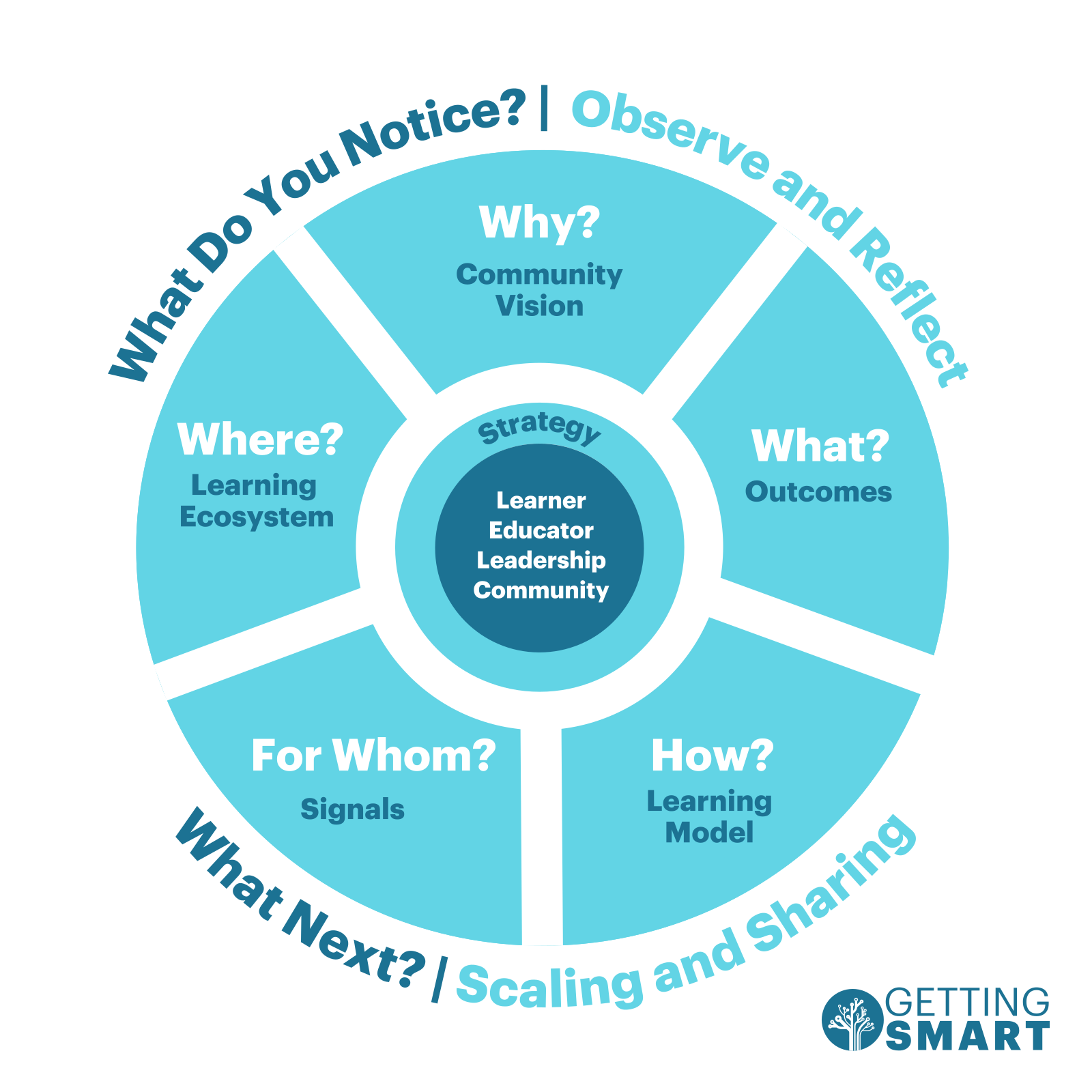
Explore the Getting Smart Innovation Framework for personalized, competency-based education that empowers all students.

Explore learner-centered ecosystems to transform education, enhancing adaptability, community involvement, and holistic student development.